
Fenbendazole vs Mebendazole: Differences, Uses & Safety (2026)
Complete comparison of fenbendazole and mebendazole: chemistry, bioavailability, safety, cost, cancer research, and which to choose. 23 FAQs answered.
 By Dr. Andrew Ellison, MD · March 6, 2026 · 28 min read
This article is for research and informational purposes only. It does not constitute medical advice. Do not self-prescribe. Always consult a qualified healthcare provider before using any supplement, especially alongside cancer treatment.
Table of Contents
- Quick Comparison: Fenbendazole vs Mebendazole
- What Are Benzimidazoles — and Why Does Fenbendazole Stand Out?
- Fenbendazole's 4 Anti-Cancer Mechanisms
- Mebendazole — What It Does and Where It Falls Short
- The Evidence: What the Research Actually Shows
- Pharmacokinetics Compared: Absorption, Half-Life, and Metabolites
- Formulation and Quality: The Mebendazole Polymorph Problem
- Drug Resistance: Why a Multi-Pathway Attack Matters
- Veterinary Safety Record: 50 Years of Wide-Margin Data
- Global Accessibility and Regulation
- The Clinical Trial Gap: Both Drugs Remain Unproven in Humans
- What People Report Online: Fenbendazole and Mebendazole
- References
This guide breaks down exactly how they compare — so you can understand why fenbendazole has become the most widely used benzimidazole in patient communities worldwide.
Quick Comparison: Fenbendazole vs Mebendazole
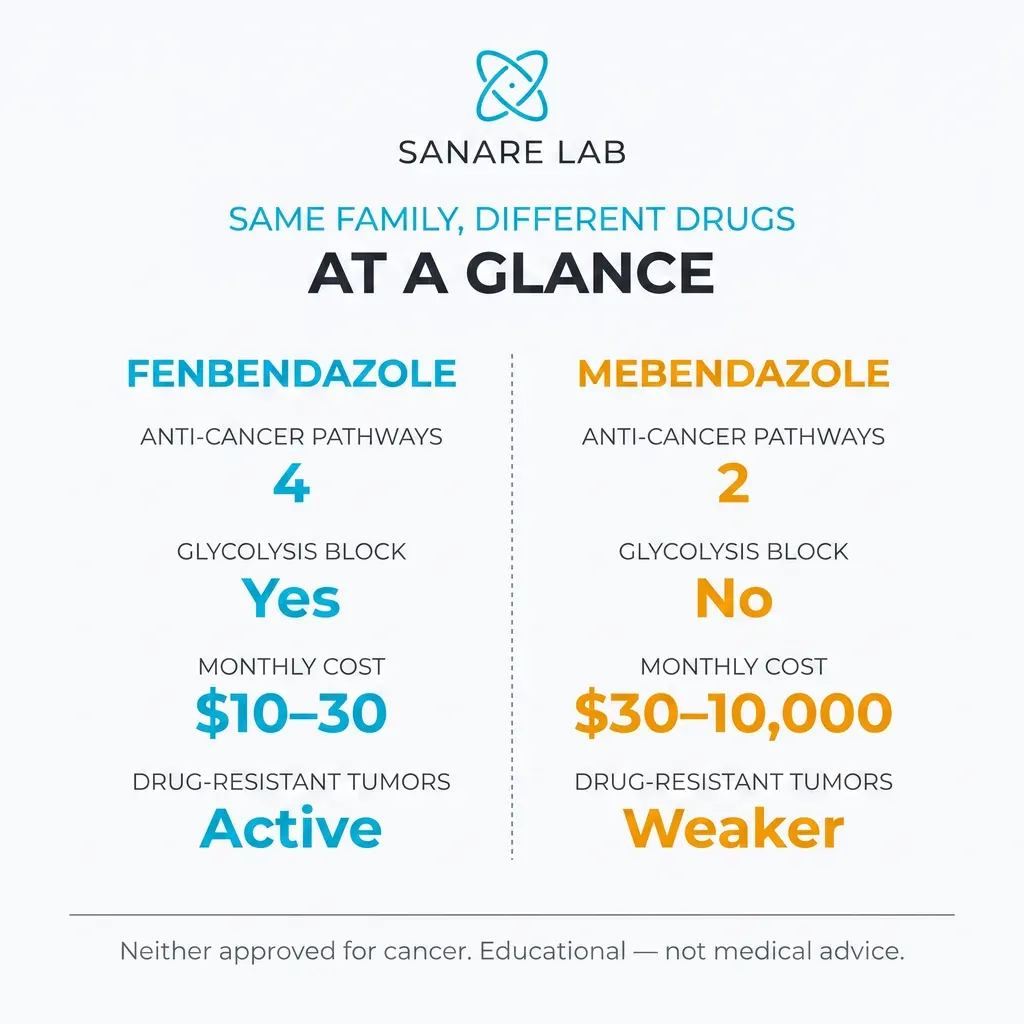
Fenbendazole vs Mebendazole at a glance — pathways, cost and resistance
What Are Benzimidazoles — and Why Does Fenbendazole Stand Out?
Benzimidazoles were developed to treat parasitic worms. They work by binding to beta-tubulin, blocking microtubule formation needed for cell division. The same mechanism caught the attention of cancer researchers: rapidly dividing cancer cells depend heavily on microtubule function.
The family includes albendazole, oxibendazole, flubendazole, mebendazole — and fenbendazole. For more details, see our guide on Joe Tippens Protocol. What separates fenbendazole from the rest is its unusually broad mechanism profile. While most benzimidazoles primarily target microtubules, fenbendazole hits cancer cells through at least four independent pathways simultaneously.
Key Insight from the Research
A 2024 review in Anticancer Research concluded that fenbendazole "surpasses albendazole and mebendazole in treating drug-resistant cells" — specifically because of its glycolytic inhibition, a mechanism the other benzimidazoles lack.
Nguyen et al., Anticancer Research, 2024;44(9):3725–3735
Fenbendazole's 4 Anti-Cancer Mechanisms
This is where fenbendazole pulls clearly ahead. Rather than relying on a single pathway, it attacks cancer cell biology from multiple angles at once:
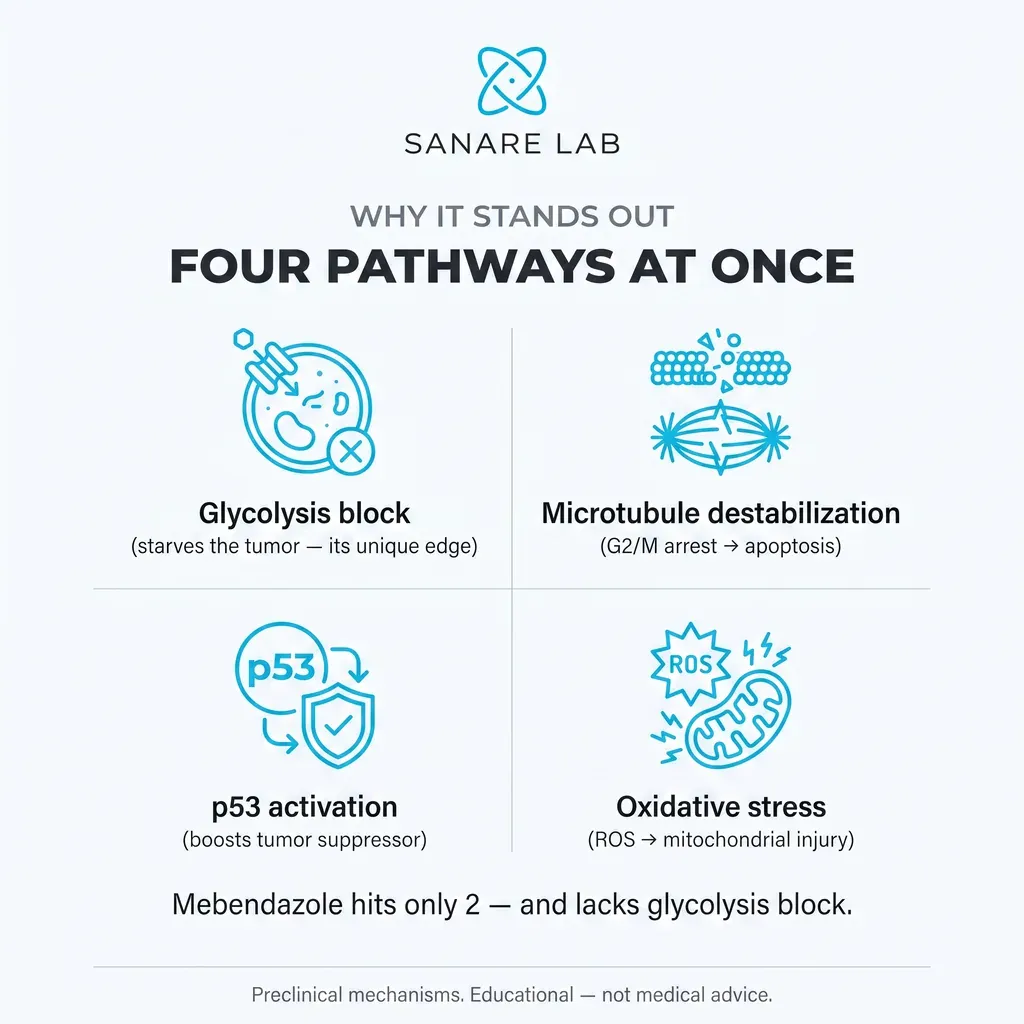
Fenbendazole attacks four pathways at once; mebendazole hits only two
Why this matters: Cancer cells that develop resistance to one mechanism still face three others. This multi-pathway approach is one of the core reasons fenbendazole has attracted researcher and patient interest in drug-resistant and heavily pre-treated cancers.
Mebendazole — What It Does and Where It Falls Short
Mebendazole shares the core microtubule disruption mechanism with fenbendazole. For more details, see our guide on Care Oncology Protocol (COC). It also has some anti-angiogenic properties and may reduce integrin beta-4 (ITGβ4) expression, which is linked to cancer stemness. These are real properties — but the clinical evidence tells a more complicated story.
Important note on "human approval": Mebendazole is approved as an antiparasitic — not for cancer. The FDA approval it holds is for pinworm and roundworm infections. Neither fenbendazole nor mebendazole is approved as a cancer treatment.
The Evidence: What the Research Actually Shows
Fenbendazole — Broad Preclinical Data + Growing Case Report Base
Preclinical evidence for fenbendazole spans more cancer types than any other benzimidazole. The 2024 Anticancer Research review catalogued active studies across lung cancer (A549, H460), colorectal cancer, breast cancer, hepatocellular carcinoma, cervical cancer, lymphoma, and melanoma cell lines — with fenbendazole consistently outperforming mebendazole in glycolysis-dependent and drug-resistant models.
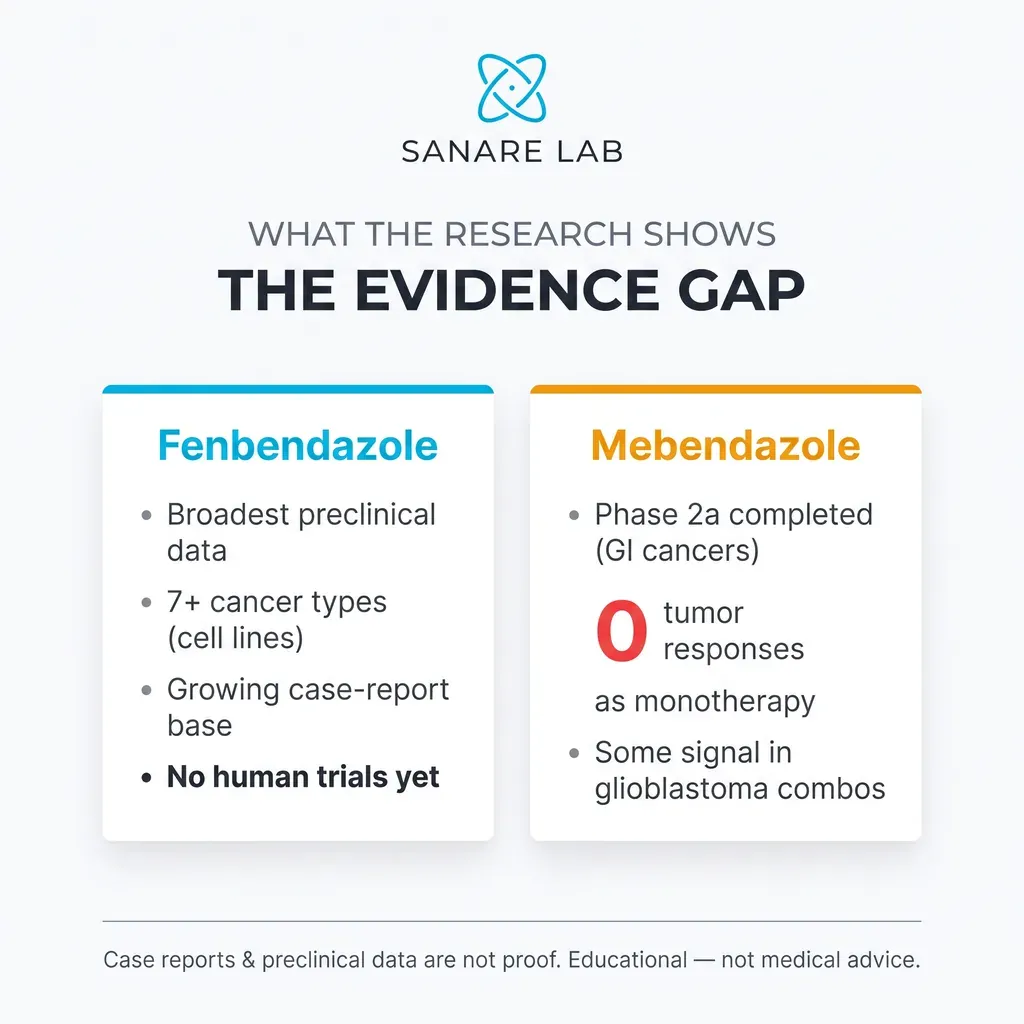
The evidence gap — what human and preclinical research actually shows
The Joe Tippens Case — Where It All Started
In 2016, Joe Tippens was diagnosed with Stage 4 small-cell lung cancer and given three months to live. After self-administering 222 mg fenbendazole alongside vitamin E succinate, CBD oil, and curcumin, he reported complete remission — confirmed by PET scan. His case sparked a global patient movement and triggered multiple research reviews.
Since then, Dr. William Makis — who runs the world's largest high-dose ivermectin and fenbendazole cancer practice — has compiled hundreds of case reports documenting responses across endometrial, pancreatic, bladder, and lung cancers, many in patients who had exhausted conventional options.
→ Read the full Joe Tippens Protocol breakdown
Mebendazole — Human Trial Data, But Disappointing Monotherapy Results
Mebendazole has completed more human trials than fenbendazole — but the results have been sobering: Learn more about fenbendazole liver safety and side effects.
- Scandinavian Phase 2a trial (NCT03628079), GI cancers: acceptable safety, but zero tumor responses as monotherapy
- One small GI cancer study: accelerated disease progression in all treated patients — a significant safety concern
- Glioblastoma trials: Some positive signals in combination with standard chemotherapy — the most promising area for mebendazole
The pattern that emerges from mebendazole trials is that it may have a role as a combination agent in specific cancers (particularly brain tumors), but shows limited activity as a standalone drug — and carries real risks in certain populations.
Pharmacokinetics Compared: Absorption, Half-Life, and Metabolites
Pharmacokinetics — how a drug is absorbed, distributed, metabolized, and cleared — often matters as much as the mechanism itself. A compound can be brilliant in a petri dish and useless in a patient if it never reaches the tumor at a meaningful concentration. Fenbendazole and mebendazole share the same core problem (both are poorly water-soluble benzimidazoles with limited oral absorption), but the details diverge in useful ways.
Absorption and the food effect
Both drugs are lipophilic and absorb poorly from the gut, and both depend heavily on dietary fat to reach usable blood levels. Fenbendazole's absorption improves markedly when taken with a fatty meal or a lipid carrier such as MCT oil — which is precisely why community protocols emphasize this pairing. Mebendazole is likewise better absorbed with food. The practical difference is that fenbendazole's food-dependence is easy to address deliberately (a spoon of healthy fat), whereas mebendazole's absorption stays variable even under controlled conditions and is further complicated by its formulation, discussed below.
Half-life: a quiet advantage for fenbendazole
One of the more meaningful pharmacokinetic contrasts is elimination half-life. Fenbendazole is generally cited with a longer effective half-life (roughly 10–15 hours in typical contexts) than mebendazole (roughly 3–6 hours). A longer half-life means more sustained exposure between doses, which matters for an antimitotic agent that acts on cells as they divide. Mebendazole's shorter half-life is one reason oncology research with it leaned toward continuous or high-frequency dosing to maintain levels — an approach that raises both cost and cumulative toxicity concerns.
Metabolite profiles: active versus inactive
The two drugs also differ in what they become after the liver processes them. Fenbendazole is oxidized to an active sulfoxide metabolite (oxfendazole), and the pro-drug febantel also converts into fenbendazole — so the parent compound sits within a small family of interconverting, biologically active molecules. Mebendazole, by contrast, is metabolized largely into inactive hydroxyl and amino metabolites [20]. The presence of active downstream metabolites is a genuine, if under-studied, point in fenbendazole's favor, because it can extend the window of biological activity — though this has never been confirmed in a formal human oncology study for either drug.
CNS penetration: where mebendazole leads
Mebendazole has a real edge in one place: it has documented ability to cross the blood–brain barrier, which is why it — not fenbendazole — became the benzimidazole of interest in glioblastoma and medulloblastoma research [4]. Fenbendazole's CNS penetration has not been comparably established, an important gap for brain tumors specifically. We cover the delivery questions for brain tumors in our fenbendazole and glioblastoma review. For most solid tumors outside the central nervous system, this particular advantage is less relevant.
Bottom line: neither drug has formal human oncology pharmacokinetic data, and that knowledge gap is wider for fenbendazole. But on the parameters that can be compared, fenbendazole's longer half-life and active metabolites are modest points in its favor for tumors outside the brain, while mebendazole's proven CNS penetration is its clearest pharmacokinetic strength.
Formulation and Quality: The Mebendazole Polymorph Problem
A drug's real-world performance depends not only on the molecule but on the physical form it is manufactured in — and this is an area many comparisons overlook. Both drugs carry formulation risks, but they are different in nature.
Why mebendazole's crystal form matters
Mebendazole exists in three distinct crystalline polymorphs — Forms A, B, and C — and they are not interchangeable. Form C is the therapeutically desirable form, with the solubility and dissolution profile needed for adequate absorption [21]. Form A is essentially inert as an oral therapeutic and is even used in some contexts precisely because it is poorly absorbed. This means two mebendazole products with an identical milligram label can behave completely differently in the body depending on which polymorph dominates. It is a genuine and under-appreciated quality-control challenge that sits at the heart of mebendazole's variable clinical performance.
The concern is not merely theoretical. A quality analysis of anthelmintic products found that while many mebendazole samples contained the correct stated amount of active ingredient, a substantial share failed international dissolution standards [19] — meaning the drug would not release and dissolve properly in the gut regardless of the dose printed on the box. For a compound already limited by poor absorption, a suboptimal dissolution profile can quietly render a course of treatment ineffective.
Fenbendazole's quality picture
Fenbendazole is not free of quality concerns either — but they are of a more familiar and more manageable kind. Because fenbendazole is sold as a veterinary product, formulations (pastes, granules, suspensions) are made to veterinary rather than human pharmaceutical standards, and cheap products can carry excipients or impurities that are undesirable for human use. The key difference is that fenbendazole does not suffer from the same bioactive-versus-inert polymorph trap: the practical variable is purity and excipient quality, which can be verified with a third-party certificate of analysis (COA). Choosing a laboratory-tested, high-purity capsule with a published COA addresses most of the concern — whereas the polymorph question in mebendazole is invisible on any label. Our guide on Panacur C dangers explains why high-excipient veterinary powders are a poor choice, and where to buy fenbendazole covers what a proper COA should show.
The compounding wildcard
Because there is no human-approved fenbendazole product, some people rely on compounded preparations; the same is true for mebendazole outside its branded forms. Compounding introduces its own dose-accuracy and consistency variability for either drug. Mebendazole at least has an FDA-approved reference product (Emverm) that serves as a quality benchmark, something fenbendazole lacks — but that benchmark is priced out of reach for many patients, which pushes people back toward compounding or veterinary sourcing anyway. In short, both drugs demand that the user pay close attention to source and quality; the difference is that fenbendazole's quality risks are more transparent and more easily audited.
Drug Resistance: Why a Multi-Pathway Attack Matters
Resistance is the reason so many cancer therapies eventually fail: tumors are genetically unstable populations, and cells that survive a single-mechanism drug can repopulate the tumor. This is where fenbendazole's broader mechanistic profile becomes strategically interesting.
Both benzimidazoles share the core antimitotic mechanism — binding β-tubulin and disrupting microtubule assembly, similar in principle to taxanes and vinca alkaloids. Cancers escape tubulin-binding drugs through well-documented routes: point mutations in β-tubulin that reduce drug binding, and upregulation of drug-efflux pumps such as P-glycoprotein (P-gp) that physically pump the drug back out of the cell. A drug that relies solely on the microtubule mechanism is fully exposed to these escape routes — and mebendazole, whose anticancer activity is dominated by microtubule disruption plus some anti-angiogenic effect, is more vulnerable to them.
Fenbendazole's advantage is redundancy. Beyond microtubule destabilization, it has been reported to inhibit glycolysis (by interfering with glucose uptake and hexokinase activity), to stabilize the p53 tumor-suppressor pathway, and to induce oxidative stress. A cancer cell that mutates its β-tubulin to evade the antimitotic effect still faces metabolic starvation, restored p53 signaling, and oxidative damage — three independent pressures the mutation does nothing to relieve. This is the mechanistic basis for the observation, highlighted in a 2024 Anticancer Research review, that fenbendazole retains activity against 5-fluorouracil-resistant and glycolysis-dependent tumor cells where microtubule-only agents weaken [7]. Our review of fenbendazole in colorectal and pancreatic cancer discusses this drug-resistant setting in more detail.
An important caveat: the specific resistance and cross-resistance profiles of these two drugs in cancer cells have not been mapped in direct head-to-head studies, so this remains a mechanism-based inference rather than a proven clinical fact. But the logic is sound and consistent with how multi-target strategies outperform single-target ones in oncology generally.
Combination Potential Compared
Modern oncology rarely relies on a single agent, so how each benzimidazole behaves in combination is a fair question. Interestingly, the more structured combination research to date has actually involved mebendazole — it has been folded into experimental multi-drug regimens such as the CUSP9 / CUSP9v3 protocol for recurrent glioblastoma, which stacks nine repurposed drugs against multiple survival pathways at once [18]. Part of the appeal there is scientific (attacking many targets) and part is economic: a specific novel combination can be patented, which creates the intellectual-property incentive that a lone off-patent drug lacks.
However, mebendazole's role in these regimens illustrates its limitation as much as its promise. It is included as one contributor among many, not as a backbone capable of carrying a response on its own — consistent with the human monotherapy data, where mebendazole produced no tumor responses by itself. In other words, mebendazole tends to be a supporting agent that needs a strong regimen around it.
Fenbendazole's multi-pathway activity positions it differently: community and case-report use has centered on fenbendazole as a foundation to which other agents are added, rather than as an add-on. The practical takeaway many practitioners reach is that mebendazole is most sensibly added to an existing fenbendazole-based protocol, not the reverse. Because concurrent high-dose use of two benzimidazoles compounds hepatic and bone-marrow load without proven additive benefit, any combination belongs under clinical supervision with lab monitoring — a point we expand on in our dedicated section below and in our fenbendazole and chemotherapy guide.
Veterinary Safety Record: 50 Years of Wide-Margin Data
Neither drug has a human cancer safety database, so the next-best evidence comes from their track records in their approved uses. Here the two compounds tell interesting, complementary stories.
Fenbendazole has more than 50 years of use across dozens of species — dogs, cats, cattle, sheep, goats, horses, pigs, poultry, fish, and numerous zoo and wildlife species — very often with a strikingly wide safety margin. In many species it is well tolerated at doses many times the therapeutic level, which is why it became a workhorse dewormer in veterinary medicine. This breadth of cross-species tolerability, detailed in our review of fenbendazole's uses in veterinary medicine, is a genuine source of confidence about the compound's baseline safety at sensible doses.
That confidence, however, must be qualified honestly. The U.S. FDA has issued a formal "Dear Veterinarian" letter warning that extra-label fenbendazole use in dogs — particularly courses longer than the standard three days — has been linked to idiosyncratic, unpredictable reactions including bone marrow hypoplasia and pancytopenia (suppression of blood-cell production) [14], and veterinary case reports confirm these events [16]. And in humans, self-administration for cancer has produced documented cases of severe drug-induced liver injury [15], sometimes missed because patients do not tell their oncologist they are taking a veterinary drug. These are real risks, and they are the reason liver-enzyme and CBC monitoring is non-negotiable.
Mebendazole's safety story is the mirror image: it has a well-characterized human safety profile from decades of antiparasitic use in millions of people, with generally mild side effects at standard doses, though its label also flags rare bone-marrow suppression at high or prolonged exposure. What mebendazole does not have is fenbendazole's enormous cross-species margin data. So each drug offers a different kind of reassurance — mebendazole a narrower but human record, fenbendazole a broader but non-human one — and neither substitutes for the human oncology safety data that still does not exist for either.
Global Accessibility and Regulation
Access is not a scientific variable, but for real patients it is often decisive — and it is one of the sharpest contrasts between the two drugs. Their availability flows directly from their regulatory classifications.
In the United States, mebendazole access is constrained by two forces: it requires a prescription, and the brand product (Emverm) can cost thousands of dollars a month, so many pharmacies do not stock it — a "de facto shortage" that leaves prescriptions unfilled. Fenbendazole, by contrast, is cheap and freely available from veterinary suppliers, which is a large part of why patient communities gravitated toward it in the first place. Regulation varies elsewhere: mebendazole is sold over the counter for pinworm in the UK and some other markets, while fenbendazole remains veterinary-only everywhere [22]. This easy access is double-edged — it lowers the barrier to unsupervised use, which is why the safety-monitoring guidance here matters. Accessibility is a practical advantage, not evidence of efficacy.
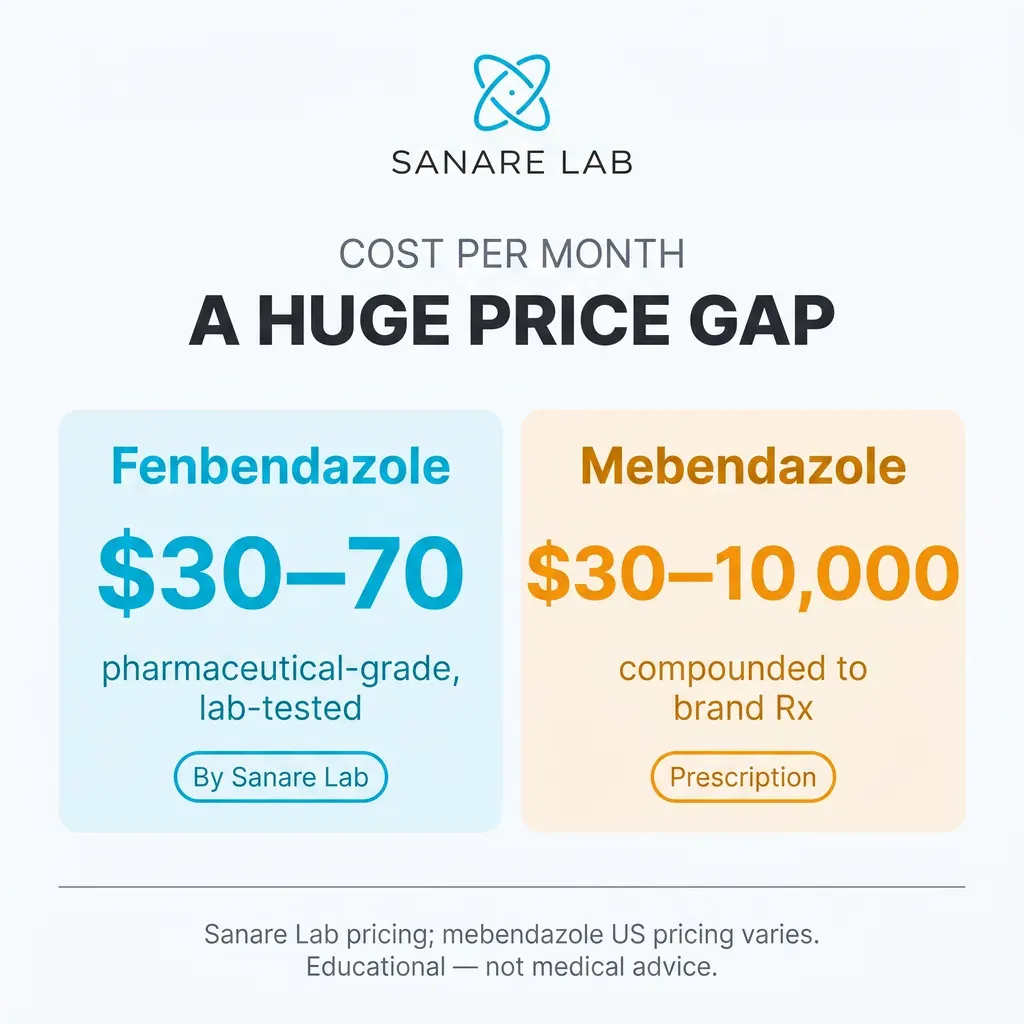
A huge price gap — monthly cost of fenbendazole vs mebendazole
The Clinical Trial Gap: Both Drugs Remain Unproven in Humans
It is tempting to assume that because mebendazole has been through human cancer trials and fenbendazole has not, mebendazole is "ahead." The reality is more level than that: neither fenbendazole nor mebendazole has been proven to treat cancer in humans.
Mebendazole's human oncology results have been, on balance, disappointing. A Scandinavian Phase 2a study in gastrointestinal cancers (NCT03628079) reported acceptable safety but zero tumor responses when mebendazole was used as monotherapy, and a small GI-cancer study raised a serious signal of accelerated disease progression in treated patients. Its more encouraging data are confined to combination settings in specific tumors such as glioblastoma, where it rides alongside standard chemotherapy rather than driving the response itself. In other words, "more trials" has not translated into "proven benefit" — it has largely translated into evidence of how hard the benzimidazole class is to turn into a working human cancer drug.
Fenbendazole, meanwhile, has no human cancer trials at all — its human evidence is limited to case reports, resting on a broad preclinical base. For the full landscape of what has and hasn't been studied, see our fenbendazole clinical trials update and the collected success stories and case reports.
Why has neither drug crossed the finish line? The obstacle is economic, not merely scientific. Both are off-patent, so no company can recoup the enormous cost of definitive Phase 1–3 trials — an investment that can run into the billions — because any competitor could market a generic the moment an indication were approved [17]. This "market failure" is the biggest reason both compounds remain stuck: fenbendazole entirely outside the formal system, and mebendazole advancing only through the slower channels of academic and philanthropic funding. The lesson is that the absence of trials is not, by itself, evidence that either drug does or does not work — it reflects how drug development is financed.
Detailed Comparison Table
The table below summarizes commonly discussed differences. Values are approximate educational estimates from mixed veterinary, pharmacology, and oncology literature—not personalized prescribing data.
| Parameter | Fenbendazole | Mebendazole |
|---|---|---|
| Cancer evidence (human) | Mostly case reports + community use; strong preclinical | More formal oncology trial activity in some settings |
| Cancer evidence (preclinical) | Strong multi-pathway signals | Moderate–strong microtubule-focused signals |
| Oral bioavailability (approx.) | ~20–30% (highly variable) | ~10–15% (highly variable) |
| Half-life (approx.) | ~10–15 hours (context-dependent) | ~3–6 hours (context-dependent) |
| Safety profile (general) | Generally well tolerated at modest experimental doses; hepatotoxicity risk rises with high dose/duration | Good antiparasitic safety record; monitor liver/marrow at higher/longer exposure |
| Typical community cancer discussion dose | 222 mg (sometimes 444 mg) | 100–200 mg ranges discussed; clinician-directed |
| Common schedule patterns | 3 days on / 4 days off; or daily in some protocols | Continuous or cyclic schedules in research/off-label use |
| Regulatory status (US) | Veterinary only | Human antiparasitic (not oncology-approved) |
| Availability | Easy veterinary access; quality varies | Prescription/restricted in many regions |
| Cost per month (rough community range) | Often ~$50–70 for quality capsules (varies) | Often ~$30–50 depending on source (varies) |
| Best-known protocol context | Joe Tippens protocol | Standalone or trial-based oncology exploration |
For practical dosing safety with fenbendazole, read the fenbendazole dosage guide. For quality risks of veterinary powders, see Panacur C dangers.
Which One Should You Choose?
There is no universal “best” benzimidazole for cancer. Use a decision framework with your clinician:
Decision tree (educational)
- Are you under oncology care? If yes, disclose any planned agent before starting. If no, establish medical supervision first.
- Is legal human-grade access available? Prefer regulated pharmacy mebendazole where appropriate and legal; prefer pharmaceutical-grade fenbendazole with COA if fenbendazole is chosen.
- Do you need a community-documented multi-component stack? The Joe Tippens protocol is fenbendazole-centered.
- Is formal trial literature your priority? Mebendazole often has more structured human oncology exploration historically.
- Can you monitor labs? If liver enzymes or CBC cannot be monitored, do not self-experiment with either agent long-term.
- Are you on chemotherapy/immunotherapy? Default to specialist review; see fenbendazole and chemotherapy.
Situations often favoring each option
| Situation | Often discussed option | Why (educational) |
|---|---|---|
| Following classic Tippens stack | Fenbendazole | Protocol history and community documentation |
| Need human-labeled antiparasitic access | Mebendazole | Pharmacy channel in many countries |
| Prior fenbendazole intolerance | Consider switch only with clinician | Different formulation/exposure may change tolerability—not guaranteed |
| Interest in metabolic multi-drug protocols | Context-dependent | See ISOM protocol and COC protocol |
| Cannot obtain lab monitoring | Neither (defer) | Risk without monitoring is unacceptable |
Can You Switch Between Them?
Yes, people switch—but there is no validated oncology conversion chart.
Switching considerations
- Do not double up full experimental doses of both agents during a transition without clinician oversight.
- Re-baseline labs (liver panel, CBC) before and 2–4 weeks after a switch.
- Reassess interactions with chemotherapy, anticoagulants, and other hepatotoxic drugs.
- Track symptoms daily for 2 weeks after any change (fatigue, dark urine, bruising, fever, RUQ pain).
- Quality change matters: moving from a high-excipient veterinary product to a tested capsule (or to pharmacy mebendazole) can change exposure more than the milligram label suggests. See where to buy fenbendazole.
Combination use
Combining fenbendazole and mebendazole is rarely justified as a DIY strategy: both are benzimidazoles with overlapping microtubule-related mechanisms. Combination may increase toxicity without proven additive benefit. If a clinician explores sequential rather than concurrent use, that is a different risk profile than simultaneous high-dose stacking.
Research Evidence Comparison
Head-to-head randomized oncology trials of fenbendazole versus mebendazole in humans are essentially absent. Comparison is therefore indirect.
Head-to-head studies
Direct comparative human efficacy data are lacking. Most claims of superiority are inferred from separate preclinical models, case reports, or trial programs that are not designed as benzimidazole head-to-heads.
Indirect comparison via mechanism
- Shared class effects: microtubule disruption, mitotic stress, potential anti-angiogenic and metabolic effects depending on model.
- Fenbendazole-emphasized themes in literature/community: p53 stabilization narratives, glucose metabolism effects, multi-pathway preclinical activity; popularized via Joe Tippens story and expanding case-report interest (success stories & case reports).
- Mebendazole-emphasized themes: longer history in human medicine, more structured oncology trial exploration in selected tumor types, pharmacy-grade human labeling as antiparasitic.
Efficacy differences by cancer type (evidence is uneven)
| Cancer context | Fenbendazole notes | Mebendazole notes |
|---|---|---|
| Lung | Strong community interest after Tippens; see lung cancer review | Investigational oncology literature exists; not standard care |
| Brain / GBM | BBB and delivery questions; see brain cancer review | Some oncology interest historically; still investigational |
| Ovarian | See ovarian research | Microtubule agents of interest in resistant disease research |
| Colorectal / pancreatic | See colorectal & pancreatic | Preclinical/early clinical exploration varies by program |
| Breast / prostate | Breast / prostate reviews | Evidence remains non-standard and heterogeneous |
So what: choose based on access, monitoring, legal context, and clinician judgment—not marketing claims of a universal winner.
Plan the numbers in our interactive dosing workspace.
What People Report Online: Fenbendazole and Mebendazole
Behind the laboratory papers sits a large, restless online conversation. On Reddit and patient forums, people comparing fenbendazole and mebendazole — and the relatives caring for them — trade experiences with fenbendazole and mebendazole, usually following some version of the Joe Tippens protocol. To save you from digging through dozens of scattered threads, we have gathered the most relevant, on-topic discussions in one place, together with an honest guide to what these accounts can and cannot tell you.
How to read these reports
These are personal stories, not clinical evidence. They are uncontrolled, self-reported, and impossible to verify independently.
In almost every account, the person was also receiving standard treatment — chemotherapy, immunotherapy, radiotherapy, or surgery — at the same time as fenbendazole and mebendazole. When someone improves on two therapies at once, the result cannot be credited to fenbendazole and mebendazole alone; the conventional treatment is the far more likely explanation.
Encouraging stories are also shared far more often than disappointing ones, so online threads skew positive (survivorship and publication bias).
The useful way to read them is as questions worth raising with your oncologist — not as a protocol to copy on your own.
For a deeper, evidence-based look at how these accounts hold up — including the documented case reports and the peer-reviewed analyses behind them — see our detailed review of fenbendazole success stories and case reports.
Frequently Asked Questions
Is fenbendazole better than mebendazole for cancer?
There is no definitive head-to-head human oncology trial proving one is superior. Fenbendazole has strong preclinical signals and widespread community use (e.g., Joe Tippens protocol), while mebendazole has more formal human oncology trial activity in some settings. Choice depends on access, regulation, monitoring, and clinician guidance.
What is the typical experimental dose of fenbendazole discussed online?
Community protocols often reference 222 mg (sometimes 444 mg) on schedules such as 3 days on / 4 days off (Joe Tippens) or daily use in some metabolic protocols. These are experimental and not FDA-approved cancer regimens. See our fenbendazole dosage guide for safety context.
What is a typical mebendazole dose discussed in oncology research?
Human antiparasitic dosing is often 100 mg, while oncology research and off-label discussions sometimes explore higher or continuous schedules (e.g., 100–200 mg ranges in various reports). Exact oncology dosing must be clinician-directed; self-escalation is unsafe.
Which has better bioavailability?
Both benzimidazoles have limited oral bioavailability. Fenbendazole is often cited around roughly 20–30% in veterinary/pharmacology contexts with high variability; mebendazole is frequently cited lower (roughly 10–15% range) and highly variable. Food and formulation matter. Numbers are approximate and context-dependent.
Can I switch from fenbendazole to mebendazole?
Some people switch due to access, regulation, or tolerability, but there is no validated conversion protocol. Any switch should include washout consideration, baseline labs, and clinician oversight. Do not stack high doses of both without medical supervision.
Can fenbendazole and mebendazole be combined?
Both target microtubules and related pathways; combination is theoretically overlapping rather than clearly synergistic. Combination increases uncertainty for liver and bone-marrow toxicity. Not recommended as a DIY stack.
Which is easier to obtain?
Fenbendazole is widely available as a veterinary product (quality varies—avoid high-excipient products like some Panacur C formulations for human experimentation). Mebendazole is a human antiparasitic that may require prescription and can be restricted by country.
Which is cheaper?
Costs vary by country and supplier. Community estimates often place fenbendazole monthly costs higher than generic mebendazole in some markets, but pharmaceutical-grade fenbendazole and pharmacy mebendazole pricing differ widely. Prioritize purity and COA over lowest price.
Is mebendazole FDA-approved for cancer?
No. Mebendazole is approved as an antiparasitic, not as a cancer treatment. Oncology use is investigational/off-label.
Is fenbendazole FDA-approved for humans?
No. Fenbendazole is a veterinary antiparasitic. It is not FDA-approved for human use or cancer treatment.
What monitoring is needed for either drug?
Baseline and periodic liver enzymes (ALT/AST, bilirubin), CBC, and clinical symptom tracking. Stop and seek care for jaundice, severe fatigue, fever, unusual bleeding, or dark urine. See fenbendazole liver safety guidance.
Does the Joe Tippens protocol use mebendazole?
The classic Joe Tippens protocol centers on fenbendazole 222 mg with vitamin E, curcumin, and CBD—not mebendazole. Some people substitute mebendazole when fenbendazole is unavailable; that is a modification, not the original protocol.
Which has more clinical trial data in oncology?
Mebendazole generally has more formal human oncology trial activity historically; fenbendazole’s human evidence is thinner and more case-report/community based, with growing preclinical literature. Evidence tiers differ by cancer type.
Are side effects similar?
Overlapping class effects include GI upset and potential hepatotoxicity; mebendazole labels also emphasize rare bone-marrow suppression and other antiparasitic-class risks. Individual risk depends on dose, duration, and comorbidities.
Which should I choose if I am on chemotherapy?
Neither should be added without oncologist approval. Drug–drug and toxicity overlaps (especially hepatic and marrow) require professional review. See fenbendazole and chemotherapy guidance.
Which drug stays in the body longer?
Fenbendazole generally has the longer effective half-life (roughly 10–15 hours versus mebendazole's roughly 3–6 hours), meaning more sustained exposure between doses. For an antimitotic agent that acts on dividing cells, longer exposure is theoretically useful. Mebendazole's shorter half-life is one reason oncology research with it has leaned toward continuous, high-frequency dosing.
Why does mebendazole's crystal form matter?
Mebendazole exists in three polymorphs (A, B and C) that are chemically identical but behave very differently in the body. Only Form C is well absorbed and biologically useful; the cheaper, more stable Form A is poorly absorbed and essentially inert. Because generic manufacturing worldwide does not always guarantee the correct polymorph, two "mebendazole" tablets can differ enormously in real-world activity. Fenbendazole does not carry this specific polymorph-identity problem, though product purity still varies by supplier.
Does either drug reach brain tumors?
This is one area where mebendazole has a genuine edge. Mebendazole has documented blood–brain barrier penetration, which is why it — not fenbendazole — became the benzimidazole studied in glioblastoma and medulloblastoma research. Fenbendazole's central-nervous-system penetration has not been comparably established. For brain tumors specifically, see our fenbendazole and glioblastoma review.
Which drug is less likely to hit a resistance wall?
Cancer cells escape single-target drugs by upregulating efflux pumps (P-glycoprotein) or mutating β-tubulin. Fenbendazole acts through several parallel routes — microtubule disruption, glucose-uptake (GLUT) interference, p53 reactivation and mild proteasome effects — so blocking one pathway may not neutralize it. Mebendazole's documented actions are narrower, which in principle makes single-pathway resistance easier to develop. Neither claim is proven in human tumors.
Is one drug safer over the long term?
Fenbendazole has a decades-long veterinary safety record with a wide margin between effective and toxic doses; the main documented animal risk is bone-marrow suppression at very high, prolonged, extra-label doses — the basis of an FDA warning to veterinarians. Mebendazole is well tolerated at antiparasitic doses but carries recognized risks of liver enzyme elevation and, rarely, neutropenia at the higher, prolonged doses cancer use would require. Both demand liver-function and blood-count monitoring.
Why can't I just get mebendazole cheaply like fenbendazole?
In the United States mebendazole requires a prescription, and the brand product (Emverm) can cost thousands of dollars per month, so many pharmacies do not stock it — a de facto shortage. Fenbendazole is inexpensive and freely sold as a veterinary product, which is a large part of why patient communities adopted it. Easy access, however, is a practical convenience, not evidence of effectiveness.
If mebendazole has had human trials, isn't it the more proven choice?
Not really. Mebendazole's human oncology results have been disappointing: a Scandinavian Phase 2a trial in gastrointestinal cancers (NCT03628079) reported zero tumor responses as monotherapy, and a small study even signaled accelerated disease. Its more encouraging data are limited to combination settings such as glioblastoma. Fenbendazole has no human cancer trials at all. Bottom line: neither drug is proven in humans — more trials for mebendazole have not produced proven benefit. See our clinical trials update.
If I already use fenbendazole, should I add or switch to mebendazole?
There is no validated protocol for either move, so any change belongs under clinician supervision with baseline and follow-up labs. As a practical matter, fenbendazole works well as a standalone foundation, and mebendazole is generally discussed as something added to an existing fenbendazole protocol rather than a replacement — especially given mebendazole's higher cost, prescription requirement and formulation variability. Never stack high doses of both without medical oversight because of overlapping liver and bone-marrow load.
Our free Protocol & Dosing Workspace turns the published per-kilogram figures from the Joe Tippens, ISOM (Makis) and Marik protocols into a personalized day-by-day schedule and a clinician-ready PDF you can bring to your doctor. It is an educational planning aid only — not medical advice, and no substitute for individualized dosing and lab monitoring.
Shop Sanare Lab
Lab-tested products referenced in the research above. Links are provided for convenience — always review the label and consult a professional before use.
180 capsules — 99% purity, laboratory tested
180 capsules — higher-dose option
120 capsules — with Black Pepper for absorption
Disclaimer: Links are informational and for convenience. This site does not provide medical advice and does not endorse any specific vendor. Always verify product quality, labeling, and consult a licensed professional for health decisions.
References
- Dogra N, Kumar A, Mukhopadhyay T. Fenbendazole acts as a moderate microtubule destabilizing agent and causes cancer cell death by modulating multiple cellular pathways. Sci Rep, 2018. PMID: 30093705. PubMed
- Song B, Park EY, Kim KJ, Ki SH. Repurposing of benzimidazole anthelmintic drugs as cancer therapeutics. Cancers, 2022. PMID: 35884373. PubMed
- Florio R, Mortimer L, Salomone F et al.. Repurposing veterinary drugs for human cancers: a systematic review of preclinical studies. Drug Discov Today, 2023. PMID: 36878395. PubMed
- Bai RY, Staedtke V, Aprhys CM et al.. Antiparasitic mebendazole shows survival benefit in 2 preclinical models of glioblastoma multiforme. Neuro Oncol, 2011. PMID: 21764822. PubMed
- Duan Q, Liu Y, Bhattacharya S. Fenbendazole as a potential anticancer drug. Anticancer Res, 2013. PMID: 23482766. PubMed
- Mrkvová Z, Uldrijan S, Pombinho A et al.. Benzimidazoles downregulate Mdm2 and MdmX and activate p53 in MdmX overexpressing tumor cells. Molecules, 2019. PMID: 31671553. PubMed
- Park D, Lee JH, Yoon SP. Anti-cancer effects of fenbendazole on 5-fluorouracil-resistant colorectal cancer cells. Korean J Parasitol, 2022. PMID: 36041488. PubMed
- Cáñez-González KE, García-Saucedo BN, Enciso-Benavides J et al.. Evaluation of fenbendazole as an anticancer agent in tumor-bearing mice. J Cancer Res Ther, 2023. PMID: 38047367. PubMed
- Chu SW, Badar S, Morris DL, Pourgholami MH. Potent inhibition of tubulin polymerisation and proliferation of paclitaxel-resistant 1A9PTX22 human ovarian cancer cells by albendazole. Anticancer Res, 2009. PMID: 19528482. PubMed
- Nygren P, Larsson R. Drug repositioning from bench to bedside: tumour remission by the antihelmintic drug mebendazole in refractory metastatic colon cancer. Acta Oncol, 2014. PMID: 24160353. PubMed
- Huang L, Zhao L, Zhang J et al.. Antiparasitic mebendazole (MBZ) effectively overcomes cisplatin resistance in human ovarian cancer cells by inhibiting multiple cancer-associated signaling pathways. Aging, 2021. PMID: 33495418. PubMed
- Guerini AE, Triggiani L, Maddalo M et al.. Mebendazole as a candidate for drug repurposing in oncology: an extensive review of current literature. Cancers, 2019. PMID: 31540055. PubMed
- Son DS, Lee ES, Bhatt SE. Fenbendazole induces apoptosis of HL-60 cells by disrupting the integrity of the tubulin-microtubule system. Korean J Parasitol, 2020. PMID: 33227869. PubMed
- U.S. Food and Drug Administration, Center for Veterinary Medicine. Dear Veterinarian Letter Regarding Adverse Events Associated with Extra-Label Use of Fenbendazole in Dogs. FDA, 2024. FDA.gov
- Fenbendazole. LiverTox: Clinical and Research Information on Drug-Induced Liver Injury. National Institute of Diabetes and Digestive and Kidney Diseases, 2024. Bookshelf ID: NBK622043. NCBI Bookshelf
- Gary AT, Kerl ME, Wiedmeyer CE et al. Bone marrow hypoplasia associated with fenbendazole administration in a dog. J Am Anim Hosp Assoc, 2004. PMID: 15131104. PubMed
- R Street Institute. The Economics of Drug Discovery and the Impact of Patents. R Street Commentary, 2023. rstreet.org
- Novel Approaches in Repurposing Medicines for Oncology Indications (CUSP9v3 combination protocol). Hospital Oncology Review, 2024. honcology.com
- Seitzer M, Klapper W, Nshimiyimana JD et al. Quality and composition of albendazole, mebendazole and praziquantel available in Burkina Faso, Côte d'Ivoire, Ghana and Tanzania. PLoS Negl Trop Dis, 2021. PMID: 33493211. PubMed
- Petronzio A, Fracassi F, Del Baldo F et al. Bone marrow toxicity associated with febantel administration in a dog: case report. Front Vet Sci, 2025. PMID: 40260210. PubMed
- Swanepoel E, Liebenberg W, de Villiers MM. Developing a discriminating dissolution test for three mebendazole polymorphs based on solubility differences. Pharmazie, 2003. PMID: 12641328. PubMed
- World Health Organization. Essential Medicines (WHO Model List of Essential Medicines). WHO Fact Sheet, 2023. who.int
Medical Disclaimer
This article is for educational and informational purposes only. It is not intended to be a substitute for professional medical advice, diagnosis, or treatment. Always seek the advice of your physician or other qualified health provider with any questions you may have regarding a medical condition. Never disregard professional medical advice or delay in seeking it because of something you have read on this website.

Dr. Andrew Ellison, MD
Science editor and health researcher at Sanare Lab, covering evidence-based wellness, emerging compound research, clinical studies, and practical health protocols. Content is educational and does not replace medical advice.