
Fenbendazole's Uses in Veterinary Medicine
Fenbendazole's established uses in animal health and veterinary practice. Decades of safety data, approved indications, and why veterinary drugs interest cancer researchers.
 By Dr. Andrew Ellison, MD · January 10, 2026 · 27 min read
This article is for research and informational purposes only. It does not constitute medical advice. Do not self-prescribe. Always consult a qualified healthcare provider before using any supplement, especially alongside cancer treatment.
Table of Contents
- History & Development of Fenbendazole
- Pharmacology & Mechanism of Action
- Species-Specific Pharmacokinetics
- Comparative Veterinary Pharmacology of Benzimidazoles
- Canine Applications
- Feline Applications
- Equine Applications
- Ruminant & Livestock Applications
- Camelid Applications (Llamas & Alpacas)
- Exotic, Zoo & Laboratory Animals
- Wildlife Conservation & Management
- Aquaculture & Fish Farming
- Detailed Poultry Protocols & Withdrawal Periods
- Formulations & Novel Delivery Systems
- Safety, Toxicology & Drug Interactions
- Anthelmintic Resistance & Monitoring
- Environmental & Ecotoxicology
- Economic Impact of Deworming Programs
- Beyond Parasites: Emerging Research
- Regulatory Status Worldwide
- Frequently Asked Questions
- References
History & Development of Fenbendazole
Fenbendazole (methyl N-(6-phenylsulfanyl-1H-benzimidazol-2-yl)carbamate) was developed in the late 1960s as part of a systematic program to create safer, more effective benzimidazole anthelmintics. The first benzimidazole, thiabendazole, had been introduced in 1961 and revolutionized veterinary parasitology, but its relatively narrow spectrum and need for high doses prompted development of second-generation compounds.
Chemical Innovation
The introduction of a phenylthio group at the 5-position of the benzimidazole ring (yielding fenbendazole) was a breakthrough in anthelmintic chemistry. This modification dramatically increased potency — reducing effective doses by 5-10 fold compared to thiabendazole — while simultaneously broadening the spectrum of activity and improving the safety margin. The phenylthio substitution also created an ideal substrate for hepatic sulfoxide metabolism, generating the active metabolite oxfendazole, effectively doubling the therapeutic coverage.
Regulatory Milestones
Fenbendazole received its first veterinary marketing authorization in the mid-1970s under the brand name Panacur®. FDA approval followed for use in dogs, cattle, horses, and swine. The compound's excellent safety data facilitated label extensions to pregnant animals, young animals, and debilitated patients — populations often excluded from treatment with other anthelmintics. Today, fenbendazole products are registered in over 100 countries worldwide.
Pharmacology & Mechanism of Action
Molecular Target: β-Tubulin
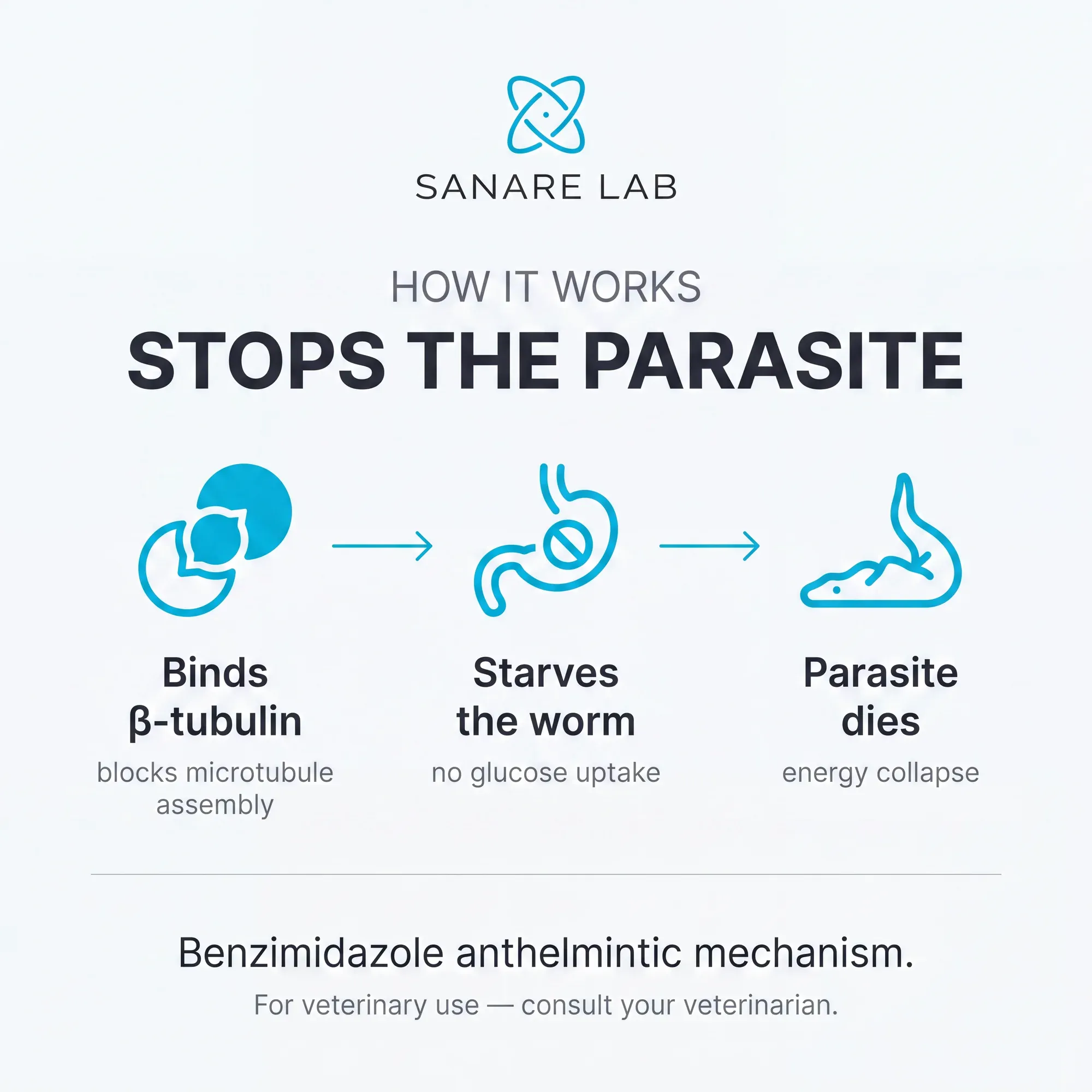
Fenbendazole's primary molecular target is helminth β-tubulin. It binds selectively to the colchicine-binding domain of parasite β-tubulin with approximately 250-400 times greater affinity than for mammalian tubulin. This binding prevents tubulin dimers from polymerizing into functional microtubules, which are essential for cell division, nutrient absorption, protein secretion, and structural integrity of parasitic cells. The result is impaired glucose uptake, depletion of the parasite's energy reserves, and eventual death of the worm.
Metabolism and Active Metabolites
In all species, fenbendazole is a sulfide-type pro-drug that is metabolized hepatically via cytochrome P450 enzymes to oxfendazole (the active sulfoxide) and subsequently to fenbendazole sulfone (inactive). Both the parent compound and the sulfoxide metabolite contribute to antiparasitic efficacy, so the two are typically measured together when assessing systemic exposure. Administration with food significantly enhances absorption in monogastric species by 2-5 fold, a critical consideration for optimal therapeutic outcomes.
Tissue Distribution
Fenbendazole distributes widely throughout body tissues, with tissue-to-plasma ratios exceeding 1.0 in liver, lung, kidney, and gastrointestinal mucosa. This broad distribution is advantageous for treating both luminal parasites (roundworms, whipworms) and tissue-dwelling parasites (lungworms, migrating larvae). The compound also crosses into milk, necessitating withdrawal period considerations in dairy animals.
Species-Specific Pharmacokinetics
The efficacy and correct dosing of fenbendazole are fundamentally dictated by pharmacokinetics, which differ markedly between species because of digestive physiology. Understanding these differences is the single most important factor in choosing an effective regimen and avoiding treatment failure.
Ruminants (Cattle and Goats)
In ruminants, the rumen functions as a natural reservoir, allowing slow dissolution and prolonged absorption of fenbendazole. This slow passage is crucial for efficacy. The drug is metabolized in the liver to oxfendazole, which can be secreted back into the rumen and reduced by microbes to parent fenbendazole — effectively recycling the active compound and extending its bioavailability in cattle. Diet significantly influences this process: high-fibre diets slow digesta passage and increase absorption, whereas higher-quality green fodder can reduce it, as demonstrated in controlled dietary pharmacokinetic studies. In goats, fenbendazole is excreted roughly twice as fast as in sheep, which is why caprine patients generally require higher mg/kg doses or extended courses.
Horses
As non-ruminant herbivores with a simple stomach, horses lack a rumen reservoir, resulting in faster gastrointestinal transit and a shorter residual effect than in ruminants. Studies show that administering fenbendazole to fasted horses increases the systemic availability of its active metabolites, and co-administration with the cytochrome P450 inhibitor piperonyl-butoxide increases the area under the concentration-time curve (AUC) and peak plasma concentrations by slowing hepatic oxidation of fenbendazole and oxfendazole. This physiology explains why the equine "PowerPac" protocol relies on repeated daily dosing rather than a single treatment.
Camelids (Llamas and Alpacas)
Camelids present a unique profile. Although they are functional ruminants, studies in llamas and alpacas show that while the rate of absorption is similar to cattle and sheep, elimination is significantly more prolonged. After an oral dose in alpacas, the terminal half-life was approximately 23 hours, and in llamas the time to peak plasma concentration (Tmax) was around 28 hours. This slow clearance underpins the specialized camelid dosing discussed in the camelid section below.
Comparative Veterinary Pharmacology of Benzimidazoles
Fenbendazole belongs to the benzimidazole (BZ) class of anthelmintics, which includes albendazole, oxfendazole, and mebendazole. All share a primary mechanism of action: selectively binding parasite β-tubulin to disrupt microtubule formation, inhibiting glucose uptake and leading to parasite death. Despite this common pathway, they differ in metabolism, spectrum, and safety. For a cancer-focused comparison of two of these agents, see our dedicated article on fenbendazole vs mebendazole; the discussion here is strictly veterinary.
Fenbendazole is a sulfide-type BZ metabolized to its active sulfoxide, oxfendazole. A similar process occurs with albendazole, which is oxidized to albendazole sulfoxide. These sulfoxide metabolites are generally more persistent in plasma than the parent compounds, and comparative studies in dogs have shown that oxfendazole achieves higher plasma concentrations and a longer mean residence time than either fenbendazole or albendazole.
| Feature | Fenbendazole | Albendazole | Oxfendazole | Mebendazole |
|---|---|---|---|---|
| Primary active form | Fenbendazole + oxfendazole (metabolite) | Albendazole sulfoxide (metabolite) | Oxfendazole (parent sulfoxide) | Mebendazole (parent) |
| Metabolic pathway | Pro-drug (sulfide) oxidized to active sulfoxide | Pro-drug (sulfide) oxidized to active sulfoxide | Active as parent sulfoxide compound | Active as parent compound |
| Lipophilicity | High (log P >3.7) | High (log P >3.7) | Less lipophilic | High (log P >3.7) |
| Key veterinary use | Broad-spectrum nematode & some cestode control in livestock, horses, small animals | Broad-spectrum control in livestock; avoided in dogs/cats on safety grounds | Broad-spectrum control in livestock and horses | Small animals and horses; less common in livestock |
| Safety note | Rare bone-marrow hypoplasia with prolonged high-dose use in dogs | Teratogenic potential in early pregnancy in some species | Longer plasma residence as active metabolite | Low gut absorption; effective for luminal parasites |
Table 1. Comparison of common benzimidazole anthelmintics in veterinary use. Data synthesized from peer-reviewed pharmacology reviews.
Canine Applications
Fenbendazole is one of the most extensively used anthelmintics in canine medicine, with FDA-approved indications for multiple gastrointestinal parasites.
Approved Indications
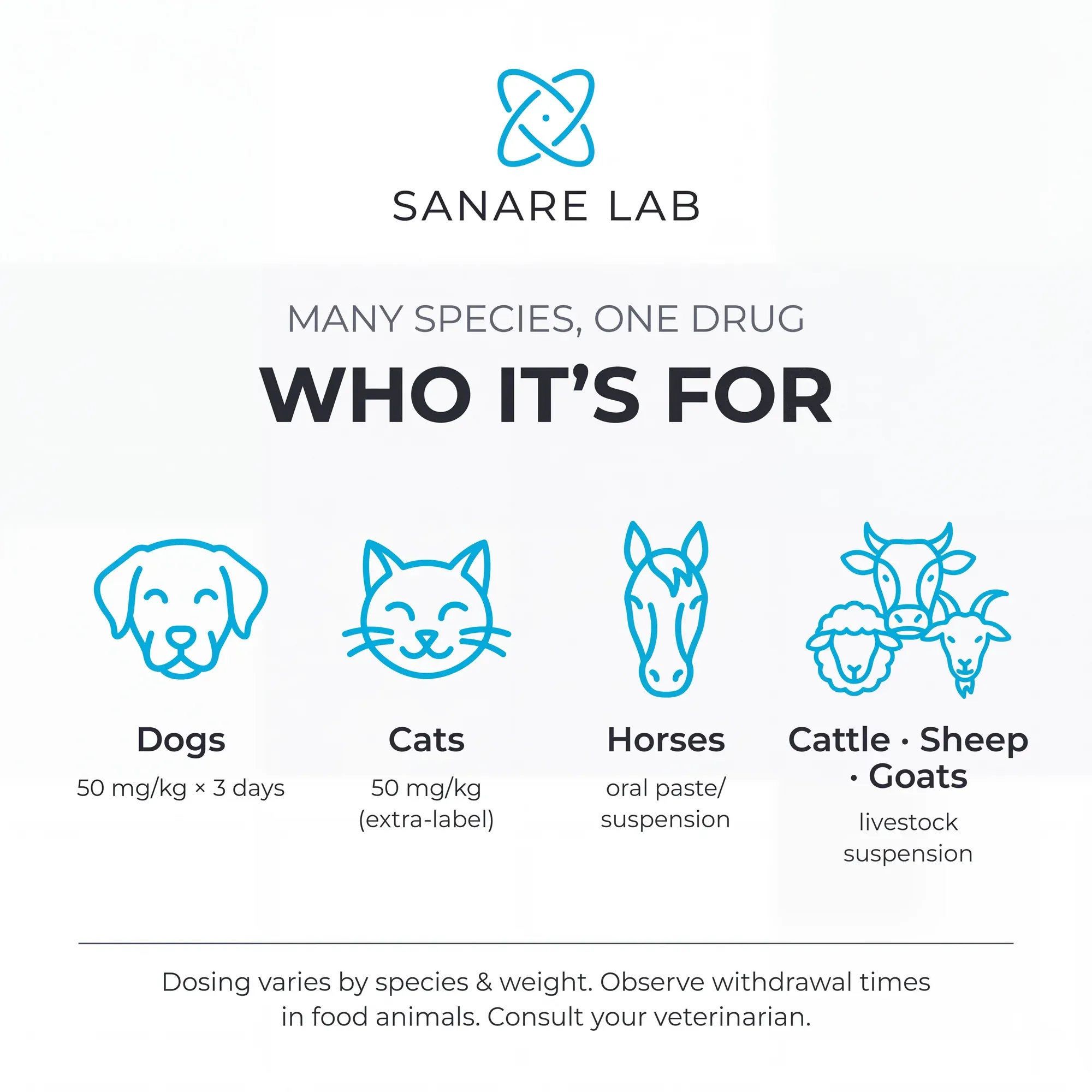
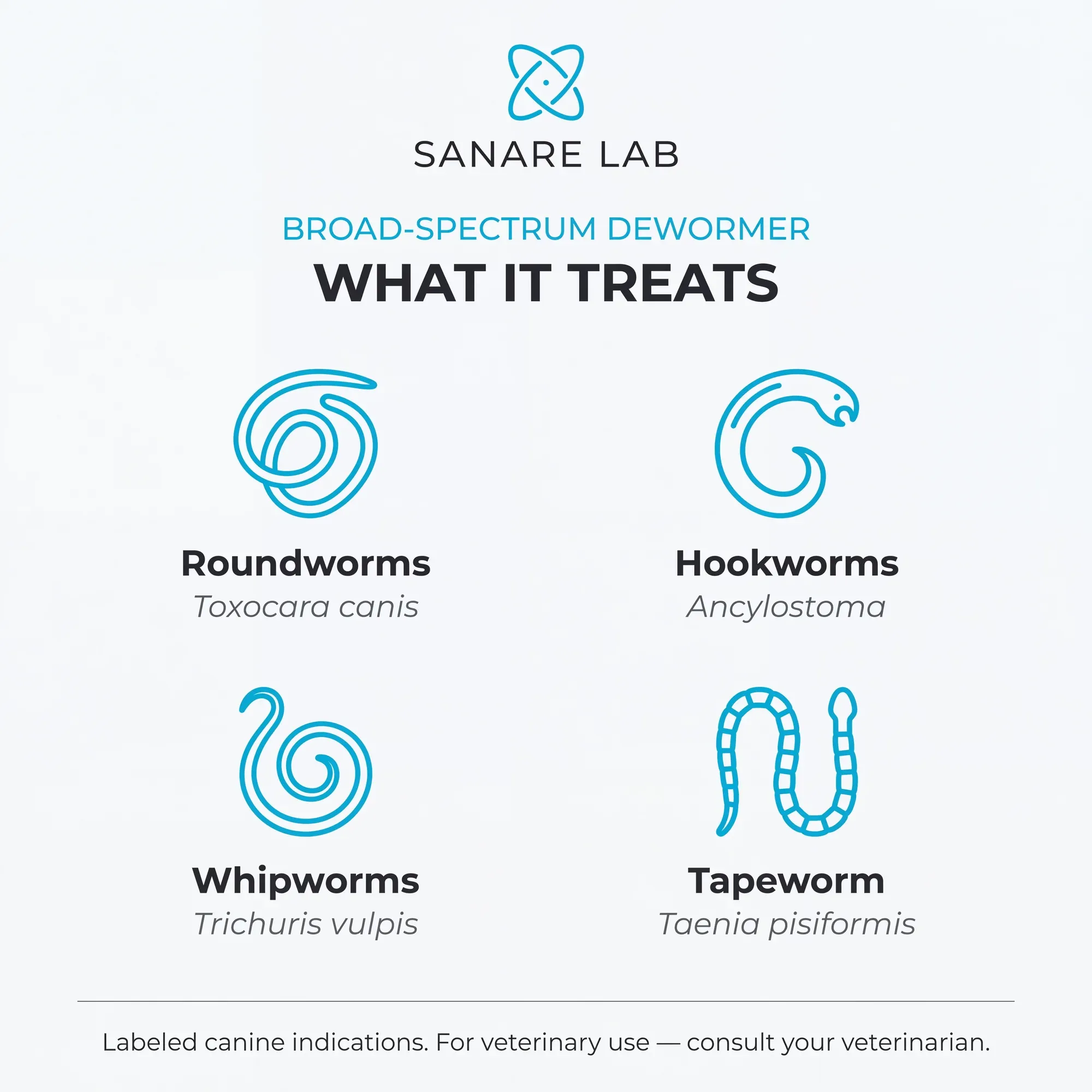
FDA-approved uses include treatment of Toxocara canis and Toxascaris leonina (roundworms), Ancylostoma caninum and Uncinaria stenocephala (hookworms), Trichuris vulpis (whipworms), and Taenia pisiformis (tapeworm). The standard dose is 50 mg/kg daily for 3 days, with extensions to 5 days for Giardia and 10-14 days for lungworms.
Off-Label Canine Uses
Veterinarians frequently prescribe fenbendazole off-label for Giardia duodenalis (5-day course), Oslerus osleri (10-14 day course), Capillaria species, and Paragonimus kellicotti. These off-label uses are well-supported by published efficacy data and clinical experience. The compound's safety in pregnant bitches and puppies from 2 weeks of age makes it uniquely versatile in canine practice. Emerging reports of Ancylostoma caninum resistance in the southeastern United States, however, mean that fecal monitoring after treatment is increasingly recommended.
Feline Applications
Common Parasites in Cats
While fenbendazole does not have FDA approval for cats in the United States, it is widely used off-label and is approved for feline use in many other countries. The standard feline dose mirrors the canine dose: 50 mg/kg daily for 3-5 days. Fenbendazole is effective against Toxocara cati (roundworm), Ancylostoma tubaeforme (hookworm), Giardia (5-day course), and Aelurostrongylus abstrusus (lungworm, 10-day course).
Safety Considerations in Cats
Cats metabolize fenbendazole faster than dogs, resulting in lower peak plasma concentrations. While this means slightly reduced efficacy per dose, it also contributes to excellent safety. Toxicology studies in cats have shown no adverse effects at 5x the therapeutic dose. However, cats with pre-existing hepatic disease should be monitored during treatment, and concurrent use with other medications metabolized by CYP450 enzymes warrants veterinary oversight.
Equine Applications
Target Parasites in Horses
Fenbendazole is approved for use in horses against large strongyles (Strongylus vulgaris, S. edentatus, S. equinus), small strongyles (cyathostomins), ascarids (Parascaris equorum), and pinworms (Oxyuris equi). The standard equine dose is 5-10 mg/kg for routine deworming and 10 mg/kg daily for 5 days ("Panacur PowerPac") for encysted small strongyle larvae — a particularly difficult target due to mucosal encystment.
Resistance Challenges in Equine Practice
Anthelmintic resistance is a significant and growing problem in equine parasitology. Benzimidazole resistance in small strongyles (cyathostomins) is now widespread globally, with resistance rates exceeding 80% in many populations. This has led to a paradigm shift in equine deworming — from routine calendar-based treatment to targeted selective therapy based on fecal egg count monitoring. Notably, benzimidazole resistance in ascarids (Parascaris spp.) does not appear to be associated with the canonical β-tubulin mutations seen in strongyles, complicating molecular diagnosis in this host.
Ruminant & Livestock Applications
Cattle
In cattle, fenbendazole (5-10 mg/kg) targets Ostertagia ostertagi (brown stomach worm), Cooperia species, Haemonchus placei, Nematodirus species, Dictyocaulus viviparus (lungworm), and various other GI nematodes. The compound is particularly valuable for treating Type II ostertagiosis (inhibited larvae) at higher doses. Strategic deworming programs in cattle — timed to coincide with peak larval acquisition — have been shown to improve weight gain by 15-30% in growing cattle.
Sheep and Goats
Fenbendazole use in small ruminants presents unique challenges due to widespread benzimidazole resistance in key parasites, particularly Haemonchus contortus (barber pole worm). Resistance prevalence exceeds 90% in some regions, necessitating alternative treatments or combination therapy. When effective, fenbendazole at 5-10 mg/kg provides excellent coverage of major ovine/caprine parasites. Goats require higher doses than sheep due to faster ruminal metabolism, and novel β-tubulin substitutions such as E198L in Haemonchus contortus have been documented in caprine herds.
Swine
Fenbendazole is FDA-approved for swine at 3-9 mg/kg administered in feed for 3-12 days, targeting Ascaris suum (large roundworm), Oesophagostomum (nodular worm), Trichuris suis (whipworm), Hyostrongylus rubidus (red stomach worm), and Stephanurus dentatus (kidney worm). The in-feed administration route is particularly practical for large swine operations.
Camelid Applications (Llamas & Alpacas)
Camelids — llamas, alpacas, and their relatives — occupy a distinct niche in fenbendazole therapeutics because of their unusually slow drug elimination. As noted in the pharmacokinetics section, the terminal half-life in alpacas is roughly 23 hours and Tmax in llamas approaches 28 hours, meaning that a given oral dose maintains therapeutic plasma concentrations far longer than in cattle or sheep.
Practical Dosing
Because camelids are not a major-label species, virtually all fenbendazole use is extra-label and guided by published pharmacokinetic work and consensus references such as the Merck Veterinary Manual. For common gastrointestinal nematodes and Trichuris spp., regimens of 15-20 mg/kg for three consecutive days are widely used. The most demanding target is the meningeal worm (Parelaphostrongylus tenuis), a neurologic parasite acquired from white-tailed deer; here, high-dose protocols of 30-50 mg/kg daily for five days are recommended to achieve central nervous system penetration.
Clinical Notes
The prolonged plasma persistence in camelids is generally an advantage, providing sustained parasite exposure, but it also means that withdrawal intervals for camelid meat or milk should be treated conservatively. Fecal egg count monitoring is essential, since camelids share many parasites — and resistance patterns — with the small ruminants they are often pastured alongside.
Exotic, Zoo & Laboratory Animals
Zoo Animals
Fenbendazole is one of the most frequently used anthelmintics in zoo medicine due to its exceptional safety across species. It has been used safely in primates, carnivores, ungulates, birds, and reptiles. Dosing varies significantly by species, and veterinary guidelines specific to exotic species should be consulted. In primates, doses of 50 mg/kg for 3 days mirror companion animal protocols. In birds, 10-50 mg/kg for 3-5 days is typical.
Laboratory Animals
In laboratory animal medicine, fenbendazole is the anthelmintic of choice for Syphacia (pinworm) and Aspiculuris treatment in mouse and rat colonies. The standard protocol involves fenbendazole-medicated feed (150 ppm) administered for 2-4 weeks. Importantly, researchers must be aware that fenbendazole can act as a microtubule-modulating agent, potentially confounding results in studies involving cell proliferation, angiogenesis, or immune function — a consideration when planning experiments in treated colonies.
Avian Species
Fenbendazole is widely used in poultry and pet birds for treatment of Ascaridia, Heterakis, Capillaria, and Syngamus (gapeworm). In pet birds, doses of 10-50 mg/kg for 3-5 days are common, and its efficacy against several nematode species has been documented in captive birds. Caution is warranted in pigeons, doves, vultures, and some storks, where higher sensitivity to benzimidazoles (including feather abnormalities and bone-marrow effects during moult) has been reported; starting at lower doses with careful monitoring is recommended. Detailed commercial-flock guidance appears in the poultry protocols section.
Wildlife Conservation & Management
Fenbendazole is a critical tool for managing endoparasites in zoo collections and free-ranging wildlife, where uncontrolled parasitism can compromise health, reproduction, and conservation outcomes.
Administration and Efficacy
Because handling wild animals is difficult and stressful, fenbendazole is most commonly delivered orally via medicated feed premixes. It shows high efficacy across a wide taxonomic range:
- Wild ruminants: Doses around 2.5 mg/kg for three days are effective in various antelope, gazelle, and ibex species, with higher doses (>5 mg/kg) frequently yielding over 90% fecal egg count reduction in captive wild ruminants.
- Feral swine: A regimen of 3 mg/kg daily for three consecutive days is effective against large roundworms and kidney worms.
- Captive birds and hedgehogs: Fenbendazole is used against Ascaridia, Capillaria, and lungworms in rescue and rehabilitation settings.
Management Challenges
A primary challenge with in-feed administration is ensuring accurate dosing: dominant animals may over-consume medicated feed while subordinates receive sub-therapeutic amounts. This variability reduces program efficacy and can accelerate resistance. Best-practice conservation medicine therefore integrates drug delivery with strategic husbandry — quarantining new arrivals, rotating or resting enclosures, regular substrate cleaning, and routine fecal monitoring to track parasite burdens and confirm drug effectiveness.
Aquaculture & Fish Farming
Fenbendazole is used in aquaculture to treat parasitic infections in a range of fish species, supported by dedicated pharmacokinetic and efficacy studies.
Therapeutic Uses
Fenbendazole has been used to control parasitic nematode infections in zebrafish colonies, typically by incorporating the drug into fish feed at 50 mg/kg. Experimental work has also demonstrated activity against microsporidian parasites: in Glugea anomala infections of sticklebacks, fenbendazole damaged all developmental stages of the parasite, and intermittent treatment regimens successfully lowered spore infectivity.
Pharmacokinetics and Tissue Distribution in Fish
Detailed pharmacokinetic data exist for channel catfish. Following an oral dose of 5 mg/kg, the elimination half-life was 20.1 hours, and the drug was metabolized to oxfendazole (FBZ-SO), a sulphone metabolite (FBZ-SO2), and a hydroxy metabolite. Tissue analysis showed the parent compound concentrated in abdominal fat, while oxfendazole distributed mainly to kidney, liver, and abdominal fat. Comparable data have been generated in rainbow trout. These residue profiles are essential for establishing safe withdrawal times in food fish, an area where regulatory approvals still lag behind clinical need.
Detailed Poultry Protocols & Withdrawal Periods
Fenbendazole is an important tool for controlling internal parasites in commercial and backyard poultry, and its pharmacokinetics in chickens are well characterized. Regulatory guidance is clearest in the United States for laying hens.
U.S. Regulatory Status and Egg Withdrawal
In the United States, the FDA has approved fenbendazole (e.g., Safe-Guard® AquaSol) for laying hens, broiler chickens, and breeding chickens to treat Ascaridia galli (roundworm) and Heterakis gallinarum (cecal worm). Crucially, there is no required egg withdrawal period when the product is used according to its label. Residue studies show that at zero-day withdrawal, total fenbendazole residues in eggs remain well below the safe concentration of 2.4 ppm.
| Setting / Region | Egg withdrawal | Meat withdrawal (chickens) | Notes |
|---|---|---|---|
| USA (FDA label, Safe-Guard® AquaSol) | 0 days | Per label (short) | Residues below 2.4 ppm at zero-day withdrawal |
| Backyard / small-scale (voluntary) | 10-14 days (precautionary) | 14 days (precautionary) | Producer preference, not a regulatory requirement |
| EU (extra-label / cascade) | Follow national MRL guidance | Follow national MRL guidance | Withdrawal set by prescribing veterinarian under the cascade |
| Certified organic (USDA) | Generally prohibited | Generally prohibited | Emergency use for breeder stock only, within an Organic System Plan |
Table 2. Representative fenbendazole withdrawal practices for poultry. Always confirm current label and national requirements before use.
Industry Practices and Organic Production
Despite the zero-day mandate, some backyard producers voluntarily discard eggs for 10-14 days as a precaution — a practice driven by personal or commercial preference rather than regulation. For certified organic poultry in the U.S., synthetic parasiticides such as fenbendazole are highly restricted: routine use is non-compliant, and treatment may only be permitted as an emergency measure for breeder stock defined within an Organic System Plan. Benzimidazole resistance is also emerging in poultry ascarids, with resistant Ascaridia galli and Heterakis gallinarum reported on broiler-breeder farms.
Formulations & Novel Delivery Systems
Oral Formulations
Fenbendazole is available in a wide range of oral formulations to accommodate different species and management systems:
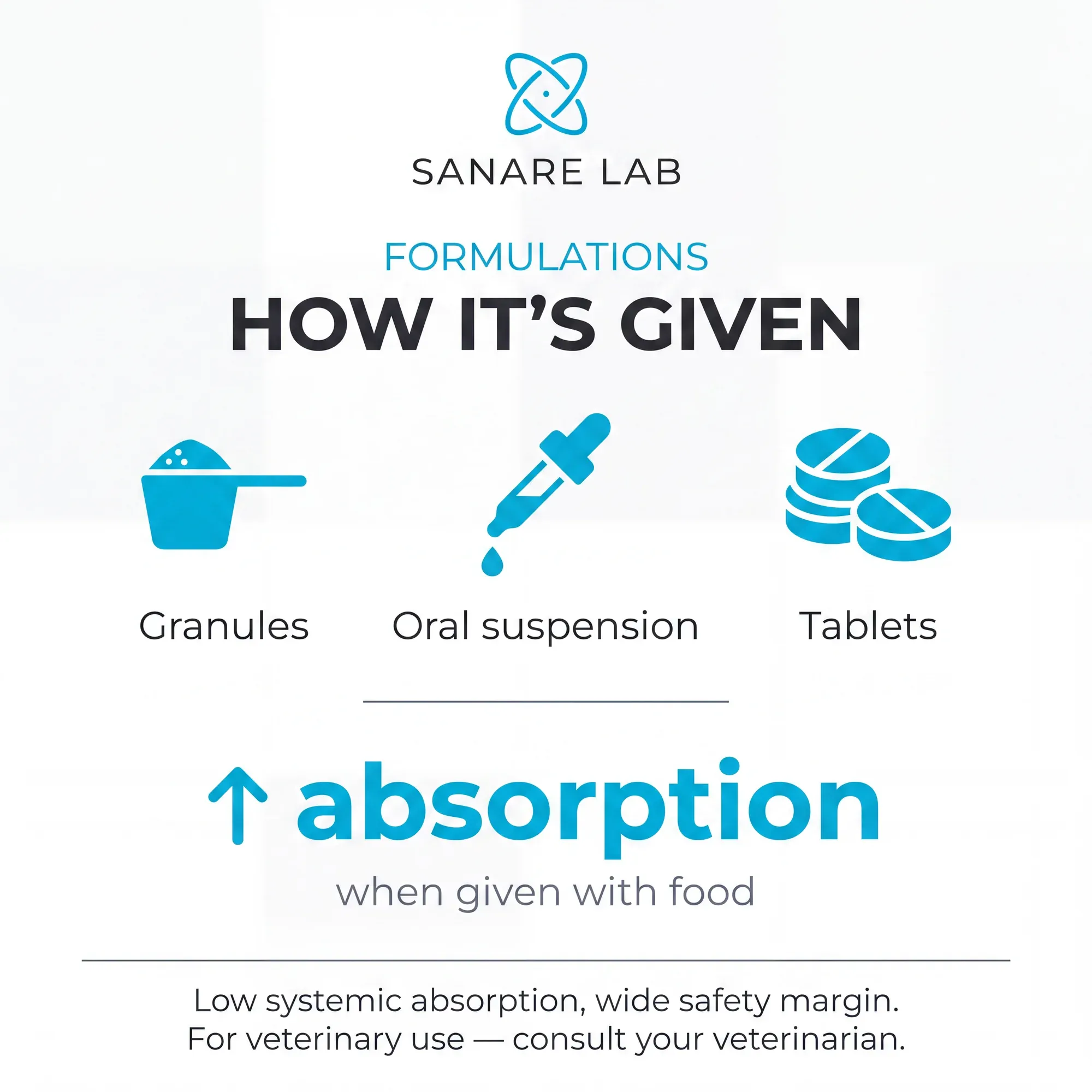
- Granules (22.2% w/w): Mixed with food — most common for dogs and cats
- Oral paste (10%): Commonly used in horses — administered via oral syringe
- Liquid suspension (10% or 25%): Useful for precise dosing in small animals and exotics
- Premix for medicated feed: Used in livestock, poultry, and laboratory animals
- Bolus: Sustained-release intraruminal devices for cattle
Bioavailability Considerations
Fenbendazole is a BCS Class II compound (high permeability, low solubility), meaning its absorption is dissolution-rate limited. Formulation strategies to improve bioavailability include particle-size reduction (micronization), co-administration with food (fatty meals enhance absorption 2-5 fold), solid dispersions with water-soluble carriers, and controlled-release technologies. These same principles inform discussions of appropriate dosing across contexts.
Sustained-Release Intraruminal Boluses
Intraruminal devices, including pulse-release boluses, have been developed for cattle to provide season-long parasite control. These devices remain in the rumen and release therapeutic doses of a benzimidazole at programmed intervals, helping to prevent patent infections and reduce pasture contamination across a grazing season. Field studies of pulse-release boluses confirmed sustained drug levels that a single oral drench cannot achieve.
Medicated Urea-Molasses Blocks
Another delivery innovation incorporates fenbendazole into urea-molasses blocks for cattle and buffalo, allowing low-level self-medication over extended periods. Studies show this approach can maintain stable plasma concentrations of the active metabolite oxfendazole through long-term feed-block administration. The manufacturing process is critical, however, because excessive heat during block production can degrade fenbendazole and reduce its bioavailability.
Nano-formulations
Nanotechnology is a promising route for improving delivery of poorly soluble drugs like fenbendazole (nano-suspensions, nano-encapsulated boluses), but in the veterinary anthelmintic space these approaches remain largely experimental. There is currently no widely marketed, late-stage veterinary nano-formulation of fenbendazole; the concept is an active research direction rather than an established clinical option.
Safety, Toxicology & Drug Interactions
Acute Toxicity
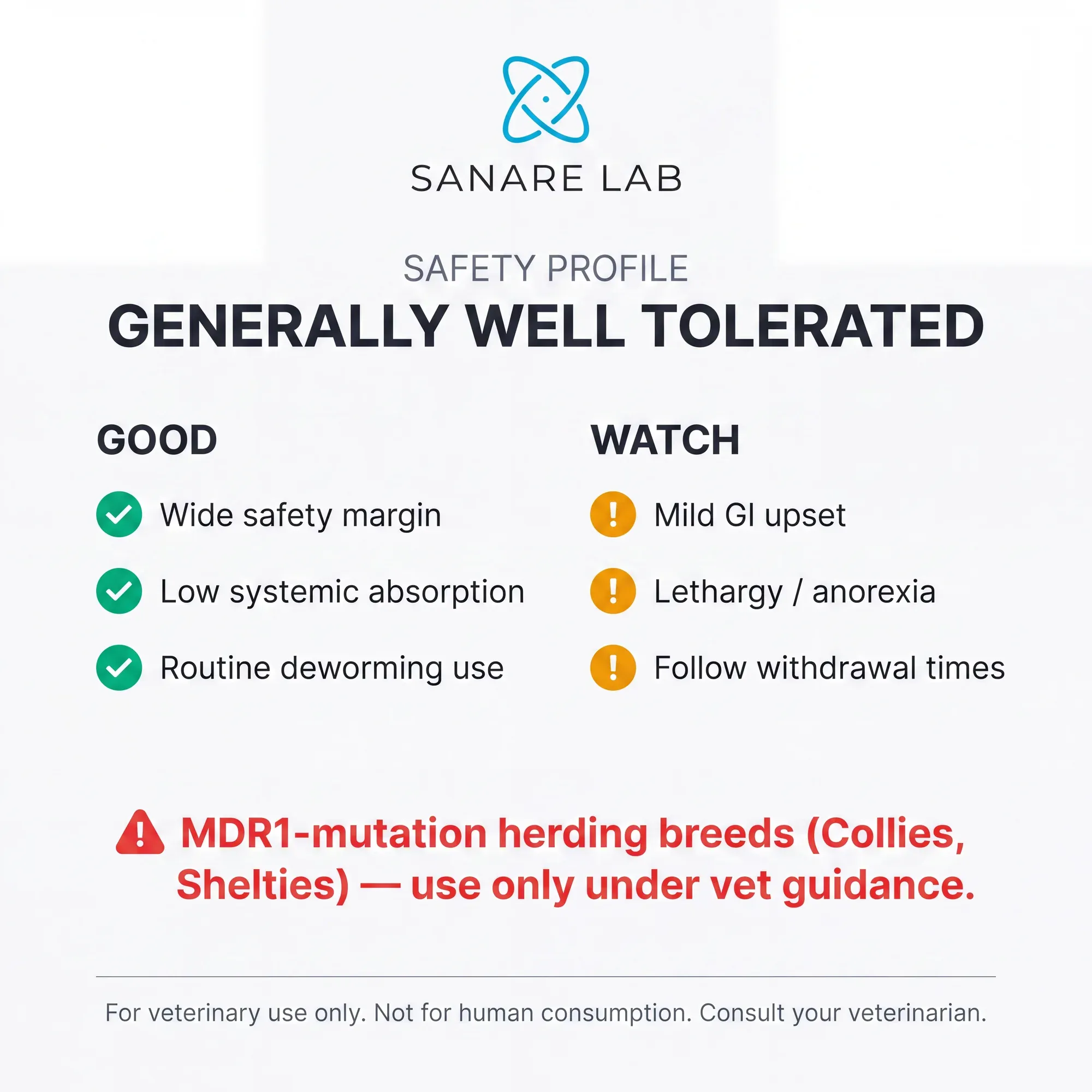
Fenbendazole has remarkably low acute toxicity. The oral LD50 exceeds 10,000 mg/kg in all species tested — representing a safety factor of over 200x relative to therapeutic doses. Even at 100x therapeutic doses, clinical signs in dogs were limited to transient emesis. This extraordinary safety margin is attributed to the high selectivity for helminth tubulin over mammalian tubulin.
Chronic/Subchronic Toxicity
Long-term safety studies in dogs (90 days at 500 mg/kg/day) and rats (2 years at 25 mg/kg/day) revealed no treatment-related toxicity, including no evidence of carcinogenicity, teratogenicity, or reproductive toxicity. These findings support the safety of extended treatment courses used for tissue-dwelling parasites.
Hepatic Considerations
As a compound metabolized primarily by hepatic CYP450 enzymes, fenbendazole can theoretically affect animals with compromised liver function. However, clinically significant hepatotoxicity is extremely rare and has been reported only in isolated cases involving very high doses or severely compromised patients. Routine liver-enzyme monitoring is recommended only for prolonged treatment courses exceeding 14 days.
Drug Interactions
While fenbendazole has a wide safety margin, a few interactions merit attention:
- Salicylanilides: Historical, anecdotal reports linked concurrent use of fenbendazole with certain older salicylanilides (dibromsalan, niclosamide) to abortion and mortality in sheep and cattle. Robust modern data on direct interaction with agents such as closantel are lacking, and current literature instead focuses on the strategic combination of these classes to manage multi-drug-resistant parasites, since they act by different mechanisms.
- Metabolic inhibitors: In horses, co-administration with piperonyl-butoxide (a CYP450 inhibitor) increases plasma concentration and persistence of fenbendazole's active metabolites by slowing hepatic metabolism, potentially enhancing efficacy.
- Bone-marrow effects: Prolonged, high-dose extra-label administration in dogs has been associated with rare cases of bone-marrow suppression, reinforcing the value of periodic monitoring during extended courses.
Anthelmintic Resistance & Monitoring
The emergence and spread of anthelmintic resistance is the single greatest threat to the continued efficacy of fenbendazole and other benzimidazoles. Effective stewardship depends on robust monitoring and molecular diagnostics.
Mechanisms of Benzimidazole Resistance
Resistance to benzimidazoles is the best-understood form of anthelmintic resistance at the molecular level. It is primarily mediated by single-nucleotide polymorphisms (SNPs) in the isotype-1 β-tubulin gene, particularly at codons 200 (Phe→Tyr), 167 (Phe→Tyr), and 198 (Glu→Ala). These mutations reduce drug-target binding affinity, allowing parasites to survive otherwise lethal concentrations.
Detection at the Farm Level: FECRT
The Fecal Egg Count Reduction Test (FECRT) remains the gold-standard in-vivo method for assessing anthelmintic efficacy on farms. It compares fecal egg counts before and typically 14 days after treatment; a reduction below 95% (or 90% in horses) generally indicates a resistant population. Reliability depends on standardized protocols — adequate animal numbers and sufficient pre-treatment egg counts — and modern surveys increasingly pair FECRT with deep amplicon sequencing to quantify resistance-allele frequencies directly.
Molecular Diagnostics and SNP Detection
Molecular assays (allele-specific PCR, pyrosequencing, droplet-digital PCR, and next-generation "deep amplicon" sequencing) offer sensitive, specific detection of the codon-200, 167, and 198 mutations, and can track resistance before it becomes clinically obvious. Newer substitutions — such as E198L in Haemonchus contortus — continue to be discovered, underscoring the need to keep marker panels up to date.
Limitations in Ascarids
The diagnostic utility of β-tubulin markers is not universal. In ascarid parasites — Parascaris spp. in horses and Ascaris spp. in swine — the canonical mutations are often absent even in phenotypically resistant populations. This indicates alternative, as-yet-unidentified resistance mechanisms and means β-tubulin-targeted molecular tests are unreliable for these species; FECRT remains essential there.
Resistance Management Strategies
Practical stewardship combines targeted selective treatment (treating only animals above egg-count thresholds), refugia management (leaving a proportion of the parasite population unexposed to the drug), combination therapy using multiple drug classes, quarantine drenching of incoming stock, and routine efficacy monitoring. Together these measures slow selection for resistance and prolong the useful life of fenbendazole.
Environmental & Ecotoxicology
The environmental fate of veterinary pharmaceuticals is a growing concern. Fenbendazole's ecotoxicological profile is relatively favorable compared with other anthelmintic classes, particularly in terrestrial ecosystems, but it is not risk-free in aquatic environments.
Effects on Soil Organisms and Dung Beetles
Fenbendazole excreted in livestock feces poses a low risk to key decomposer organisms:
- Dung beetles: Unlike macrocyclic lactones such as ivermectin, fenbendazole residues do not cause significant negative effects on the abundance, development, or activity of dung beetles (Scarabaeidae), as confirmed by a recent review and meta-analysis of non-target effects.
- Earthworms: Field and laboratory studies show fenbendazole does not negatively affect earthworm populations, biomass, or their role in dung-pat degradation.
- Soil nematodes: While high concentrations of pure fenbendazole are toxic to soil nematodes in the laboratory, the levels naturally excreted by treated animals are considered non-toxic.
Effects on Aquatic Invertebrates
Fenbendazole can enter aquatic systems via runoff, where it poses a greater risk. The water flea Daphnia magna is among the most sensitive organisms, with chronic exposure reducing survival, growth, and reproduction, as shown in multi-species aquatic toxicity testing. In the non-biting midge Chironomus riparius, environmentally relevant concentrations impair larval survival and development and induce molecular stress responses (upregulation of heat-shock proteins and cytochrome P450 genes), documented in a multi-level ecotoxicology study. Managing agricultural runoff is therefore the key mitigation measure.
Economic Impact of Deworming Programs
Gastrointestinal parasitism is a leading cause of economic loss in livestock production worldwide, reducing weight gain, feed conversion, milk and wool yield, and increasing mortality.
Cost-Benefit of Control
Effective anthelmintics like fenbendazole are a fundamental tool for mitigating these losses and deliver a clear return on investment. Strategic deworming — timed to parasite epidemiology rather than the calendar — maintains productivity and helps producers remain competitive, a point emphasized in reviews of gastrointestinal parasitism in small ruminants.
The Economic Threat of Resistance
These benefits are undermined by resistance. When parasites become resistant to fenbendazole, treatment failures allow unchecked production losses even at subclinical burdens. The true cost of resistance includes lost productivity, wasted spend on ineffective drugs, and the expense of switching to newer, often more costly anthelmintic classes. Resistance surveys across regions consistently show that monitoring and stewardship are not merely clinical concerns but economic necessities for a sustainable livestock sector.
Beyond Parasites: Emerging Research
Beyond its established antiparasitic role, fenbendazole has attracted scientific interest for other biological activities observed in laboratory models. As a microtubule-modulating benzimidazole, it has been studied in cell and animal systems for effects on cell proliferation and related pathways. These investigations are preclinical and outside the scope of approved veterinary indications; readers seeking that separate body of literature can consult our overview of fenbendazole research updates and the comparison with other repurposed agents such as ivermectin. Within veterinary medicine specifically, the practical takeaway is simply that fenbendazole's pharmacology continues to be actively researched.
Regulatory Status Worldwide
Veterinary Approvals
Fenbendazole holds veterinary marketing authorizations in over 100 countries, with approved species including dogs, cats (in select markets), horses, cattle, sheep, goats, swine, poultry, and various exotic species. It is classified as OTC (over-the-counter) in most markets for companion-animal use, while livestock formulations may require veterinary dispensation depending on jurisdiction.
Withdrawal Periods
For food-producing animals, fenbendazole has established withdrawal periods to ensure residues in meat and milk fall below Maximum Residue Limits (MRLs). Typical periods are: cattle meat ~8 days, cattle milk 48-72 hours (varies by country), swine meat 0-4 days, and eggs 0 days (label-approved formulations). These relatively short intervals reflect fenbendazole's rapid metabolism and elimination. Where a species or indication is not on the label, prescribers in the EU and elsewhere set withdrawal times under the veterinary "cascade."
Extra-Label Use
Much fenbendazole use in minor species — camelids, exotics, fish, and wildlife — is extra-label and must follow national rules governing extra-label drug use in animals, including conservative withdrawal intervals and appropriate record-keeping. Responsible extra-label practice is central to keeping food-animal products safe and preserving the drug's regulatory standing.
Plan the numbers in our interactive dosing workspace.
Frequently Asked Questions
What is fenbendazole used for in animals?
Fenbendazole is a broad-spectrum dewormer used to treat gastrointestinal and lung nematodes (and some tapeworms) across dogs, cats, horses, cattle, sheep, goats, swine, poultry, fish, and many exotic and zoo species. It targets roundworms, hookworms, whipworms, lungworms, and certain protozoa such as Giardia.
How does fenbendazole kill parasites?
It binds selectively to parasite β-tubulin, preventing microtubule formation. This blocks the worm's ability to absorb glucose and maintain its cell structure, depleting its energy reserves and causing death. Its 250-400x higher affinity for parasite tubulin over mammalian tubulin explains its wide safety margin.
Is fenbendazole safe for pregnant and young animals?
Yes, in approved species. Fenbendazole's high safety index allows use in pregnant bitches and in puppies from about two weeks of age, and it is widely regarded as safe in pregnant livestock. As always, follow label directions or veterinary guidance for the specific species.
Why do goats need a higher dose than sheep?
Goats metabolize and excrete fenbendazole roughly twice as fast as sheep. Because the drug clears more quickly, caprine patients generally require higher mg/kg doses or longer courses to reach the same parasite exposure.
Why do camelids need special dosing?
Llamas and alpacas eliminate fenbendazole much more slowly than other ruminants (alpaca half-life ~23 hours). Common nematodes are treated at 15-20 mg/kg for three days, while meningeal worm requires high-dose protocols of 30-50 mg/kg for five days.
Can fenbendazole be used in fish?
Yes. It is used in aquaculture and research settings — for example at 50 mg/kg in medicated feed for zebrafish nematodes — and its pharmacokinetics are documented in channel catfish and trout. Because approvals for food fish are limited, use is often extra-label and requires conservative withdrawal times.
Is there an egg withdrawal period after treating chickens?
Under the FDA label for approved products in the U.S., there is no required egg withdrawal period, because residues stay well below the 2.4 ppm safety threshold. Some backyard keepers still discard eggs for 10-14 days as a voluntary precaution, but this is not a regulatory requirement.
How is anthelmintic resistance detected?
The main on-farm method is the Fecal Egg Count Reduction Test (FECRT), which compares egg counts before and ~14 days after treatment; less than 95% reduction (90% in horses) suggests resistance. Molecular tests detect β-tubulin SNPs at codons 200, 167, and 198, increasingly via deep amplicon sequencing.
Why do β-tubulin resistance tests fail in ascarids?
In Parascaris (horses) and Ascaris (swine), the classic codon-167/198/200 mutations are frequently absent even when the worms are clearly resistant. These parasites appear to use other, unidentified resistance mechanisms, so FECRT remains essential for them.
How does fenbendazole compare with albendazole and oxfendazole?
All three are benzimidazoles sharing the same β-tubulin mechanism. Fenbendazole and albendazole are pro-drugs oxidized to active sulfoxides; oxfendazole is itself the active sulfoxide metabolite of fenbendazole and tends to persist longer in plasma. Albendazole is generally avoided in dogs and cats on safety grounds. See our benzimidazole comparison for more.
Does fenbendazole harm dung beetles or earthworms?
No, not at environmentally realistic levels. Unlike macrocyclic lactones such as ivermectin, fenbendazole excreted in dung has minimal impact on dung beetles, earthworms, and dung-pat degradation, making it comparatively favorable for pasture ecosystems.
Is fenbendazole toxic to aquatic life?
It can be. Aquatic invertebrates such as Daphnia magna and midge larvae (Chironomus riparius) are sensitive to fenbendazole, so runoff into waterways should be minimized even though its terrestrial profile is benign.
What are sustained-release boluses and feed blocks?
These are delivery systems for cattle that release benzimidazole slowly over weeks. Pulse-release intraruminal boluses and medicated urea-molasses blocks maintain steady plasma drug levels, reduce pasture contamination, and cut the labour of repeated dosing.
Can fenbendazole be given with other dewormers?
Yes — combination anthelmintic therapy with drugs from different classes is a recognized strategy for managing multi-drug-resistant parasites. In horses, piperonyl-butoxide can raise fenbendazole metabolite levels. Historical caution exists about certain old salicylanilides, so combinations should be veterinary-directed.
What withdrawal periods apply to meat and milk?
Typical figures are cattle meat ~8 days, cattle milk 48-72 hours (country-dependent), and swine meat 0-4 days, based on approved labels. For minor or extra-label species, a veterinarian must assign an appropriate, usually longer, withdrawal interval.
Can fenbendazole cause side effects?
Serious side effects are rare. The most common is transient vomiting or mild GI upset. Prolonged high-dose extra-label use in dogs has been linked in rare cases to bone-marrow suppression, and animals with severe liver disease warrant monitoring; see our liver-safety guide.
Is fenbendazole used in wildlife and conservation?
Yes. It is delivered in medicated feed to treat nematodes in captive and free-ranging wild ruminants, feral swine, birds, and rehabilitation cases. The main challenge is ensuring each animal receives an accurate dose, since dominant individuals may over-consume medicated feed.
Where can I learn about non-veterinary uses of fenbendazole?
This article is limited to veterinary applications. Discussion of unapproved human or research uses is covered separately in our research update and sourcing and quality articles. Always consult a qualified professional before any use.
Shop Sanare Lab
Lab-tested products referenced in the research above. Links are provided for convenience — always review the label and consult a professional before use.
180 capsules — 99% purity, laboratory tested
180 capsules — higher-dose option
120 capsules — with Black Pepper for absorption
Disclaimer: Links are informational and for convenience. This site does not provide medical advice and does not endorse any specific vendor. Always verify product quality, labeling, and consult a licensed professional for health decisions.
References
- McKellar QA, Scott EW. The benzimidazole anthelmintic agents — a review. J Vet Pharmacol Ther. 1990;13(3):223-247. PMID: 2231864. PubMed
- Dayan AD. Albendazole, mebendazole and praziquantel. Review of non-clinical toxicity and pharmacokinetics. Acta Trop. 2003;86(2-3):141-159. PMID: 12745134. PubMed
- Lanusse CE, Prichard RK. Relationship between pharmacological properties and clinical efficacy of ruminant anthelmintics. Vet Parasitol. 1993;49(2-4):123-158. PMID: 7751799. PubMed
- Short CR, Flory W, Hsieh LC, Barker SA. The oxidative metabolism of fenbendazole: a comparative study. J Vet Pharmacol Ther. 1988;11(1):50-55. PMID: 3379666. PubMed
- Hennessy DR. Modifying the formulation or delivery mechanism to increase the activity of anthelmintic compounds. Vet Parasitol. 1997;72(3-4):367-390. PMID: 9460207. PubMed
- Prichard RK, Hennessy DR, Steel JW. Prolonged administration: a new concept for increasing the spectrum and effectiveness of anthelmintics. Vet Parasitol. 1978. PMID: 22264880. PubMed
- Burke TM, Roberson EL. Prenatal and lactational transfer of fenbendazole in dogs. Am J Vet Res. 1983;44(10):1982-1985. PMID: 6771302. PubMed
- Kaplan RM. Biology, epidemiology, diagnosis, and management of anthelmintic resistance in GI nematodes. Vet Clin North Am Food Anim Pract. 2020;36(1):17-30. PMID: 19482397. PubMed
- Prichard RK, Hennessy DR. The pharmacokinetics of fenbendazole in cattle. J Vet Pharmacol Ther. 1997. PMID: 9060141. PubMed
- Prichard RK, et al. Influence of the diet on the pharmacokinetics of fenbendazole. Vet Parasitol. 1995. PMID: 8557467. PubMed
- Marriner SE, Bogan JA. Pharmacokinetics of fenbendazole in sheep. Am J Vet Res. 1981;42(7):1146-1148. PMID: 7271033. PubMed
- Gokbulut C, et al. Pharmacokinetics, metabolism and anthelmintic efficacy of fenbendazole in horses. J Vet Pharmacol Ther. 2002. PMID: 12386129. PubMed
- Kitzman JV, et al. Pharmacokinetics and metabolism of fenbendazole in llamas. J Vet Pharmacol Ther. 2000. PMID: 10867318. PubMed
- Kitzman JV, et al. Pharmacokinetics and metabolism of fenbendazole in channel catfish. Vet Res Commun. 1990. PMID: 2382406. PubMed
- Kitzman JV, et al. Pharmacokinetics of fenbendazole and its metabolites in trout. J Vet Pharmacol Ther. 1999. PMID: 10435299. PubMed
- Powell J, et al. Efficacy of oral fenbendazole at 50 mg/kg for nematode infections in zebrafish (Danio rerio). J Am Assoc Lab Anim Sci. 2013. PMID: 23808385. PubMed
- Weidner E, Findley A. Fenbendazole, an antiparasitic drug, damages the microsporidian Glugea. J Eukaryot Microbiol. 1998. PMID: 9491425. PubMed
- Kirkpatrick CE, et al. Efficacy of fenbendazole against several species of nematodes in captive birds. J Am Vet Med Assoc. 1983. PMID: 6868306. PubMed
- Yazwinski TA, et al. Pharmacokinetics of fenbendazole in chickens. J Vet Pharmacol Ther. 1993. PMID: 8230410. PubMed
- Field evaluation of the efficacy of fenbendazole in captive wild ruminants. J Zoo Wildl Med. 2005. PMID: 16272545. PubMed
- Kaplan RM, et al. Gastrointestinal parasitism in small ruminants. Vet Clin North Am Food Anim Pract. 2004. PMID: 15305727. PubMed
- Jones BR, et al. Long-term, low-level administration of fenbendazole in feed blocks. Vet Rec. 1993. PMID: 8212523. PubMed
- Anderson N, et al. Efficacy of a pulse-release intraruminal bolus against Ostertagia. Vet Parasitol. 1988. PMID: 2960069. PubMed
- Ali RA, et al. Novel E198L substitution in the β-tubulin gene of Haemonchus contortus and benzimidazole resistance. Parasit Vectors. 2020. PMID: 32122383. PubMed
- Martin F, et al. Benzimidazole resistance is not associated with F167Y, E198A and F200Y substitutions in Parascaris univalens. Int J Parasitol Drugs Drug Resist. 2022. PMID: 35631011. PubMed
- Tydén E, et al. Widespread benzimidazole resistance in poultry ascarids (Ascaridia galli and Heterakis gallinarum). 2024. PMID: 41061416. PubMed
- Redman E, et al. Molecular diagnosis of anthelmintic resistance in gastrointestinal nematodes of ruminants: an update. Front Genet / PMC. 2013. PMID: 33557928. PubMed
- Oh E, et al. Ecotoxicological effects of fenbendazole in the non-biting midge Chironomus riparius: a multi-level approach. Chemosphere. 2009. PMID: 19683327. PubMed
- Wagil M, et al. Toxicity of three veterinary pharmaceuticals to four aquatic invertebrates. Chemosphere. 2011. PMID: 21955346. PubMed
- Non-target effects of veterinary parasiticides on dung beetles: a review and meta-analysis. 2024. PMID: 40652334. PubMed
Veterinary Disclaimer
This article is for educational and informational purposes only and is intended for veterinary professionals and animal caregivers. It is not a substitute for professional veterinary advice, diagnosis, or treatment. Always consult a licensed veterinarian regarding parasite control, dosing, and withdrawal periods for your specific animals. Never disregard professional advice or delay seeking it because of something you have read on this website.
Medical Disclaimer
This article is for educational and informational purposes only. It is not intended to be a substitute for professional medical advice, diagnosis, or treatment. Always seek the advice of your physician or other qualified health provider with any questions you may have regarding a medical condition. Never disregard professional medical advice or delay in seeking it because of something you have read on this website.

Dr. Andrew Ellison, MD
Science editor and health researcher at Sanare Lab, covering evidence-based wellness, emerging compound research, clinical studies, and practical health protocols. Content is educational and does not replace medical advice.