
Methylene Blue Dosage & Safety Guide: Practical Patient Handbook [2026]
Practical patient guide to methylene blue: FDA-approved uses, dosing, G6PD and serotonin safety, side effects, quality (USP), and FAQs. Not a cancer protocol.
 By Dr. Andrew Ellison, MD · January 10, 2026 · 24 min read
![Methylene Blue Dosage & Safety Guide: Practical Patient Handbook [2026]](https://storage.ghost.io/c/71/33/71331401-900c-4129-b24f-ec3d045b8350/content/images/size/w1200/2026/07/openart-image_1784124808389_7d012178_1784124808827_336aef9d.webp)
This article is for research and informational purposes only. It does not constitute medical advice. Do not self-prescribe. Always consult a qualified healthcare provider before using any supplement, especially alongside cancer treatment.
Table of Contents
- What Is Methylene Blue?
- FDA-Approved Uses
- Dosage Guide for Different Purposes
- How to Take Methylene Blue Safely
- Side Effects & Safety Profile
- Drug Interactions — Especially MAOIs & SSRIs
- Contraindications & Warnings
- G6PD Deficiency — Absolute Contraindication
- Off-Label Use Discussion (Brief)
- Where to Get Methylene Blue (USP vs Other Grades)
- Cost & Availability
- Practical Monitoring Checklist
- Forms, Measuring, and Home-Use Pitfalls
- Common Patient Scenarios (What To Do)
- Product Quality Red Flags
- How to Talk to Your Doctor About Methylene Blue
- Frequent Dosing Mistakes to Avoid
- Notes for Caregivers
- Myths vs Facts (Patient Edition)
- Printable Emergency Information Card (Text)
- After Hospital Exposure — What Patients Ask
- Access, Prescriptions, and Practical Logistics
- When to Call Your Doctor
- Patient FAQ (20 Practical Questions)
- References
What Is Methylene Blue?
Methylene blue (methylthioninium chloride) is a synthetic phenothiazine dye first made in 1876. It is one of the oldest synthetic medicines still in clinical use. In its oxidized form it is deep blue; when reduced it becomes colorless leucomethylene blue. That reversible redox behavior is the basis of its medical effects.
Today, pharmaceutical methylene blue is FDA-approved primarily for acquired methemoglobinemia (as ProvayBlue® and generics). It is also used in hospitals as a surgical dye and diagnostic stain. Over more than a century of clinical use, its safety profile — including two absolute stop conditions — is well characterized in FDA labeling and clinical monographs.
Available forms include intravenous injection (hospital use), oral tablets or capsules, and liquid drops. Only USP / pharmaceutical-grade product is appropriate for human use — aquarium or industrial dye is not safe (heavy-metal contamination risk).
FDA-Approved Uses
Understanding what methylene blue is actually approved for helps separate standard care from experimental interest.
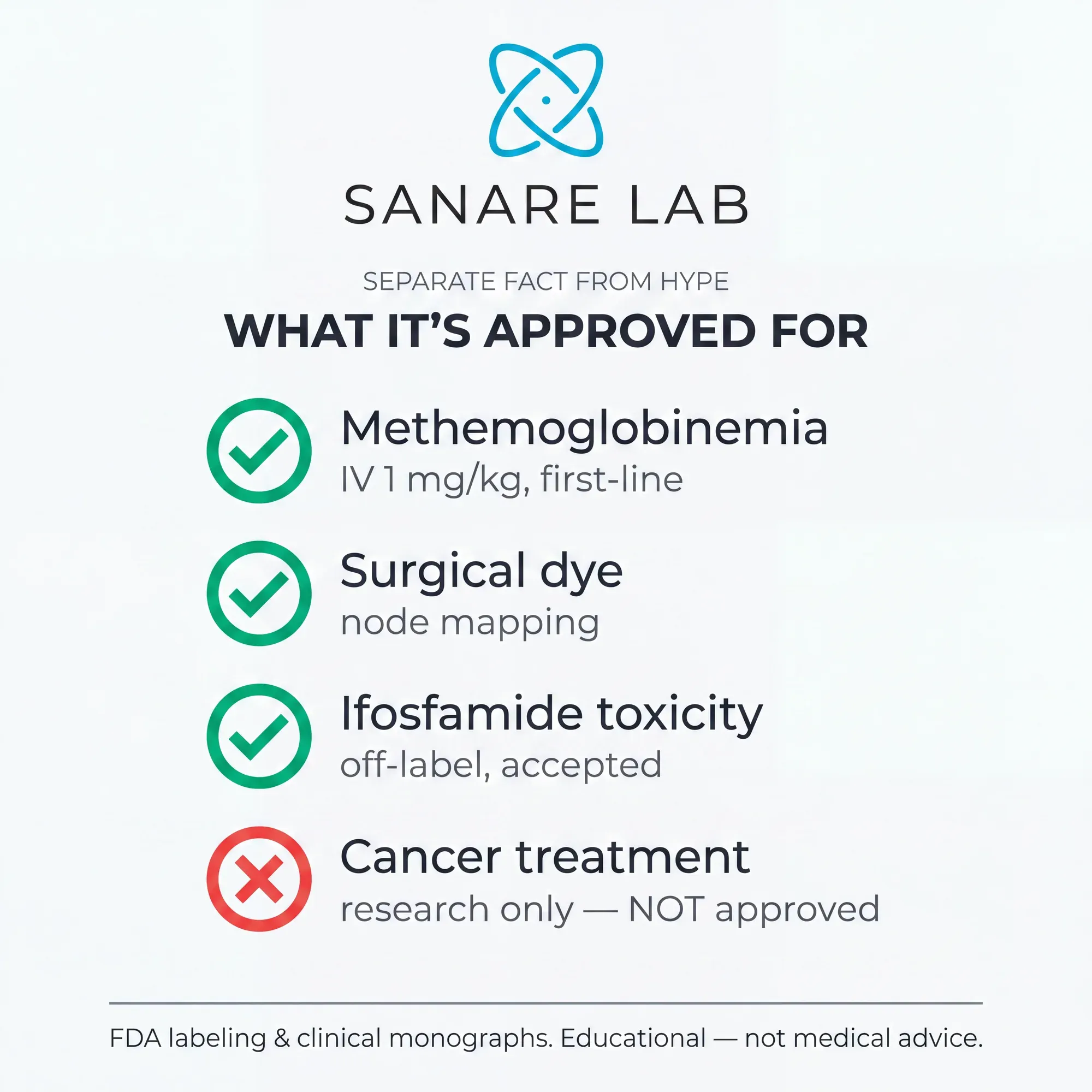
Primary FDA Indication: Acquired Methemoglobinemia
Acquired methemoglobinemia is a condition in which hemoglobin iron is oxidized to Fe³⁺, so blood cannot carry oxygen effectively. Patients may appear cyanotic (blue-gray skin) with low pulse-oximetry readings that do not improve with oxygen. Common triggers include certain local anesthetics (benzocaine, prilocaine), dapsone, nitrites, and some industrial chemicals.
Intravenous methylene blue is first-line therapy. The standard adult dose is 1 mg/kg IV over 5–30 minutes; a second dose may be given if methemoglobin remains elevated. Response is usually rapid (minutes to hours). Doses above ~7 mg/kg can paradoxically worsen methemoglobinemia because the drug shifts from a reducing to an oxidizing agent at high concentration.
Other Established Clinical Uses
- Surgical / diagnostic dye: sentinel lymph node mapping, parathyroid identification, fistula tract visualization
- Ifosfamide-induced encephalopathy: used off-label in oncology supportive care to reverse neurotoxicity from ifosfamide metabolites
- Vasoplegic syndrome: sometimes used in cardiac surgery for refractory vasodilation (specialist setting)
- Historical antimalarial: early 20th-century use; not a modern first-line antimalarial
| Use | Route | Typical setting | Status |
|---|---|---|---|
| Acquired methemoglobinemia | IV 1–2 mg/kg | Emergency / hospital | FDA-approved |
| Surgical tissue staining | Local / IV low dose | Operating room | Established practice |
| Ifosfamide encephalopathy | IV | Oncology ward | Off-label, accepted |
| Vasoplegic syndrome | IV | Cardiac ICU | Off-label, specialist |
| Cancer treatment | — | Research only | Not approved |
None of these approved or established uses means methylene blue is a proven cancer therapy. Cancer applications remain investigational — see the cancer research companion article.
Dosage Guide for Different Purposes
Dosing depends entirely on the indication. There is no single “standard daily dose” for wellness or cancer. The numbers below are drawn from FDA labeling, clinical monographs, and published research contexts — they are not self-treatment instructions.
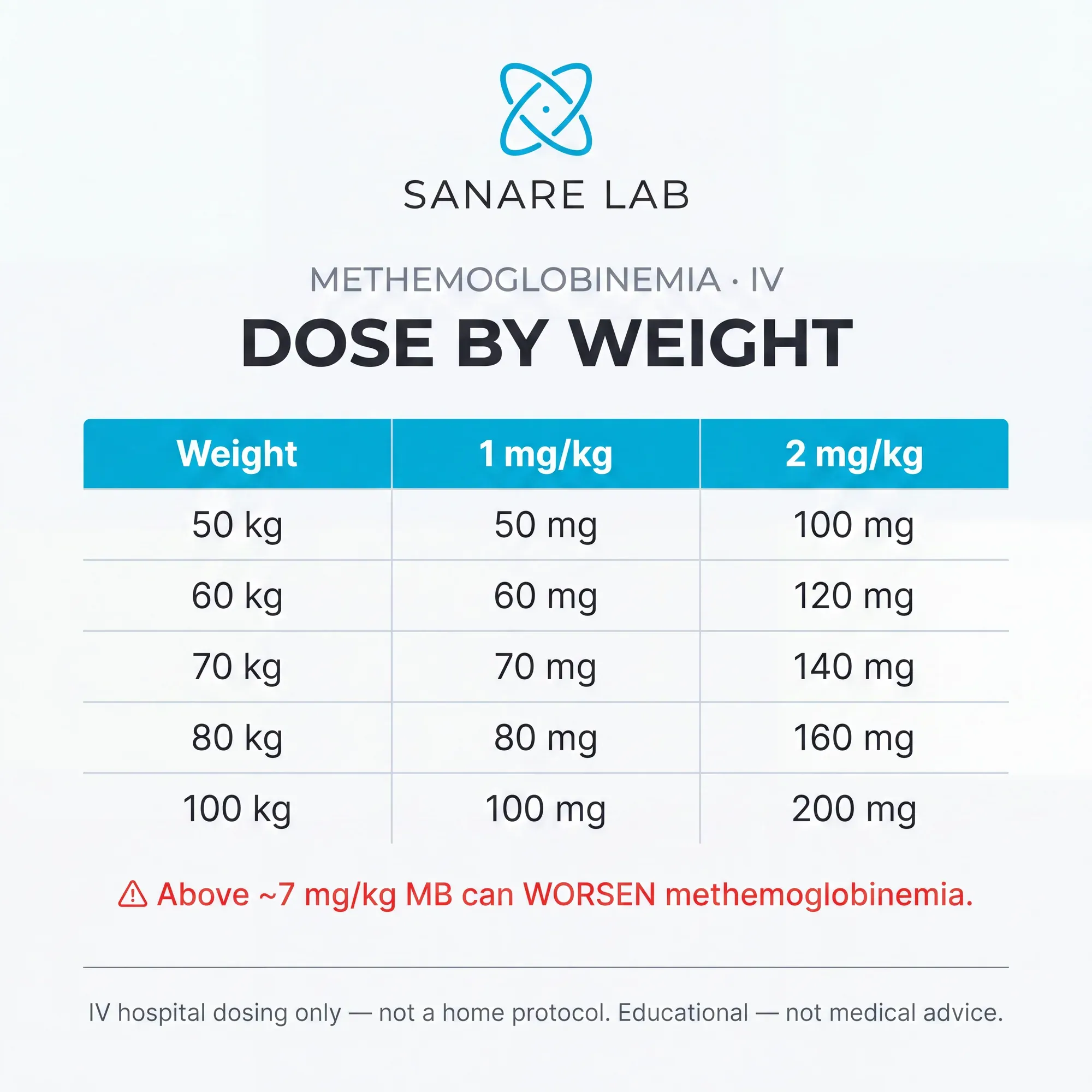
FDA-Approved Therapeutic Dosing (Methemoglobinemia)
| Patient | Dose | Route | Notes |
|---|---|---|---|
| Adults | 1 mg/kg | IV over 5–30 min | May repeat once if needed |
| Children | 1 mg/kg | IV | Same weight-based approach |
| Maximum single dose context | Avoid >7 mg/kg | IV | Paradoxical methemoglobinemia risk |
| Repeat dosing | As clinically indicated | IV | Monitor methemoglobin levels |
Weight-Based Reference Table (IV Methemoglobinemia Context)
| Body weight | 1 mg/kg dose | 2 mg/kg dose |
|---|---|---|
| 50 kg (110 lb) | 50 mg | 100 mg |
| 60 kg (132 lb) | 60 mg | 120 mg |
| 70 kg (154 lb) | 70 mg | 140 mg |
| 80 kg (176 lb) | 80 mg | 160 mg |
| 90 kg (198 lb) | 90 mg | 180 mg |
| 100 kg (220 lb) | 100 mg | 200 mg |
Oral / Research-Context Dosing (Not FDA-Approved for These Uses)
Published research and clinical anecdotes sometimes describe oral methylene blue in low milligram ranges for cognitive, mitochondrial, or experimental metabolic protocols. These are not validated cancer doses and vary widely:
| Context (research / historical) | Reported range | Frequency | Evidence quality |
|---|---|---|---|
| Low-dose oral research (cognitive / mitochondrial) | 0.5–4 mg/kg oral (study-dependent) | Single or short courses | Heterogeneous human data |
| Very low oral wellness anecdotes | 5–15 mg/day oral | Daily (anecdotal) | Not clinical standard |
| Ifosfamide encephalopathy (hospital) | Often 50 mg IV q4–6h × 3–6 doses | Short course | Off-label oncology practice |
| Cancer metabolic protocols | No validated regimen | — | Preclinical only |
| MB photodynamic therapy | Local / topical + light | Procedural | Preclinical / early clinical |
Key practical points:
- Therapeutic window is narrow at high doses. More is not better — high doses increase hemolysis and paradoxical methemoglobinemia risk.
- Oral bioavailability differs from IV; do not convert IV hospital doses into home oral regimens without a clinician.
- Frequency: approved methemoglobinemia use is acute, not chronic daily therapy. Chronic daily use is not an FDA-labeled regimen.
- For cancer-related research dosing hypotheses, see Methylene Blue and Cancer — not this patient guide.
How to Take Methylene Blue Safely
Before the First Dose — Mandatory Checks
- G6PD screening if you are in a higher-risk ancestry group or have unexplained hemolysis history (see G6PD section)
- Full medication review — especially antidepressants, opioids, cough medicines, and other serotonergic drugs
- Confirm product grade — USP / pharmaceutical only
- Pregnancy / breastfeeding status — generally avoid unless life-saving indication under specialist care
With or Without Food
- Hospital IV dosing is independent of meals.
- Oral liquid or capsules: many clinicians advise taking with water; some patients tolerate better with a light snack if nausea occurs.
- Avoid alcohol on dosing days — both can affect CNS and hydration status.
What to Avoid
- SSRIs, SNRIs, MAOIs, many TCAs, tramadol, meperidine, fentanyl, dextromethorphan — serotonin syndrome risk (see interactions)
- High-dose vitamin C concurrent with experimental PDT contexts — may alter redox chemistry (discuss with clinician)
- Aquarium / industrial dye products — not for human use
- Self-escalating doses — blue urine is not a “more is working” signal
Storage
- Store pharmaceutical product as labeled — typically room temperature, protected from light
- Keep tightly closed; liquid formulations can stain permanently
- Keep out of reach of children and pets
- Do not use past expiration; do not use if solution is cloudy or contaminated
What to Expect After a Dose
- Blue or blue-green urine and stool — common and usually harmless
- Possible temporary blue tint to skin or sclera at higher doses
- Possible headache, dizziness, or nausea
- Pulse oximeters may read falsely low while the dye is circulating — clinicians use arterial blood gas when accuracy matters
Side Effects & Safety Profile
Methylene blue has a long clinical track record, but “old drug” does not mean “risk-free.” Side effects range from cosmetic (blue urine) to life-threatening (hemolysis in G6PD deficiency, serotonin syndrome with serotonergic drugs).
Common Side Effects
| Side effect | How common | Severity | What to do |
|---|---|---|---|
| Blue/green urine or stool | Very common | Benign | Expected; hydrates; resolves after clearance |
| Blue skin / mucous membranes | Common at higher doses | Usually mild | Resolves; warn clinicians before procedures |
| Nausea, vomiting, diarrhea | Common | Mild–moderate | Supportive care; dose review |
| Headache, dizziness | Common | Mild–moderate | Rest; avoid driving if impaired |
| Sweating, altered taste | Occasional | Mild | Usually self-limited |
| Injection-site pain (IV) | Occasional | Mild | Slow infusion rate if appropriate |
Serious Side Effects — Seek Care Immediately
- Serotonin syndrome: agitation, confusion, high fever, rigid muscles, tremor, rapid heart rate, sweating, seizures
- Hemolytic anemia (especially G6PD): dark urine, jaundice, severe fatigue, shortness of breath, rapid drop in hemoglobin
- Paradoxical methemoglobinemia at very high doses: worsening cyanosis, hypoxia
- Severe allergic reaction: swelling, hives, breathing difficulty, anaphylaxis
- Confusion, visual changes, or seizure-like activity at high doses
| Population | Concern | Practical guidance |
|---|---|---|
| Pregnancy | Fetal risk reports (e.g., intestinal atresia with intra-amniotic use) | Avoid unless life-saving and specialist-directed |
| Breastfeeding | May pass into milk; infant exposure unknown | Generally avoid; pump-and-dump guidance from clinician |
| Infants / children | Weight-based hospital dosing only | No home self-treatment |
| Renal impairment | Altered clearance possible | Clinician dose adjustment / monitoring |
| Hepatic impairment | Limited data | Use caution; specialist input |
| Elderly | Polypharmacy → interaction risk | Medication reconciliation essential |
Drug Interactions — Especially MAOIs & SSRIs
Methylene blue is a potent, reversible monoamine oxidase A (MAO-A) inhibitor. That is why combining it with serotonergic medications can cause serotonin syndrome — a medical emergency. The FDA label for injectable methylene blue carries a boxed warning on this interaction.
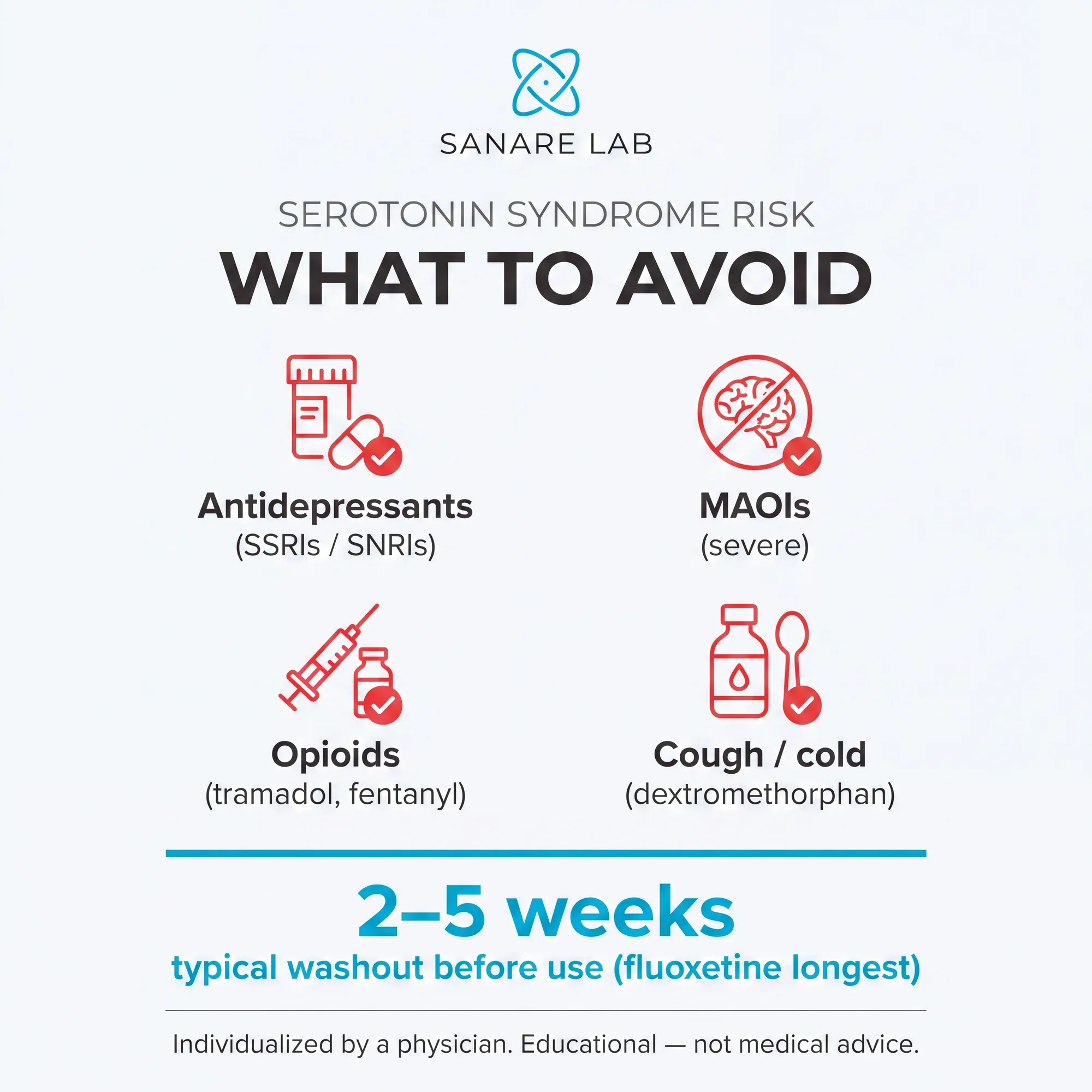
High-Risk Serotonergic Combinations
| Drug class | Examples | Risk | Typical washout note* |
|---|---|---|---|
| SSRIs | Sertraline, fluoxetine, escitalopram, paroxetine | Serotonin syndrome | Often ≥2 weeks; fluoxetine up to ~5 weeks |
| SNRIs | Venlafaxine, duloxetine, desvenlafaxine | Serotonin syndrome | Often ≥2 weeks |
| MAOIs | Phenelzine, tranylcypromine, selegiline | Severe interaction | Specialist only; extended washout |
| TCAs (selected) | Clomipramine, imipramine, amitriptyline | Serotonin syndrome | Clinician-directed |
| Opioids (selected) | Tramadol, meperidine, fentanyl, methadone | Serotonin syndrome | Avoid combination |
| Other | Dextromethorphan, linezolid | Serotonin toxicity | Review all OTC cough meds |
*Washout periods are clinical heuristics from labeling and toxicology guidance — exact timing must be individualized by a physician. Emergency life-saving MB use may proceed with intensive monitoring even if serotonergic drugs cannot be fully washed out.
Serotonin Syndrome — What It Looks Like
- Mental status: agitation, confusion, hallucinations, coma
- Autonomic: fever, sweating, fast or unstable blood pressure, fast heart rate
- Neuromuscular: tremor, clonus, hyperreflexia, rigidity, myoclonus
- GI: nausea, vomiting, diarrhea
If these appear after methylene blue, seek emergency care. Treatment is supportive; stop serotonergic agents and methylene blue; hospital monitoring is required.
Other Clinically Relevant Interactions & Interferences
| Agent / situation | Issue | Management |
|---|---|---|
| Pulse oximetry | Falsely low SpO₂ readings | Use arterial blood gas when critical |
| Urine dipstick tests | Color interference | Inform lab; interpret cautiously |
| BIS anesthesia monitors | Possible interference | Anesthesia team awareness |
| Dapsone / oxidant drugs | Methemoglobin context | Specialist management |
| High-dose oxidants | Redox imbalance | Avoid unsupervised stacking |
Contraindications & Warnings
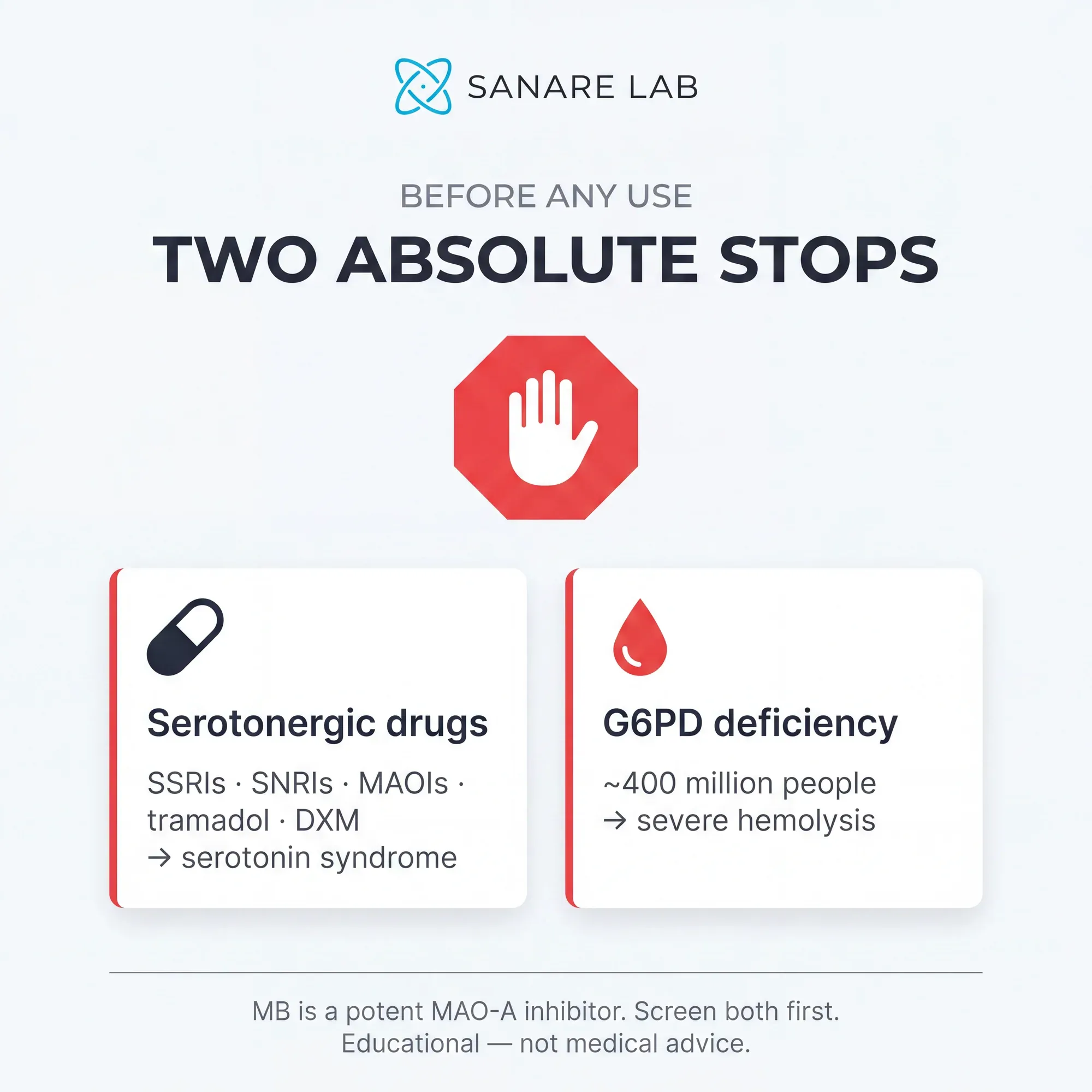
| Condition | Type | Reason |
|---|---|---|
| G6PD deficiency | ABSOLUTE | Severe hemolytic anemia risk |
| Known severe hypersensitivity to MB / thiazine dyes | ABSOLUTE | Anaphylaxis risk |
| Concurrent serotonergic drugs (non-emergency) | Strong relative / often absolute in practice | Serotonin syndrome |
| Pregnancy (non-life-saving use) | Strong relative | Fetal harm reports |
| Breastfeeding (non-essential use) | Relative | Infant exposure concern |
| Severe renal failure without monitoring | Relative | Clearance / complication risk |
Before elective or investigational use, a practical pre-check list:
- G6PD status known or screened
- Full medication + supplement list reviewed
- Pregnancy test if applicable
- Baseline CBC if hemolysis risk factors present
- Clear emergency plan if serotonin or hemolysis symptoms appear
G6PD Deficiency — Absolute Contraindication
Glucose-6-phosphate dehydrogenase (G6PD) deficiency is the most important genetic stop condition for methylene blue. More than 400 million people worldwide carry G6PD variants. It is X-linked, so males are more often clinically affected; females can still be symptomatic depending on lyonization.
Why Methylene Blue Is Dangerous in G6PD Deficiency
Normally, methylene blue is reduced by NADPH (generated via the G6PD pathway) to leucomethylene blue, which then helps reduce methemoglobin. In G6PD deficiency, NADPH is insufficient. Oxidized methylene blue and oxidative stress damage red blood cell membranes and hemoglobin → acute hemolysis, sometimes with paradoxical methemoglobinemia.
Who Should Be Screened
- People of African, Mediterranean, Middle Eastern, or Southeast Asian ancestry (higher prevalence)
- Anyone with prior unexplained hemolysis after drugs, infection, or fava beans
- Family history of G6PD deficiency
- Anyone considering non-emergency methylene blue
Symptoms of MB-Triggered Hemolysis
- Onset: hours to 2–3 days after exposure
- Dark urine (hemoglobinuria), jaundice, pallor, severe fatigue, shortness of breath
- Lab pattern: falling hemoglobin, high LDH, high indirect bilirubin, low haptoglobin, Heinz bodies; Coombs usually negative
Off-Label Use Discussion (Brief)
Beyond methemoglobinemia and surgical staining, methylene blue appears in research on:
- Mitochondrial function and cellular redox balance
- Neuroprotection and cognitive research
- Photodynamic therapy (light-activated) in experimental oncology
- Metabolic effects relevant to cancer cell energetics (preclinical)
Bottom line for patients: interesting science ≠ approved treatment. There is no FDA-approved methylene blue cancer protocol. Do not replace surgery, chemotherapy, immunotherapy, or radiation with methylene blue.
Where to Get Methylene Blue (USP vs Other Grades)
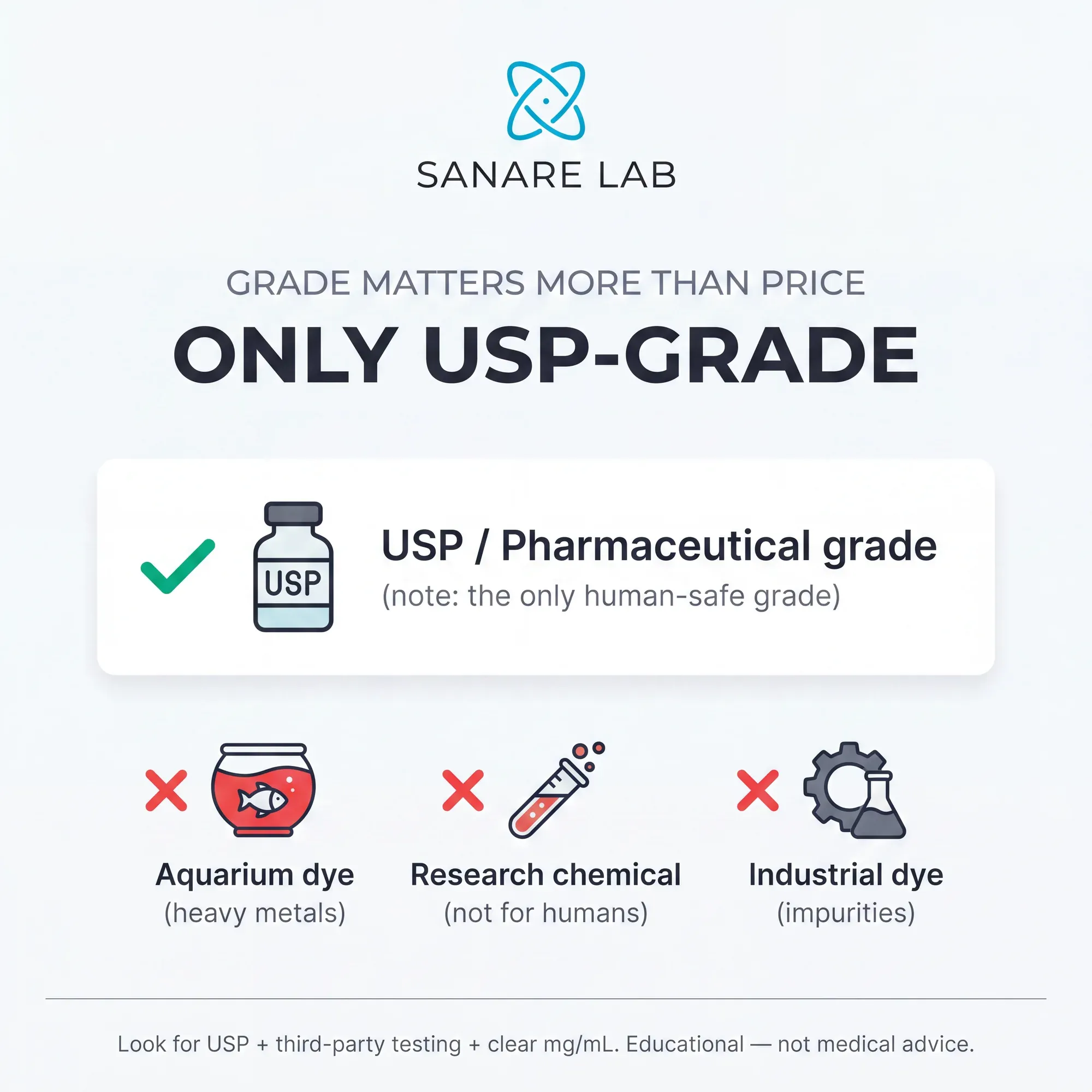
| Grade | Intended use | Safe for humans? | Notes |
|---|---|---|---|
| USP / pharmaceutical (e.g., ProvayBlue®, pharmacy compound) | Medical | Yes (with prescription / clinical oversight) | Preferred |
| Research chemical labeled not for human use | Lab only | No | Purity / contaminants unknown |
| Aquarium / fish tank dye | Aquaria | No | Heavy metals / industrial impurities |
| Industrial textile dye | Industry | No | Not medical grade |
Practical quality checklist:
- Look for USP or equivalent pharmacopeial standard on the label
- Prefer vendors with third-party testing (identity, purity, heavy metals)
- Avoid products that do not disclose concentration clearly (mg/mL or mg/capsule)
- Prescription hospital product is the reference standard for IV use
For related product quality discussions in the repurposed-drug space, see also fenbendazole dosage safety and ivermectin for humans.
Cost & Availability
- Hospital IV methylene blue: billed as part of emergency / inpatient care; patient cost depends on insurance and facility
- Pharmacy / specialty oral or liquid products: prices vary widely by brand, concentration, and testing documentation
- Insurance: typically covers FDA-indicated methemoglobinemia treatment; rarely covers experimental wellness or cancer-related self-use
- Availability: prescription injectable is pharmacy/hospital controlled; consumer “wellness” products exist but quality is uneven — grade matters more than price
Cheapest is not safest. Contaminated industrial dye can cost far more in medical harm than a verified pharmaceutical product.
Practical Monitoring Checklist
If a clinician has prescribed or supervised methylene blue for an approved or carefully considered off-label indication, structured monitoring reduces preventable harm. This checklist is educational — your care team sets the actual plan.
Before Starting
- Document indication and expected duration (acute vs short course vs investigational)
- Complete medication reconciliation including OTC cough syrups and herbal products
- Confirm G6PD status when risk factors are present or use is non-emergent
- Baseline vital signs; consider baseline CBC if hemolysis risk is non-trivial
- Patient education: blue urine is expected; serotonin and hemolysis warning signs are not
During Use
- Watch mental status, temperature, muscle tone, and heart rate after doses when serotonergic risk exists
- For IV hospital use: methemoglobin levels, oxygenation (preferably ABG when SpO₂ unreliable), blood pressure
- For any prolonged course: periodic CBC if clinically indicated; symptom diary for dark urine, jaundice, severe fatigue
- Re-check the medication list whenever a new prescription is added
After Stopping
- Know washout expectations before restarting SSRIs/SNRIs (clinician-directed; fluoxetine is special-case long)
- Report delayed dark urine or jaundice within several days of the last dose
- Inform future anesthesiology teams about recent exposure
Forms, Measuring, and Home-Use Pitfalls
Patients encounter methylene blue as hospital IV ampoules, compounded capsules, and liquid drops. Measuring errors are a common real-world problem with liquids.
| Form | Typical setting | Measuring tip | Common pitfall |
|---|---|---|---|
| IV ampoule / vial | Hospital | Weight-based mg/kg by pharmacy/nurse | Home conversion of IV doses to oral |
| Oral capsule | Clinic / specialty | Fixed mg per capsule — do not open unless instructed | Assuming all brands are equal purity |
| Liquid drops | Consumer / specialty | Use the supplied dropper; confirm mg per drop/mL on label | Counting drops without knowing concentration |
| Powder (research) | Lab only | Not for self-measurement | Weighing industrial powder at home |
Staining and Household Reality
- Methylene blue permanently stains fabric, counters, and some plastics
- Use gloves when handling concentrated liquids; clean spills promptly
- Blue tongue or teeth discoloration can occur with oral liquids — temporary but alarming if unexpected
- Keep separate from children’s vitamins or pet medications to avoid mix-ups
Travel and Procedures
- Carry a medication card if you recently received hospital MB
- Before endoscopy, surgery, or dental anesthesia, disclose MB and all serotonergic drugs
- Pulse oximetry at urgent care may look falsely low — tell staff about recent MB so they do not over-treat hypoxia incorrectly
 Also available on Amazon

Blue Essence — USP Grade Methylene Blue with Vitamin C & Organic Cocoa | 60 Capsules
Common Patient Scenarios (What To Do)
Scenario 1: “I take sertraline and saw methylene blue online for energy.”
Do not start. SSRI + methylene blue is a classic serotonin syndrome risk pairing. Discuss any interest with the prescribing clinician; most will advise against unsupervised combination.
Scenario 2: “My urine turned blue after a hospital procedure.”
If MB was used as a dye or for methemoglobinemia, blue urine is expected. Seek care if you also have fever, agitation, muscle rigidity, dark cola-colored urine with weakness, or breathing trouble.
Scenario 3: “I have Mediterranean ancestry and want to try oral MB.”
Ask about G6PD screening first. Do not self-experiment while status is unknown.
Scenario 4: “Can I use fish-tank methylene blue because it is cheaper?”
No. Industrial and aquarium products are not controlled for human toxic impurities. Price savings are not worth hemolysis or heavy-metal risk.
Scenario 5: “I have cancer and want to add MB to chemotherapy.”
Coordinate with oncology before any addition. MB is not an approved anticancer drug; interaction and timing issues matter. Read the science in our cancer research article, then make decisions only with your oncology team.
| Scenario | Priority action | Why |
|---|---|---|
| On SSRI/SNRI/MAOI | Do not self-start MB | Serotonin syndrome risk |
| Unknown G6PD + elective use | Screen first | Hemolysis risk |
| Aquarium product | Discard plan; use USP only | Contamination |
| Cancer interest | Oncology discussion + evidence review | Not approved therapy |
| Post-dose severe symptoms | Emergency care | Possible crisis reaction |
Product Quality Red Flags
Because consumer methylene blue markets are uneven, use a skeptical quality filter:
- No concentration on the label (mg/mL or mg/capsule missing)
- “For aquarium use only” / “not for human consumption”
- No lot number, no manufacturer address, no testing summary
- Miracle cancer cure marketing — scientific red flag and regulatory red flag
- Extremely low price with medical claims — often correlates with poor quality control
- Unclear whether the salt form and purity match USP expectations
Prefer transparent vendors, pharmacopeial grade, and clinician-guided sourcing. Sanare Lab product links are convenience references, not a substitute for medical supervision — see Shop Sanare Lab.
How to Talk to Your Doctor About Methylene Blue
Bring specific questions rather than vague interest. A productive visit often covers:
- What indication are we actually treating?
- Is my G6PD status known?
- Which of my medicines are serotonergic?
- What monitoring will we use?
- What symptoms mean stop-and-go-to-ER?
- How does this interact with my cancer or chronic disease plan?
If your clinician is unfamiliar with the MAOI properties of methylene blue, the FDA label boxed warning on serotonin syndrome is the authoritative starting point — not social media protocols.
Frequent Dosing Mistakes to Avoid
Real-world harm often comes from process errors rather than exotic pharmacology. The patterns below appear repeatedly in clinical toxicology and patient forums:
| Mistake | Why it is dangerous | Safer alternative |
|---|---|---|
| Copying someone else’s mg dose without weight/indication | Ignores mg/kg logic and indication differences | Clinician-calculated, indication-specific plan |
| Stacking MB with a new antidepressant the same week | Serotonin syndrome risk window | Full med review + washout plan |
| Using aquarium dye “because chemistry name matches” | Impurities / wrong grade | USP/pharmaceutical only |
| Chasing deeper blue urine as a success metric | Color ≠ efficacy; may encourage overdosing | Track symptoms and clinician labs |
| Converting a hospital IV mg/kg dose into daily oral drops | Route and context are not interchangeable | Do not convert without specialist guidance |
| Starting MB during active chemotherapy without oncology input | Unknown interactions; care fragmentation | Oncology-coordinated decisions only |
If you already made one of these mistakes and feel unwell — especially with fever, agitation, rigidity, dark urine, or trouble breathing — seek emergency care and bring the product bottle if possible.
Notes for Caregivers
Family members often manage medications for patients with cancer, cognitive impairment, or complex polypharmacy. Caregiver-specific points:
- Keep a single shared medication list (prescription + OTC + supplements) updated weekly
- Do not add “natural” cough syrups containing dextromethorphan while MB is in use
- Photograph labels of any MB product used in hospital discharge papers
- Know the two emergency scripts: “possible serotonin syndrome” and “possible hemolysis after methylene blue”
- Blue-stained clothing or bedding is messy, not necessarily an overdose by itself
- If the patient cannot reliably report symptoms, lower the threshold for clinical evaluation after any new dose
Myths vs Facts (Patient Edition)
| Myth | Fact |
|---|---|
| “Blue urine means it is working against disease.” | Blue urine means dye is being excreted. It is not a cancer or wellness efficacy biomarker. |
| “If hospitals use it, daily home use must be safe.” | Hospital use is usually acute, weight-based, monitored, and indication-specific. |
| “Natural-looking online protocols are low risk.” | MB is a potent MAO-A inhibitor with boxed-warning interaction potential. |
| “G6PD only matters for malaria drugs.” | G6PD deficiency is a major stop condition specifically for methylene blue. |
| “Aquarium MB is the same molecule so it is fine.” | Same colorant class ≠ pharmaceutical quality, purity, or legal human use. |
| “More milligrams heal faster.” | High doses raise hemolysis and paradoxical methemoglobinemia risk. |
Printable Emergency Information Card (Text)
Copy this block into a note on your phone if a clinician has approved supervised methylene blue use:
Medication: Methylene blue (methylthioninium chloride)
Key properties: MAO-A inhibitor; can cause serotonin syndrome with SSRIs/SNRIs/MAOIs/tramadol/DXM; contraindicated in G6PD deficiency (hemolysis).
Expected: Blue/green urine or stool.
Emergency symptoms: Agitation, high fever, rigid muscles, seizures; OR dark urine + jaundice + severe weakness; OR anaphylaxis signs.
Tell ER: "Patient took methylene blue; consider serotonin toxicity and hemolysis; SpO2 may be falsely low."
This card does not replace medical care. It exists to speed communication under stress.
After Hospital Exposure — What Patients Ask
Many people first meet methylene blue during surgery or emergency methemoglobinemia treatment, then later see wellness marketing online. Distinguishing those contexts prevents false confidence:
- A single monitored IV dose in hospital is not permission for indefinite home experiments
- Surgical dye doses are chosen for visibility, not chronic metabolic goals
- If you were given MB while on an antidepressant, ask the team what monitoring was done and whether any washout advice applies afterward
- Request the medication name on your after-visit summary so future clinicians know exact exposure
For research curiosity about cancer mechanisms after a hospital exposure, use the scientific companion article — not as a self-treatment manual.
Access, Prescriptions, and Practical Logistics
Access pathways differ sharply by country and indication:
- Emergency methemoglobinemia: hospital formulary product; patients do not self-procure IV ampoules
- Compounded oral products: may require a prescription depending on jurisdiction; quality varies by compounding pharmacy standards
- Consumer wellness liquids: easiest to buy, hardest to verify — apply the USP/quality checklist strictly
- Cross-border purchases: legal and customs rules vary; legality does not equal pharmaceutical quality
If cost is the barrier to a clinician-supervised plan, ask about pharmacy options and legitimate patient-assistance pathways rather than defaulting to industrial dye substitutes. Related quality discussions for other agents appear in our fenbendazole safety guide and ivermectin for humans articles.
When to Call Your Doctor
Call emergency services (or go to ER) if you have:
- Agitation, high fever, muscle rigidity, seizures (possible serotonin syndrome)
- Dark urine, yellow skin/eyes, severe weakness after a dose (possible hemolysis)
- Trouble breathing, facial swelling, widespread hives (allergic emergency)
- Chest pain, fainting, severe confusion
Contact your clinician promptly if:
- You started a new antidepressant, pain medicine, or cough syrup while using methylene blue
- You discover a family history of G6PD deficiency
- You become pregnant or plan pregnancy
- Side effects persist beyond expected blue discoloration
- You are considering methylene blue alongside cancer treatment — coordinate with oncology first
You can map out a weight-based schedule using our dosage calculator.
Frequently Asked Questions
Is methylene blue safe for humans?
Pharmaceutical-grade methylene blue has a long hospital safety record for approved uses, but it is not risk-free. G6PD deficiency and serotonergic drug interactions are the main life-threatening concerns.
Why is my urine blue after taking it?
Methylene blue is a dye. Blue or blue-green urine and stool are expected and usually harmless. They resolve as the compound is cleared.
Can I take methylene blue with my antidepressant?
Usually no. Combining methylene blue with SSRIs, SNRIs, MAOIs, and several other serotonergic drugs can cause serotonin syndrome. Always ask your prescriber before any combination.
What is G6PD and why does it matter?
G6PD is an enzyme that helps red blood cells handle oxidative stress. If you lack it, methylene blue can destroy red blood cells (hemolysis). Screening is essential before non-emergency use.
Is aquarium methylene blue the same as medical methylene blue?
No. Aquarium products are not manufactured or tested for human use and may contain toxic impurities. Only USP/pharmaceutical grade is appropriate.
What is the normal dose for methemoglobinemia?
The usual adult IV dose is 1 mg/kg, sometimes repeated once, given in a medical setting with monitoring. This is not a home protocol.
Can methylene blue cure cancer?
No. It is not FDA-approved for cancer. Research is mostly preclinical. See our scientific companion article for mechanisms and evidence limits: Methylene Blue and Cancer.
How long does methylene blue stay in the body?
Clearance varies by dose and route. Blue discoloration may last hours to a couple of days. Your clinician interprets timing in clinical context.
Can I take it every day for energy or brain health?
Chronic daily self-dosing is not an FDA-approved regimen. Discuss any experimental use with a clinician who understands interactions and G6PD risk.
Does food affect absorption?
IV dosing is independent of food. Oral use tolerance varies; some people prefer a light snack if nauseated. Follow product-specific clinical advice.
Will it mess up my pulse oximeter?
Yes, it can make SpO₂ read falsely low. Hospitals use arterial blood gas when accurate oxygenation data is critical.
Is it safe in pregnancy?
Generally avoided. There are reports of fetal harm with certain exposures. Use only if a specialist judges benefit outweighs risk in a life-threatening situation.
Can children take methylene blue?
Only under medical supervision with weight-based hospital dosing for approved indications. Not for home experimentation.
What should I tell my surgeon or anesthesiologist?
Tell them about any recent methylene blue use, all antidepressants/pain meds, and G6PD status. It can affect monitors and interact with drugs used in anesthesia.
How do I know if I have serotonin syndrome?
Watch for agitation, fever, sweating, tremor, stiff muscles, rapid heart rate, and confusion after a dose — especially if you take serotonergic meds. This is an emergency.
Can I buy methylene blue over the counter?
Availability varies by country and product type. Medical injectable forms are prescription/hospital controlled. Consumer products exist but quality varies — grade matters.
Does blue skin mean overdose?
Mild blue discoloration can occur at therapeutic doses. Severe symptoms (breathing problems, confusion, hemolysis signs) matter more than color alone — seek care if severe.
Can I combine it with fenbendazole or ivermectin?
Combination “stacks” are experimental and not validated. Safety still requires G6PD and serotonin screens. See fenbendazole vs ivermectin and ISOM protocol for context — not as a DIY recipe.
What lab tests might my doctor order?
Depending on context: G6PD enzyme activity, CBC, methemoglobin level, comprehensive metabolic panel, and medication review. After suspected hemolysis, LDH, bilirubin, and haptoglobin are relevant.
When should I stop taking it?
Stop and get care for serotonin syndrome signs, hemolysis signs, allergic reaction, or any severe unexpected symptom. Also stop if your clinician advises washout before starting a serotonergic drug.
Shop Sanare Lab
Lab-tested products referenced in the research above. Links are provided for convenience — always review the label and consult a professional before use.
pharmaceutical-grade 10 mg liquid drops, 60 ml
180 capsules — 99% purity, laboratory tested
120 capsules — with Black Pepper for absorption
Disclaimer: Links are informational and for convenience. This site does not provide medical advice and does not endorse any specific vendor. Always verify product quality, labeling, and consult a licensed professional for health decisions.
References
- FDA. ProvayBlue (methylene blue) prescribing information / labeling updates. accessdata.fda.gov
- Drugs.com. Methylene Blue Monograph. https://www.drugs.com/monograph/methylene-blue.html
- StatPearls. Methylene Blue. NCBI Bookshelf NBK557593.
- APSF. Methylene Blue and the Risk of Serotonin Toxicity.
- DailyMed. Methylene blue drug labels (multiple setids).
- PubMed literature on G6PD deficiency and drug-induced hemolysis.
- Clinical reviews of methemoglobinemia management (hospital protocols).
- Sanare Lab companion research article on experimental oncology applications (internal cross-link).
References emphasize regulatory labeling and safety monographs appropriate to a patient-facing dosage guide. Mechanistic oncology citations are concentrated in the companion cancer research article.
Medical Disclaimer
This article is for educational and informational purposes only. It is not intended to be a substitute for professional medical advice, diagnosis, or treatment. Always seek the advice of your physician or other qualified health provider with any questions you may have regarding a medical condition. Never disregard professional medical advice or delay in seeking it because of something you have read on this website.

Dr. Andrew Ellison, MD
Science editor and health researcher at Sanare Lab, covering evidence-based wellness, emerging compound research, clinical studies, and practical health protocols. Content is educational and does not replace medical advice.