
Fenbendazole for Dogs: 95% Effective Dewormer Guide
Veterinary guide to fenbendazole as 95% effective dewormer for dogs. Safe dosing by weight, treatment schedules, and parasite coverage for canine health.
 By Dr. Andrew Ellison, MD · January 10, 2026 · 28 min read

This article is for research and informational purposes only. It does not constitute medical advice. Do not self-prescribe. Always consult a qualified healthcare provider before using any supplement, especially alongside cancer treatment.
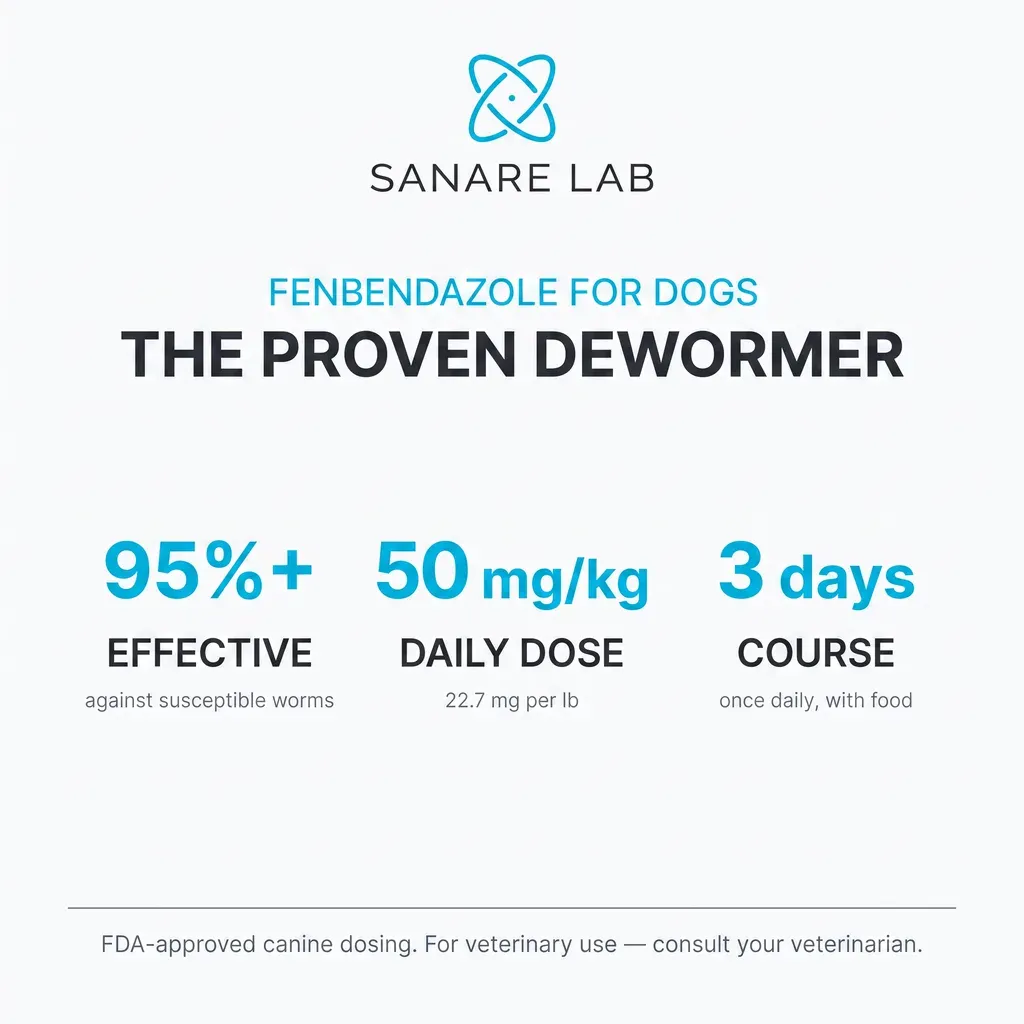
Fenbendazole is a broad-spectrum benzimidazole dewormer that has been an FDA-approved staple of canine parasite control for decades, most familiar to dog owners under the brand names Panacur and Safe-Guard. Given at the labeled dose of 50 mg per kilogram of body weight once daily for three consecutive days, it clears the great majority of the intestinal worms that infect dogs — roundworms, hookworms, whipworms, and certain tapeworms — with published field efficacy commonly exceeding 90–95% against susceptible parasites.
Key Takeaway
Fenbendazole (Panacur, Safe-Guard) is one of the safest and most widely used dewormers in veterinary medicine. The FDA-approved dose for dogs is 50 mg/kg (22.7 mg/lb) once daily for 3 consecutive days, effective against roundworms, hookworms, whipworms, and Taenia tapeworms; Giardia typically needs 5 days. It has a very wide safety margin and is approved for puppies over 6 weeks and pregnant dogs, but the FDA has warned against extra-label courses longer than 3 days without veterinary supervision because of rare bone-marrow suppression. Always confirm the diagnosis with a fecal test and re-check afterward.
Table of Contents
- What Is Fenbendazole?
- How Does Fenbendazole Work?
- How Fenbendazole Moves Through a Dog’s Body
- Is Fenbendazole FDA-Approved for Dogs?
- Which Parasites Does Fenbendazole Treat in Dogs?
- A Brief History of Fenbendazole in Veterinary Medicine
- Signs Your Dog May Have Worms
- Diagnosis: Why a Fecal Test Comes First
- Fenbendazole Dosage for Dogs by Weight
- Fenbendazole Treatment Schedules for Dogs
- How to Give Fenbendazole to Your Dog
- Is Fenbendazole Safe for Dogs?
- Side Effects of Fenbendazole in Dogs
- Drug Interactions
- Fenbendazole for Puppies and Pregnant Dogs
- Panacur vs. Generic Fenbendazole
- Fenbendazole vs. Other Common Dog Dewormers
- Fenbendazole and the MDR1 Gene
- Treating Lungworm in Dogs
- A Closer Look at Giardia in Dogs
- Deworming Protocols for Breeders
- What to Expect After Deworming
- Preventing Reinfection: Environmental Control
- Where Fenbendazole Fits in a Year-Round Plan
- Can Parasites Become Resistant to Fenbendazole?
- Storage and Handling Tips
- Fenbendazole in Dogs vs. Humans
- Frequently Asked Questions
- References
What Is Fenbendazole?
Fenbendazole is a member of the benzimidazole class of anthelmintic (anti-worm) drugs, first introduced for veterinary use in the mid-1970s. In dogs, it is sold most commonly as Panacur C and Safe-Guard, both of which contain fenbendazole as the sole active ingredient, usually formulated as 22.2% granules that are mixed into food. It is a “broad-spectrum” dewormer, meaning a single drug covers several different worm species at once, which is why it has remained a first-choice product for veterinarians and breeders for more than four decades.
The same molecule is used across many species — dogs, cats, horses, cattle, sheep, goats, and reptiles — which is covered in more depth in our overview of fenbendazole’s uses in veterinary medicine. This particular guide focuses specifically on the canine context: what fenbendazole treats in dogs, exactly how to dose it by body weight, how safe it is, and how the veterinary product differs from the pharmaceutical-grade capsules people take. If you are researching human use, note that the Panacur C granule formulation carries formulation-related concerns for people that do not apply to dogs.
Brand names and formulations
Because “fenbendazole” is a generic drug name, it appears under several labels. The active ingredient is identical; the differences are in concentration, presentation, and which species the label is written for.
How Does Fenbendazole Work?
Fenbendazole kills parasites by binding to β-tubulin, a building-block protein inside the worm’s cells, and blocking it from assembling into microtubules. Without a working microtubule network the parasite can no longer transport nutrients or divide, so it starves and dies while your dog’s own cells are largely spared.
The drug’s selectivity is the reason it is so safe for mammals. Fenbendazole binds with high affinity to the β-tubulin of parasites at a site that overlaps the colchicine-binding domain. Parasitic β-tubulin has specific amino-acid residues (notably at positions 198 and 200) that give the drug a strong grip, whereas mammalian β-tubulin lacks these residues, so the dog’s own cells bind fenbendazole far more weakly. This difference produces a wide therapeutic index — a large gap between an effective dose and a toxic one.
Once microtubules collapse, several lethal events cascade inside the worm:
- Transport failure: Microtubules act as internal “tracks.” When they disintegrate, glucose-transporter proteins can no longer reach the parasite’s surface membrane, so the worm cannot absorb sugar from the gut.
- Energy depletion: Starved of glucose, the parasite burns through its glycogen reserves and then runs out of ATP, causing ion pumps to fail and the cell to swell and rupture.
- Mitotic arrest: Because the spindle is made of microtubules, dividing parasite cells become trapped and die.
- Enzyme inhibition: Fenbendazole may also impair fumarate reductase, a key enzyme in the worm’s anaerobic energy metabolism.
This is the same core mechanism — microtubule disruption — that has driven scientific interest in benzimidazoles beyond parasitology. For readers exploring that angle, we compare the class in fenbendazole vs. mebendazole and fenbendazole vs. ivermectin.
How Fenbendazole Moves Through a Dog's Body
Understanding a little about how fenbendazole is absorbed, processed, and eliminated helps explain two things owners often ask about: why the drug is given with food, and why it must be repeated for three days in a row rather than as a single big dose.
Absorption — why food matters
Fenbendazole is poorly water-soluble, so only a modest fraction of an oral dose is actually absorbed into the bloodstream — studies in dogs estimate systemic absorption at under 20%. The drug has to dissolve in the intestinal fluids before it can cross the gut lining, and a meal slows transit and stimulates bile flow, which helps the granules dissolve and be taken up. This is why the label and every veterinarian recommend mixing the dose into food. Much of the anthelmintic action, though, happens right where the worms live — inside the gut — so even the un-absorbed portion is doing useful work against intestinal parasites.
Metabolism and the active metabolite
Once absorbed, fenbendazole is processed mainly in the liver, where it is oxidised into oxfendazole (fenbendazole sulfoxide) and then to oxfendazole sulfone. Oxfendazole is itself an active dewormer, and there is a two-way interconversion between fenbendazole and oxfendazole that helps sustain anti-parasitic activity. This shared metabolism is also why products such as febantel — which the body converts into fenbendazole — appear in the comparison table earlier in this guide.
Half-life and elimination
The elimination half-life of fenbendazole in dogs is relatively short and somewhat variable, commonly reported in the range of roughly 3 to 15 hours depending on the study and formulation. More than 90% of a dose is cleared in the feces within about three days. Because blood levels do not persist for long, a single dose gives only a brief window of exposure — and susceptible worms (and their newly maturing stages) are killed more completely by repeating the dose daily for three days, which keeps the drug in contact with the parasites long enough to be lethal. This dissolution- and exposure-limited pharmacology, rather than any single "magic" blood level, is the practical reason the three-day course works so reliably.
Is Fenbendazole FDA-Approved for Dogs?
Yes. Fenbendazole is FDA-approved for use in dogs and has a long, well-documented regulatory history. It is approved to treat and control specific intestinal parasites when given at the labeled dose of 50 mg/kg once daily for three consecutive days. The approval applies to adult dogs and to puppies six weeks of age and older, and the drug is also considered safe for use in pregnant bitches.
The labeled canine indications cover the following parasites:
It is important to understand what “extra-label” means here. Veterinarians frequently and legitimately prescribe fenbendazole for Giardia, lungworm, and other parasites not on the printed label. That is legal and evidence-based when done under veterinary direction. However, the FDA has issued a specific caution about extending the duration of therapy — see the warning below.
Which Parasites Does Fenbendazole Treat in Dogs?
Fenbendazole’s broad spectrum is its biggest selling point. Field and label studies routinely report efficacy above 90% — and often 95–99% — against susceptible intestinal nematodes when the full three-day course is completed. The table below summarizes what it does and does not reliably clear.
Two practical takeaways: first, if a stool test shows the flea tapeworm Dipylidium, fenbendazole will not fix it — you need praziquantel and flea control. Second, whipworm eggs are extraordinarily hardy in the environment, so a single course rarely ends the problem; many vets schedule repeat treatments (see schedules below).
A Brief History of Fenbendazole in Veterinary Medicine
Fenbendazole was developed by Hoechst (later part of the animal-health companies that became Intervet/Merck Animal Health) and introduced for veterinary use in the mid-1970s. It quickly became a workhorse dewormer across companion animals and livestock because it combined three qualities that are hard to find together: a broad spectrum of activity, an exceptionally wide safety margin, and low cost. Decades of on-label use in dogs, cattle, horses, sheep, and goats have produced a deep body of pharmacokinetic and safety data, which is why regulators and veterinarians treat it as a well-characterized, dependable drug rather than an experimental one. Its long track record is precisely what later attracted attention to the benzimidazole class for other potential applications — but in dogs, its role has always been straightforward parasite control.
Signs Your Dog May Have Worms
Intestinal parasites are common, and many infected dogs show few outward signs until the worm burden is heavy. Watch for:
- Visible worms or worm segments in stool or around the anus
- Diarrhea, sometimes with blood or mucus
- Vomiting (occasionally with worms)
- A dull coat, weight loss despite normal appetite, or a pot-bellied appearance (especially in puppies)
- Scooting, anemia (pale gums), lethargy, or coughing (with certain larval migrations)
Because signs overlap with many other conditions, a laboratory fecal examination is the reliable way to confirm which parasite is present before choosing a dewormer.
Diagnosis: Why a Fecal Test Comes First
Because the outward signs of worms overlap with many other conditions — and because different parasites need different drugs — the single most useful step before deworming is a laboratory fecal examination. Treating "blind" risks using the wrong drug (fenbendazole will not clear a Dipylidium flea tapeworm, for example) or missing an infection entirely.
How veterinarians test for worms
The gold-standard method is centrifugal fecal flotation, which concentrates parasite eggs so they can be identified under the microscope. The Companion Animal Parasite Council (CAPC) specifically recommends centrifugal — not passive — flotation because passive methods miss too many infections. Two other tools are increasingly common: fecal antigen tests, which detect parasite proteins even when eggs are not yet being shed, and fecal PCR, which identifies parasite DNA. Antigen testing is especially valuable for whipworm and hookworm, which shed eggs erratically.
The whipworm diagnostic trap
Whipworm (Trichuris vulpis) is notorious for false-negative stool tests. It has a long prepatent period — roughly 74 to 90 days from ingestion until the adults start laying eggs — and it sheds eggs intermittently, so a single flotation can easily come back clear even in an infected dog. If a dog has signs consistent with whipworm (chronic large-bowel diarrhea, sometimes with fresh blood or mucus) but the flotation is negative, veterinarians often treat presumptively or use antigen ELISA to confirm.
How often to test
CAPC guidance is practical and worth following: puppies should have at least four fecal examinations in their first year, and healthy adult dogs at least twice a year, with more frequent testing for dogs that hunt, visit dog parks, travel, or have known exposure. A follow-up fecal test after any deworming course confirms the treatment actually worked — which matters most for whipworm and Giardia, the two infections most likely to persist or return.
Fenbendazole Dosage for Dogs by Weight
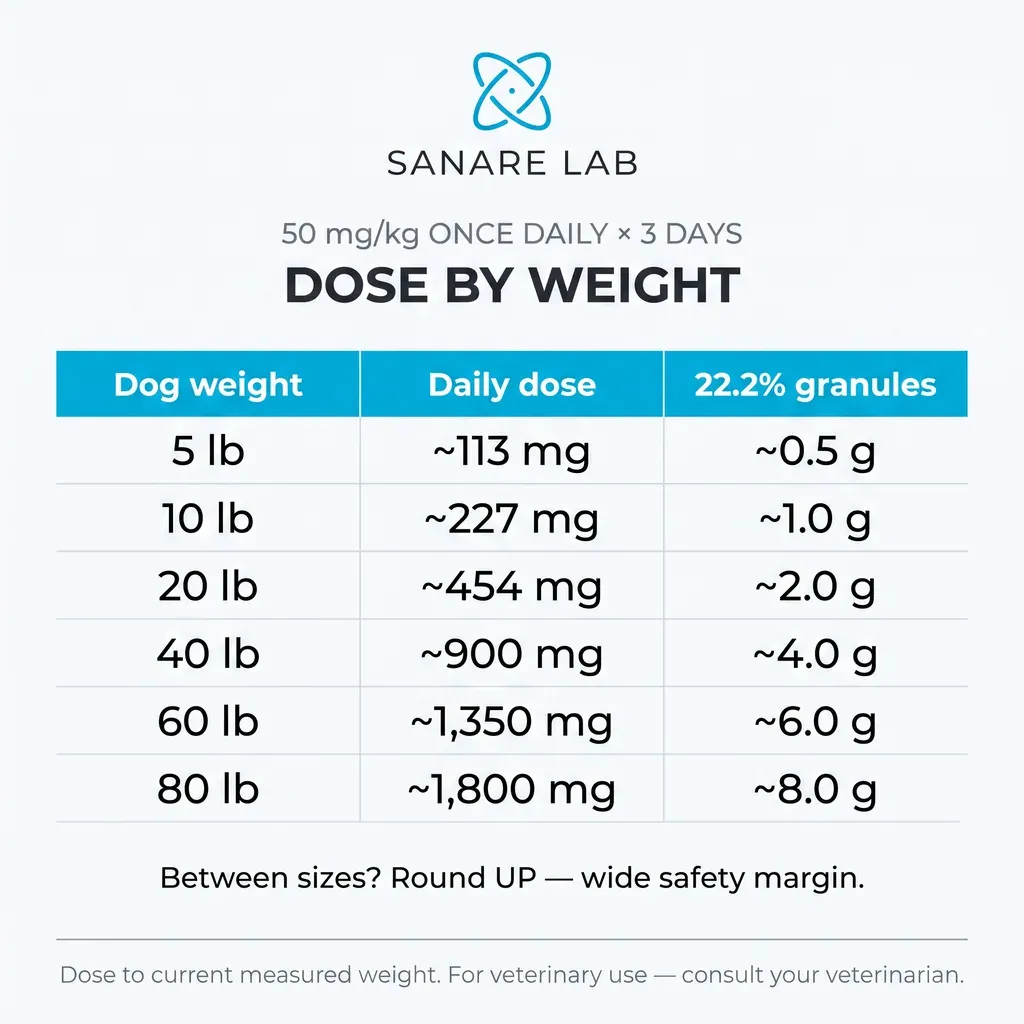
The standard fenbendazole dose for dogs is 50 milligrams per kilogram of body weight — about 22.7 mg per pound — given once a day for three days in a row. Always dose to your dog’s current, accurately measured weight rather than estimating.
The 22.2% (222 mg/g) granule is the most common canine product, and Panacur C is sold in pre-measured packets sized to weight bands. When a dog’s weight falls between two packet sizes, the general veterinary guidance is to round up to the next size — fenbendazole’s wide safety margin makes modest over-dosing low-risk, whereas under-dosing risks treatment failure and resistance. The table below shows approximate daily amounts; confirm exact dosing with your veterinarian.
Note this canine deworming dose (50 mg/kg for 3 days) is completely different from the low, long-term daily regimens discussed in human protocol articles such as our fenbendazole dosage guide and the Joe Tippens protocol. Do not cross-apply dog dosing to people or vice versa.
Fenbendazole Treatment Schedules for Dogs
The right schedule depends on which parasite you are targeting and the dog’s life stage.
Standard intestinal worms (roundworm, hookworm, whipworm, Taenia)
Give 50 mg/kg once daily for 3 consecutive days. This is the FDA-labeled course and clears most susceptible infections.
Giardia
Give 50 mg/kg once daily for 5 consecutive days. Because Giardia cysts survive in the environment, combine treatment with thorough cleanup: bathe the dog on the last day, wash bedding in hot water, and disinfect hard surfaces. Some cases require a repeat course.
Whipworm re-treatment
Whipworm (Trichuris vulpis) eggs can persist in soil for years. A common veterinary approach is a 3-day course repeated at intervals — for example at diagnosis, again at about 3 weeks, and again at roughly 3 months — to catch newly matured worms from re-ingested eggs.
Puppy deworming
Puppies are commonly dewormed on a schedule starting at 2 weeks of age with other products, but fenbendazole is labeled for use from 6 weeks of age. Because roundworms and hookworms can pass from the mother, breeders often deworm both dam and litter under veterinary guidance.
How to Give Fenbendazole to Your Dog
Fenbendazole is absorbed better and tolerated best when given with food. Practical tips:
- Mix the full daily dose of granules into a small portion of your dog’s favorite wet or moistened food, and make sure the whole portion is eaten so no dose is left behind.
- Give it at roughly the same time each day for three days in a row — do not skip days, as consistent exposure is what clears the worms.
- If your dog is a picky eater, warming the food slightly or using a strong-smelling topper (a spoon of canned food, plain cooked meat) can help.
- For multi-dog households, feed dogs separately so each animal gets its own correct dose.
- If a dose is vomited shortly after eating, contact your veterinarian before re-dosing.
Is Fenbendazole Safe for Dogs?
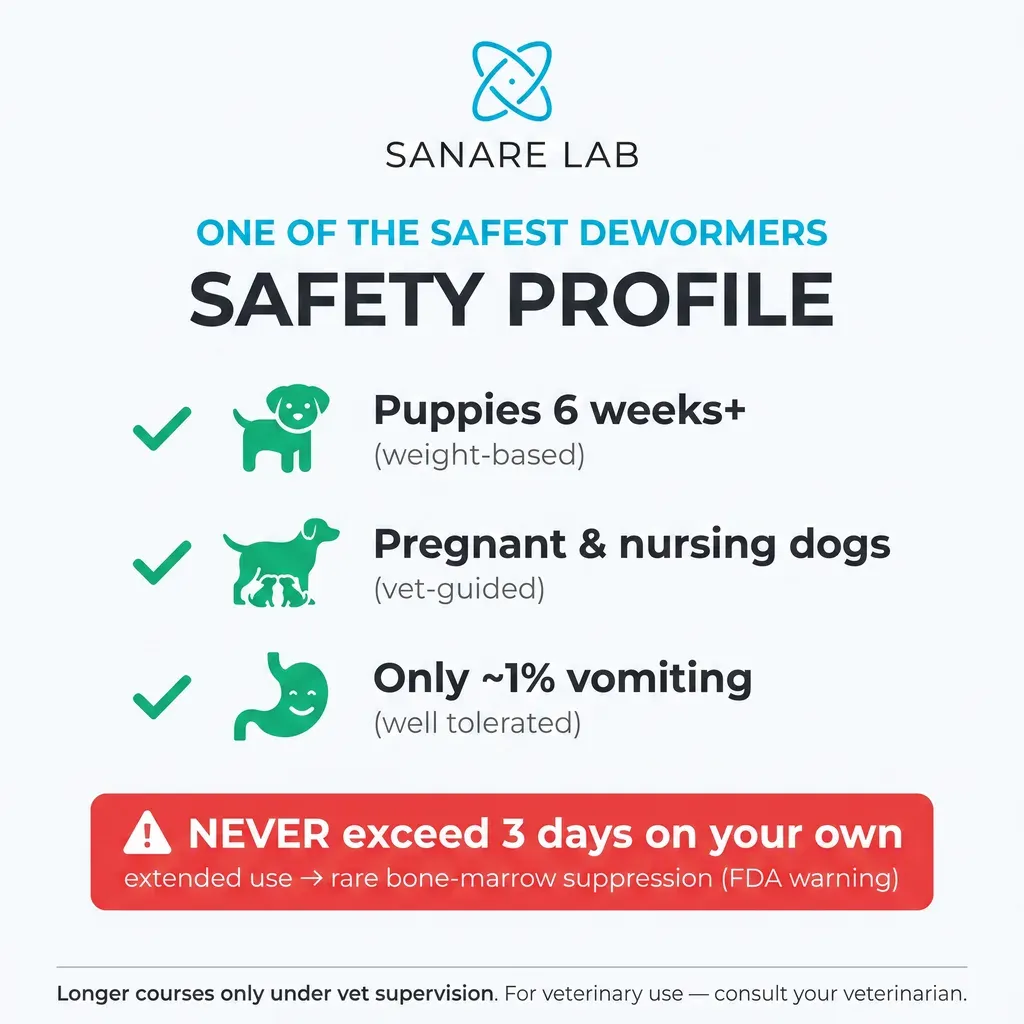
Fenbendazole is considered one of the safest dewormers available for dogs. It has a very wide margin of safety, is approved for puppies over six weeks old and for pregnant dogs, and serious adverse events are rare when it is used at the labeled dose for the labeled three days.
In controlled studies, fenbendazole is well tolerated, with vomiting reported in only about 1% of treated dogs. Its high therapeutic index means that even substantial accidental overdoses are usually well tolerated — a key reason it is trusted for vulnerable animals. That said, “very safe” is not “risk-free,” and one specific caution deserves emphasis.
Warning
The U.S. FDA has issued a “Dear Veterinarian” letter warning that extra-label use of fenbendazole for longer than the labeled 3 days (reported treatment lengths of 5–14 days) has been associated with rare but serious adverse events, including bone marrow hypoplasia and pancytopenia (a dangerous drop in red cells, white cells, and platelets). Do not extend fenbendazole beyond 3 days on your own — longer courses (for example for Giardia or lungworm) should only be given under direct veterinary supervision.
Dogs with pre-existing liver disease deserve extra caution, since fenbendazole is metabolized in the liver; our article on fenbendazole and liver safety discusses hepatic considerations in more detail (in the human context, but the metabolic principles overlap).
Side Effects of Fenbendazole in Dogs
Most dogs experience no side effects at all. When they occur, they are usually mild and short-lived. Importantly, some “side effects” are actually a reaction to dying parasites rather than to the drug itself — a heavy worm burden dying off at once can release antigens that provoke digestive upset or, rarely, an allergic response.
Contact your veterinarian if you see persistent vomiting, severe or bloody diarrhea, lethargy, pale gums, or any signs of an allergic reaction. Fenbendazole is contraindicated in dogs with a known hypersensitivity to benzimidazole compounds.
Drug Interactions
Fenbendazole has relatively few clinically important drug interactions, which is another reason for its wide use. Still, tell your veterinarian about every medication and supplement your dog receives. Points to note:
- Concurrent use with bromsalans (certain flukicides) should be avoided.
- It is commonly used alongside other parasite preventives (heartworm, flea/tick), but coordinate timing with your vet.
- In dogs on drugs that stress the liver or bone marrow, veterinary oversight is prudent, especially for extended courses.
Fenbendazole for Puppies and Pregnant Dogs
One of fenbendazole’s advantages is that it is safe enough for the most vulnerable patients. It is approved for puppies from 6 weeks of age and for pregnant and lactating bitches. In fact, fenbendazole is part of well-known protocols to reduce transmission of Toxocara canis roundworms from mother to puppies, because these worms can cross the placenta and pass through milk. Because roundworm and hookworm infections in puppies are common and can be zoonotic (transmissible to humans, especially children), early, vet-guided deworming matters for the whole household. Do not use fenbendazole in puppies younger than 6 weeks unless a veterinarian specifically directs it.
Panacur vs. Generic Fenbendazole
Panacur C and Safe-Guard are brand-name veterinary fenbendazole; generic fenbendazole granules and powders contain the same active ingredient, often at lower cost. For deworming a dog, a quality generic dosed correctly is therapeutically equivalent to the brand. The meaningful differences are:
- Pre-measured convenience: Panacur C packets are portioned by weight band, which reduces measuring errors for owners.
- Quality control: Reputable manufacturers test potency and purity; unverified powders may vary. See our guidance on verifying fenbendazole quality and sourcing.
- Formulation for species: Veterinary granules are designed to be mixed into dog food, not for human consumption. The excipients (fillers) in veterinary products are not tested to human pharmaceutical standards — a distinction explained fully in our Panacur C excipient analysis.
Fenbendazole vs. Other Common Dog Dewormers
Fenbendazole is not the only dewormer, and it is not the right tool for every parasite. Understanding where it fits helps you and your veterinarian choose correctly.
In practice, many products combine actives to widen coverage. Fenbendazole’s niche is dependable, gentle broad-spectrum control of the major intestinal nematodes plus Giardia and Taenia.
Fenbendazole and the MDR1 Gene: Reassurance for Herding Breeds
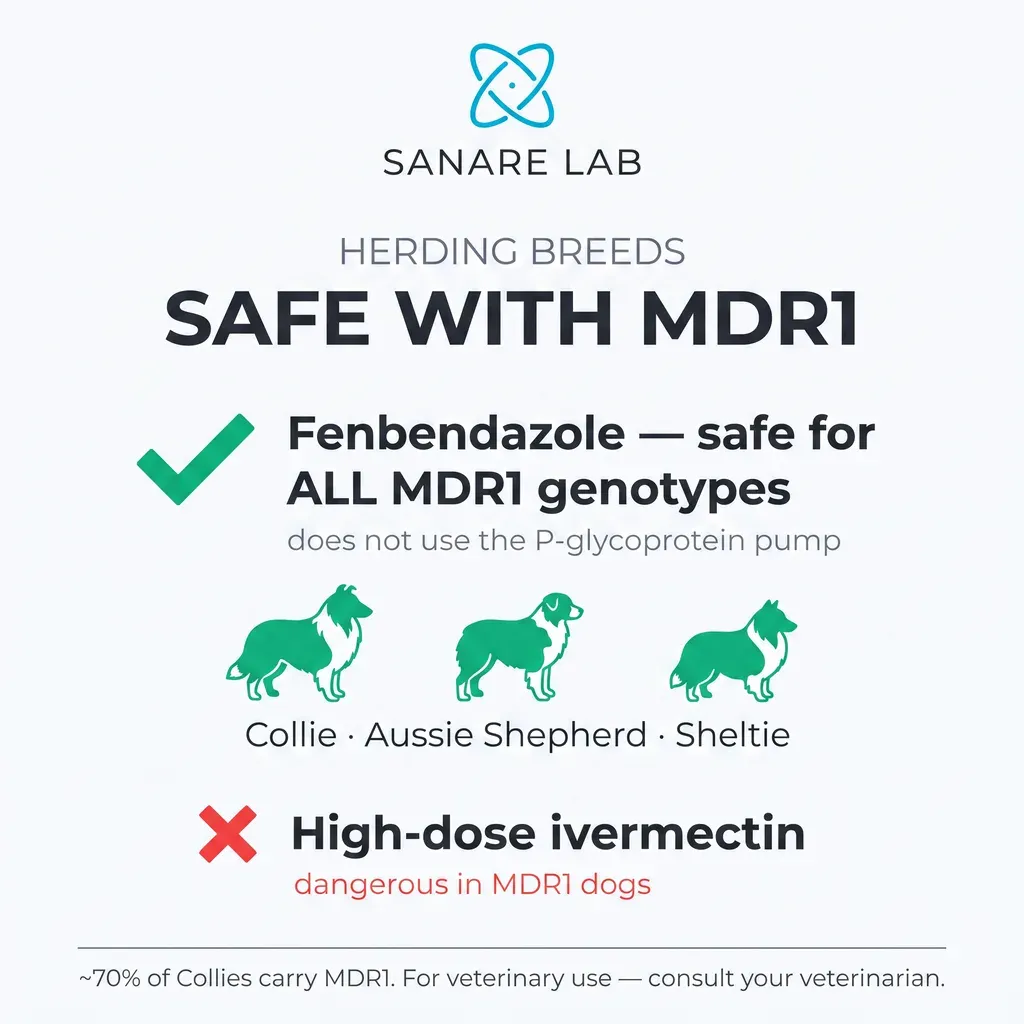
Owners of Collies, Australian Shepherds, Shelties, and related herding breeds are often — rightly — nervous about drug reactions. Many of these dogs carry a mutation in the MDR1 gene (also called ABCB1), which codes for P-glycoprotein, a molecular "pump" that normally keeps certain drugs out of the brain. When the gene is defective, those drugs can accumulate in the central nervous system and cause serious neurological toxicity. The mutation is common: roughly 70% of Collies and about 50% of Australian Shepherds carry at least one copy, and it also turns up in mixed-breed dogs with herding ancestry.
Here is the reassuring part: fenbendazole is considered safe for dogs of every MDR1 genotype. It does not rely on — or interfere with — the P-glycoprotein pump, so a defective MDR1 gene does not change how the dog handles it. This is a meaningful advantage over some other antiparasitics. The drugs that are dangerous in MDR1-affected dogs include high therapeutic doses of ivermectin (used to treat mange, not the tiny heartworm-prevention dose), loperamide (Imodium), and certain other macrocyclic lactones at treatment-level doses. For a fuller comparison of these two antiparasitic classes, see our fenbendazole vs. ivermectin overview.
If you own a herding breed, a simple cheek-swab or blood MDR1 test (offered through labs such as Washington State University's veterinary pharmacology program) tells you your dog's status once and for life. Even so, when it comes to routine deworming, fenbendazole gives herding-breed owners one less thing to worry about.
Treating Lungworm in Dogs with Fenbendazole
Beyond the familiar intestinal worms, fenbendazole is a first-choice treatment for certain lungworms — parasites that live in the airways or surrounding tissue and typically cause a chronic, nagging cough rather than digestive signs. These are extra-label uses, so they should always be handled by a veterinarian, but they are well documented.
Lungworm is usually diagnosed with the Baermann technique, which recovers larvae from a fresh stool sample, and for Oslerus by bronchoscopy to see the characteristic nodules. The key point for owners: a persistent cough is worth investigating, and fenbendazole handles the two most common "true" lungworms well — but Angiostrongylus vasorum, which lives in the pulmonary arteries and can be life-threatening, is not a fenbendazole job and needs specific prescription therapy.
A Closer Look at Giardia in Dogs
Giardia duodenalis is a single-celled protozoan — not a worm — but fenbendazole is one of the most widely used treatments for it, which is why it deserves a section of its own. It causes soft, greasy, foul-smelling diarrhea, and it is stubborn: reinfection is common because the infective cysts are shed in feces already able to spread.
The treatment course
The usual regimen is 50 mg/kg once daily for 3 to 5 days (five days is common for confirmed giardiasis). For infections that don't fully clear, veterinarians may add metronidazole or use a fenbendazole–metronidazole combination. Not every positive dog is automatically treated: symptomatic dogs are always treated, while for a healthy, asymptomatic dog the decision weighs factors such as whether young children or immunocompromised people share the home.
Breaking the reinfection cycle
Medication alone often fails against Giardia because cysts cling to the coat and contaminate the environment. Three steps make a real difference:
- Bathe the dog on the last day of treatment — a thorough wash, paying attention to the hindquarters, removes cysts stuck to the fur so the dog doesn't re-swallow them while grooming.
- Decontaminate the environment — pick up feces promptly, steam-clean or use quaternary ammonium disinfectants (at least one minute of contact) on hard surfaces, and wash bedding in hot water. Outdoors, sunlight and drying are the most effective natural cyst-killers.
- Retest correctly — because Giardia antigen can linger after the parasite is gone, a follow-up centrifugal flotation 2–4 weeks later (rather than an immediate antigen test) is the better way to confirm success.
Deworming Protocols for Breeders and Pregnant Dogs
Newborn puppies are very often born already infected with roundworms. The reason is biological: dormant Toxocara canis larvae encysted in an adult female's tissues reactivate during pregnancy and migrate across the placenta to the fetuses — a process that can begin around day 40 of gestation — and later into the milk. This is why so many puppies have the classic pot-bellied, poor-doing appearance despite a good appetite.
A well-established veterinary protocol uses fenbendazole in the pregnant dam to interrupt this cycle. In the classic study by Burke and Roberson, giving the bitch 50 mg/kg of fenbendazole daily from about day 40 of pregnancy through to roughly two days after whelping dramatically reduced both prenatal and milk-borne transmission of Toxocara canis and Ancylostoma caninum (hookworm) to the pups. Fenbendazole's excellent safety record in pregnancy is exactly what makes this extended, veterinarian-directed course acceptable.
For breeders, the practical framework is: treat the dam through late pregnancy as above, then deworm the litter "early and often" alongside the nursing mother. Because Toxocara is zoonotic — a genuine risk to people, especially children — this is about household health, not just the puppies. General puppy timing and the wider household picture are covered in the puppy and pregnancy section above; this protocol is the more intensive, breeder-focused version.
What to Expect After Deworming Your Dog
Knowing what is normal after a deworming course prevents unnecessary worry — and helps you recognise the rare situation that does need attention.
- Worms in the stool: Seeing dead or dying worms in your dog's feces for a few days is normal and actually a sign the drug is working. With heavy roundworm burdens, whole worms may be passed.
- Mild digestive upset: Some dogs have soft stool, a little diarrhea, or a temporarily reduced appetite. This often reflects the die-off of a large parasite load releasing antigens, rather than a reaction to the drug itself, and it usually settles within a day or two.
- Timeline: Fenbendazole starts killing worms within hours, but the full effect depends on completing all three days. Do not stop early even if your dog looks better.
- When to call the vet: Persistent or bloody diarrhea, repeated vomiting, lethargy, pale gums, or facial swelling/hives are not part of a normal response and warrant prompt veterinary contact.
- Confirm the cure: Schedule a follow-up fecal test 2–4 weeks later, particularly for whipworm and Giardia.
Preventing Reinfection: Environmental Control
One of the most common frustrations owners face is a dog that keeps testing positive despite correct treatment. Usually the culprit is not drug failure but the environment: parasite eggs and cysts left in the yard or home re-infect the dog after each course.
Whipworm illustrates the problem perfectly. A single female whipworm can shed more than 2,000 eggs a day, and those eggs are remarkably tough — resistant to cold, heat, and UV light, and able to remain infectious in soil for up to several years. No practical chemical reliably sterilises soil, so control depends on mechanical measures: pick up feces at least daily, keep runs and yards as dry and sunny as possible (desiccation is what actually kills the eggs), and consider replacing heavily contaminated soil or gravel in kennel areas. Because of whipworm's long prepatent period, a single course is rarely enough — many vets repeat treatment at intervals over about three months and then rely on a monthly preventive labelled for whipworm.
Giardia cysts are shorter-lived but spread fast in damp, shaded spots; the same principles — prompt fecal pickup, drying, sunlight, and disinfection of hard surfaces — apply. The overarching lesson is that deworming the dog and cleaning the environment are two halves of the same job.
Where Fenbendazole Fits in a Year-Round Parasite Plan
Fenbendazole is a superb treatment for an identified infection, but modern veterinary guidance frames parasite control as an ongoing program rather than a one-off fix. The Companion Animal Parasite Council recommends year-round broad-spectrum prevention that covers heartworm, intestinal worms, and fleas and ticks, together with routine fecal screening. For dogs that are not kept on a monthly broad-spectrum preventive, CAPC advises deworming at least four times a year.
Within that framework, fenbendazole tends to play two roles: it is the go-to targeted treatment when a fecal test identifies roundworm, hookworm, whipworm, Taenia, or Giardia, and it serves as an affordable periodic broad-spectrum dewormer for at-risk dogs under veterinary guidance. It does not, however, replace a dedicated heartworm preventive or flea/tick control — those target parasites fenbendazole doesn't touch. Used thoughtfully alongside regular testing, fenbendazole remains one of the most cost-effective, dependable tools in a complete canine parasite plan.
Cost is part of the reason it endures. A three-day course for an average dog costs only a few dollars in generic form, and even brand-name Panacur C packets are inexpensive compared with many prescription products. That affordability matters most for multi-dog households, breeders, and rescues, where whole groups may need treating at once. The trade-off is that fenbendazole is a treatment, not a monthly shield — it clears what is present but offers no lasting residual protection, so it works best as one component of a plan that also includes a monthly preventive and routine fecal screening. Talk with your veterinarian about tailoring the frequency to your dog's lifestyle, local parasite prevalence, and exposure risk rather than deworming on a fixed calendar alone.
Can Parasites Become Resistant to Fenbendazole?
Yes, though resistance is more of a documented problem in livestock than in pet dogs. Benzimidazole resistance is driven by genetic mutations in the parasite’s β-tubulin gene — most notably single-nucleotide changes at codons 167, 198, and 200 (the Phe-200-Tyr substitution is the classic example) that weaken the drug’s grip on its target. You can reduce the risk of resistance by dosing accurately to full body weight, completing the entire labeled course rather than stopping early, confirming clearance with a follow-up fecal test, and avoiding unnecessary repeated treatment without a positive diagnosis. If worms persist after a correctly given course, ask your veterinarian about resistance testing or an alternative drug class rather than simply repeating fenbendazole.
Storage and Handling Tips
- Store granules and suspension at controlled room temperature, away from direct heat, light, and moisture.
- Keep packets sealed until use; opened granules should be used promptly.
- Shake liquid suspensions well before measuring.
- Keep out of reach of children and pets, and check expiry dates before dosing.
- Wash your hands after handling; while low-toxicity, it is a medication, not a treat.
Fenbendazole in Dogs vs. Humans
Fenbendazole is licensed only for animals, not for people. Interest in human use grew after anecdotal cancer reports such as the Joe Tippens protocol, and there are now documented case reports and ongoing scientific discussion. However, the veterinary deworming context on this page is entirely separate from those experimental human topics. Two cautions are worth repeating for anyone arriving here from human-use searches:
- Different doses: The canine 50 mg/kg × 3-day deworming course is not a human protocol.
- Different formulations: Veterinary granules such as Panacur C contain fillers not evaluated for human intake — see why Panacur C is not appropriate for people.
If you are comparing repurposed antiparasitics, our fenbendazole vs. ivermectin and fenbendazole vs. mebendazole comparisons provide balanced, sourced overviews.
You can map out a weight-based schedule using our dosage calculator.
Frequently Asked Questions
How much fenbendazole do I give my dog?
The standard dose is 50 mg/kg (about 22.7 mg/lb) of body weight once daily for three consecutive days. Dose to your dog’s accurately measured current weight, and round up to the next packet size if you fall between bands. Always confirm with your veterinarian, especially for puppies, pregnant dogs, or dogs with health conditions.
How long does fenbendazole take to work in dogs?
Fenbendazole begins killing worms within hours, but the full three-day course is needed to clear an infection. You may see dead worms in the stool for several days after treatment. A follow-up fecal test 2–4 weeks later confirms the parasites are gone.
Can I give fenbendazole to my dog without a vet?
Over-the-counter canine fenbendazole (Panacur C, Safe-Guard) is widely available, but a veterinary diagnosis via fecal testing is strongly recommended so you treat the right parasite for the right duration. Never extend treatment beyond three days on your own.
Is fenbendazole safe for puppies?
Yes, for puppies six weeks of age and older at the correct weight-based dose. It is not recommended for puppies younger than six weeks unless a veterinarian directs it.
Can pregnant dogs take fenbendazole?
Yes. Fenbendazole is considered safe in pregnant and lactating dogs and is used in protocols to reduce roundworm transmission to puppies. Use it under veterinary guidance.
Does fenbendazole treat Giardia in dogs?
Yes, though this is technically extra-label use. The typical regimen is 50 mg/kg once daily for five consecutive days, combined with environmental cleanup. Some cases need a repeat course.
What parasites does fenbendazole NOT treat?
It does not reliably kill the flea tapeworm Dipylidium caninum (praziquantel is needed for that) and is not effective against heartworms, fleas, ticks, or mites.
Can fenbendazole be given with food?
Yes — it should be. Giving it with food improves absorption and reduces stomach upset. Mix the granules into a small portion your dog will finish completely.
What happens if I give my dog too much fenbendazole?
Fenbendazole has a very wide safety margin, so a modest overdose is usually well tolerated. Large overdoses may cause vomiting or diarrhea. If you suspect a significant overdose, contact your veterinarian or a pet poison hotline.
Can I give fenbendazole longer than 3 days?
Not on your own. The FDA has warned that extra-label courses longer than three days have been linked to rare bone-marrow suppression. Extended courses (for Giardia or lungworm) should only be given under veterinary supervision.
Is Panacur the same as fenbendazole?
Panacur is a brand name; fenbendazole is the active ingredient. Panacur C, Safe-Guard, and quality generics all contain the same drug. They differ mainly in packaging, concentration, and price.
Do I need to re-test my dog after treatment?
Yes. A follow-up fecal examination confirms the infection cleared, which is especially important for whipworms and Giardia that can persist or re-infect from the environment.
Can my dog give worms to my family?
Some canine roundworms and hookworms are zoonotic and can infect humans, particularly children. Prompt deworming, good hygiene, and cleaning up feces reduce this risk.
Can I use dog fenbendazole for myself?
No. Fenbendazole is licensed only for veterinary use, and dog products contain fillers not evaluated for human consumption. See our detailed article on why the Panacur C formulation is inappropriate for people.
Is fenbendazole safe for herding breeds with the MDR1 gene?
Yes. Fenbendazole is considered safe for dogs of every MDR1 (ABCB1) genotype, including Collies, Australian Shepherds, and other herding breeds, because it does not interact with the P-glycoprotein pump affected by that mutation. This is a genuine advantage over high-dose ivermectin, which can be dangerous in MDR1-affected dogs.
Can fenbendazole treat lungworm in dogs?
Yes, for certain lungworms. It is a first-choice treatment for Oslerus osleri (typically 50 mg/kg daily for 7 days) and Crenosoma vulpis, but it is not the primary treatment for Angiostrongylus vasorum ("French heartworm"), which needs specific prescription drugs. All lungworm treatment should be veterinarian-directed.
How often can my dog take fenbendazole?
Fenbendazole can be repeated as needed under veterinary guidance — for example, whipworm protocols often repeat a 3-day course at roughly 3-week and 3-month intervals. What you should not do is extend a single continuous course beyond 3 days on your own, because prolonged extra-label use has been linked to rare bone-marrow suppression.
Why does my dog still have worms after treatment?
The most common reason is reinfection from the environment rather than drug failure — whipworm and Giardia in particular leave hardy eggs or cysts in the yard and home. Clean up feces promptly, keep areas dry and sunny, and repeat testing. If worms persist after a correctly given course, ask your veterinarian about resistance testing or an alternative drug.
Do I need to treat my other pets too?
Often, yes. Many intestinal parasites spread between animals sharing a home and environment, so veterinarians frequently recommend testing — and treating — all pets in the household, along with environmental cleanup, to stop a cycle of reinfection. Nursing mothers are treated alongside their litters for the same reason.
Key Takeaway
Fenbendazole is a proven, FDA-approved, broad-spectrum dewormer that clears the great majority of common canine intestinal worms at 50 mg/kg once daily for 3 days (5 days for Giardia). It is safe for puppies over 6 weeks and pregnant dogs, has few interactions, and rarely causes side effects — but should never be extended past 3 days without veterinary oversight. Confirm the diagnosis with a fecal test, give it with food, and re-test afterward.
Shop Sanare Lab
Lab-tested products referenced in the research above. Links are provided for convenience — always review the label and consult a professional before use.
180 capsules — 99% purity, laboratory tested
180 capsules — higher-dose option
120 capsules — with Black Pepper for absorption
Disclaimer: Links are informational and for convenience. This site does not provide medical advice and does not endorse any specific vendor. Always verify product quality, labeling, and consult a licensed professional for health decisions.
References
- U.S. Food & Drug Administration. Dear Veterinarian Letter: Adverse Events Associated with Extra-Label Use of Fenbendazole in Dogs. FDA
- DailyMed (FDA). Panacur C (fenbendazole) Canine Dewormer — Prescribing Information. DailyMed
- Bowman DD. Georgi’s Parasitology for Veterinarians. 10th ed. Saunders Elsevier, 2014. Ch. 6-9.
- Barr SC, Bowman DD, Heller RL. Efficacy of fenbendazole against giardiasis in dogs. Am J Vet Res, 1994;55(7):988-990. PMID: 7978640. PubMed
- Jacobs DE, et al. Efficacy of fenbendazole granules and pyrantel pamoate suspension against nematodes in dogs. Vet Parasitol, 1999;84(1-2):139-143. PMID: 10384907. PubMed
- McKellar QA, Scott EW. The benzimidazole anthelmintic agents — a review. J Vet Pharmacol Ther, 1990;13(3):223-247. PMID: 2231864. PubMed
- Dayan AD. Albendazole, mebendazole and praziquantel. Review of non-clinical toxicity. Acta Tropica, 2003;86(2-3):141-159. PMID: 12745134. PubMed
- Lanusse CE, Prichard RK. Relationship between pharmacological properties and clinical efficacy of ruminant anthelmintics. Vet Parasitol, 1993;49(2-4):123-158. PMID: 8249240. PubMed
- Short CR, Barker SA, Hsieh LC, et al. The oxidative metabolism of fenbendazole: a comparative study. J Vet Pharmacol Ther, 1988;11(1):50-55. PMID: 3379664. PubMed
- Hennessy DR. Modifying the formulation or delivery mechanism to increase the activity of anthelmintic compounds. Vet Parasitol, 1997;72(3-4):367-390. PMID: 9460207. PubMed
- Companion Animal Parasite Council (CAPC). Guidelines for Internal Parasites. CAPC
- Dogra N, Kumar A, Mukhopadhyay T. Fenbendazole acts as a moderate microtubule destabilizing agent. Scientific Reports, 2018;8(1):11926. PMID: 30093705. PubMed
- Kaplan RM. Biology, epidemiology, diagnosis, and management of anthelmintic resistance in gastrointestinal nematodes. Vet Clin North Am Food Anim Pract, 2020;36(1):17-30. PMID: 32029182. PubMed
- Overgaauw PA, van Knapen F. Veterinary and public health aspects of Toxocara spp. Vet Parasitol, 2013;193(4):398-403. PMID: 23305972. PubMed
- Plumb DC. Fenbendazole. Plumb’s Veterinary Drug Handbook. 9th ed., 2018.
- Burke TM, Roberson EL. Fenbendazole treatment of pregnant bitches to reduce prenatal and lactogenic infections of Toxocara canis and Ancylostoma caninum in pups. J Am Vet Med Assoc, 1983;183(9):987-990. PMID: 12002591. PubMed
- Merck Veterinary Manual. Pharmacokinetics of Anthelmintics in Animals. Merck Vet Manual
- WHO/FAO JECFA. Fenbendazole — Toxicological Evaluation (INCHEM monograph). INCHEM
- VCA Animal Hospitals. Multidrug Resistance Mutation (MDR1) in Dogs. VCA
- Washington State University, Veterinary Clinical Pharmacology Lab (PRiME). MDR1 in Dogs. WSU
- dvm360. Canine and Feline Lungworms (Proceedings). dvm360
- Merck Veterinary Manual. Lungworm Infection in Animals. Merck Vet Manual
- Companion Animal Parasite Council. Giardia Guidelines. CAPC
- Cornell University Riney Canine Health Center. Giardia Infection: Treatment and Prevention. Cornell
- Companion Animal Parasite Council. General Guidelines (fecal testing frequency). CAPC
- Companion Animal Parasite Council. Trichuris vulpis (Whipworm) Guidelines. CAPC
- Cornell University Riney Canine Health Center. Whipworms in Dogs. Cornell
- petMD. Fenbendazole (Panacur, Safe-Guard) for Dogs and Cats. petMD
Medical Disclaimer
This article is for educational and informational purposes only. It is not intended to be a substitute for professional medical advice, diagnosis, or treatment. Always seek the advice of your physician or other qualified health provider with any questions you may have regarding a medical condition. Never disregard professional medical advice or delay in seeking it because of something you have read on this website.

Dr. Andrew Ellison, MD
Science editor and health researcher at Sanare Lab, covering evidence-based wellness, emerging compound research, clinical studies, and practical health protocols. Content is educational and does not replace medical advice.