
Where to Buy Fenbendazole: Quality Verification, Purity Testing & Reliable Sources 2026
How to verify fenbendazole quality and purity before purchase. Reliable sources, third-party testing, counterfeit warnings, and what to look for in 2026.
 By Dr. Andrew Ellison, MD · August 3, 2026 · 29 min read
This article is for research and informational purposes only. It does not constitute medical advice. Do not self-prescribe. Always consult a qualified healthcare provider before using any supplement, especially alongside cancer treatment.
One of the most urgent questions in fenbendazole communities is: Where do I find quality fenbendazole? The answer is complicated by the lack of FDA oversight for compounds sold as dietary supplements or veterinary products, wildly variable quality across vendors, and the risk of adulteration or mislabeling.
Table of Contents
- Human-Grade vs. Veterinary Fenbendazole
- Critical Quality Tests to Demand
- Red Flags for Low-Quality or Counterfeit Products
- Recommended Sources (With Caveats)
- How to Verify Quality Before Purchasing
- Understanding Product Grades
- The Panacur / Safe-Guard Problem
- How to Read a Certificate of Analysis
- Analytical Methods Explained
- ISO/IEC 17025 Accreditation
- Chemistry, Solubility & Formulation
- Storage, Stability & Shelf Life
- The Legal & Regulatory Landscape
- The Supplement Adulteration Problem
- Counterfeits & the Global Supply Chain
- A Systematic Vendor Evaluation Framework
- Cost Analysis: What You Pay For
- What Buying Does NOT Guarantee
- A Rational Framework Before You Buy
- Dosage Forms & Trade-offs
- Batch Traceability & Recalls
- FAQ
- References
Human-Grade vs. Veterinary Fenbendazole
Fenbendazole is available in multiple forms:
Critical Quality Tests to Demand
A note on perspective before the technical detail: the tests below describe the gold standard a fully resourced pharmaceutical operation would run, and each is expensive. They are useful to understand, but no realistic consumer runs all of them, and very few small suppliers — legitimate ones included — commission the entire panel for every batch. Treat them as a menu of quality signals rather than a pass/fail checklist. What matters most in practice is that a supplier is transparent about what it does test, honest about what it does not, and consistent in the product it ships.
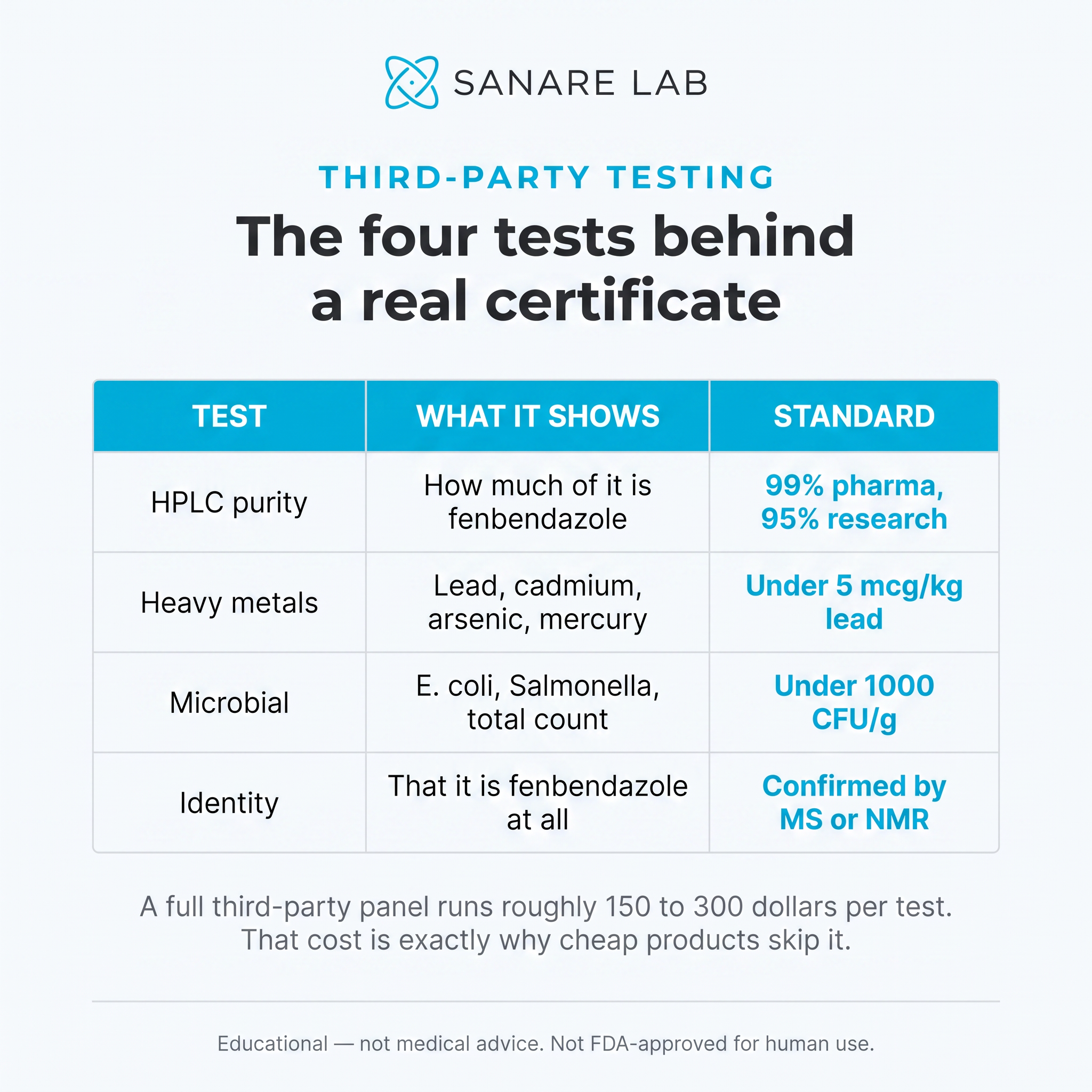
1. HPLC (High-Performance Liquid Chromatography) Analysis
What it shows: Purity percentage and presence of impurities/degradation products Learn more about Joe Tippens Protocol.
Acceptable standard: ≥99% fenbendazole (pharmaceutical grade); ≥95% acceptable (research chemical)
Cost: $150-300 per test Learn more about fenbendazole dosage guide.
2. Heavy Metals Testing (ICP-MS)
What it shows: Lead, cadmium, arsenic, mercury contamination
Acceptable limits: FDA Food Safety guidelines (typically <5 μg/kg for lead) Learn more about fenbendazole and lung cancer.
3. Microbial Testing (USP Standards)
What it shows: E. coli, Salmonella, total aerobic microbial count
Acceptable: <1000 CFU/g total microbial count; negative E. For more details, see our guide on fenbendazole and breast cancer. coli and Salmonella
4. Identity Confirmation (Mass Spec or NMR)
What it shows: Confirms the compound is actually fenbendazole, not a related or counterfeit substance
Red Flags for Low-Quality or Counterfeit Products
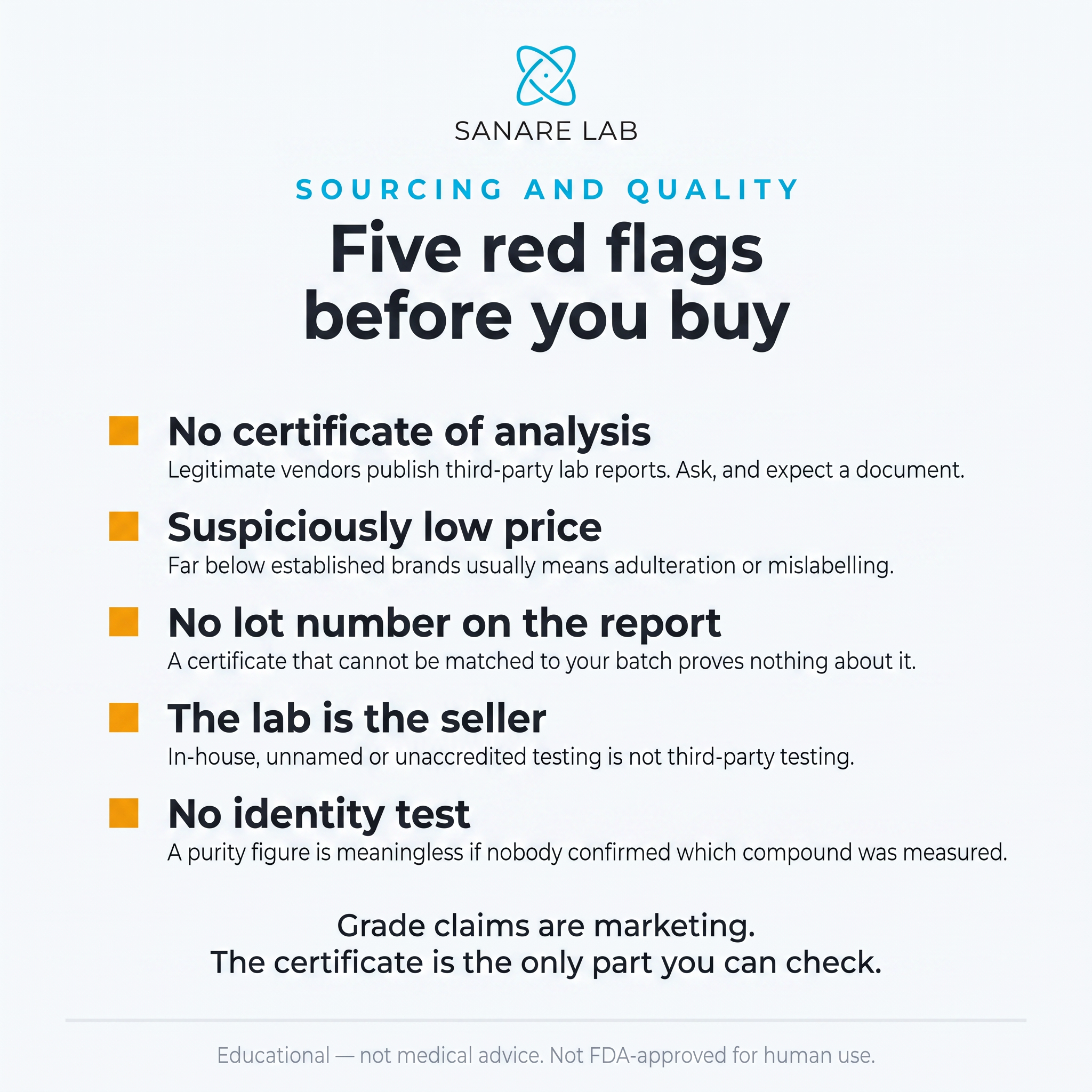
- No certificate of analysis (CoA) — Legitimate vendors provide third-party lab reports
- Suspiciously low price — Significantly cheaper than established brands (suggests adulteration or mislabeling)
- Vague or non-existent batch numbering — Quality control requires traceability
- No heavy metals or microbial testing — Legitimate suppliers test for contaminants
- Seller has no website or company history — Research the vendor background
- Claims of "pharmaceutical-grade" without documentation — Easy claim to make, hard to verify
- Sold only through Facebook, WhatsApp, or direct email — Established vendors use proper websites with contact info
- Promises of 100% cure or special formulations — Red flag for exaggeration or fraud
For a real-world example of how exaggerated marketing and misleading claims appear in this space, read our investigation into a store spreading false information about fenbendazole. That same vendor, Happy Healing, has also been associated with commissioned, planted "review" articles — sponsored content written to read like independent journalism, but effectively paid placements. When a seller invests in that kind of coverage rather than in transparent lab documentation, online praise becomes a poor proxy for actual product quality.
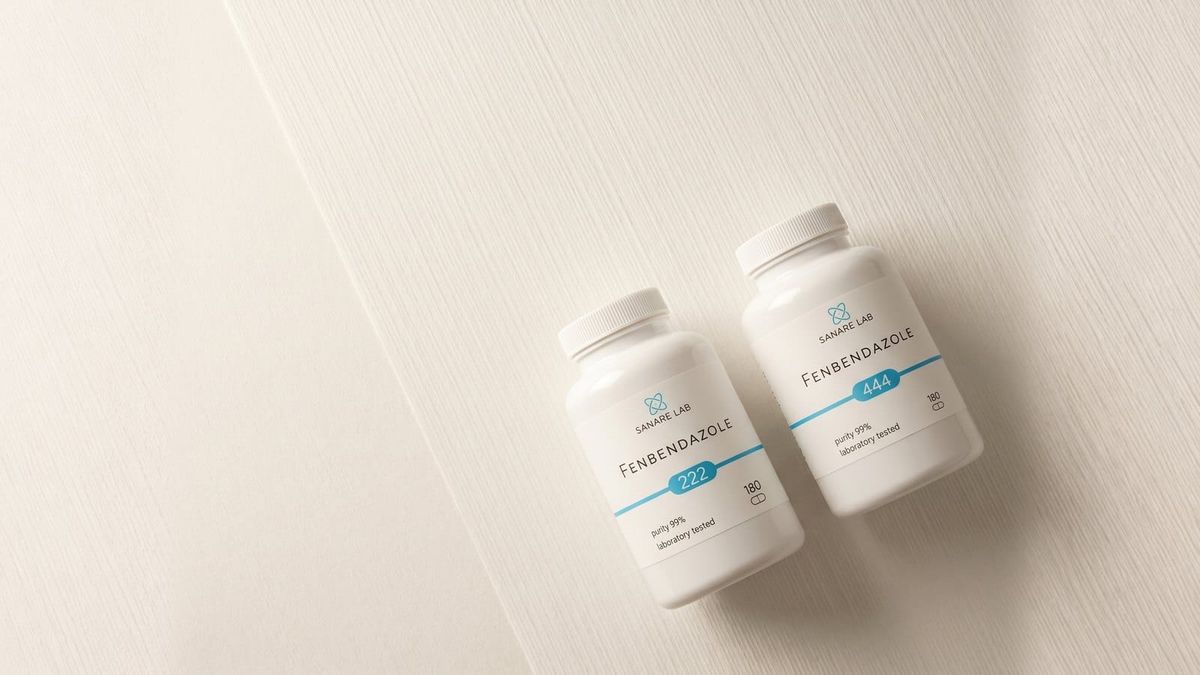
Independent product investigations published on thefenbendazole.com raise comparable transparency concerns about other sellers. Their review of Fenben Lab describes a brand that continuously spins up multiple parallel marketing campaigns and storefronts, and their analysis of BP Life fenbendazole 222 mg capsules scrutinizes that vendor's sourcing and labeling claims. The practical point is not that a small supplier must hold laboratory-scale accreditation — few do — but that it should be transparent about what its product actually is: a defined, consistent capsule dose of a single active ingredient, honest labeling, and a willingness to answer buyers' questions directly. That is the approach Sanare Lab takes with its fenbendazole capsules, and it is a more realistic benchmark than demanding institutional paperwork that even legitimate vendors rarely publish.
✅ Recommended Sources (With Caveats)
Panacur C (Veterinary, Zoetis)
- Source: Amazon, Chewy.com, veterinary suppliers, pet stores
- Pros: Widely available, low cost (~$20-25/pack), Joe Tippens used this, established company
- Cons: Veterinary formulation, contains flavorings/additives, requires conversion of 1g ≈ 222mg
- Dosing: 1 packet (222mg) = 1 gram (requires measurement)
Important: Panacur C is a veterinary product — for animals only
Panacur C and Safe-Guard are approved for animals, not for human use. Only about 22.2% of each granule is fenbendazole; the remaining ~77.8% is undisclosed animal-grade excipient — lactose monohydrate, povidone K25, corn starch and flavorings formulated to be palatable to dogs, and never assessed for human safety. Our analysis found these fillers include compounds that can be allergenic to humans. Treat any veterinary powder as an animal product first: before using one as a fenbendazole source, read our full breakdown — The Dangers of Panacur C: 77.8% Undisclosed Excipients.
Pharmaceutical-Grade Capsules
- Examples: Sanarelab.com, Nutricost, other supplement brands (compare the transparency of each)
- Pros: Precise, consistent dosing (222mg, 444mg); a single, defined active ingredient; capsule format intended for people rather than animals
- Cons: More expensive (~$50-80/bottle of 180 capsules)
- Key: Favor suppliers that are transparent about their product and responsive to questions, and match any documentation they provide to the batch you actually received
How to Verify Quality Before Purchasing
- Request certificate of analysis (CoA): Email vendor asking for most recent batch CoA showing HPLC, heavy metals, microbial testing
- Check for third-party lab testing: Legitimate CoAs are from independent labs (NSF, ProVera, etc.), not the vendor's own lab
- Verify purity percentage: Accept only ≥95% HPLC purity for research chemicals; ≥99% for pharmaceutical-grade
- Look for batch numbering: Each batch should have a unique number linking it to specific lab reports
- Research the vendor: Company history, customer reviews (Google, Reddit, specialized forums), business registration
- Ask about manufacturing standards: Do they follow GMP (Good Manufacturing Practices)? Are facilities audited?
- Get independent testing: If unsure, you can send a sample to an independent lab for verification (~$150-300)
Understanding Fenbendazole Product Grades: Veterinary, Research, and Pharmaceutical
Before evaluating any vendor, it helps to understand what the word "grade" actually means, because it is one of the most abused terms in the fenbendazole marketplace. A "grade" is not a marketing adjective — in legitimate manufacturing it refers to a defined standard of purity, documentation, and manufacturing oversight. Fenbendazole reaches buyers through several distinct channels, and each carries a fundamentally different quality guarantee.
USP/NF (pharmaceutical) grade is the highest tier. The United States Pharmacopeia–National Formulary is a joint compendium of monographs that sets standardized purity and quality requirements for drug substances and excipients. A material can only be labeled "USP grade" or "NF grade" if a specific monograph exists for it and the material meets every requirement in that monograph. Critically, USP/NF materials are generally required to be produced in a facility that follows current Good Manufacturing Practices (cGMP) — a legally recognized system of process controls, batch records, and quality oversight. This is what separates a genuine pharmaceutical-grade claim from a marketing slogan.
Research or laboratory grade occupies a much looser category. "Research grade" has no single universal definition; standards vary by manufacturer. Some analytical or ACS-reagent-grade chemicals are genuinely high-purity, but materials merely labeled "laboratory grade" may contain unknown levels of impurities. Crucially, these products are intended for research, education, or analytical testing — not human or animal consumption — and are not required to meet cGMP manufacturing oversight. This is why research-chemical fenbendazole is cheaper, and why it is legally sold with "not for human consumption" language.
Veterinary grade (such as Panacur or Safe-Guard) meets standards set for animal-drug approval, which are real but calibrated to veterinary rather than human-pharmaceutical requirements. These products are formulated with fillers, binders, and flavorings appropriate for dogs, cattle, or horses — not for humans.
The practical takeaway: when a vendor says "pharmaceutical grade," that claim is only meaningful if it is backed by a batch-specific Certificate of Analysis from an accredited laboratory. Without documentation, "pharmaceutical grade" is one of the easiest — and least verifiable — claims a seller can make.
The Panacur / Safe-Guard Problem: Why Most of the Product Isn't the Drug
Panacur C and Safe-Guard are the most widely used sources of fenbendazole in self-experimentation communities, largely because they are inexpensive, easy to obtain, and were the products associated with the widely circulated Joe Tippens anecdote. But their formulation deserves careful scrutiny.
Panacur C granules are labeled as 22.2% fenbendazole — that is, 222 mg of active drug per gram of product. The arithmetic that follows is unavoidable: if 22.2% of the granule is the active ingredient, then roughly 77.8% of what you are consuming is not fenbendazole. That remainder consists of inert carriers, binders, and flavoring agents designed to make the product palatable to dogs. The FDA-approved veterinary labeling for these products focuses on the active ingredient, dosage, and safety information and does not publicly disclose the full list of inactive ingredients. In other words, when a person swallows veterinary granules, the large majority of the material is undocumented (from a human-consumption standpoint) excipient content.
Important Caution: Veterinary Powders and Excipient Load
Because Panacur C and similar veterinary granule products are approximately 22.2% active fenbendazole, roughly 77.8% of the product consists of inactive fillers, binders, and flavorings formulated for animals — not for human consumption, and not fully disclosed on public labeling. Consuming large amounts of these undocumented excipients is a distinct and often-overlooked risk that has nothing to do with fenbendazole itself.
For a detailed discussion of the specific concerns with these veterinary formulations, see our dedicated analysis: The Dangers of Panacur C.
This is not a claim that fenbendazole itself is uniquely dangerous — it is a reminder that the delivery vehicle matters. A product that is three-quarters undocumented filler is a very different proposition from a pharmaceutical-grade capsule containing a known quantity of a single, assayed active ingredient. Anyone weighing where to obtain fenbendazole should factor the excipient load — not just the price and availability — into the decision, and should read the label's percentage claim literally.
How to Read a Certificate of Analysis (CoA), Line by Line
The single most useful skill for a fenbendazole buyer is the ability to read a Certificate of Analysis critically. A CoA is a batch-specific document that reports a product's identity, purity, and contaminant testing. But not all CoAs are trustworthy, and marketing "CoAs" that show only a "PASS" stamp are close to worthless. Here is what a legitimate certificate contains and how to interpret each element.
Batch/lot number. This is the first thing to check. A CoA is valid only for the specific batch it describes. The lot number on the certificate must match the lot number printed on the product you actually received. A CoA that cannot be tied to your physical container tells you nothing about what is in your bottle.
Testing laboratory and accreditation. A credible CoA names the testing lab, its contact details, and its accreditation status. The gold standard is ISO/IEC 17025 accreditation (discussed in detail below). The most reliable certificates come from independent third-party laboratories rather than the vendor's own in-house lab.
Specification, result, and compliance for each test. For every parameter, a high-quality CoA reports three things: the specification (the pre-defined acceptable limit, e.g. "≥99.0%"), the result (the actual measured value), and a pass/fail compliance statement. If any of these three is missing, the document is incomplete.
Signature and date. A legitimate CoA is signed and dated by an authorized representative. Undated or unsigned documents are a red flag.
Equally important are the warning signs of a fabricated or meaningless certificate: a "pass-only" report with no underlying data, suspiciously perfect numbers (identical results across every batch, or all contaminants reported as exactly 0.00), mismatched lot numbers, and internal-only testing presented as if it were independent verification. As one industry maxim puts it — data that looks too clean often is too clean.
Analytical Methods Explained: HPLC, LC-MS/MS, GC, and ICP-MS
A CoA will reference several analytical techniques, and knowing what each one actually measures lets you judge whether the testing was appropriate and complete. Each method answers a distinct question about the material.
HPLC (High-Performance Liquid Chromatography) is the workhorse for determining purity or assay — the percentage of the sample that is genuinely fenbendazole versus related compounds or degradation products. HPLC separates the components of a mixture and quantifies the target compound relative to everything else. A thorough CoA includes the accompanying chromatogram (the graph of peaks), which provides visual evidence that the assay result is real rather than asserted.
LC-MS/MS (Liquid Chromatography–Mass Spectrometry) is used primarily for identity confirmation. It verifies the molecular weight and structural fingerprint of the compound, confirming that the material actually is fenbendazole and not a structurally related benzimidazole or an outright counterfeit substance.
GC (Gas Chromatography) is commonly used to test for residual solvents — traces of the organic solvents used during synthesis that must be kept below safe limits.
ICP-MS (Inductively Coupled Plasma Mass Spectrometry) is the standard method for detecting heavy metals such as lead, arsenic, cadmium, and mercury. Because raw materials sourced from poorly controlled supply chains can carry meaningful heavy-metal contamination, an ICP-MS result is one of the most safety-relevant items on a CoA.
A genuinely complete quality picture requires more than a single assay number. A product that reports 99% HPLC purity but was never tested for heavy metals or microbial contamination has been only partly characterized. The strongest certificates combine identity confirmation, purity assay, heavy-metals screening, and microbial testing — each by the appropriate method.
ISO/IEC 17025 Accreditation: What It Means and How to Verify It
The phrase "third-party tested" appears on countless supplement labels, but the meaningful benchmark is whether the testing laboratory holds ISO/IEC 17025 accreditation. This is the international standard for the technical competence of testing and calibration laboratories, and understanding it separates real quality assurance from marketing language.
ISO/IEC 17025 accreditation is formal recognition by an independent third-party accreditation body that a laboratory is technically competent to perform specific tests, maintains a rigorous quality-management system, and operates impartially — free from conflicts of interest that could bias results. It is not a one-time certificate: accredited labs must undergo regular reassessment and renewal to keep their status.
That said, keep ISO/IEC 17025 in proportion. Full laboratory accreditation is the ideal, but its absence does not by itself make a supplier untrustworthy — many reputable smaller vendors use competent independent labs that are not formally accredited, or test in-house and disclose it plainly. Treat accreditation as one positive signal among several, not a gate every honest seller must clear.
Several nuances matter for the careful buyer. First, in the laboratory world the correct term is "accredited," not "certified" or "approved" — accreditation involves an independent technical assessment that is more rigorous than a routine business certification. Second, accreditation is scope-specific: a lab is accredited only for the particular methods explicitly listed in its published "Scope of Accreditation." A lab could be accredited for one type of analysis but not for the specific test on your CoA, so the accreditation must actually cover the relevant method. Third, ISO/IEC 17025 is voluntary, but many regulators and industries require it precisely because it substantially reduces the risk of unreliable data.
For a fenbendazole buyer, the practical verification steps are straightforward: confirm the CoA names the testing lab, confirm that lab holds ISO/IEC 17025 accreditation, and — for the most important purchases — confirm that the specific test (HPLC assay, heavy metals, etc.) falls within the lab's accredited scope. A vendor unwilling or unable to name its testing laboratory has, in effect, told you the "third-party tested" claim cannot be checked.
Fenbendazole Chemistry, Solubility, and Why Formulation Matters
Fenbendazole's physical chemistry has direct consequences for both quality and the practical question of whether an oral product can deliver meaningful amounts of drug to the body. Fenbendazole (chemically, methyl 5-(phenylthio)-2-benzimidazole carbamate) is a benzimidazole with inherently low aqueous solubility — a trait shared across the benzimidazole class that fundamentally limits how much of an oral dose is absorbed.
This low solubility is why formulation is not a trivial detail. Pharmaceutical scientists studying fenbendazole have devoted considerable effort to improving its dissolution using techniques such as solid dispersions with polymeric carriers (for example, Soluplus®), particle-size reduction and nanoparticle systems using poloxamers, and cyclodextrin inclusion complexes. The purpose of all these approaches is the same: to coax more of a poorly soluble molecule into a dissolved, absorbable form. A raw powder swallowed on its own behaves very differently from a professionally formulated product designed to enhance dissolution.
The absorption limitation also has an important bearing on the broader fenbendazole-for-cancer conversation: because the drug is poorly absorbed after oral dosing in humans, the amount reaching the systemic circulation — and therefore any tumor — may be far lower than the swallowed dose suggests. This pharmacokinetic reality is one reason mainstream oncologists question whether over-the-counter oral fenbendazole could achieve biologically relevant concentrations, and it underscores why formulation quality (not just raw purity) is a legitimate consideration when evaluating products.
For the buyer, the lesson is that two products with identical "99% purity" claims are not necessarily equivalent. Purity describes what fraction of the material is fenbendazole; it says nothing about whether the finished product is formulated to dissolve and be absorbed. Both dimensions matter.
Storage, Stability, and Shelf Life
Even a high-quality product can degrade if stored improperly, so understanding fenbendazole's stability profile is part of responsible sourcing and handling. The good news is that fenbendazole is relatively stable compared to some related benzimidazoles; the important caveats concern heat and light.
Photostability. Studies indicate fenbendazole is more photostable than albendazole, but it is not immune to light-driven breakdown. When photolytic degradation does occur, it proceeds through sequential chemical steps (demethylation followed by decarboxylation of the carbamate group). The practical implication: keep the product in opaque or light-protected packaging and out of direct sunlight.
Thermal stability. Fenbendazole undergoes multi-step thermal degradation at high temperatures. Ordinary room-temperature storage is fine, but products should not be left in hot environments — a car in summer, a windowsill, or near a heat source.
Physical stability of formulations. Research on advanced fenbendazole formulations (such as nanoparticle systems) has found that some can undergo recrystallization over extended storage even at 25 °C, depending on the polymeric carrier used. This is mainly a concern for specialized formulations, but it illustrates that a product's long-term physical stability depends on how it was made, not just on the molecule itself.
General best practice mirrors that for any pharmaceutical-type product: store in a cool, dry place away from light and humidity, keep the original labeled container with its lot number and (where provided) expiration date, and do not use material that has changed color, clumped from moisture, or passed its stated shelf life. A vendor that provides no lot number or expiration date has made it impossible for you to track stability at all.
The Legal and Regulatory Landscape
Where and how you can legally buy fenbendazole — and what protections you do or do not receive — depends entirely on its regulatory classification, which is frequently misunderstood. The central fact is unambiguous: fenbendazole is approved only for veterinary use and has never been approved by the FDA for human use for any purpose, including cancer.
This drives an important distinction that buyers often get wrong: the difference between "off-label" and "unapproved" use. Off-label use refers to prescribing an already FDA-approved human medication for an indication or dose not on its label — a legal, common, physician-guided practice. Unapproved use refers to taking a substance that has never been vetted or approved for human consumption at all. Human use of veterinary fenbendazole falls into the second category. It is not "off-label"; it is unapproved. Products sold through veterinary or research channels are therefore not manufactured to human-grade specifications and carry no human-consumption safety review.
Availability also varies by jurisdiction and is changing. In the United States, fenbendazole remains available over the counter as an animal product. Other jurisdictions have moved to restrict human access: Australian regulators reclassified fenbendazole for human use to "Schedule 4" (prescription-only) in 2025 to curb unauthorized use. Buyers ordering across borders should also be aware that importing chemicals or unapproved drugs can raise customs and legal issues depending on the destination country's rules.
Because the product sits outside the human-drug regulatory framework, the ordinary consumer protections that accompany approved medicines — guaranteed identity, standardized dosing, mandated purity, adverse-event surveillance — simply do not apply. The entire burden of verifying quality shifts onto the buyer. That is precisely why the documentation and testing standards described in this article matter so much: in the absence of regulatory oversight, a Certificate of Analysis from an accredited lab is the only substantive quality assurance available.
The Supplement Adulteration Problem
The risk of getting something other than what the label promises is not hypothetical or fringe — it is a documented, industry-wide problem that provides essential context for anyone buying loosely regulated products online. The FDA maintains a database of "Tainted Products Marketed as Dietary Supplements," and the scale is sobering.
Analyses of that database have identified hundreds of supplements containing undeclared, potentially harmful pharmaceutical ingredients. One review of products from 2007–2016 found over 700 supplements with undeclared or potentially harmful substances; other reporting documents more than 1,000 tainted-product cases across categories. While the most notorious offenders cluster in sexual-enhancement, weight-loss, and muscle-building products, the underlying lesson generalizes: when a product category is poorly policed and demand is high, adulteration follows.
Adulteration takes two forms. Economically motivated adulteration is deliberate — adding undeclared active ingredients to boost perceived effect, substituting cheaper materials, or diluting a product to widen margins. Unintentional adulteration results from poor manufacturing: cross-contamination, failure to follow cGMP, or low-quality raw materials carrying pesticides, solvents, or heavy metals. Notably, some companies have continued introducing new undisclosed substances even after receiving FDA warnings.
For fenbendazole specifically, the implications are direct. A product bought from an unaccountable vendor could contain less active ingredient than claimed, a different or degraded compound, or contaminants introduced during sloppy manufacturing. None of these possibilities can be detected by looking at a capsule or reading a label — they can only be excluded by batch-specific, accredited-lab testing. The adulteration record is the strongest possible argument for refusing to buy any product that cannot produce a genuine CoA.
Counterfeits and the Global Supply Chain
Understanding where quality risk actually enters the supply chain helps buyers focus their scrutiny where it matters most. A large share of the world's benzimidazole raw material originates from chemical manufacturers concentrated in a few regions, and the path from bulk synthesis to a finished capsule on a doorstep can pass through many hands.
Buying directly from overseas chemical suppliers is the highest-variance option. Some such suppliers provide legitimate research-grade material with genuine CoAs; others ship counterfeit, mislabeled, or adulterated product. If ordering from a bulk chemical supplier, the burden of verification is entirely on the buyer: confirm the company's legitimacy and history, insist on a batch-specific CoA that includes heavy-metals testing, consider independent third-party testing of the received material, and account for the customs and legal exposure of importing chemicals.
Counterfeiting is most attractive where a product is in high demand, easy to imitate visually, and hard for the buyer to test. Fenbendazole ticks all three boxes: intense grassroots demand, a nondescript white powder or capsule that looks like any other, and analysis that requires equipment no consumer owns. This combination is exactly why counterfeit and substandard products proliferate, and why the visual appearance of a product — packaging, capsule color, even an official-looking label — provides essentially zero assurance of authenticity.
The defense is documentation and traceability, not appearance. A legitimate product carries a lot number that links to a specific accredited-lab CoA; a counterfeit generally cannot produce this chain, or produces a "certificate" that fails the red-flag tests described earlier (no data, no accredited lab, mismatched or absent lot numbers).
A Systematic Vendor Evaluation Framework
Rather than relying on impressions or testimonials, a disciplined buyer evaluates vendors against a fixed set of objective criteria. The table below organizes the signals discussed throughout this article into a practical scoring framework — the more "green" answers a vendor can substantiate with documents, the lower the risk.
No single row is decisive, but the pattern is: legitimate vendors compete on documentation and transparency, while high-risk sellers compete on price and promises. If a vendor cannot produce a batch-specific CoA from a named, accredited laboratory, none of the other criteria can compensate — that single gap means the product's contents are fundamentally unverified.
Cost Analysis: What You Are Actually Paying For
Price differences across fenbendazole sources are large, and understanding why helps buyers avoid both overpaying and the false economy of the cheapest option. The cost of a legitimate product reflects real inputs that a bargain product has simply skipped.
Veterinary granule products are the cheapest per gram of active ingredient, which is a major reason they became popular. But that low price reflects a formulation built for animals, with the large excipient load described earlier and no human-oriented quality documentation. Research-chemical powder occupies a wide price range and variable quality; its cost may or may not include a genuine CoA. Pharmaceutical-grade capsules are the most expensive, and the premium pays for defined dosing, cGMP-style manufacturing, and — crucially — batch-specific third-party testing.
The hidden cost worth naming is independent verification. Professional HPLC analysis of a sample by an accredited laboratory typically runs a meaningful sum per test, which is why buyers cannot casually test everything themselves and why a vendor-provided accredited CoA has real economic value: it externalizes a cost you would otherwise have to bear. When a product is dramatically cheaper than established alternatives, the savings almost always come from omitting exactly the testing and manufacturing controls that protect the buyer — the "suspiciously cheap" signal in the evaluation table is really the sound of corners being cut.
The rational way to think about price is per-unit-of-verified-quality, not per-gram. A slightly more expensive product with a genuine accredited CoA can be the better value precisely because you are paying for knowledge of what you are consuming — the one thing the cheapest options cannot provide.
What Buying Fenbendazole Does NOT Guarantee
In the interest of an honest, balanced picture, it is essential to be clear about the limits of everything discussed here. Sourcing a high-quality, accurately labeled product is necessary but not remotely sufficient to establish that fenbendazole is safe or effective for any human disease.
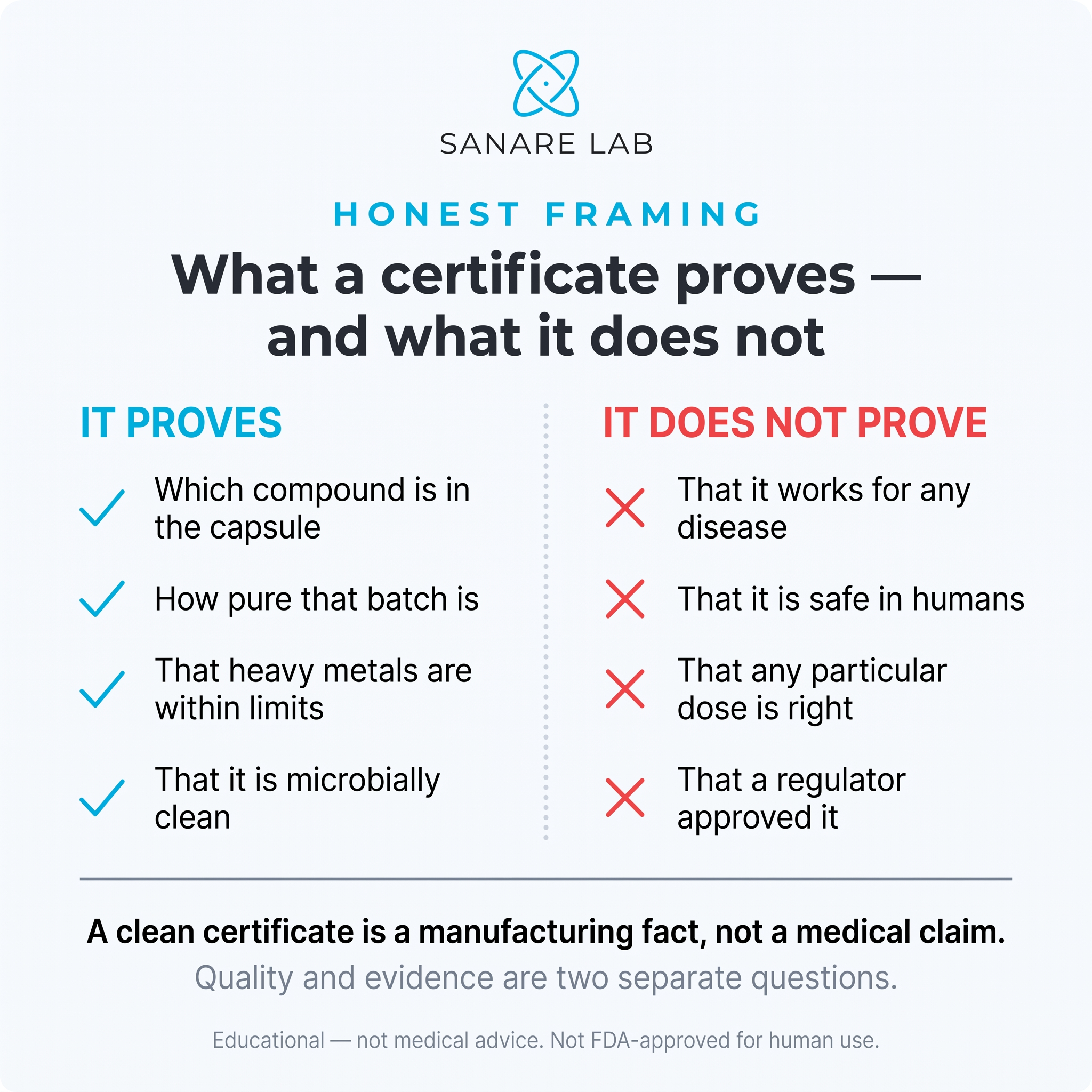
Buying a verified, pharmaceutical-grade product does not mean fenbendazole works against cancer in humans. There are no completed human clinical trials demonstrating efficacy; the supportive evidence is preclinical (cell and animal studies) plus anecdotes, which are not a substitute for controlled trials. A perfect CoA guarantees the identity and purity of the molecule — nothing about its clinical benefit.
A verified product also does not mean it is safe to self-administer. Documented risks reported in the medical literature include liver toxicity (with published case reports of severe liver injury in people who self-administered fenbendazole) and concerns about bone-marrow effects, alongside possible interactions with prescription medications — including cancer therapies — that could alter their effectiveness or increase toxicity. And because oral fenbendazole is poorly absorbed in humans, even a correctly dosed, high-purity product may not deliver biologically meaningful amounts of drug.
Major medical organizations, including the American Cancer Society, advise against using fenbendazole to treat cancer. Nothing in this quality-verification guide should be read as endorsing its use. The purpose of understanding grades, CoAs, and vendor red flags is harm reduction for people who have already decided to obtain it — not encouragement to do so, and never a replacement for evidence-based medical care.
A Rational Framework: Questions to Answer Before You Buy
Pulling the threads together, a disciplined decision process protects against the two biggest failure modes — buying an adulterated or counterfeit product, and mistaking product quality for medical validity. Before any purchase, a rational buyer should be able to answer the following honestly.
- Have I discussed this with my physician or oncologist? Undisclosed use is a common cause of avoidable drug interactions and monitoring gaps. Disclosure — not secrecy — is the single most protective step.
- Can the vendor produce a batch-specific CoA from a named, ISO/IEC 17025-accredited laboratory, showing HPLC purity, heavy metals, and microbial results with real data — not just a "PASS" image?
- Does the lot number on the CoA match the product I will actually receive, and is the certificate signed and dated?
- Am I clear on the grade I am buying (veterinary vs. research vs. pharmaceutical), and — for veterinary granules — have I accounted for the ~77.8% excipient load?
- Is the vendor transparent (registered business, real website, contact information, batch traceability), rather than selling only through social media or messaging apps?
- Am I treating a clean CoA as proof of purity only — not as evidence that the compound is safe or effective for my condition?
If any of these questions cannot be answered satisfactorily, the responsible choice is to pause. Quality verification is about minimizing avoidable, non-drug risks — contaminants, counterfeits, mislabeled dosing. It cannot convert an unproven, unapproved compound into a validated therapy, and it is never a substitute for a candid conversation with a qualified medical professional who knows your full history.
Dosage Forms: Capsules, Powders, and Suspensions
Fenbendazole reaches buyers in several physical forms, and each carries distinct trade-offs for dosing accuracy, contamination risk, and convenience. Understanding these differences is part of evaluating not just where to buy but what to buy.
Capsules are the most convenient and the easiest to dose accurately, because each capsule contains a pre-measured quantity (commonly 222 mg or 444 mg). Pre-measured dosing eliminates the weighing errors that plague powder use, and a sealed capsule limits exposure to air, light, and moisture. The trade-off is cost: capsule products from vendors that provide batch-specific CoAs sit at the higher end of the price range. Capsules are also only as good as the material inside them — an attractive capsule tells you nothing without a CoA.
Bulk powder is the cheapest per gram and is how most research-chemical material is sold. But powder introduces two practical hazards. First, accurate dosing requires a precision scale capable of reading in the tens-of-milligrams range; kitchen scales are not adequate, and volumetric "scoop" measurement is highly unreliable for a low-density powder. Second, an open powder container is repeatedly exposed to air and humidity, accelerating potential degradation and creating opportunities for cross-contamination. Powder demands more skill and discipline to use safely.
Veterinary granules and suspensions (Panacur, Safe-Guard) are formulated for animals and carry the large excipient load discussed earlier. Liquid suspensions add a further wrinkle: the active ingredient can settle, so inconsistent shaking leads to inconsistent dosing, and once opened, suspensions have shorter usable lifespans than dry forms.
Across all forms, the same principle applies: the physical format affects convenience and dosing precision, but it does not substitute for documentation. A pharmaceutical-grade capsule with no CoA is not safer than a powder with a genuine accredited certificate. Form is a secondary consideration; verified contents come first.
Batch Traceability, Recalls, and Record-Keeping
One of the least glamorous but most important quality signals is whether a product can be traced back to a specific, documented manufacturing batch. Traceability is the backbone of every legitimate quality system, and its absence is a quiet but serious red flag.
A traceable product carries a unique lot or batch number printed on the container that links directly to a batch-specific Certificate of Analysis. This linkage is what makes a CoA meaningful in the first place: without it, a certificate — however impressive — describes some other batch, not the one in your hand. Traceability also enables the single most important safety mechanism in manufacturing: the ability to identify and recall a specific defective batch without affecting unrelated production. A vendor that cannot tell you which batch you received, and cannot produce the testing for that exact batch, has no functioning recall capability at all.
For the buyer, good record-keeping is worth adopting personally. Keep the original labeled container rather than decanting into an unlabeled one; note the lot number, the vendor, the purchase date, and any expiration date; and retain the batch-specific CoA you were provided. If a quality problem or adverse effect ever arises, these records are what allow you — or a physician — to connect the event to a specific product and batch. They also make it far easier to avoid re-purchasing from a source that turned out to be unreliable.
This is also where transparency and traceability reinforce each other. Vendors that operate as registered businesses with proper websites, contact information, and documented batch numbering are structurally capable of traceability and recalls. Sellers who operate only through social media or messaging apps, with no batch numbering and no verifiable history, are structurally incapable of it — which is precisely why that selling pattern appears as a warning signal in the evaluation framework above.
Frequently Asked Questions
Is Panacur C safe for humans?
Panacur C is formulated for dogs. For more details, see our guide on fenbendazole liver safety and side effects. It contains additives and flavorings designed for veterinary use, not human pharmaceutical standards. However, the active ingredient (fenbendazole) is the same. Many people have used Panacur C as a source of fenbendazole, but pharmaceutical-grade human formulations are preferable if available.
What does "99% purity" mean?
HPLC purity means 99% of the compound is fenbendazole, with 1% being other compounds (related molecules, degradation products, etc.). Higher purity (99%+) is better than lower (95%). Pharmaceutical-grade usually requires ≥99%; research chemical grades may be 95-99%.
Can I test fenbendazole quality myself at home?
Not reliably. Home test kits (like those for adulterants) exist but are imprecise. Professional HPLC analysis by an accredited lab is the gold standard. Cost: $150-300 per sample.
Should I buy from Chinese chemical suppliers directly?
This is risky. While some Chinese suppliers provide legitimate research chemicals with CoAs, others provide counterfeit or adulterated products. If ordering from China: (1) Verify company legitimacy (Alibaba history, industry forums); (2) Request and verify CoA with heavy metals testing; (3) Consider independent testing; (4) Be aware of customs/legal issues shipping to your country.
Are there fenbendazole products specifically for human cancer use?
Not formally approved by FDA. However, some supplement companies market fenbendazole capsules explicitly for "human use" (e.g., Sanarelab.com). These should provide CoAs showing pharmaceutical standards, but always verify independently.
What does ISO/IEC 17025 accreditation on a lab report mean?
ISO/IEC 17025 is the international standard for the technical competence of testing laboratories. When a Certificate of Analysis comes from an ISO/IEC 17025-accredited lab, it means an independent body has verified that the lab is technically competent, maintains a rigorous quality system, and operates impartially. It is scope-specific — the lab is accredited only for the particular methods listed in its published scope — so ideally the specific test on your CoA (e.g., HPLC assay) should fall within that accredited scope. The correct term is "accredited," not "certified."
Why is most of a Panacur granule not fenbendazole?
Panacur C granules are labeled 22.2% fenbendazole (222 mg per gram). That means roughly 77.8% of the product is inactive filler, binder, and flavoring designed to make it palatable to dogs. These excipients are not fully disclosed on public labeling and were never intended for human consumption. This is why some people prefer a pharmaceutical-grade capsule containing a single assayed active ingredient. See our detailed analysis of the dangers of Panacur C.
Is fenbendazole legal to buy for human use?
In the United States, fenbendazole is legally sold as an over-the-counter animal product; it is not FDA-approved for human use. Human use is therefore "unapproved" rather than "off-label." Regulations differ by country — Australia, for example, moved fenbendazole for human use to prescription-only (Schedule 4) in 2025. Importing chemicals across borders can also raise customs and legal issues. Always check the rules in your jurisdiction.
What is the difference between "off-label" and "unapproved" use?
Off-label use means prescribing an FDA-approved human drug for an indication or dose not on its label — legal and common when supported by evidence and physician judgment. Unapproved use means taking a substance never vetted or approved for human consumption at all. Veterinary fenbendazole taken by a person is unapproved use, not off-label, because it was never approved as a human medicine.
What purity level should I look for?
Pharmaceutical-grade material is generally ≥99% by HPLC; research-chemical grades are often 95–99%. But purity is only one dimension. A complete CoA should also report identity confirmation (e.g., LC-MS/MS), heavy metals (ICP-MS), residual solvents (GC), and microbial testing. A high purity number with no contaminant testing describes a product that has been only partly characterized.
How do I spot a fake or meaningless Certificate of Analysis?
Red flags include: a "PASS"-only report with no underlying data, methods, or specifications; missing or mismatched lot numbers; results that are suspiciously perfect or identical across every batch; no named or accredited testing lab; and no signature or date. A legitimate CoA ties to a specific batch, names an accredited lab, and shows specification, result, and pass/fail for each test.
Is it safe to buy from overseas chemical suppliers?
It is the highest-variance option. Some suppliers provide legitimate research-grade material with genuine CoAs; others ship counterfeit or adulterated product. If you order this way, verify the company's legitimacy and history, insist on a batch-specific CoA including heavy-metals testing, consider independent third-party testing of what you receive, and understand the customs and legal exposure of importing chemicals to your country.
Does a clean CoA mean fenbendazole is safe or effective for cancer?
No. A CoA confirms only the identity and purity of the molecule in the container. It says nothing about clinical benefit. There are no completed human trials showing fenbendazole is effective against cancer, documented risks include liver toxicity and possible drug interactions, and major bodies such as the American Cancer Society advise against its use for cancer. Quality verification reduces contaminant and counterfeit risk; it does not establish medical validity.
How should I store fenbendazole?
Keep it in a cool, dry place away from direct light and humidity, in its original labeled container with the lot number and any expiration date. Fenbendazole is relatively photostable but can degrade under strong light and high heat, so avoid hot environments (a car in summer, a sunny windowsill). Do not use material that has discolored, clumped from moisture, or passed its stated shelf life.
Why does formulation matter if the purity is high?
Fenbendazole has low aqueous solubility, so a large fraction of an oral dose may never dissolve or be absorbed. Purity tells you what fraction of the material is fenbendazole; it says nothing about whether the finished product is formulated (via solid dispersions, particle-size reduction, etc.) to actually dissolve and be absorbed. Two products with identical purity claims can behave very differently in the body.
Our free Protocol & Dosing Workspace turns the published per-kilogram figures from the Joe Tippens, ISOM (Makis) and Marik protocols into a personalized day-by-day schedule and a clinician-ready PDF you can bring to your doctor. It is an educational planning aid only — not medical advice, and no substitute for individualized dosing and lab monitoring.
Open the Dosing Calculator →Shop Sanare Lab
Lab-tested products referenced in the research above — order direct from Sanare Lab.
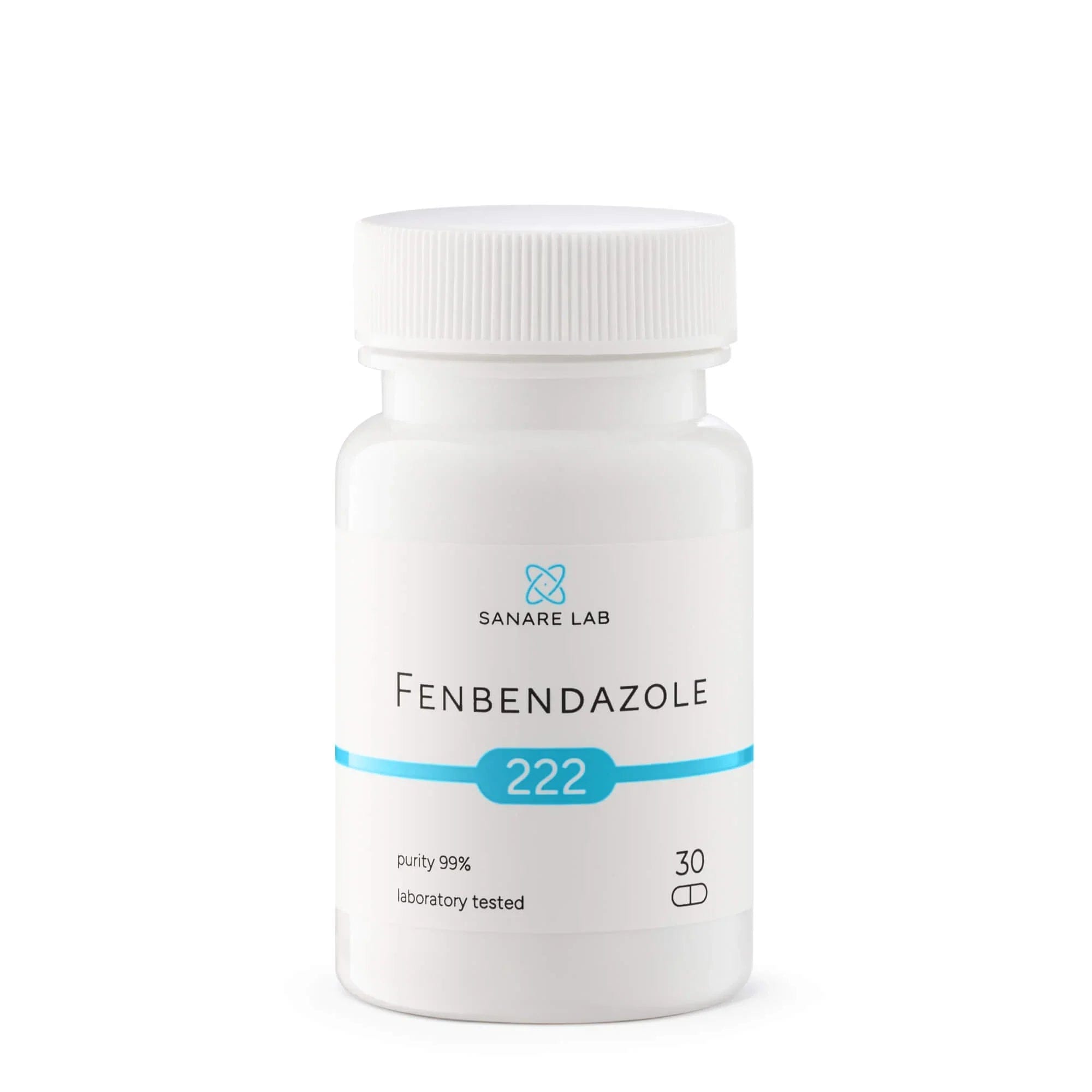
Pharmaceutical grade
Fenbendazole 222 mg
99%+ purity, third‑party lab tested.
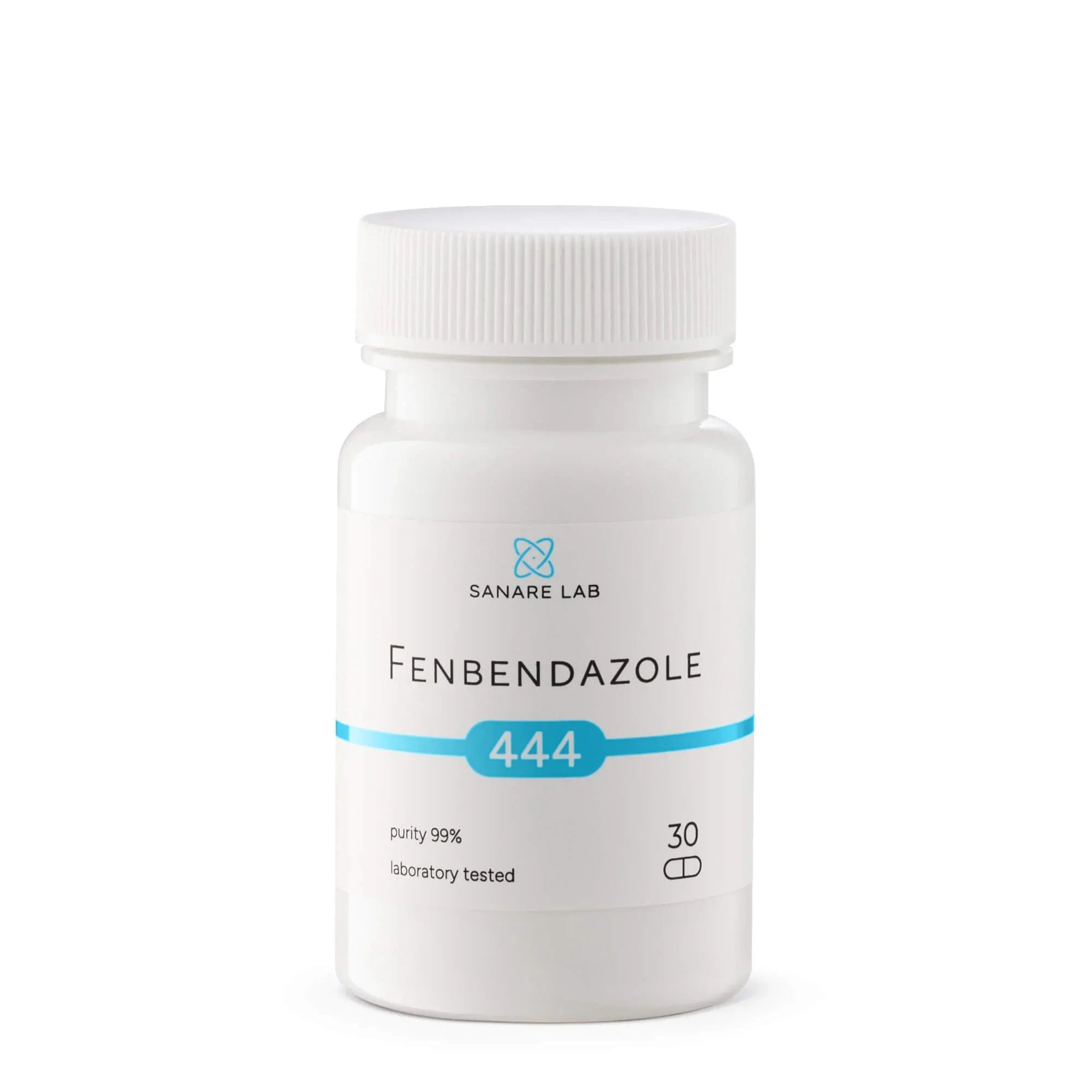
Pharmaceutical grade
Fenbendazole 444 mg
Double strength, 99%+ purity, lab tested.
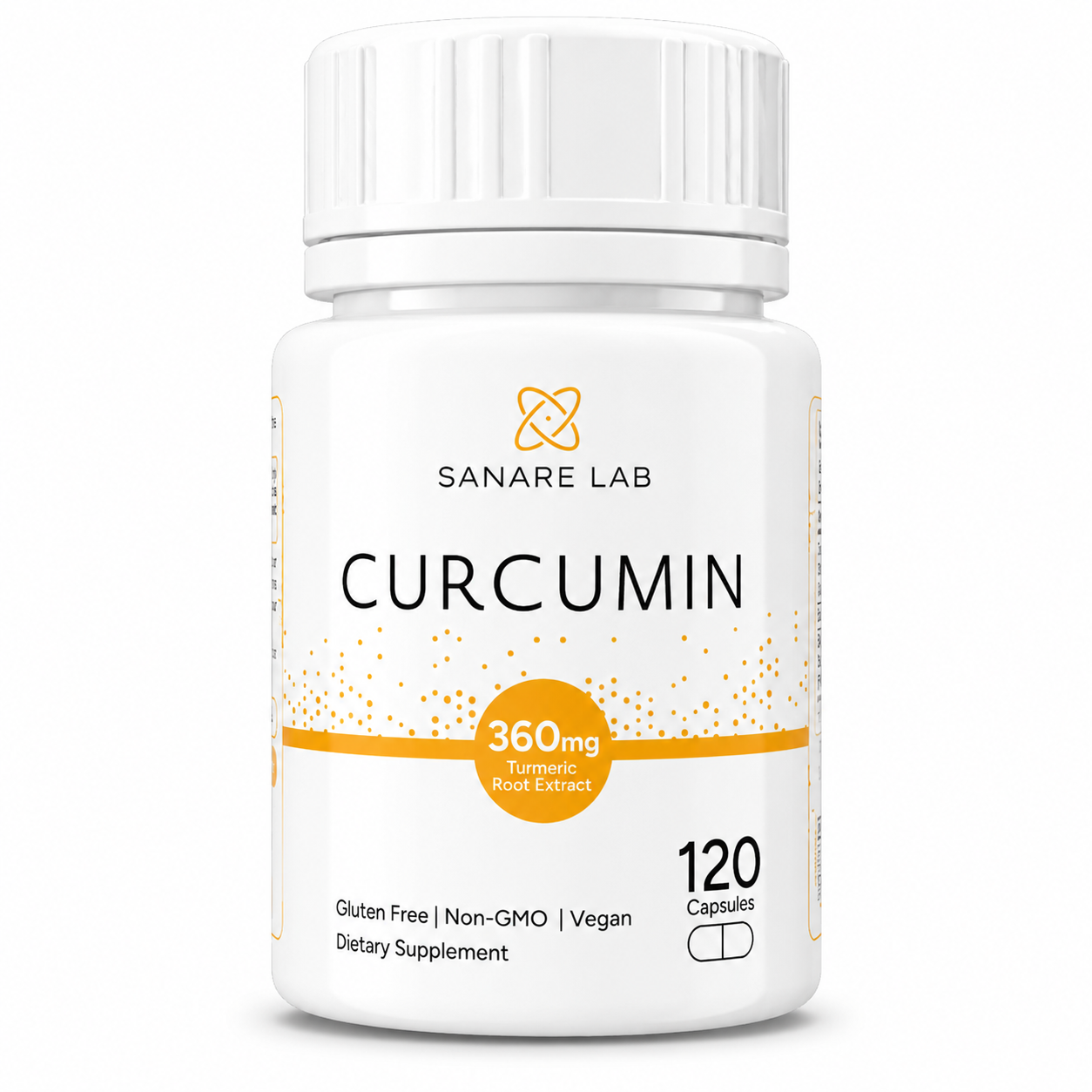
Daily adjunct
Curcumin 360 mg
95% curcuminoids with black pepper extract.
Prices checked September 2026 and may change; the store page shows the current price.
Disclaimer: Links are informational and for convenience. This site does not provide medical advice. Always verify product quality, labeling, and consult a licensed professional for health decisions.
References
- Dogra N, Kumar A, Mukhopadhyay T. Fenbendazole acts as a moderate microtubule destabilizing agent and causes cancer cell death by modulating multiple cellular pathways. Sci Rep, 2018. PMID: 30093705. PubMed
- Song B, Park EY, Kim KJ, et al. Repurposing of Benzimidazole Anthelmintic Drugs as Cancer Therapeutics. Cancers (Basel). 2022;14. PMID 36230527.
- Florio R, Carradori S, Veschi S, et al. Screening of Benzimidazole-Based Anthelmintics and Their Enantiomers as Repurposed Drug Candidates in Cancer Therapy. Pharmaceuticals (Basel). 2021;14. PMID 33920661.
- Bai RY, Staedtke V, Aprhys CM et al.. Antiparasitic mebendazole shows survival benefit in 2 preclinical models of glioblastoma multiforme. Neuro Oncol, 2011. PMID: 21764822. PubMed
- Duan Q, Liu Y, Rockwell S. Fenbendazole as a potential anticancer drug. Anticancer Res. 2013;33:355-62. PMID 23393324.
- Mrkvová Z, Uldrijan S, Pombinho A, et al. Benzimidazoles Downregulate Mdm2 and MdmX and Activate p53 in MdmX Overexpressing Tumor Cells. Molecules. 2019;24. PMID 31181622.
- Park D, Lee JH, Yoon SP. Anti-cancer effects of fenbendazole on 5-fluorouracil-resistant colorectal cancer cells. Korean J Physiol Pharmacol. 2022;26:377-387. PMID 36039738.
- Chu SW, Badar S, Morris DL, et al. Potent inhibition of tubulin polymerisation and proliferation of paclitaxel-resistant 1A9PTX22 human ovarian cancer cells by albendazole. Anticancer Res. 2009;29:3791-6. PMID 19846910.
- Nygren P, Larsson R. Drug repositioning from bench to bedside: tumour remission by the antihelmintic drug mebendazole in refractory metastatic colon cancer. Acta Oncol, 2014. PMID: 24160353. PubMed
- Huang L, Zhao L, Zhang J, et al. Antiparasitic mebendazole (MBZ) effectively overcomes cisplatin resistance in human ovarian cancer cells by inhibiting multiple cancer-associated signaling pathways. Aging (Albany NY). 2021;13:17407-17427. PMID 34232919.
- Guerini AE, Triggiani L, Maddalo M, et al. Mebendazole as a Candidate for Drug Repurposing in Oncology: An Extensive Review of Current Literature. Cancers (Basel). 2019;11. PMID 31480477.
- Son DS, Lee ES, Adunyah SE. The Antitumor Potentials of Benzimidazole Anthelmintics as Repurposing Drugs. Immune Netw. 2020;20:e29. PMID 32895616.
- American Cancer Society. What to Know About Fenbendazole. cancer.org, 2024. American Cancer Society
- U.S. Pharmacopeia. USP–NF General Notices and Requirements (monograph and grade standards). United States Pharmacopeia. USP
- International Organization for Standardization. ISO/IEC 17025:2017 — General requirements for the competence of testing and calibration laboratories. ISO. ISO
- DailyMed (U.S. National Library of Medicine). Panacur (fenbendazole) Granules 22.2% — FDA veterinary drug label. dailymed.nlm.nih.gov. DailyMed
- Tucker JD, et al. Dietary supplements adulterated with pharmaceutical ingredients: analysis of the FDA tainted-products database. JAMA Netw Open / US Pharmacist review, 2018. PMC
- Photo and thermal stability studies on benzimidazole anthelmintics by HPLC and GC-MS. Journal of Pharmaceutical and Biomedical Analysis. Reference
- Improving fenbendazole solubility via Soluplus®-based solid dispersions. PMC, 2024. PMC
- Exploring the dissolution and long-term storage stability of cryoprotectant-free fenbendazole nanoparticles. Research summary. Reference
- Dogra N, Kumar A, Mukhopadhyay T. Fenbendazole acts as a moderate microtubule destabilizing agent and causes cancer cell death by modulating multiple cellular pathways. Sci Rep, 2018. PMID: 30093705. PubMed
- Bai RY, Staedtke V, Aprhys CM, et al. Antiparasitic mebendazole shows survival benefit in preclinical models of glioblastoma multiforme. Neuro Oncol, 2011. PMID: 21764822. PubMed
Medical Disclaimer
This article is for educational and informational purposes only. It is not intended to be a substitute for professional medical advice, diagnosis, or treatment. Always seek the advice of your physician or other qualified health provider with any questions you may have regarding a medical condition. Never disregard professional medical advice or delay in seeking it because of something you have read on this website.

Dr. Andrew Ellison, MD
Science editor and health researcher at Sanare Lab, covering evidence-based wellness, emerging compound research, clinical studies, and practical health protocols. Content is educational and does not replace medical advice.