
Fenbendazole and Breast Cancer: Pyroptosis, Case Reports & What the Research Shows
2025 case series documenting three Stage IV cancer remissions with fenbendazole. Detailed protocols, timelines, and independently verified outcomes.
 By Dr. Andrew Ellison, MD · March 17, 2026 · 25 min read
This article is for research and informational purposes only. It does not constitute medical advice. Do not self-prescribe. Always consult a qualified healthcare provider before using any supplement, especially alongside cancer treatment.
Table of Contents
- What Is Pyroptosis — and Why Does It Matter in Breast Cancer?
- The 2025 Frontiers in Pharmacology Pyroptosis Study: What It Found
- Established Mechanisms: Microtubules, p53, and GLUT Transporters
- Stage IV Breast Cancer Case Report: From Hospice to Complete Remission
- Safety Considerations: Liver Monitoring and DILI Risk
- Triple-Negative Breast Cancer: A Special Consideration
- How This Fits the Joe Tippens Protocol Framework
- The American Cancer Society's Position
- Fenbendazole and Breast Cancer: Putting It All Together
- What People Report Online: Breast Cancer
- References
This article covers the full picture of what current research shows about fenbendazole and breast cancer: the 2025 pyroptosis study in detail, the in vivo mouse efficacy data, earlier mechanisms involving microtubule disruption and p53 stabilization, the documented case of an 83-year-old woman with Stage IV ER+ disease who achieved complete remission while taking 222 mg/day, practical considerations for triple-negative breast cancer, the American Cancer Society's perspective, and an honest assessment of liver safety. This is an educational deep-dive for researchers, patients, and caregivers — not a treatment recommendation.
What Is Pyroptosis — and Why Does It Matter in Breast Cancer?
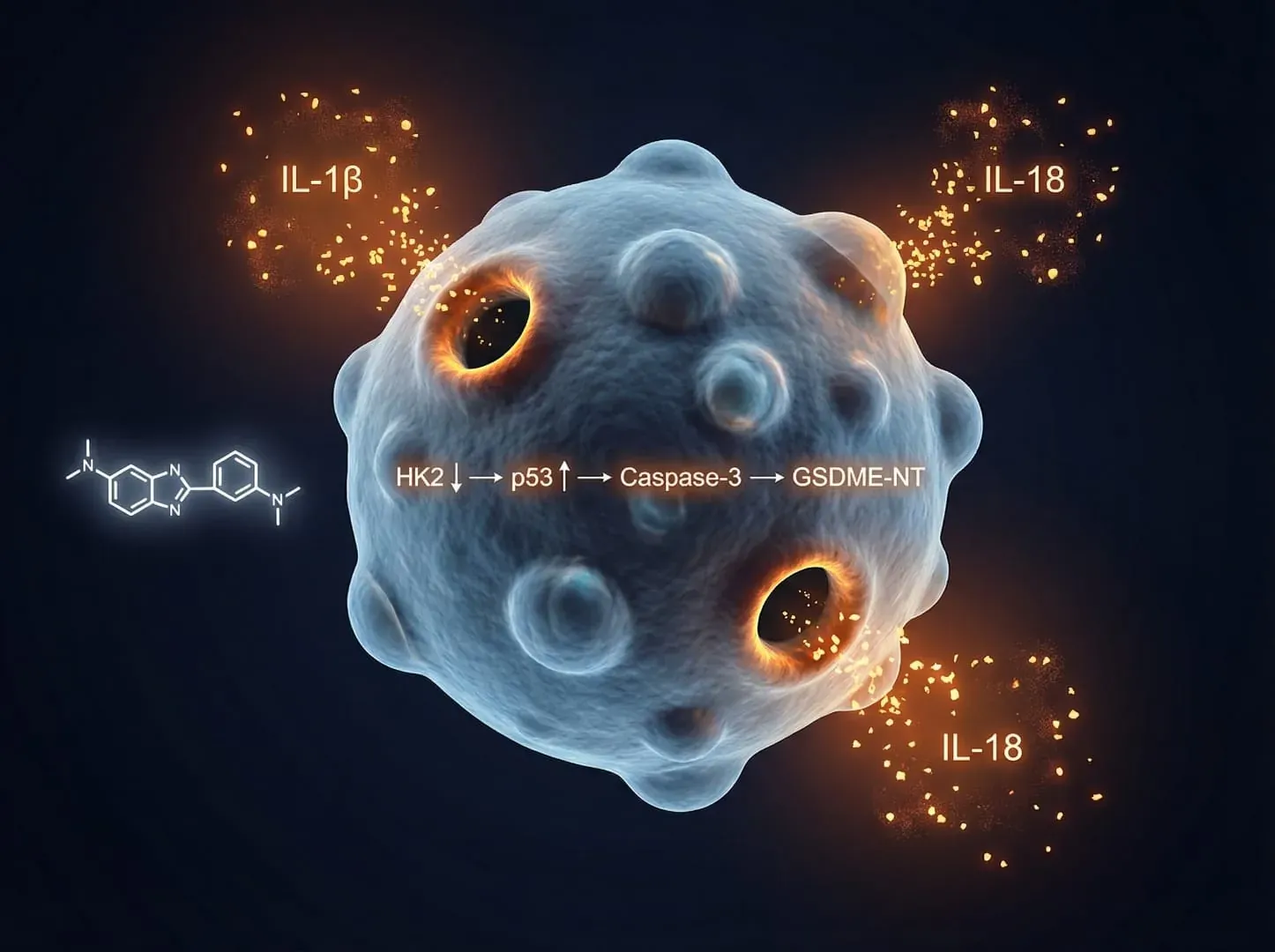
Pyroptosis is a form of programmed cell death distinct from apoptosis. While apoptosis is typically a quiet, immunologically silent process, pyroptosis is characterized by cell swelling, plasma membrane pore formation, and the release of pro-inflammatory cytokines (particularly IL-1β and IL-18). In the context of cancer, this distinction matters considerably: pyroptotic death activates the immune system, potentially recruiting immune effector cells to the tumor site and reshaping the local tumor microenvironment.
The molecular switch governing pyroptosis is the gasdermin (GSDM) protein family. When cleaved by activated caspases, gasdermin proteins insert into the plasma membrane, creating pores that cause cell lysis and cytokine release. In cancer cells, GSDME (gasdermin E) is a particularly relevant target — and it sits downstream of caspase-3, the same executioner caspase involved in apoptosis. The caspase-3/GSDME axis therefore represents a bifurcation point: activation of caspase-3 can result in either apoptosis or pyroptosis, depending on GSDME expression levels in the target cell.
This is the pathway that fenbendazole appears to exploit in breast cancer cells, according to the 2025 Frontiers study — and it represents a mechanistic advance over what was previously understood about the drug's anticancer activity.
The 2025 Frontiers in Pharmacology Pyroptosis Study: What It Found
Published in July 2025, the study titled "Fenbendazole induces pyroptosis in breast cancer cells through HK2/caspase-3/GSDME signaling pathway" by Pan, Jin, Huang and colleagues represents the first direct demonstration that fenbendazole can activate the pyroptotic machinery in breast cancer (Frontiers in Pharmacology, 2025). The work used EMT6 mouse mammary carcinoma cells in vitro and a Balb/c xenograft model in vivo.
In Vitro Findings
Treating EMT6 cells with fenbendazole at increasing concentrations produced a dose-dependent reduction in cell viability, as measured by CCK-8 assay. Crucially, the researchers also observed characteristic pyroptotic morphology under microscopy: cells swelled, developed membrane bubbles, and lysed — patterns consistent with gasdermin-mediated membrane disruption, not typical apoptotic shrinkage. Importantly, the control cell line HC11 (normal mouse mammary epithelial cells) showed no significant toxicity at the same concentrations, suggesting a degree of selectivity for cancer cells.
Western blot and qPCR analysis confirmed upregulation of:
- Cleaved caspase-3 — the activated form of the executioner caspase
- GSDME-N terminal fragment (GSDME-NT) — the membrane-pore-forming product of GSDME cleavage
- IL-1β and IL-18 — canonical pyroptosis-associated pro-inflammatory cytokines
- LDH release — a marker of membrane rupture and cell lysis
When the researchers inhibited caspase-3 pharmacologically (using Z-DEVD-FMK) or knocked down GSDME using siRNA, pyroptosis was significantly attenuated — confirming that the caspase-3/GSDME axis is causally required for fenbendazole's pyroptotic effect, not merely correlative.
HK2 and the Glycolysis Connection
Perhaps the most novel finding of the 2025 study is the link between fenbendazole, hexokinase 2 (HK2), and the pyroptotic pathway. For more details, see our guide on Joe Tippens Protocol. HK2 is the rate-limiting enzyme of glycolysis — it phosphorylates glucose to glucose-6-phosphate, committing it to the glycolytic pathway. Cancer cells typically overexpress HK2 as part of the Warburg effect, their pathological reliance on aerobic glycolysis for energy and biosynthetic precursors.
The study found that fenbendazole significantly downregulates HK2 expression, leading to:
- Reduced glucose consumption in EMT6 cells
- Decreased lactate production (a glycolysis byproduct)
- Lower intracellular ATP levels
Mechanistically, this appears to occur through p53 upregulation: fenbendazole stabilizes p53, which transcriptionally suppresses HK2 expression. The downstream metabolic disruption then feeds into the caspase-3/GSDME axis, amplifying pyroptosis. When the researchers used 2-DG (an HK2 inhibitor) alongside fenbendazole, pyroptosis was enhanced; when they added ATP (activating HK2), the pyroptotic effect was reversed — directly demonstrating that HK2 modulation is mechanistically upstream of the pyroptotic outcome.
In Vivo Mouse Results: Medium-Dose FBZ vs. Cisplatin
The in vivo component of the study used Balb/c mice implanted with EMT6 mammary carcinoma xenografts. Animals were treated with three doses of fenbendazole (low: 12.5 mg/kg, medium: 25 mg/kg, high: 50 mg/kg, administered intraperitoneally every 3 days for 21 days) and compared to a cisplatin-treated group (DDP, clinical equivalent dose) and untreated controls.
Key in vivo results:
- Medium-dose FBZ (25 mg/kg) produced tumor volume and weight reduction statistically comparable to cisplatin — a standard cytotoxic chemotherapy agent
- All three FBZ doses produced dose-dependent tumor growth inhibition
- Histopathology of excised tumors showed pyroptotic-like cell morphology and disrupted tumor architecture in FBZ-treated animals
- Consistent with in vitro findings, FBZ-treated xenografts showed elevated LDH, IL-18, and IL-1β in tumor tissue — confirming active pyroptosis in vivo
Safety Comparison: FBZ vs. Cisplatin In Vivo
The toxicity profile comparison in this study is clinically striking. While medium-dose FBZ achieved efficacy comparable to cisplatin, the systemic toxicity profiles were markedly different:
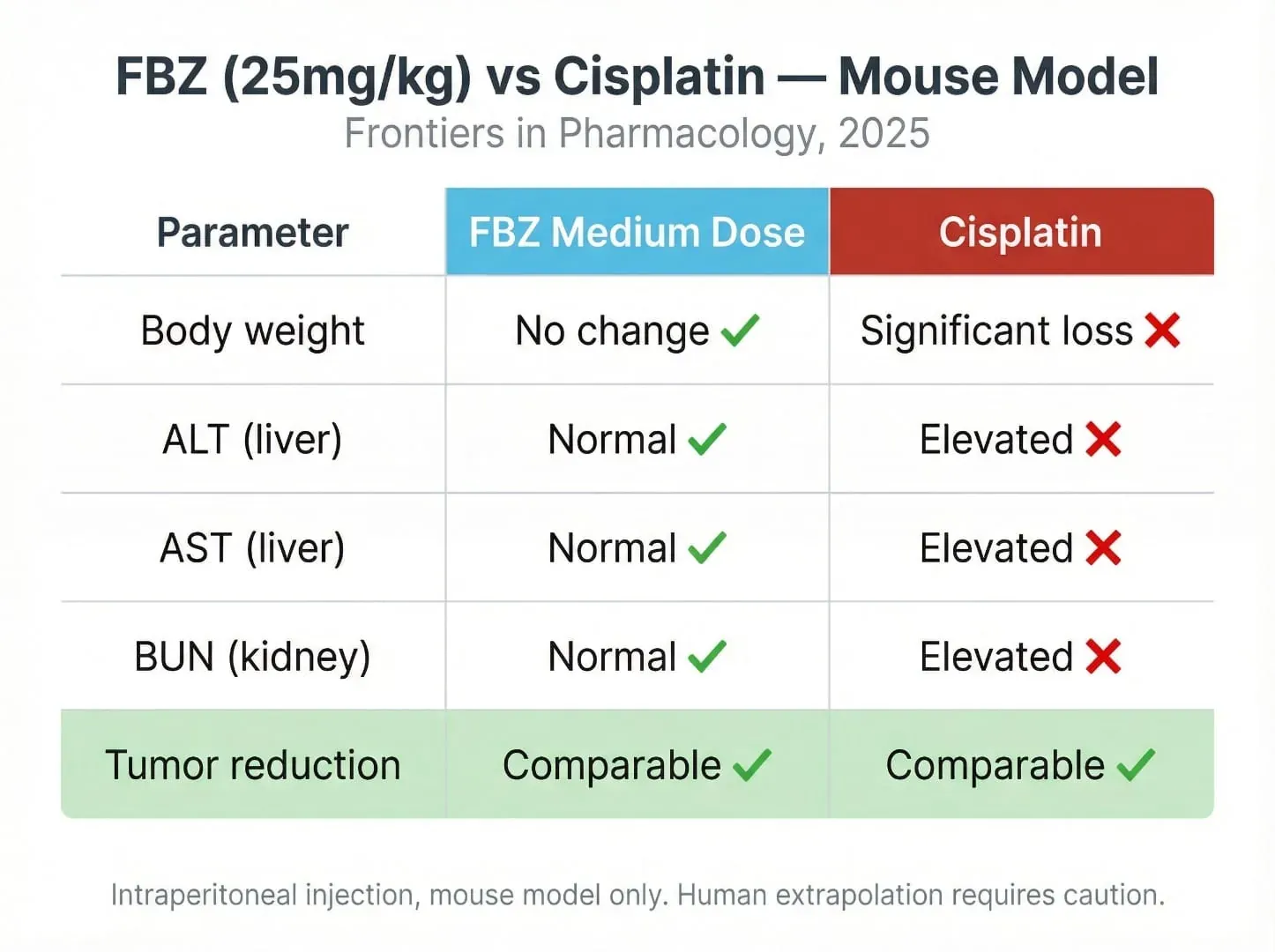
Important context: These results are in mouse models using intraperitoneal injection, not oral human dosing. The extrapolation to human use requires significant caution. Nonetheless, the safety differential between FBZ and cisplatin in this preclinical model is notable, and it aligns with the broader benzimidazole safety data from veterinary use.
Established Mechanisms: Microtubules, p53, and GLUT Transporters
The pyroptosis discovery builds on a foundation of earlier mechanistic work. The most-cited study establishing fenbendazole's anticancer credentials is a 2018 paper by Dogra, Kumar, and Mukhopadhyay in Scientific Reports (Nature), which demonstrated three interconnected mechanisms in human non-small cell lung cancer (NSCLC) cells (PMC6103891):
1. Microtubule Disruption
Fenbendazole, like all benzimidazoles, binds to β-tubulin and interferes with microtubule polymerization. For more details, see our guide on fenbendazole dosage guide. Cancer cells undergoing mitosis depend on intact spindle formation; disrupting microtubule dynamics causes mitotic arrest and cell death. This mechanism is shared with well-established cancer drugs such as paclitaxel and vincristine, though fenbendazole is described as a "moderate" destabilizer rather than a potent one. The 2018 paper demonstrated this in A549 NSCLC cells using tubulin polymerization assays and immunofluorescence microscopy.
2. p53 Stabilization
The 2018 study also showed that fenbendazole significantly upregulates and stabilizes p53, the master tumor suppressor protein often called the "guardian of the genome." In the majority of cancer cells that retain functional p53 (approximately 50% of all cancers), p53 stabilization activates transcriptional programs leading to cell cycle arrest, DNA repair engagement, or apoptosis. The 2025 pyroptosis study extends this observation: p53 upregulation by fenbendazole appears to transcriptionally suppress HK2, creating the metabolic vulnerability that feeds into the pyroptotic cascade.
3. GLUT Transporter Downregulation
Fenbendazole was shown in the 2018 study to reduce expression of GLUT transporters (primarily GLUT1 and GLUT4) on the cancer cell surface. GLUT transporters are responsible for importing glucose into cells; cancer cells overexpress them to fuel their voracious glycolytic demands. Reducing GLUT expression limits glucose entry, complementing the HK2 suppression documented in the 2025 pyroptosis study. Together, these two mechanisms — less glucose entering the cell, and reduced capacity to phosphorylate and metabolize what does enter — create compounding metabolic stress in cancer cells.
Synergy insight: The metabolic mechanisms (GLUT downregulation + HK2 suppression) and the cell death mechanisms (microtubule disruption + p53 stabilization + caspase-3/GSDME pyroptosis) may act in concert. Metabolic stress can sensitize cancer cells to pyroptotic death, while pyroptotic signaling further disrupts metabolism — creating a potentially self-reinforcing cycle.
For readers interested in how fenbendazole compares mechanistically with other benzimidazoles, see our article on Fenbendazole vs. Mebendazole.
Stage IV Breast Cancer Case Report: From Hospice to Complete Remission
Published in May 2025 in a peer-reviewed case series by Makis, Baghli, and Martinez (PMC12215191), Case 1 of the series describes one of the most clinically compelling fenbendazole reports in the breast cancer literature to date.
Patient Profile and Diagnosis
An 83-year-old woman with a history of ER+ breast cancer originally diagnosed in 2009 (treated with bilateral mastectomy, reconstruction, and aromatase inhibitors) presented in October 2021 with recurrence as fully metastatic Stage IV ER+/PR+, HER2-negative breast cancer. The disease burden was extensive:
- Liver metastases confirmed by fine needle aspiration (including a left lobe lesion measuring 2.9×1.7 cm, SUV max 5.6 on PET/CT)
- Ascites requiring biliary stent placement for obstruction
- Extensive bone metastases: T10, T12, L1-L5, S1-S2, iliac bones (L4 lesion: 5.0×2.9 cm lytic, SUV max 6.8)
- Multiple lung lesions: 6 hypermetabolic nodules, largest 2.8×1.5 cm in the right upper lobe (SUV max 8.4)
She declined chemotherapy and radiation (with the exception noted below) and was placed on hospice care. This baseline context is important for interpreting the subsequent clinical course.
Treatment Timeline and Protocol
CA 27.29 Tumor Marker Trajectory
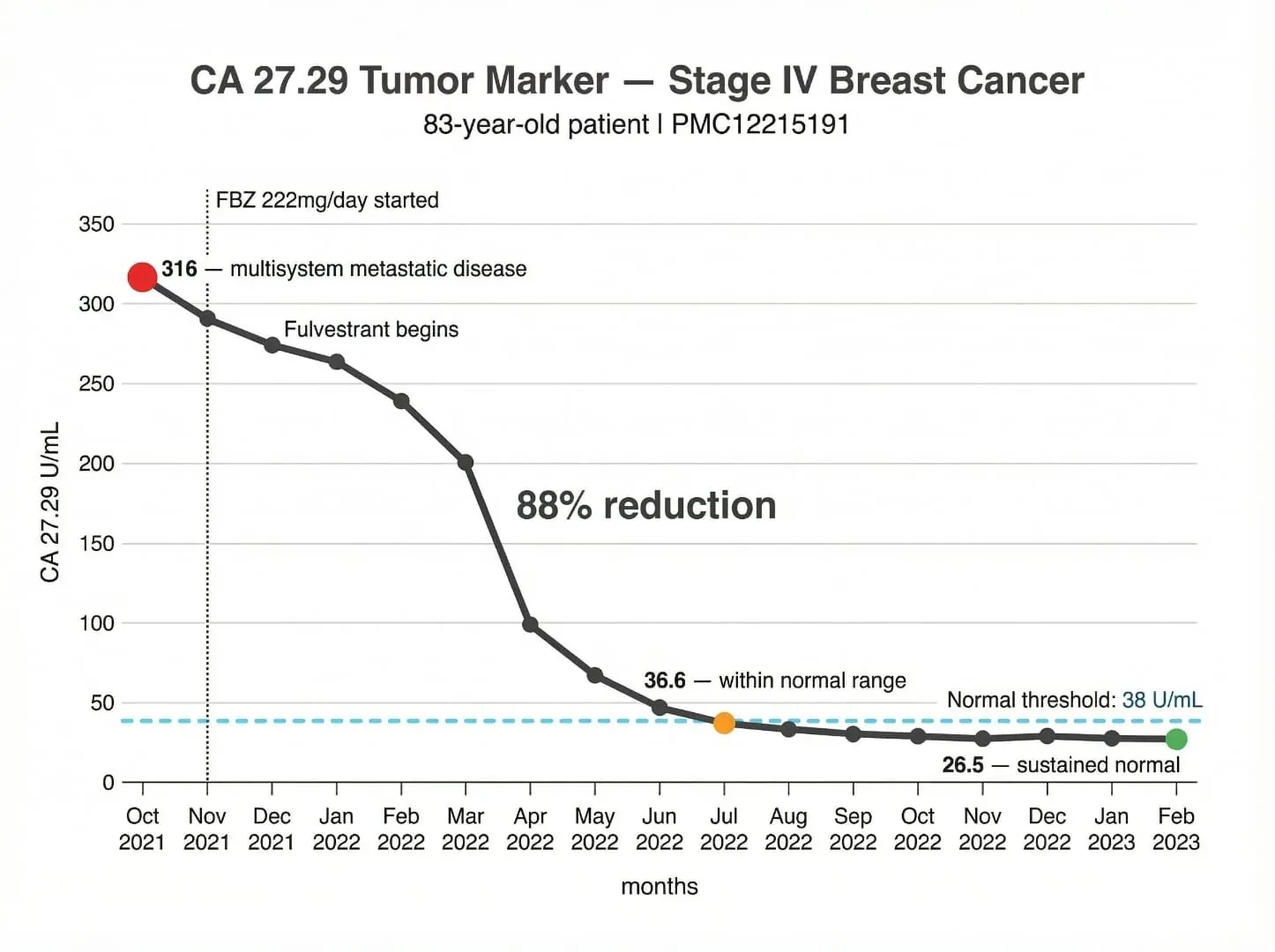
CA 27.29 is the primary serum tumor marker used to monitor breast cancer disease burden. For more details, see our guide on fenbendazole and lung cancer. A value above 38 U/mL is generally considered elevated. The trajectory in this case is remarkable:
- November 2021 (baseline): CA 27.29 = 316 U/mL — far above normal, consistent with extensive metastatic disease
- July 2022 (7 months after starting FBZ): CA 27.29 = 36.6 U/mL — an ~88% reduction, now within normal range
- February 2023: CA 27.29 = 26.5 U/mL — remained normal
- Subsequent follow-up: All values remained normal through approximately 3 years of follow-up
⭐ Clinical note: The case authors (Makis et al.) are careful to note that the patient received three concurrent interventions — fenbendazole, fulvestrant (an estrogen receptor degrader/blocker), and targeted radiation to two spinal lesions. Attributing the complete response to any single agent is not scientifically defensible from a case report. However, the authors point out that fulvestrant monotherapy in heavily pre-treated ER+ metastatic breast cancer typically yields an objective response rate of approximately 15–20%, and complete remission of this magnitude and duration in a patient with liver, lung, and extensive bone metastases who had declined chemotherapy would be extraordinary for fulvestrant alone.
Safety Considerations: Liver Monitoring and DILI Risk
Any honest discussion of fenbendazole must include a clear-eyed look at its hepatotoxicity potential. While the drug has a long veterinary safety record and the 2025 in vivo study showed FBZ did not elevate liver enzymes in mice (unlike cisplatin), published human case reports document real cases of drug-induced liver injury (DILI) — some severe — associated with fenbendazole self-administration.
Documented DILI Cases
ACG Case Reports Journal (2024) — Histologically Confirmed Severe DILI: A 67-year-old woman self-administering fenbendazole for premalignant skin lesions developed jaundice and marked liver enzyme elevation (PMC11068125). RUCAM score: 9 (highly probable). Pattern: severe hepatocellular DILI. Resolution occurred approximately 3 months after stopping fenbendazole. This is notable as the first histologically confirmed case of fenbendazole-induced DILI in humans.
World Journal of Clinical Cases (2026) — DILI vs. Immunotherapy Hepatitis: A 47-year-old woman with metastatic colon cancer on nivolumab/relatlimab developed severe hepatocellular injury (ALT 2407 U/L, AST 2435 U/L, bilirubin 3.1 mg/dL) within 7 days of escalating her fenbendazole dose from 222 mg three times weekly to 222 mg daily — a 2.3-fold weekly exposure increase (PMC12836008). RUCAM score: 8 (probable). This case is clinically important for two reasons: it illustrates dose-dependent toxicity, and it highlights the diagnostic complexity when patients on immunotherapy self-administer fenbendazole (DILI can mimic immune-related hepatitis).
The 2026 case also notes a mechanistic explanation: fenbendazole activates CYP1A1 and CYP1A2 enzymes, which can generate reactive metabolites or interfere with the metabolism of co-administered drugs. It also appears to deplete hepatic glutathione — an essential antioxidant — increasing hepatocyte vulnerability to oxidative stress from other medications or metabolic challenges.
Liver Monitoring Recommendations
Based on published DILI cases and expert commentary, practitioners who supervise patients using fenbendazole generally recommend the following monitoring framework: Learn more about fenbendazole and prostate cancer.
Interaction risk: The 2026 case strongly suggests that dose escalation dramatically increases DILI risk. Patients on immunotherapy (checkpoint inhibitors such as nivolumab, pembrolizumab) face an additional diagnostic complication, as fenbendazole DILI can closely mimic immune-related hepatitis — potentially resulting in unnecessary corticosteroid use or premature discontinuation of life-prolonging immunotherapy. Anyone on immunotherapy should disclose fenbendazole use to their oncologist.
The breast cancer case note: The 83-year-old patient in the PMC12215191 case series did experience transient ALT/AST elevation in July 2022 (approximately 7 months after starting FBZ). The authors noted the elevation was mild and normalized within weeks without discontinuing FBZ, and the cause was unclear (possibly fulvestrant, FBZ, or their interaction). This did not preclude sustained complete remission but underscores the importance of hepatic monitoring.
Triple-Negative Breast Cancer: A Special Consideration
Triple-negative breast cancer (TNBC) — characterized by absence of estrogen receptor, progesterone receptor, and HER2 amplification — is the most challenging breast cancer subtype. It lacks the druggable targets (ER, PR, HER2) that define the treatment landscape for other subtypes, making it more dependent on cytotoxic chemotherapy and, more recently, immunotherapy (checkpoint inhibitors). TNBC is associated with higher rates of early recurrence and reduced survival compared to hormone receptor-positive subtypes.
Several lines of evidence suggest fenbendazole may have particular relevance in TNBC:
- The 2025 Frontiers study used EMT6 cells — a model of highly aggressive murine mammary carcinoma that shares characteristics with human TNBC, including rapid growth kinetics and resistance to hormonal therapies. The pyroptosis and HK2-suppression mechanisms demonstrated in this model are not estrogen receptor-dependent.
- Cisplatin — the comparator drug in the 2025 in vivo study — is itself a standard-of-care option in TNBC, which gives the FBZ-vs-cisplatin comparison added clinical relevance for this subtype specifically.
- TNBC cells are known to highly overexpress GLUT1 and rely heavily on aerobic glycolysis for energy — precisely the metabolic vulnerability that FBZ's GLUT downregulation and HK2 suppression mechanisms target.
- The pyroptosis pathway activated by FBZ releases pro-inflammatory cytokines (IL-1β, IL-18) that could theoretically enhance immune recognition of tumor cells — potentially complementing checkpoint inhibitor immunotherapy, which is now part of the TNBC standard of care (pembrolizumab + chemotherapy in early and metastatic TNBC).
A Phase I/II clinical trial (NCT05318469) at Cedars-Sinai Medical Center is currently evaluating ivermectin combined with immune checkpoint inhibitors specifically in metastatic triple-negative breast cancer — a related antiparasitic approach that reflects growing institutional interest in repurposed antiparasitic drugs in this subtype.
Research gap: No published preclinical study has directly compared fenbendazole efficacy across ER+, HER2+, and TNBC cell lines in a head-to-head format. The claim of particular TNBC activity is biologically plausible but not yet rigorously established. Human clinical data specific to FBZ in TNBC does not exist.
Subtype Sensitivity: Why TNBC Cells Are More Vulnerable
Not all breast cancers respond equally to fenbendazole in the laboratory. Multiple independent studies have confirmed a consistent pattern: triple-negative breast cancer (TNBC) cells — particularly the widely studied MDA-MB-231 line — show significantly greater sensitivity to fenbendazole than luminal, hormone receptor-positive cell lines like MCF-7.
The IC50 values (the concentration needed to kill 50% of cells) for MDA-MB-231 cells are typically below 10 µM, while MCF-7 cells require noticeably higher concentrations to achieve similar cytotoxicity. This difference is not random — it reflects fundamental metabolic differences between breast cancer subtypes.
TNBC cells are heavily reliant on glycolysis (the Warburg effect) for energy production and survival. Because fenbendazole directly disrupts glycolysis by suppressing hexokinase II (HK2) and downregulating glucose transporters (GLUT1), cells with greater glycolytic dependence are more acutely affected. ER-positive MCF-7 cells, by contrast, have more metabolic flexibility and can partially compensate through alternative energy pathways.
This metabolic vulnerability also helps explain why the pyroptosis pathway (described above) appears to be preferentially activated in TNBC — the HK2 suppression that triggers the caspase-3/GSDME cascade is more consequential in cells that cannot survive without it.
Important caveat: These are laboratory observations in isolated cell cultures. The human breast tumor microenvironment is vastly more complex — including immune cells, stromal tissue, blood supply, and drug metabolism — and laboratory sensitivity does not automatically predict clinical response.
Oxidative Stress Selectivity: Cancer Cells vs. Normal Cells
One of the more intriguing findings in recent fenbendazole breast cancer research comes from a 2023 study by Semkova, Nikolova, and colleagues published in Anticancer Research (PMID: 36854536). The researchers investigated whether fenbendazole's cytotoxic effects are selective — that is, whether it preferentially harms cancer cells while sparing normal tissue.
Using MDA-MB-231 triple-negative breast cancer cells alongside MCF-10A normal breast epithelial cells, the study demonstrated a striking dichotomy:
- In cancer cells (MDA-MB-231): Fenbendazole significantly increased reactive oxygen species (ROS), overwhelming the cells' antioxidant defense systems and contributing to cell death.
- In normal cells (MCF-10A): Fenbendazole actually suppressed oxidative stress relative to untreated controls, showing a protective or neutral effect on non-malignant cells.
This redox selectivity is scientifically notable because it suggests a potential therapeutic window — the idea that a drug can affect cancer cells at concentrations that leave normal tissue relatively unharmed. Cancer cells often operate at a baseline of elevated oxidative stress due to their rapid proliferation and metabolic reprogramming. Adding further ROS burden pushes them past a lethal threshold, while normal cells — operating with lower baseline stress — can tolerate or even benefit from the compound's antioxidant properties.
However, this finding comes with significant limitations. The study was conducted entirely in vitro (cell cultures), and the concentrations used may not be achievable in human blood plasma given fenbendazole's poor oral bioavailability. Additionally, selectivity observed in isolated cell lines does not guarantee selectivity in the complex environment of a living patient, where drug metabolism, tissue distribution, and immune interactions all play roles.
The Broader Benzimidazole Class: Flubendazole and HER2-Positive Breast Cancer
While fenbendazole research in breast cancer has focused primarily on TNBC, a closely related benzimidazole — flubendazole — has shown specific activity against HER2-positive breast cancer, one of the most challenging subtypes when resistance to targeted therapy develops.
A 2018 study by Kim et al. in Cancer Letters (PMID: 29080749) demonstrated that flubendazole overcomes trastuzumab (Herceptin) resistance by targeting cancer stem-like properties and disrupting HER2 signaling in HER2-positive breast cancer models. Specifically:
- Flubendazole downregulated truncated p95HER2 (a resistance-associated variant), phospho-HER2, and phospho-Akt — key nodes in the survival signaling cascade.
- It suppressed breast cancer stem cell (BCSC) populations by reducing ALDH1 expression and CD44high/CD24low phenotype — the cell population most often implicated in therapy resistance and recurrence.
- In trastuzumab-resistant xenograft models (in vivo), flubendazole administration resulted in significant tumor suppression.
These results do not directly apply to fenbendazole, which is a different molecule with distinct pharmacokinetics. However, they illustrate that the benzimidazole drug class has broader relevance across breast cancer subtypes than any single compound's data would suggest. The shared β-tubulin binding mechanism and common structural pharmacophore mean that insights from flubendazole research can inform — though not replace — investigation of fenbendazole in HER2-positive contexts.
Drug Interactions with Standard Breast Cancer Treatments
Any discussion of fenbendazole in a breast cancer context must address potential interactions with standard treatments. Breast cancer patients typically receive some combination of surgery, radiation, hormonal therapy (tamoxifen, aromatase inhibitors), targeted therapy (trastuzumab, CDK4/6 inhibitors), and chemotherapy (taxanes, anthracyclines). Adding any experimental compound to this regimen creates pharmacological complexity.
The critical point: none of these interactions have been studied in human clinical trials. Every entry in the table above is based on pharmacological reasoning or extrapolation from preclinical models. A breast cancer patient undergoing active treatment should never add fenbendazole without explicit discussion with their treating oncologist, because even a theoretically "non-interacting" combination can produce unexpected effects when compounded with the metabolic stress of cancer treatment.
For more detail on fenbendazole's metabolism and liver safety, see our comprehensive Liver Safety & Side Effects guide.
Bioavailability: The Translation Gap
Every promising in-vitro cancer study must confront the same question: can the drug reach the tumor at effective concentrations in a living patient? For fenbendazole, this question represents perhaps the most significant obstacle to clinical translation.
Fenbendazole is classified as BCS Class II — high permeability but extremely low aqueous solubility. In veterinary medicine, this is partially overcome by taking the drug with food, which increases absorption 2–3 fold. In human volunteers, the pharmacokinetic profile is characterized by:
- Variable absorption: Peak plasma concentrations show wide inter-individual variation, partly due to food composition, gut transit time, and formulation differences.
- First-pass metabolism: The liver rapidly converts fenbendazole to its primary metabolites — fenbendazole sulfoxide (active) and fenbendazole sulfone (less active) — before it reaches systemic circulation. Saturation of this first-pass process at higher doses may partly explain why drug-induced liver injury (DILI) risk increases with dose escalation.
- Species differences: Humans produce significantly more aminofenbendazole (an inactive metabolite) than rodents, meaning that the plasma levels of active fenbendazole achieved in mouse studies are likely higher than what humans achieve at comparable oral doses.
The IC50 values reported in breast cancer cell studies (often 1–10 µM) must be compared against achievable human plasma concentrations — and the data suggest a meaningful gap. This does not categorically rule out clinical utility, as tumor tissue may accumulate drug differently than plasma, and pulsed dosing schedules (as used in the Joe Tippens protocol) attempt to maximize peak levels. But it does mean that laboratory results should not be interpreted as proof of human clinical efficacy.
For a detailed pharmacokinetic analysis, see our Panacur C analysis which covers human PK data, CYP2J2/CYP2C19 metabolism, and formulation-specific absorption issues.
⭐ How This Fits the Joe Tippens Protocol Framework
The widespread interest in fenbendazole as an anticancer agent traces in large part to the story of Joe Tippens, a small-cell lung cancer patient who reportedly achieved complete remission after adding fenbendazole (among other supplements) to his prescribed pembrolizumab immunotherapy. The Joe Tippens Protocol typically combines fenbendazole 222 mg/day (or 444 mg/day) with vitamin E succinate, curcumin, and CBD oil — taken on a cycling schedule of 3 days on, 4 days off, though continuous dosing is also used.
The dose used in the PMC12215191 breast cancer case (222 mg/day, continuous) aligns with the lower end of the Tippens Protocol dosing range. For more details, see our guide on fenbendazole case reports showing remission. For comprehensive dosing context and cycle schedules, see our Fenbendazole Dosage Guide. For comparisons with related antiparasitic approaches, see Ivermectin in Cancer Protocols and our comparison of Fenbendazole vs. Ivermectin.
Within the broader ISOM metabolic oncology framework, fenbendazole is used as part of a multi-target strategy alongside ivermectin, vitamin C, vitamin D3, curcumin, and metabolic interventions such as ketogenic diet and intermittent fasting. The compounding mechanisms — microtubule disruption, metabolic suppression, p53 activation, and now pyroptosis — make fenbendazole one of the more mechanistically interesting candidates in this space.
The American Cancer Society's Position
The American Cancer Society maintains a clear and cautionary stance on fenbendazole for cancer treatment, summarized on their website (cancer.org). Their position, as of their October 2025 update, includes several key points worth acknowledging directly:
- Not FDA approved for human use: Fenbendazole is approved for veterinary use only. There are no approved human dosing guidelines, no pharmacokinetic data in cancer patients, and no safety monitoring protocols established through clinical trials.
- No completed human clinical trials: While preclinical (laboratory and animal) data exists, no randomized controlled trial has evaluated fenbendazole in human cancer patients. Anecdotal case reports, however compelling, cannot establish efficacy or safety.
- Potential risks acknowledged: The ACS specifically calls out liver damage risk, potential interactions with standard cancer treatments, and the possibility of reducing efficacy of proven therapies if patients substitute FBZ for conventional treatment.
- Acknowledged early-stage science: The ACS does acknowledge "some early promise against cancer cells in laboratory and animal studies" — a meaningful concession from a conservative mainstream oncology body.
- Recommendation: Patients interested in fenbendazole should discuss it openly with their oncologist, and the ACS encourages exploring clinical trial eligibility rather than unmonitored self-administration.
Dr. Petros Grivas, quoted in the ACS article: "No proven benefit but several potential risks — I do not prescribe it."
This is a reasonable institutional position given the current evidence base. The absence of proof is not proof of absence — and the 2025 pyroptosis study, along with the growing case series literature, provides grounds for optimism about future clinical investigation. But the ACS position is not wrong to demand rigorous human trial data before endorsing clinical use.
✅ Fenbendazole and Breast Cancer: Putting It All Together
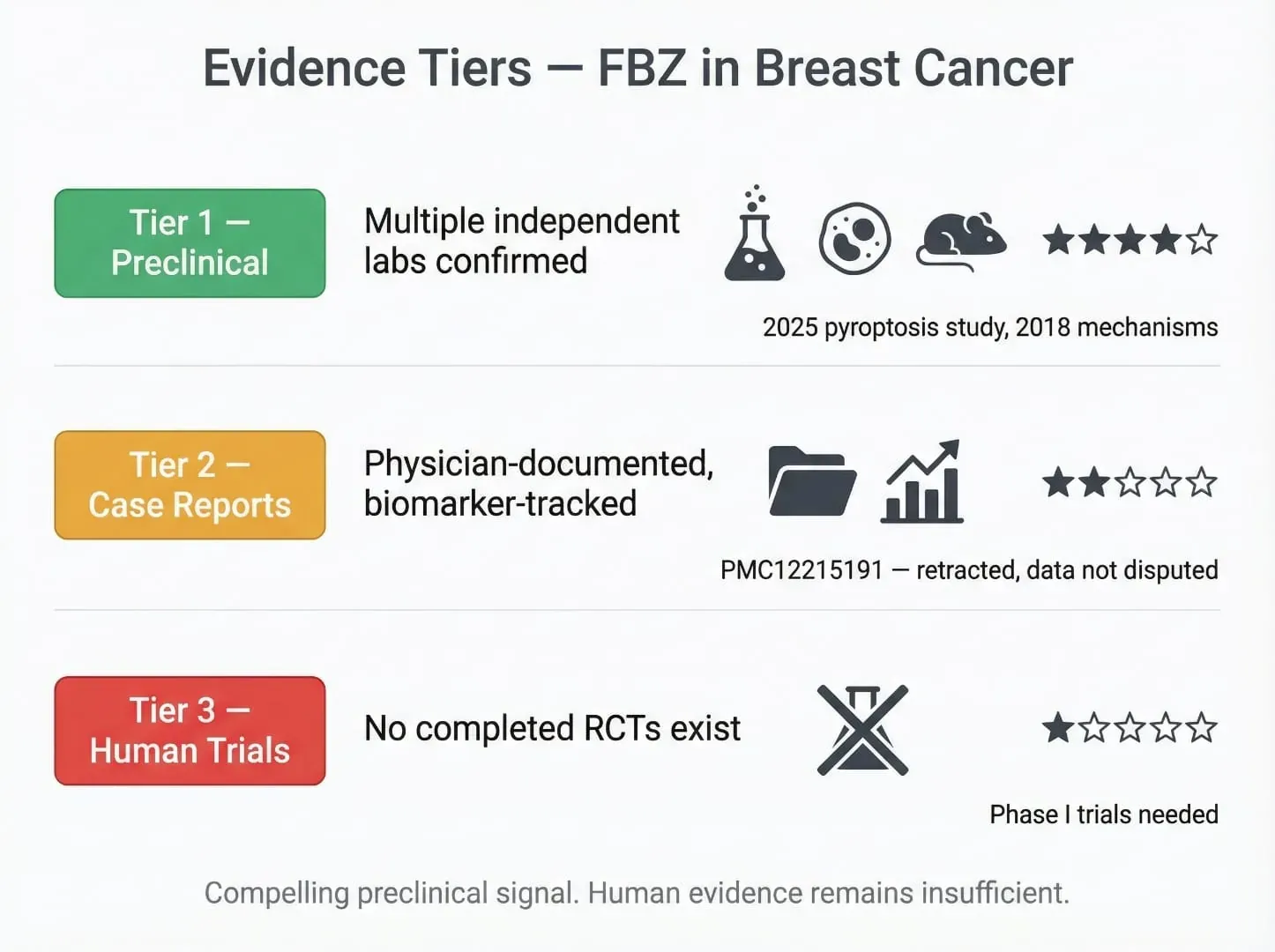
The research landscape on fenbendazole and breast cancer in 2025–2026 can be summarized across three tiers of evidence:
Tier 1 — Preclinical (laboratory and animal): Robust and growing. The 2025 Frontiers pyroptosis study adds a novel, well-characterized mechanism to an already substantial preclinical profile. Multiple independent laboratories have now confirmed FBZ's anticancer activity across various cell lines and animal models. The mechanisms — pyroptosis induction, glycolysis suppression, microtubule disruption, p53 stabilization, GLUT downregulation — are biologically plausible and pharmacologically coherent.
Tier 2 — Case reports and series: Suggestive but not definitive. The PMC12215191 case series (Makis et al., 2025) provides physician-documented, biomarker-tracked accounts of apparent complete or near-complete remission in Stage IV cancer patients using fenbendazole within multimodal regimens. The breast cancer case is particularly striking given the disease burden at baseline and the 3-year sustained NED status. However, as with all case reports, confounding by concurrent treatments, spontaneous remission (rare but documented in breast cancer), and selection bias limits causal attribution.
Tier 3 — Controlled human trials: Absent. This is the critical gap. Without randomized controlled trials, questions about optimal dosing, patient selection, combination strategies, and comparative efficacy remain unanswered. The ACS position is grounded in this reality.
For patients navigating these questions, transparency with the oncology team is paramount. Sharing relevant literature (including this post's references), disclosing all supplements and off-label medications, and undergoing regular hepatic monitoring are the practical essentials for anyone considering fenbendazole as part of a comprehensive cancer protocol.
Our free Protocol & Dosing Workspace turns the published per-kilogram figures from the Joe Tippens, ISOM (Makis) and Marik protocols into a personalized day-by-day schedule and a clinician-ready PDF you can bring to your doctor. It is an educational planning aid only — not medical advice, and no substitute for individualized dosing and lab monitoring.
Open the Dosing Calculator →What People Report Online: Breast Cancer
Behind the laboratory papers sits a large, restless online conversation. On Reddit and patient forums, people living with breast cancer — and the relatives caring for them — trade experiences with fenbendazole, usually following some version of the Joe Tippens protocol. To save you from digging through dozens of scattered threads, we have gathered the most relevant, on-topic discussions in one place, together with an honest guide to what these accounts can and cannot tell you.
How to read these reports
These are personal stories, not clinical evidence. They are uncontrolled, self-reported, and impossible to verify independently.
In almost every account, the person was also receiving standard treatment — chemotherapy, immunotherapy, radiotherapy, or surgery — at the same time as fenbendazole. When someone improves on two therapies at once, the result cannot be credited to fenbendazole alone; the conventional treatment is the far more likely explanation.
Encouraging stories are also shared far more often than disappointing ones, so online threads skew positive (survivorship and publication bias).
The useful way to read them is as questions worth raising with your oncologist — not as a protocol to copy on your own.
For a deeper, evidence-based look at how these accounts hold up — including the documented case reports and the peer-reviewed analyses behind them — see our detailed review of fenbendazole success stories and case reports.
Shop Sanare Lab
Lab-tested products referenced in the research above. Links are provided for convenience — always review the label and consult a professional before use.
Fenbendazole 222 mg
180 capsules — 99% purity, laboratory testedBuy Fenbendazole 222 →Fenbendazole 444 mg
180 capsules — higher-dose optionBuy Fenbendazole 444 →Curcumin Turmeric 360 mg
120 capsules — with Black Pepper for absorptionBuy Curcumin →
Disclaimer: Links are informational and for convenience. This site does not provide medical advice and does not endorse any specific vendor. Always verify product quality, labeling, and consult a licensed professional for health decisions.
References
- Dogra N, Kumar A, Mukhopadhyay T. Fenbendazole acts as a moderate microtubule destabilizing agent and causes cancer cell death by modulating multiple cellular pathways. Sci Rep, 2018. PMID: 30093705. PubMed
- Song B, Park EY, Kim KJ, Ki SH. Repurposing of benzimidazole anthelmintic drugs as cancer therapeutics. Cancers, 2022. PMID: 35884373. PubMed
- Florio R, Mortimer L, Salomone F et al.. Repurposing veterinary drugs for human cancers: a systematic review of preclinical studies. Drug Discov Today, 2023. PMID: 36878395. PubMed
- Bai RY, Staedtke V, Aprhys CM et al.. Antiparasitic mebendazole shows survival benefit in 2 preclinical models of glioblastoma multiforme. Neuro Oncol, 2011. PMID: 21764822. PubMed
- Duan Q, Liu Y, Bhattacharya S. Fenbendazole as a potential anticancer drug. Anticancer Res, 2013. PMID: 23482766. PubMed
- Mrkvová Z, Uldrijan S, Pombinho A et al.. Benzimidazoles downregulate Mdm2 and MdmX and activate p53 in MdmX overexpressing tumor cells. Molecules, 2019. PMID: 31671553. PubMed
- Park D, Lee JH, Yoon SP. Anti-cancer effects of fenbendazole on 5-fluorouracil-resistant colorectal cancer cells. Korean J Parasitol, 2022. PMID: 36041488. PubMed
- Cáñez-González KE, García-Saucedo BN, Enciso-Benavides J et al.. Evaluation of fenbendazole as an anticancer agent in tumor-bearing mice. J Cancer Res Ther, 2023. PMID: 38047367. PubMed
- Chu SW, Badar S, Morris DL, Pourgholami MH. Potent inhibition of tubulin polymerisation and proliferation of paclitaxel-resistant 1A9PTX22 human ovarian cancer cells by albendazole. Anticancer Res, 2009. PMID: 19528482. PubMed
- Nygren P, Larsson R. Drug repositioning from bench to bedside: tumour remission by the antihelmintic drug mebendazole in refractory metastatic colon cancer. Acta Oncol, 2014. PMID: 24160353. PubMed
- Huang L, Zhao L, Zhang J et al.. Antiparasitic mebendazole (MBZ) effectively overcomes cisplatin resistance in human ovarian cancer cells by inhibiting multiple cancer-associated signaling pathways. Aging, 2021. PMID: 33495418. PubMed
- Guerini AE, Triggiani L, Maddalo M et al.. Mebendazole as a candidate for drug repurposing in oncology: an extensive review of current literature. Cancers, 2019. PMID: 31540055. PubMed
- Subtype Sensitivity: Why TNBC Cells Are More Vulnerable
- Oxidative Stress Selectivity: Cancer Cells vs. Normal Cells
- The Broader Benzimidazole Class: Flubendazole and HER2
- Drug Interactions with Standard Breast Cancer Treatments
- Bioavailability: The Translation Gap
- Son DS, Lee ES, Bhatt SE. Fenbendazole induces apoptosis of HL-60 cells by disrupting the integrity of the tubulin-microtubule system. Korean J Parasitol, 2020. PMID: 33227869. PubMed
- Semkova S, Nikolova B, Tsoneva I, Antov G, Ivanova D. Redox-mediated anticancer activity of anti-parasitic drug fenbendazole in triple-negative breast cancer cells. Anticancer Res, 2023;43(3):1207-1212. PMID: 36854536. PubMed
- Pan T, Jin S, Huang X, Xin X, Xing Q. Fenbendazole induces pyroptosis in breast cancer cells through HK2/caspase-3/GSDME signaling pathway. Front Pharmacol, 2025;16:1596694. PMID: 40756987. PubMed
- Kim YJ, Sung D, Oh E, Cho Y, Cho TM. Flubendazole overcomes trastuzumab resistance by targeting cancer stem-like properties and HER2 signaling in HER2-positive breast cancer. Cancer Lett, 2018;412:118-130. PMID: 29080749. PubMed
- Wu Z, Lee D, Joo J, et al. CYP2J2 and CYP2C19 are major enzymes for fenbendazole sulfoxidation in human liver microsomes. Antimicrob Agents Chemother, 2013;57(11):5448-5456. PMID: 23959307. PubMed
Breast Cancer Integrative Toolkit
Get the evidence-based integrative toolkit designed specifically for breast cancer — includes hormone receptor-specific supplement protocols, fenbendazole dosing adaptations, monitoring schedules, and questions to discuss with your oncologist.
Download Free Breast Cancer Integrative Toolkit (PDF)
Medical Disclaimer
This article is for educational and informational purposes only. It is not intended to be a substitute for professional medical advice, diagnosis, or treatment. Always seek the advice of your physician or other qualified health provider with any questions you may have regarding a medical condition. Never disregard professional medical advice or delay in seeking it because of something you have read on this website.

Dr. Andrew Ellison, MD
Science editor and health researcher at Sanare Lab, covering evidence-based wellness, emerging compound research, clinical studies, and practical health protocols. Content is educational and does not replace medical advice.