
Fenbendazole Dosage for Cancer: Complete Protocol Guide 2026
Complete fenbendazole dosing guide for cancer: Joe Tippens protocol, ISOM protocol, safety guidelines, timing, and expert recommendations.
 By Dr. Andrew Ellison, MD · January 13, 2026 · 28 min read
This article is for research and informational purposes only. It does not constitute medical advice. Do not self-prescribe. Always consult a qualified healthcare provider before using any supplement, especially alongside cancer treatment.
Table of Contents
- Introduction: When "More" Almost Became Fatal
- What Is Fenbendazole and Why Does Dose Matter?
- Documented Cases: What Happens When People Take Too Much
- Veterinary Overdose Data: What Animal Studies Tell Us
- The Science of Fenbendazole Toxicity: Why Too Much Is Dangerous
- Dose-Response Overview: From Safe to Dangerous
- Red Flags: When to Stop Immediately and Seek Medical Help
- Lab Value Red Flags: What Your Blood Work Should Show
- Why Rest Days Are Not Optional
- Who Is at Higher Risk? Individual Variation Factors
- Safe Dosing Guidelines: What the Evidence Supports
- Typical Veterinary Dosage vs. Human Use: Understanding the Gap
- Quality and Purity: A Safety Factor
- Consider Your Total Protocol
- Keeping a Symptom and Lab Journal
- What If You've Already Taken Too Much?
- Standard Dosage Protocols
- Dosage by Body Weight
- Timing and Absorption
- Dose Escalation Guidelines
- Frequently Asked Questions (FAQ)
- Conclusion: The Balance Between Too Little and Too Much
- Scientific References
- What People Report Online: Fenbendazole Dosing and Safety
Introduction: When "More" Almost Became Fatal
In 2024, a 67-year-old woman with colon cancer was admitted to the hospital with severe jaundice — her skin and eyes had turned bright yellow, and blood tests revealed her bilirubin had spiked to 24 mg/dL, nearly 20 times the normal level. The cause wasn't her cancer. It wasn't chemotherapy. It was fenbendazole.
She had been self-administering approximately 9 grams of fenbendazole per week — far above the commonly referenced protocols — for an entire year. A liver biopsy confirmed severe drug-induced hepatocellular injury. Her RUCAM causality score was 9 out of 10, meaning fenbendazole was "highly probable" as the cause. It took three months after discontinuation for her liver enzymes to return to normal (Thakurdesai et al., 2024).
This is not a hypothetical scenario. This is a published, peer-reviewed medical case report — one of several that document what happens when fenbendazole dosing goes wrong.
The question "How much fenbendazole is too much?" is not academic. It has real consequences, documented in medical literature, veterinary records, and patient forums. This guide examines the evidence — the actual cases, the mechanisms of toxicity, the warning signs, and the data-driven boundaries of safe use.
What Is Fenbendazole and Why Does Dose Matter?
Fenbendazole is a benzimidazole anthelmintic — a compound designed to eliminate intestinal parasites in animals. It works by binding to beta-tubulin protein, disrupting microtubule formation that parasites need for cell division and nutrient transport. It is sold under brand names such as Panacur and Safe-Guard and is approved by the FDA for veterinary use only.
Its relevance to human use emerged primarily through the "Joe Tippens Protocol," in which a terminal cancer patient reportedly used a combination of fenbendazole (222 mg/day, 3 days on / 4 days off), vitamin E succinate, curcumin, and CBD. Preclinical research has shown fenbendazole's effects on microtubule destabilization, glucose uptake interference, and p53 activation in cancer cell lines (Dogra et al., Sci Rep, 2018). A 2021 review published in Biomedicines (PMC8531887) further examined fenbendazole's anti-tumor activity in preclinical models. These findings are promising, but they come from laboratory and animal studies — not human clinical trials.
However, the same mechanism that makes fenbendazole potentially useful against cancer cells — disrupting rapidly dividing cells — is precisely what makes it dangerous at high doses. Your bone marrow cells, gut lining cells, and liver cells are all rapidly dividing. At therapeutic doses, fenbendazole's selectivity for parasitic tubulin (250–400 times more potent against nematode tubulin than mammalian tubulin) provides a margin of safety. At excessive doses, that margin narrows dangerously.
A small 2021 human pilot study published in Scientific Reports (PMC8481218) observed the pharmacokinetics of fenbendazole in healthy human volunteers, noting low oral bioavailability (~20–30%) and a half-life of approximately 6–10 hours. This limited absorption means that dosing strategy and formulation matter considerably — and it also means that dramatically increasing the dose does not linearly increase the therapeutic effect; it primarily increases the load on the liver and other organs.
Key Pharmacokinetic Facts
- Oral bioavailability: Low (~20–30% in humans), but significantly increased (3–4x) when taken with fatty food
- Half-life: Approximately 6–10 hours in humans
- Primary metabolism: Liver (via CYP1A1 and CYP1A2 enzymes) → active metabolite oxfendazole
- Elimination: Primarily through feces, with some renal excretion
- Protein binding: High (~98%), meaning small changes in liver function can significantly affect free drug levels
These pharmacokinetics explain why the liver is the primary organ at risk during overdose — it bears the entire metabolic processing burden.
Documented Cases: What Happens When People Take Too Much
The following cases are drawn from peer-reviewed medical literature and official regulatory reports. Names and some identifying details are anonymized where required, but the clinical data is exact.
CRITICAL WARNING: These are not hypothetical scenarios. These are real patients who experienced real harm. The cases below are documented in peer-reviewed journals indexed in PubMed.
Case 1: The 67-Year-Old Who Took 9 Grams Per Week for a Year
Patient: 67-year-old woman with colon cancer
Protocol: Approximately 9 grams of fenbendazole per week (~1,286 mg/day average) for 12 months
What happened:
- Presented with severe jaundice (yellowing of skin and eyes)
- Peak bilirubin: 24 mg/dL (normal: 0.1–1.2 mg/dL) — a 20-fold elevation
- Liver biopsy confirmed severe hepatocellular injury
- RUCAM causality score: 9/10 ("highly probable" fenbendazole caused the injury)
- Required 3 months for full liver enzyme normalization after discontinuation
Source: Thakurdesai et al., Severe DILI Due to Self-administration of Fenbendazole, ACG Case Reports, 2024
Case 2: The 80-Year-Old Lung Cancer Patient on Social Media Protocol
Patient: 80-year-old man with non-small cell lung cancer (NSCLC)
Protocol: 1 gram of fenbendazole on a 4-days-on / 3-days-off schedule, started after finding the protocol on social media
What happened:
- Liver enzyme elevations detected approximately 1 month after starting fenbendazole
- Asymptomatic — discovered only through routine blood work
- Liver tests normalized within 6 weeks after discontinuation
- Had to interrupt standard cancer treatment during this period
Key lesson: Even without symptoms, liver damage was occurring silently. Without routine bloodwork, this damage would have gone undetected until potentially becoming severe.
Source: Yamaguchi et al., Case Reports in Oncology, 2021
Case 3: The 47-Year-Old Who Escalated Her Dose During Immunotherapy
Patient: 47-year-old woman with metastatic colon cancer, receiving immunotherapy (nivolumab/relatlimab)
Protocol: Started at 222 mg three times per week, then escalated to daily dosing
What happened:
- Severe hepatocellular injury developed 7 weeks after starting fenbendazole
- Injury worsened dramatically 2 weeks after she increased the dose from 3x/week to daily
- ALT (liver enzyme) showed rapid and dangerous elevation
- After discontinuing fenbendazole: 78% drop in ALT within just 10 days
- The rapid improvement after stopping confirmed fenbendazole as the cause
- Was able to resume her immunotherapy after liver recovery
Key lesson: Dose escalation — changing from the standard 3-on/4-off pattern to daily use — was the trigger for severe toxicity. The combination with immunotherapy drugs may have lowered the threshold for liver injury.
Source: Krishnan et al., 2026 (LiverTox/PMC)
Case 4: The 70-Year-Old Who Developed Jaundice in Just Two Weeks
Patient: 70-year-old man with lung cancer
Protocol: 222 mg of fenbendazole daily (continuous, without breaks) for 2 weeks
What happened:
- Developed fatigue, jaundice, loss of appetite, and severe skin itching
- Significantly elevated ALT, AST, and total bilirubin
- Symptoms and lab values improved after discontinuation with hepatoprotective therapy
Key lesson: Even at the "standard" 222 mg dose, continuous daily use (without the 4-day break) caused liver injury in just two weeks. The rest days exist for a reason.
Source: Li et al., World Journal of Clinical Cases, 2024
Important Pattern Across All Cases
✅ The Good News: In all documented cases, liver function recovered after fenbendazole was discontinued. The injury appears to be reversible — but only if caught in time and the drug is stopped promptly.
Veterinary Overdose Data: What Animal Studies Tell Us
Because fenbendazole has been used in veterinary medicine for decades, we have extensive safety data from animal studies that helps establish toxicity thresholds.
Acute Toxicity
The oral LD50 (dose lethal to 50% of test animals) of fenbendazole exceeds 10,000 mg/kg in laboratory animals. For a 70 kg human, the equivalent would be over 700,000 mg — a dose so massive it's essentially impossible to reach through oral capsules. This means fenbendazole is not acutely lethal, but chronic toxicity is an entirely different story.
Dogs: The FDA Warning
In 2024, the U.S. FDA issued a formal "Dear Veterinarian" letter after documenting adverse events in dogs receiving fenbendazole:
- 12 reports of bone marrow hypoplasia and pancytopenia (all blood cell lines suppressed)
- 8 of 12 cases had a strong causal association with fenbendazole alone
- All cases involved extra-label use — durations of 5–14 days instead of the labeled 3-day course
- The standard veterinary dose of 50 mg/kg for 3 days was safe; extended use was not
This is directly relevant to human protocols. When people take fenbendazole for weeks or months without breaks, they are replicating the exact conditions that caused bone marrow failure in dogs.
Translating Animal Data to Human Context
"I thought if 222 mg was the standard dose, then 1,000 mg would clear things faster. After three weeks straight, my bloodwork came back and my white cells were in the basement. My oncologist had never seen a patient do this to themselves." — Anonymized forum post, cancer support community, 2023
The Science of Fenbendazole Toxicity: Why Too Much Is Dangerous
Understanding why fenbendazole becomes toxic at high doses is essential for making informed decisions about dosing. The toxicity isn't random — it follows predictable biological mechanisms that parallel what we observe with chemotherapy drugs — because fenbendazole, at high doses, essentially acts like a chemotherapy agent.
1. Bone Marrow Suppression
Fenbendazole binds to beta-tubulin and disrupts microtubule formation — the structural framework cells need to divide. Bone marrow cells are among the most rapidly dividing cells in the body, producing billions of new blood cells daily. At excessive doses or with continuous exposure:
- Mechanism: Disruption of mitotic spindle formation in hematopoietic stem cells
- Result: Decreased production of all blood cell types (pancytopenia)
- Timeline: Effects typically emerge after 2–4 weeks of continuous high-dose exposure
- Manifestation: Low white blood cells (leukopenia → infection risk), low red blood cells (anemia → fatigue), low platelets (thrombocytopenia → bleeding risk)
- Reversibility: Generally reversible after discontinuation, but recovery takes weeks
A 2023 analysis of the WHO's global pharmacovigilance database (VigiBase) identified 19,068 reports of serious adverse events associated with benzimidazole derivatives, with statistically significant signals for bone marrow failure, hypoplastic anemia, and serious leukopenia (PLOS NTDs, 2024).
2. Liver Toxicity (Hepatotoxicity)
The liver is the primary organ for fenbendazole metabolism. Through the cytochrome P450 system (CYP1A1 and CYP1A2), fenbendazole is converted to its active metabolite, oxfendazole. At high doses, several problems emerge:
- Metabolic overload: The liver's capacity to process the drug is overwhelmed
- Glutathione depletion: Reactive intermediate metabolites accumulate, depleting the liver's primary antioxidant defense
- Microtubule disruption in hepatocytes: High systemic exposure can damage the liver cells' own structural framework
- Possible hypersensitivity: Some cases show allergic features (rash, eosinophilia), suggesting an immune-mediated component
According to the LiverTox database (NIH), long-term fenbendazole therapy is associated with transient, asymptomatic serum enzyme elevations in approximately 50% of users. This means half of long-term users show signs of liver stress — even if they don't feel symptoms (LiverTox, 2026).
3. Gastrointestinal Toxicity
Direct irritation of the GI tract at high doses produces dose-dependent symptoms:
- Nausea and vomiting (most common, usually first to appear)
- Abdominal pain and cramping
- Diarrhea (sometimes severe)
- Loss of appetite
These symptoms are generally the earliest warning signs and serve as the body's first signal to reduce dosage.
4. Neurological Effects (Rare)
At very high doses or when combined with drugs that inhibit P-glycoprotein (the blood-brain barrier transporter), fenbendazole can accumulate in the central nervous system:
- Dizziness and headache
- Confusion and disorientation
- In extreme cases: seizures (documented in animal studies; a new pharmacovigilance signal was identified for benzimidazoles in the WHO VigiBase analysis)
- Risk factors: Concurrent use of P-glycoprotein inhibitors (verapamil, cyclosporine, ketoconazole, certain HIV medications)
Dose-Response Overview: From Safe to Dangerous
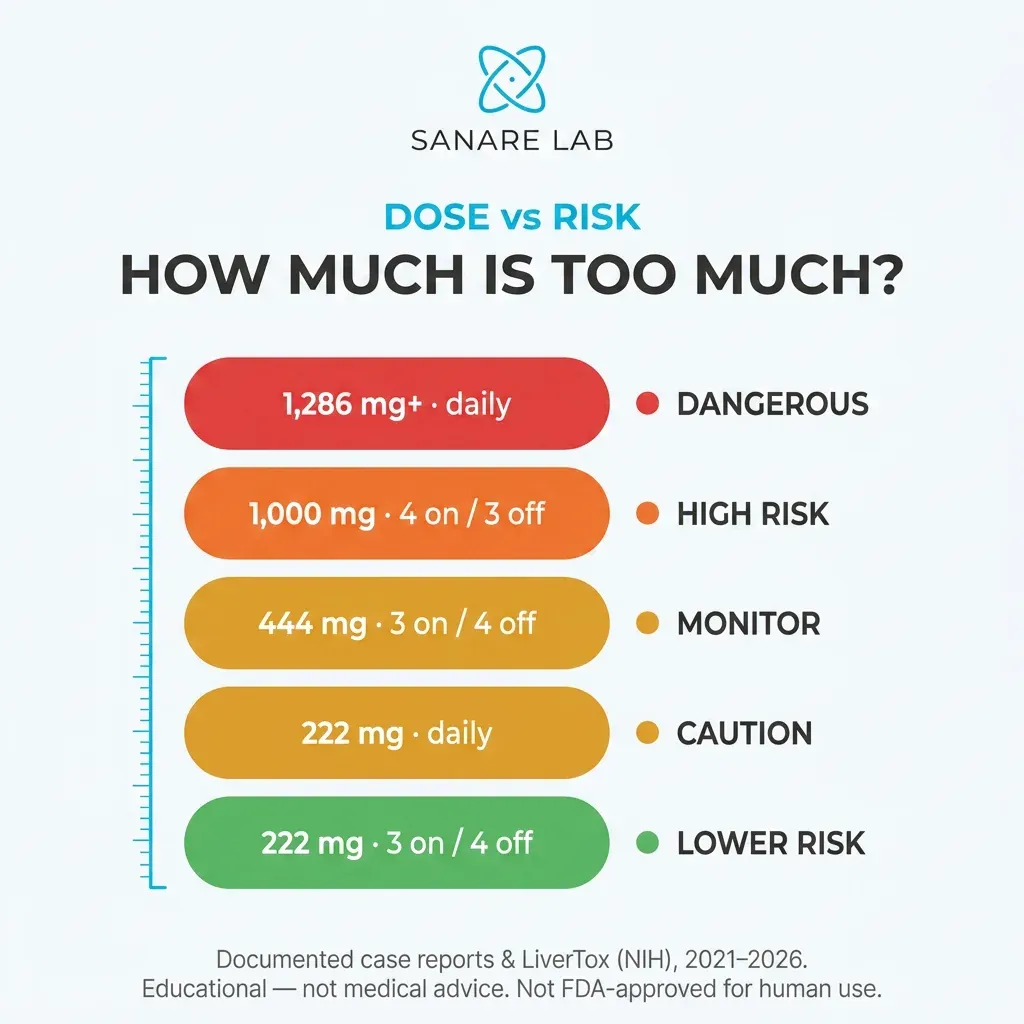
Infographic: Dose vs Risk — visual summary of fenbendazole risk levels by dosage. Always verify with your healthcare provider.
Red Flags: When to Stop Immediately and Seek Medical Help
Not every side effect requires emergency action, but certain signs indicate potentially serious toxicity that demands immediate response.
Warning Signs by Severity
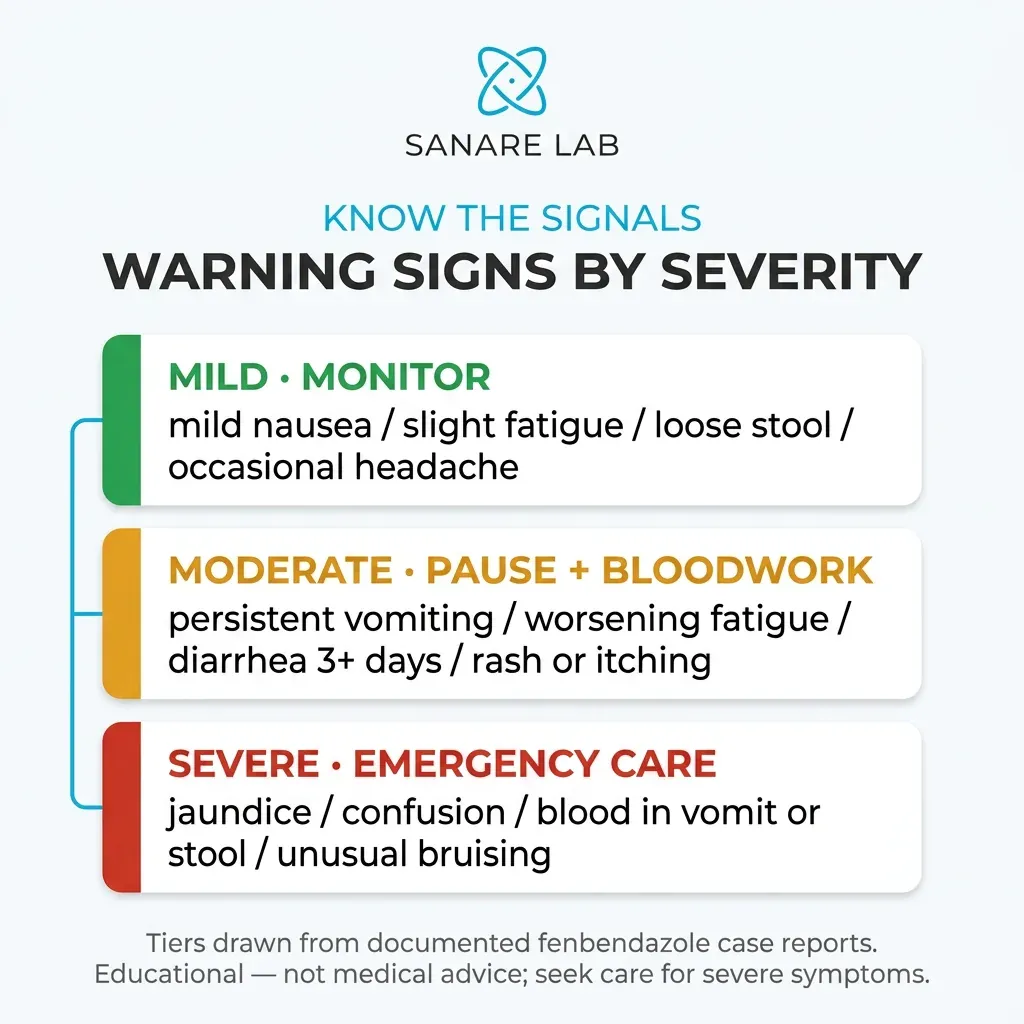
Infographic: Know the Signals — warning signs sorted by severity level. Severe symptoms require immediate medical attention.
IMPORTANT: Liver damage from fenbendazole can be silent — Case 2 (80-year-old) had significant liver enzyme elevations with zero symptoms. You cannot rely on "feeling fine" to know you are safe. Regular blood work is essential.
Lab Value Red Flags: What Your Blood Work Should Show
If you are using fenbendazole in any protocol, regular laboratory monitoring is not optional — it's essential for safety. Here are the critical values to track:
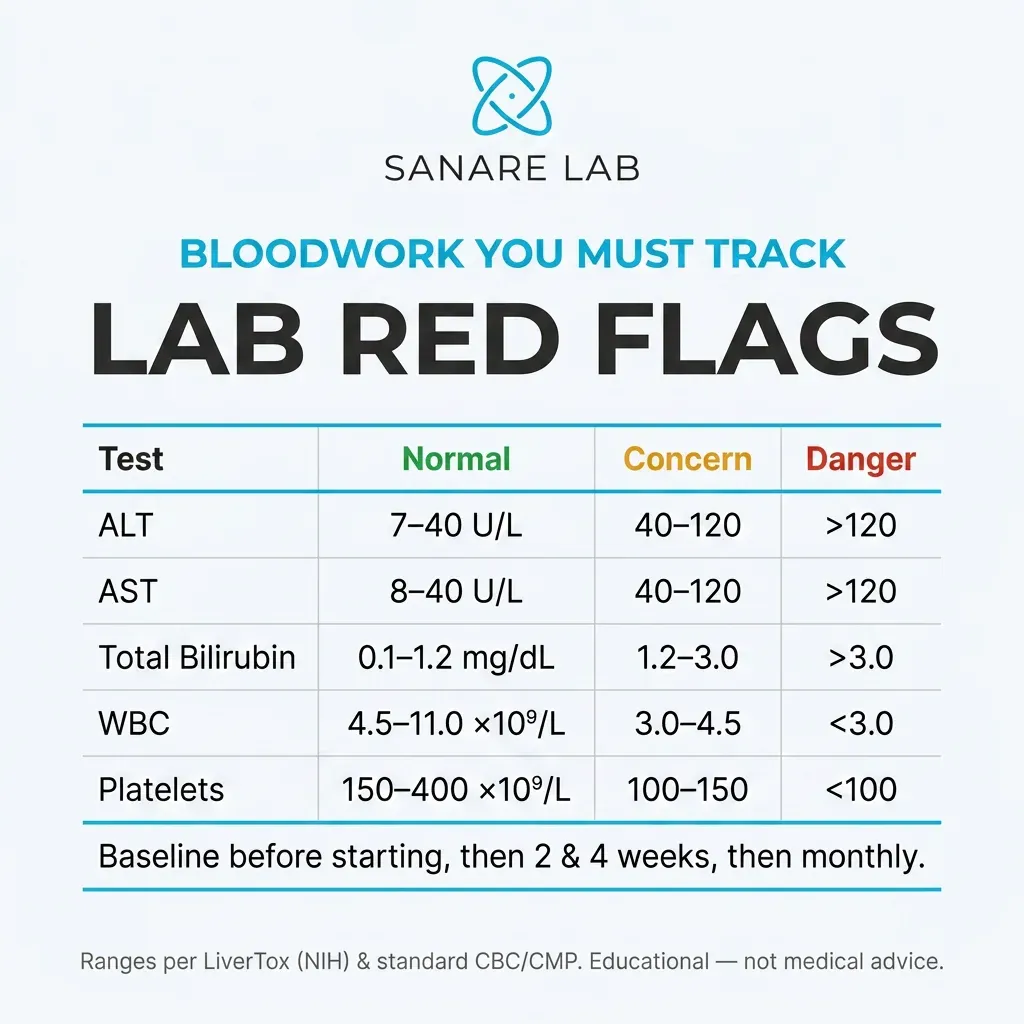
Infographic: Bloodwork You Must Track — lab ranges for safe fenbendazole monitoring. Get baseline labs before starting any protocol.
Recommended Monitoring Schedule
- Before starting: Baseline CBC (complete blood count) and CMP (comprehensive metabolic panel) including liver enzymes
- First month: Repeat bloodwork at 2 weeks and 4 weeks
- Ongoing (if stable): Monthly blood tests for as long as you take fenbendazole
- After dose changes: Recheck within 2 weeks of any dose increase
- If any abnormalities: Repeat within 1 week and consider discontinuation
Keep a log of all your lab results. Tracking trends (rather than single values) is the most important aspect of monitoring — a rising ALT over 3 months is more significant than a single mildly elevated reading.
Why Rest Days Are Not Optional
The 3-days-on, 4-days-off pattern in the original Tippens protocol is not arbitrary. It serves critical biological functions:
- Liver recovery: The 4-day break allows CYP enzyme systems to clear accumulated metabolites and regenerate glutathione stores
- Bone marrow protection: Rest days allow hematopoietic stem cells to recover from microtubule disruption before the next exposure
- GI tract repair: The intestinal epithelium has a complete turnover cycle of 3–5 days; rest days allow the gut lining to regenerate
- Immune system pulsing: Intermittent dosing may actually enhance immune-mediated anti-tumor effects compared to continuous exposure (a concept known as metronomic dosing)
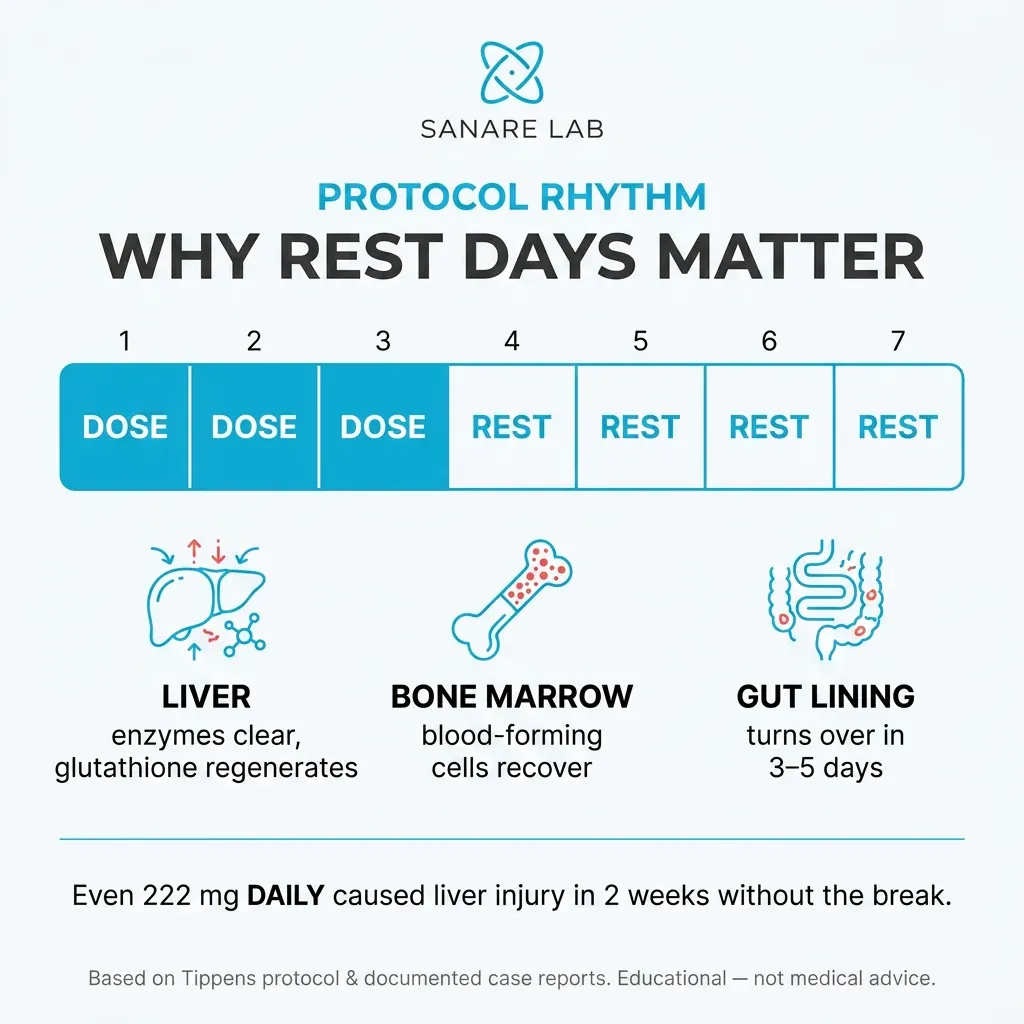
Infographic: Protocol Rhythm — why rest days are essential for organ recovery during fenbendazole use.
Case 4 (the 70-year-old) illustrates this clearly: even at the standard 222 mg dose, skipping the rest days caused liver injury within just 2 weeks. The dose wasn't the problem — the absence of recovery time was.
"The 3 days on, 4 days off pattern exists for a reason. I did 30 days straight at 222 mg and my liver enzymes came back at 3x the upper limit. My oncologist almost pulled me off all my other medications trying to figure out what was wrong." — Anonymized patient report from cancer support forum, 2023
Who Is at Higher Risk? Individual Variation Factors
Not everyone responds to fenbendazole the same way. Several factors can significantly increase the risk of toxicity:
Pre-Existing Liver Disease
Patients with hepatitis, cirrhosis, fatty liver disease, or liver metastases have reduced metabolic capacity. Fenbendazole is extensively metabolized by the liver, so impaired liver function means slower clearance, higher blood levels, and increased toxicity risk. If you have any liver condition, fenbendazole should be used only under close medical supervision with more frequent monitoring.
Kidney Disease
Although fenbendazole is primarily eliminated through feces, renal impairment can affect drug distribution and the clearance of metabolites. Patients with reduced kidney function should exercise additional caution.
Age
The documented case reports disproportionately feature older patients (67, 70, 80 years old). This is not coincidental — aging reduces liver enzyme activity, decreases drug clearance rates, and is often accompanied by polypharmacy and comorbidities.
Drug Interactions: Specific Medications to Watch
Fenbendazole is metabolized by CYP1A1/CYP1A2 and may interact with the P-glycoprotein transporter. The following drug categories require particular attention:
- Immune checkpoint inhibitors (nivolumab, pembrolizumab, ipilimumab): Case 3 showed that combining fenbendazole with immunotherapy may lower the threshold for liver injury
- P-glycoprotein inhibitors (verapamil, cyclosporine, ketoconazole, ritonavir): Can increase fenbendazole accumulation in the brain and other tissues
- Other hepatotoxic medications (acetaminophen at high doses, statins, certain antibiotics): Cumulative liver burden increases injury risk
- CYP3A4-metabolized chemotherapy (irinotecan, docetaxel, paclitaxel): Potential for altered metabolism of both fenbendazole and the chemotherapy drug
- Alcohol: Significant additive hepatotoxicity; even moderate alcohol use during fenbendazole protocol is inadvisable
Genetic Factors
CYP1A1 and CYP1A2 enzymes show significant genetic polymorphism — some individuals are "rapid metabolizers" (potentially safer but with less therapeutic effect), while others are "poor metabolizers" (higher drug levels, greater toxicity risk). Pharmacogenomic testing can identify these variations, though it is not yet standard practice in off-label fenbendazole use.
Safe Dosing Guidelines: What the Evidence Supports
There are no FDA-approved dosing guidelines for fenbendazole in humans. The following guidance is derived from the Joe Tippens Protocol, veterinary safety data, published case reports, and pharmacokinetic studies. It is intended for informational purposes only.
Starting a Protocol: The Titration Approach
- Week 1–2: Begin with 111 mg/day (half the standard dose), 3 days on / 4 days off. Observe for any GI symptoms, fatigue, or headache.
- Week 3–4: If well tolerated, increase to 222 mg/day, maintaining the 3-on/4-off schedule. Get baseline bloodwork before this increase.
- Week 5–6: Check bloodwork. If all values are normal and symptoms are stable, continue at 222 mg.
- If considering higher doses (444 mg): Only after 4+ weeks at 222 mg with confirmed normal labs. Increase monitoring to every 2 weeks initially.
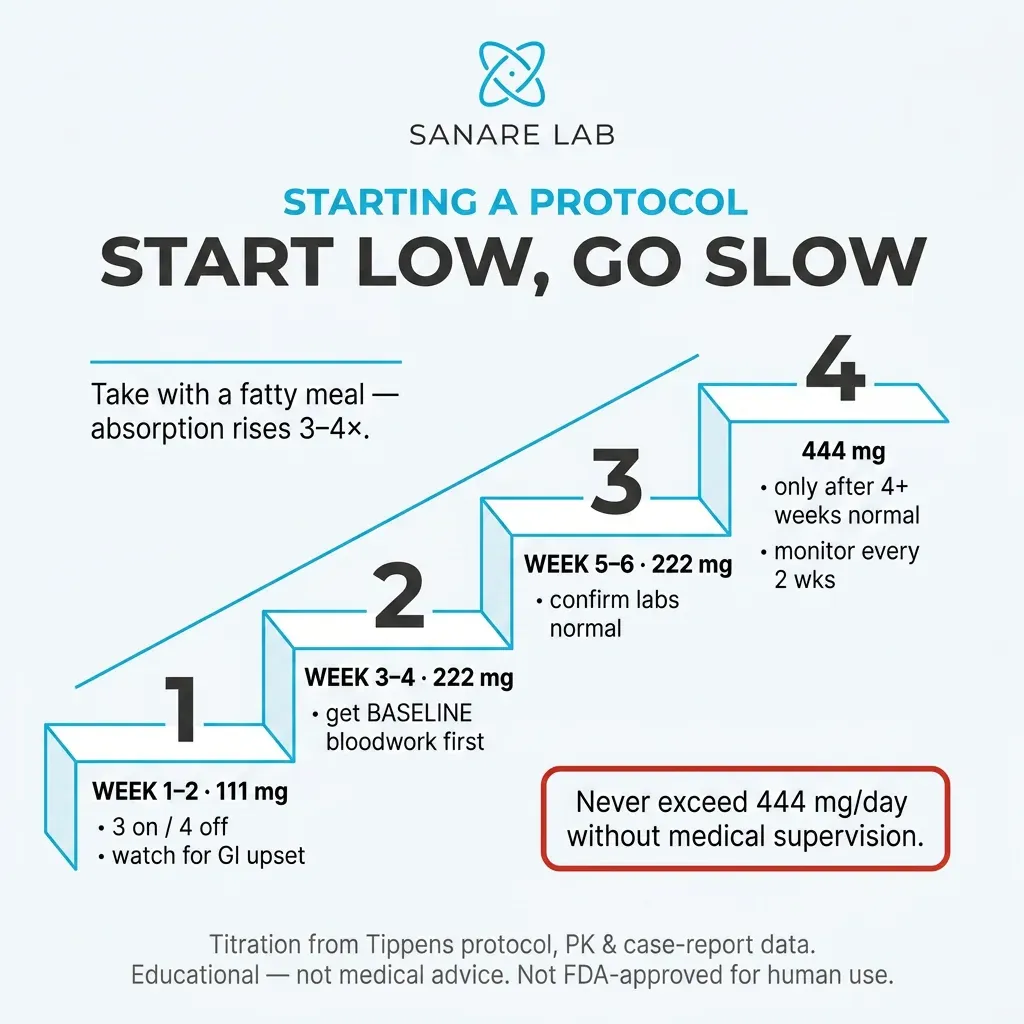
Infographic: Start Low, Go Slow — 4-week titration protocol with built-in safety checkpoints. Never skip the gradual increase.
Critical Protocol Rules
- Always take with a fatty meal: Bioavailability increases 3–4x with dietary fat (avocado, nuts, olive oil, fatty fish)
- Never skip rest days: The 4-day break is essential for organ recovery (see Case 4)
- Protocol breaks: Consider a 2-week complete break every 2–3 months to allow full liver and bone marrow recovery
- Never exceed 444 mg/day without medical supervision: Doses above this level are associated with serious adverse events in published literature
- Do not combine with other hepatotoxic substances: Minimize alcohol, acetaminophen, and other liver-stressing medications
The Importance of Bioavailability
Fenbendazole's oral bioavailability is low (~20–30% in fasted state). This poor absorption is actually a safety feature — it limits systemic exposure. However, taking fenbendazole with fat dramatically increases absorption. This means:
- The same capsule can produce very different blood levels depending on whether you took it fasting or with food
- Suddenly adding a high-fat meal to your routine (when you previously took fenbendazole on an empty stomach) can effectively increase your dose significantly
- Consistency in how you take fenbendazole (always with or always without food) is important for predictable dosing
Typical Veterinary Dosage vs. Human Use: Understanding the Gap
For dogs, the standard dosage of fenbendazole is approximately 50 mg/kg for three consecutive days. For a 20 kg dog, that's 1,000 mg per day — but only for 3 days. Humans are not dogs — body weight, liver metabolism, gut microbiome, and pharmacokinetics differ significantly.
Most anecdotal human protocols suggest much lower doses relative to body weight, often starting at 222 mg per day (roughly 3 mg/kg for a 70 kg person — far below the veterinary therapeutic dose of 50 mg/kg). Some users prefer lower starting doses (111 mg/day) to minimize side effects.
The critical distinction is not just the daily dose but the duration. In veterinary medicine, fenbendazole is given for 3 days and then stopped. Human protocols that extend use to weeks or months without adequate breaks are venturing into entirely uncharted territory from a safety standpoint — territory where the case reports above show real harm occurs.
Key Point: There are no FDA-approved dosing guidelines for fenbendazole in humans. All human protocols are considered experimental and off-label. The "standard" 222 mg, 3-on/4-off schedule is based on anecdotal reports, not clinical trials. Always discuss with a qualified healthcare provider before starting any protocol.
Quality and Purity: A Safety Factor
One overlooked aspect of fenbendazole safety is the product itself. When dealing with a compound where precise dosing matters — where the difference between a therapeutic and a toxic dose can be the factor of safety — the accuracy of what's in each capsule is a genuine safety concern.
Why Product Quality Affects Safety
- Dosing accuracy: Veterinary-grade granule products designed for large animals are difficult to measure precisely for human-scale doses. A 10–20% variation in each self-measured dose can compound over weeks
- Contamination: Veterinary products may contain excipients, fillers, or co-formulations not intended for human consumption
- Purity: Lower purity means unknown quantities of synthesis byproducts entering your system alongside fenbendazole
- Consistency: Batch-to-batch variation in non-pharmaceutical products makes it harder to maintain a consistent, monitored protocol
Pharmaceutical-grade fenbendazole formulations, such as those from Sanare Lab (99% purity, lab-tested with certificates of analysis), provide precise 222 mg or 444 mg dosing per capsule — reducing the risk of accidental over- or under-dosing that comes with measuring from bulk veterinary products.
Consider Your Total Protocol
Fenbendazole is rarely taken alone. Most protocols include combinations with vitamin E succinate, curcumin, CBD, and sometimes ivermectin. When evaluating "how much is too much," you must consider the cumulative burden on your liver and body:
- Curcumin: Generally hepatoprotective at moderate doses, but high doses of certain formulations have been linked to liver injury
- Vitamin E (tocopherols): High doses (>400 IU/day) may increase bleeding risk, especially if platelets are already low from fenbendazole
- CBD: Metabolized by CYP3A4 and CYP2C19; can interact with fenbendazole metabolism and has its own potential for liver enzyme elevation
- Ivermectin: Additional hepatic metabolism burden; shared potential for neurological side effects if P-glycoprotein is inhibited
The total protocol, not just the fenbendazole dose, determines your overall risk.
Supporting Liver Health During Protocol
If you are using fenbendazole, actively supporting your liver is important:
- N-Acetyl Cysteine (NAC): A precursor to glutathione, the liver's primary antioxidant. Commonly used at 600–1200 mg/day
- Milk thistle (silymarin): Hepatoprotective properties demonstrated in clinical studies
- Adequate hydration: Supports renal clearance of metabolites
- Minimize alcohol: Competes for liver enzymes and directly damages hepatocytes
- Avoid unnecessary medications: Reduce overall hepatic burden wherever possible
Keeping a Symptom and Lab Journal
Structured tracking is one of the most valuable safety practices for anyone on an experimental protocol. A simple daily log should include:
- Date and dose: Exact mg taken, whether on- or off-day
- Time and food: When you took it, what you ate with it
- Symptoms: Any new or changed symptoms, rated 1–10
- Energy level: Subjective 1–10 scale
- Digestion: Any GI changes
- Lab results: When available, record all values and note trends
- Other supplements/medications: Everything else you took that day
This log becomes invaluable if you need to consult a healthcare provider — it provides a clear timeline that can help identify causality and guide treatment decisions.
What If You've Already Taken Too Much?
If you suspect you have been taking fenbendazole at doses higher than recommended, or have been using it continuously without rest days, here is a step-by-step response plan:
Immediate Actions
- Stop taking fenbendazole immediately. Do not taper — complete cessation is the standard approach documented in all clinical case reports.
- Get bloodwork within 24–48 hours. Request a CBC with differential and a comprehensive metabolic panel (CMP) including ALT, AST, bilirubin, and alkaline phosphatase.
- Document everything. Write down exactly what you have been taking, the dose, the duration, and any symptoms you have experienced.
- Contact your healthcare provider. Bring your documentation and lab results. Be honest about what you have been taking — your doctor cannot help you if they don't know the full picture.
What to Expect After Stopping
Based on the documented case reports, recovery follows a predictable pattern:
- GI symptoms: Usually resolve within 2–5 days of stopping
- Liver enzymes: Begin improving within 1–2 weeks; full normalization can take 6–12 weeks depending on severity (Case 1 required 3 months; Case 3 showed 78% improvement in 10 days)
- Blood counts (if affected): Begin recovering within 1–3 weeks; full recovery may take 4–6 weeks
- Fatigue: May persist for several weeks as the body recovers
Do not restart fenbendazole at any dose until all lab values have fully normalized AND you have discussed a safe re-start plan with a healthcare professional. The LiverTox database notes that recurrence of liver injury is common if fenbendazole is restarted, so re-challenge should be approached with extreme caution — if attempted at all.
Standard Dosage Protocols
The following schedules appear frequently in community and protocol discussions. None is FDA-approved for cancer treatment. Educational comparison only.
| Protocol | Dose | Schedule | Duration notes |
|---|---|---|---|
| Joe Tippens | 222 mg | 3 days on, 4 days off | Often discussed as ongoing with monitoring |
| ISOM-style | 222 mg (context-dependent) | Daily in some write-ups | Part of multi-drug metabolic strategy |
| High-dose discussion | 444 mg | 3 days on, 4 days off | Higher risk; short-term discussion only |
| Maintenance discussion | 222 mg | 2–3× per week | Long-term community maintenance pattern |
For the full multi-component Tippens stack (CBD, curcumin, vitamin E), see the Joe Tippens protocol guide. For liver risk at high exposure, continue reading the case-based sections above and liver safety.
Dosage by Body Weight
Veterinary fenbendazole is often dosed in mg/kg for parasites. That does not create a validated human oncology calculator.
- Fixed-capsule reality: most human experimental use is 222 mg or 444 mg capsules, not precise mg/kg titration.
- Smaller adults / frail patients: clinicians may favor the lower end (or intermittent schedules) and tighter lab follow-up—not automatic mg/kg inflation.
- Larger adults: higher body weight does not automatically justify doubling experimental cancer doses; hepatotoxicity case reports involve high cumulative exposure.
- Do not convert dog deworming mg/kg charts into daily human cancer protocols.
| Approach | What people do | Safety comment |
|---|---|---|
| Fixed 222 mg | Most common community starting discussion | Still requires labs and medical oversight |
| Fixed 444 mg | Escalation discussions | Higher cumulative risk |
| Veterinary mg/kg copy | Not recommended | Wrong indication, wrong evidence base |
| Clinician-individualized | Best practice if any experimental use occurs | Accounts for liver, drugs, goals of care |
Our free Protocol & Dosing Workspace takes the published per-kilogram figures from the Joe Tippens, ISOM (Makis) and Marik protocols, applies your body weight and start date, and builds a day-by-day schedule plus a clinician-ready PDF you can bring to your doctor. It is an educational planning aid only — it does not replace medical advice, individualized dosing, or the lab monitoring described above.
Open the Dosing Calculator →Timing and Absorption
- With food: a meal containing fat is commonly suggested to support absorption of poorly soluble benzimidazoles.
- Time of day: pick a consistent time to improve adherence and symptom tracking; morning with breakfast is common.
- With other protocol components: curcumin (with piperine), vitamin E, and CBD are part of Tippens-style stacks—watch total supplement burden and interactions (curcumin evidence).
- Factors that may affect exposure: formulation purity, GI illness, bile flow, interacting drugs, and taking on an empty stomach vs with fats.
- Avoid: crushing unknown veterinary granules with high excipient loads (Panacur C analysis).
Dose Escalation Guidelines
- Establish baseline labs and medication list (including herbals).
- Start low and documented: many start at 222 mg on an intermittent schedule rather than jumping to 444 mg daily.
- Re-check labs in 2–4 weeks before any increase.
- Increase only with a reason (clinician-defined), not anxiety-driven escalation.
- Decrease or stop for enzyme rises, jaundice, severe GI toxicity, infection signs, or clinician advice.
- Never “megadose” multi-gram weekly exposures—case reports link extreme use to serious liver injury.
Related: combining with chemotherapy, mebendazole vs fenbendazole, case reports.
Frequently Asked Questions
How much fenbendazole should I take?
There is no FDA-approved human cancer dose. Community protocols often discuss 222 mg per day on a 3-days-on/4-days-off schedule (Joe Tippens) or daily 222 mg in some metabolic protocols. These remain experimental. Start only with clinician oversight and lab monitoring.
Can I take more than 222 mg?
Some people discuss 444 mg, but higher doses increase hepatotoxicity risk. Published case reports link very high weekly exposures to severe liver injury. More is not necessarily better.
Should I take fenbendazole with food?
Fenbendazole is lipophilic; taking with a fat-containing meal is commonly discussed to support absorption. Consistency matters more than perfection. Follow clinician guidance.
What if I miss a dose?
Skip the missed dose and resume the next scheduled dose. Do not double up to “catch up,” especially on higher-dose days.
Is the Joe Tippens 3-on/4-off schedule required?
It is the most famous community schedule, not a proven optimal regimen. Some protocols use daily dosing. Rest days may reduce cumulative toxicity risk for some people, but evidence is not definitive.
What is the ISOM protocol dose?
ISOM-style metabolic strategies may include fenbendazole among repurposed agents; dosing should be taken from the protocol source and clinician, not improvised. See our ISOM protocol article.
How long can I stay on fenbendazole?
No validated long-term oncology duration exists. Many community users continue for months with periodic labs. Any long-term use needs ongoing risk–benefit review.
Should dose be adjusted by body weight?
Veterinary antiparasitic dosing is weight-based, but human experimental cancer use is usually fixed-capsule (222/444 mg). Weight-based self-calculation from animal mg/kg data is not a validated human oncology method.
Can I take fenbendazole every day?
Some protocols discuss daily use; others use intermittent schedules. Daily use may increase cumulative exposure—monitor liver enzymes more carefully.
What labs should I check?
ALT, AST, ALP, bilirubin, CBC; consider metabolic panel. Recheck within 2–4 weeks of starting or changing dose, then periodically.
What are red-flag symptoms to stop?
Jaundice, severe fatigue, dark urine, pale stools, fever, unusual bruising/bleeding, severe abdominal pain, confusion. Seek urgent care.
Is 444 mg safer if I split the dose?
Splitting may change peak levels but does not eliminate cumulative toxicity risk. High total weekly dose remains the main concern in severe case reports.
Can I combine fenbendazole with mebendazole?
Not recommended as a DIY stack due to overlapping class effects. See mebendazole vs fenbendazole comparison.
Can I combine with ivermectin?
Some community protocols combine agents; evidence for synergy is limited and interaction/toxicity uncertainty rises. Clinician oversight required.
Is veterinary Panacur C okay for dosing?
Many Panacur C formulations contain high excipient loads unsuitable for human experimental use. Prefer pharmaceutical-grade capsules with COA. See Panacur C dangers.
Does coffee or alcohol affect dosing?
Alcohol increases liver stress and is a poor combination with any potentially hepatotoxic regimen. Keep alcohol minimal or none; discuss other substances with a clinician.
Should I cycle fenbendazole?
Cycling (e.g., weeks on/off) is discussed to manage tolerability, but optimal cycles are unproven. Any cycle still needs lab monitoring.
Can children use fenbendazole for cancer?
Not as a self-directed protocol. Pediatric oncology decisions belong exclusively to specialists.
What if liver enzymes rise mildly?
Contact the supervising clinician. Mild elevations may prompt dose reduction, pause, or workup for other causes. Do not ignore trends.
Where does dosage fit with chemotherapy?
Never self-combine with chemo without oncologist approval. Timing, liver strain, and marrow effects need professional coordination.
Conclusion: The Balance Between Too Little and Too Much
The concept of hormesis — where a substance that is beneficial at low doses becomes harmful at high doses — perfectly describes fenbendazole's dose-response relationship. The published case reports make one thing abundantly clear: more is not better.
The Core Principles
- Respect the rest days. The 3-on/4-off schedule exists because continuous dosing causes organ damage — even at standard doses (Case 4).
- Monitor your labs. Liver damage can be completely silent (Case 2). You cannot know your status without blood work.
- Start low and go slow. Titrate from 111 mg to 222 mg over weeks, not days. Never jump to high doses.
- Know the red flags. Jaundice, unusual bruising, persistent fatigue, or confusion require immediate medical attention.
- Treat this as a medical protocol. Work with a healthcare provider who knows you are using fenbendazole. Provide them with your symptom journal and lab results.
The patients in the case reports above all had one thing in common: they thought more would work faster. It didn't. The evidence shows that disciplined, lower-dose protocols with proper rest days and monitoring are both safer and more sustainable than aggressive high-dose approaches.
Your safety depends not on taking the most fenbendazole possible, but on taking it intelligently — with respect for the compound's pharmacology, your body's limits, and the documented evidence of what happens when those limits are exceeded.
Summary: If you choose to use fenbendazole, keep doses at or below 222–444 mg per day with a 3-on/4-off schedule. Get bloodwork before starting and monthly thereafter. Never exceed doses without medical supervision. And remember — the cases documented in medical literature are real. They happened to real people who thought they were making a safe choice.
What People Report Online: Fenbendazole Dosing and Safety
Behind the laboratory papers sits a large, restless online conversation. On Reddit and patient forums, people trying to work out a safe fenbendazole dose — and the relatives caring for them — trade experiences with fenbendazole, usually following some version of the Joe Tippens protocol. To save you from digging through dozens of scattered threads, we have gathered the most relevant, on-topic discussions in one place, together with an honest guide to what these accounts can and cannot tell you.
How to read these reports
These are personal stories, not clinical evidence. They are uncontrolled, self-reported, and impossible to verify independently.
In almost every account, the person was also receiving standard treatment — chemotherapy, immunotherapy, radiotherapy, or surgery — at the same time as fenbendazole. When someone improves on two therapies at once, the result cannot be credited to fenbendazole alone; the conventional treatment is the far more likely explanation.
Encouraging stories are also shared far more often than disappointing ones, so online threads skew positive (survivorship and publication bias).
The useful way to read them is as questions worth raising with your oncologist — not as a protocol to copy on your own.
For a deeper, evidence-based look at how these accounts hold up — including the documented case reports and the peer-reviewed analyses behind them — see our detailed review of fenbendazole success stories and case reports.
Shop Sanare Lab
Lab-tested products referenced in the research above. Links are provided for convenience — always review the label and consult a professional before use.
Fenbendazole 222 mg
180 capsules — 99% purity, laboratory testedBuy Fenbendazole 222 →Fenbendazole 444 mg
180 capsules — higher-dose optionBuy Fenbendazole 444 →Curcumin Turmeric 360 mg
120 capsules — with Black Pepper for absorptionBuy Curcumin →
Disclaimer: Links are informational and for convenience. This site does not provide medical advice and does not endorse any specific vendor. Always verify product quality, labeling, and consult a licensed professional for health decisions.
Scientific References
- Dogra N, Kumar A, Mukhopadhyay T. Fenbendazole acts as a moderate microtubule destabilizing agent and causes cancer cell death by modulating multiple cellular pathways. Sci Rep, 2018. PMID: 30093705
- Thakurdesai A et al. Severe Drug-Induced Liver Injury Due to Self-administration of the Veterinary Anthelmintic Medication Fenbendazole. ACG Case Reports Journal, 2024. PMC11068125
- Yamaguchi T et al. Drug-Induced Liver Injury in a Patient with Non-small Cell Lung Cancer. Case Reports in Oncology, 2021. PMC8255718
- Krishnan A et al. Fenbendazole-Induced Liver Injury in a Patient Receiving Immune Checkpoint Inhibitors. 2026. PMC12836008
- Li R et al. Liver injury induced by fenbendazole: A case report. World Journal of Clinical Cases, 2024. PMC11068125
- FDA. Dear Veterinarian Letter: Adverse Events Associated with Extra-Label Use of Fenbendazole in Dogs. 2024. FDA.gov
- LiverTox: Clinical and Research Information on Drug-Induced Liver Injury — Fenbendazole. National Library of Medicine. NBK622043
- WHO VigiBase Analysis: Serious adverse events associated with benzimidazole derivatives. PLOS NTDs, 2024. PLOS NTDs
- Song B et al. Repurposing of benzimidazole anthelmintic drugs as cancer therapeutics. Cancers, 2022. PMID: 35884373
- Park D et al. Anti-cancer effects of fenbendazole on 5-fluorouracil-resistant colorectal cancer cells. Korean J Parasitol, 2022. PMID: 36041488
Medical Disclaimer
This article is for educational and informational purposes only. It is not intended to be a substitute for professional medical advice, diagnosis, or treatment. Always seek the advice of your physician or other qualified health provider with any questions you may have regarding a medical condition. Never disregard professional medical advice or delay in seeking it because of something you have read on this website.

Dr. Andrew Ellison, MD
Science editor and health researcher at Sanare Lab, covering evidence-based wellness, emerging compound research, clinical studies, and practical health protocols. Content is educational and does not replace medical advice.