
Ivermectin for Humans: Uses, Dosage & Safety Guide
Comprehensive guide to ivermectin use in humans for cancer and other conditions. Safe dosing protocols, drug interactions, side effects, and latest research findings.
 By Dr. Andrew Ellison, MD · January 10, 2026 · 27 min read
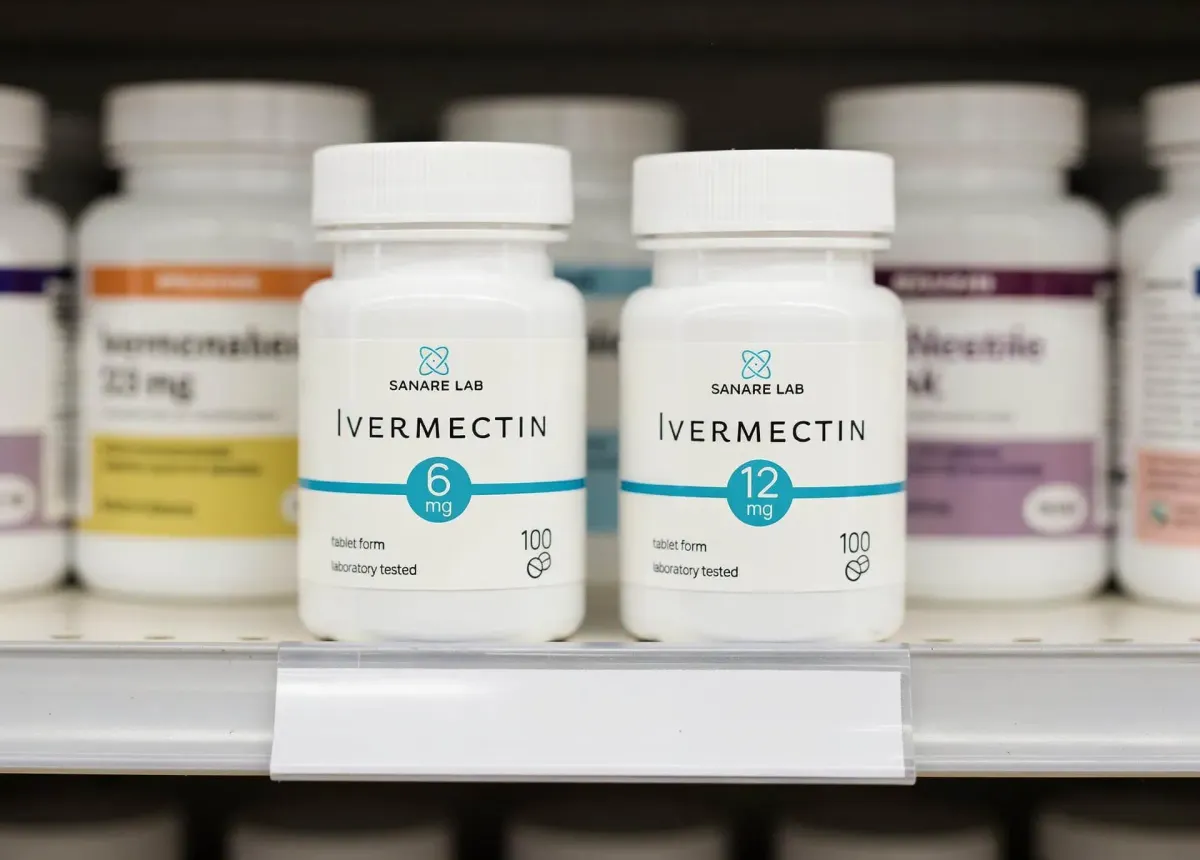
This article is for research and informational purposes only. It does not constitute medical advice. Do not self-prescribe. Always consult a qualified healthcare provider before using any supplement, especially alongside cancer treatment.
Ivermectin in Cancer Research: Related Resources
While this guide focuses on ivermectin for humans in its established medical applications, there is growing research interest in ivermectin's potential anticancer properties. Below are our comprehensive resources:
- Ivermectin Dosage & Cancer Protocols — Complete guide to investigational cancer dosing, drug interactions, safety monitoring, and the ivermectin dosage chart.
- Ivermectin & Cancer Immunotherapy — How ivermectin may enhance immune checkpoint inhibitors through immunogenic cell death.
- NCT05318469 Clinical Trial — Analysis of the first human trial combining ivermectin with pembrolizumab.
- Fenbendazole vs. Ivermectin — Head-to-head comparison of mechanisms, safety, and dosing in cancer research.
- Joe Tippens Protocol — The most well-known repurposed antiparasitic cancer protocol.
- Curcumin & Cancer — Frequently combined with ivermectin in multi-drug protocols.
- Methylene Blue & Cancer — Another repurposed compound studied in experimental cancer models.
- Ivermectin: What It Is & How It Works — Foundational guide covering mechanism of action and pharmacology.
Note: Ivermectin is not approved for cancer treatment by any regulatory authority. All cancer-related applications are investigational. Always consult your oncologist.
Table of Contents
- What Is Ivermectin?
- Dosage Guidelines by Indication
- How to Take Ivermectin Safely
- Pharmacokinetics & Metabolism
- Safety Profile & Side Effects
- The MDR1 Gene: Why It Matters for Ivermectin Safety
- Drug Interactions
- Contraindications & Precautions
- Emerging Cancer Research: Current Evidence
- Cancer Research: What Patients Should Know
- Where to Get Ivermectin
- When to Call Your Doctor
- Practical Guidance for Patients
- Ivermectin Brand Names: Stromectol, Soolantra & Ivomec
- What People Report Online: Ivermectin and Cancer
- Frequently Asked Questions
- References
What Is Ivermectin?
Onchocerciasis (River Blindness)
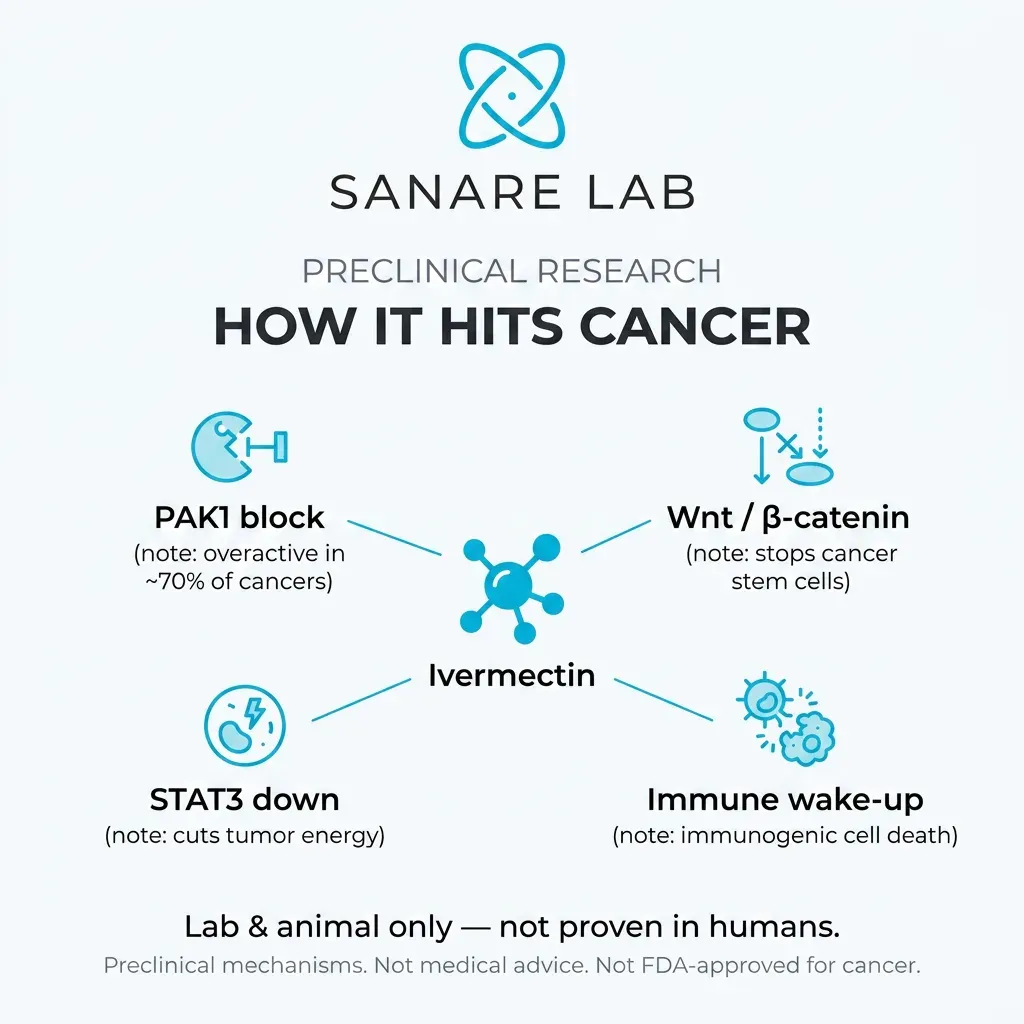
Ivermectin's original human indication remains one of its most impactful. A single oral dose of 150 μg/kg kills microfilariae of Onchocerca volvulus and suppresses their production for months, preventing the inflammatory reactions that lead to blindness. Annual or semi-annual treatment has dramatically reduced the global burden of onchocerciasis, with several formerly endemic countries now certified as free of the disease (PMID: 25130507).
Strongyloidiasis
Ivermectin is the treatment of choice for intestinal strongyloidiasis caused by Strongyloides stercoralis. A single dose of 200 μg/kg achieves cure rates of 85-100%, superior to the alternative (thiabendazole) with far fewer side effects. For disseminated/hyperinfection strongyloidiasis — a life-threatening condition in immunocompromised patients — repeated doses may be necessary (PMID: 17488840).
Scabies
Oral ivermectin (200 μg/kg, typically two doses 1–2 weeks apart) is effective for both ordinary and crusted (Norwegian) scabies. It is particularly valuable for institutional outbreaks, crusted scabies (which is refractory to topical treatments alone), and cases where topical application is impractical. The WHO included oral ivermectin on its Essential Medicines List for scabies treatment (PMID: 20573667).
Lymphatic Filariasis
In combination with albendazole (and sometimes diethylcarbamazine), ivermectin is a key component of mass drug administration programs targeting lymphatic filariasis. This triple-drug regimen can achieve >99% clearance of circulating microfilariae with a single dose, supporting the WHO's goal of eliminating lymphatic filariasis as a public health problem.
Other Approved/Established Uses
Additional approved or well-established uses include:
- Pediculosis (head lice) — topical 0.5% lotion (Sklice®)
- Rosacea — topical 1% cream (Soolantra®)
- Ascariasis, trichuriasis, and enterobiasis (off-label but supported by efficacy data)
- Demodex mite infestation — topical or oral
Dosage Guidelines by Indication
FDA-Approved Dosing (Parasitic Infections)
| Indication | Dose | Schedule | Notes |
|---|---|---|---|
| Onchocerciasis | 150 μg/kg | Single dose, repeat every 6–12 months | Part of MDA programs |
| Strongyloidiasis | 200 μg/kg | Single dose or 2 doses (days 1, 14) | Repeat if symptoms persist |
| Scabies | 200 μg/kg | 2 doses, days 1 and 8–15 | Combine with topical for crusted scabies |
| Lymphatic filariasis | 150–200 μg/kg | Single dose annually | Combined with albendazole ± DEC |
| Head lice | 200–400 μg/kg | Single dose, repeat day 10 | Or topical 0.5% lotion |
Weight-Based Dosing Chart
| Body Weight | Dose at 150 μg/kg | Dose at 200 μg/kg | 3 mg Tablets |
|---|---|---|---|
| 15–25 kg | 3 mg | 3 mg | 1 tablet |
| 26–44 kg | 6 mg | 6 mg | 2 tablets |
| 45–64 kg | 9 mg | 12 mg | 3–4 tablets |
| 65–84 kg | 12 mg | 15 mg | 4–5 tablets |
| ≥85 kg | 15 mg | 18 mg | 5–6 tablets |
Oncology Research Protocols (NOT FDA-Approved)
The following protocols are from the research literature and are NOT FDA-approved for cancer. They are presented for informational purposes only and should only be considered under medical supervision.
ISOM Protocol Component
The ISOM Protocol (Ivermectin + Fenbendazole + Mebendazole) represents a multi-target metabolic approach to cancer:
- Ivermectin component: 12–18 mg (approximately 0.2–0.4 mg/kg)
- Frequency: 1–3 times per week
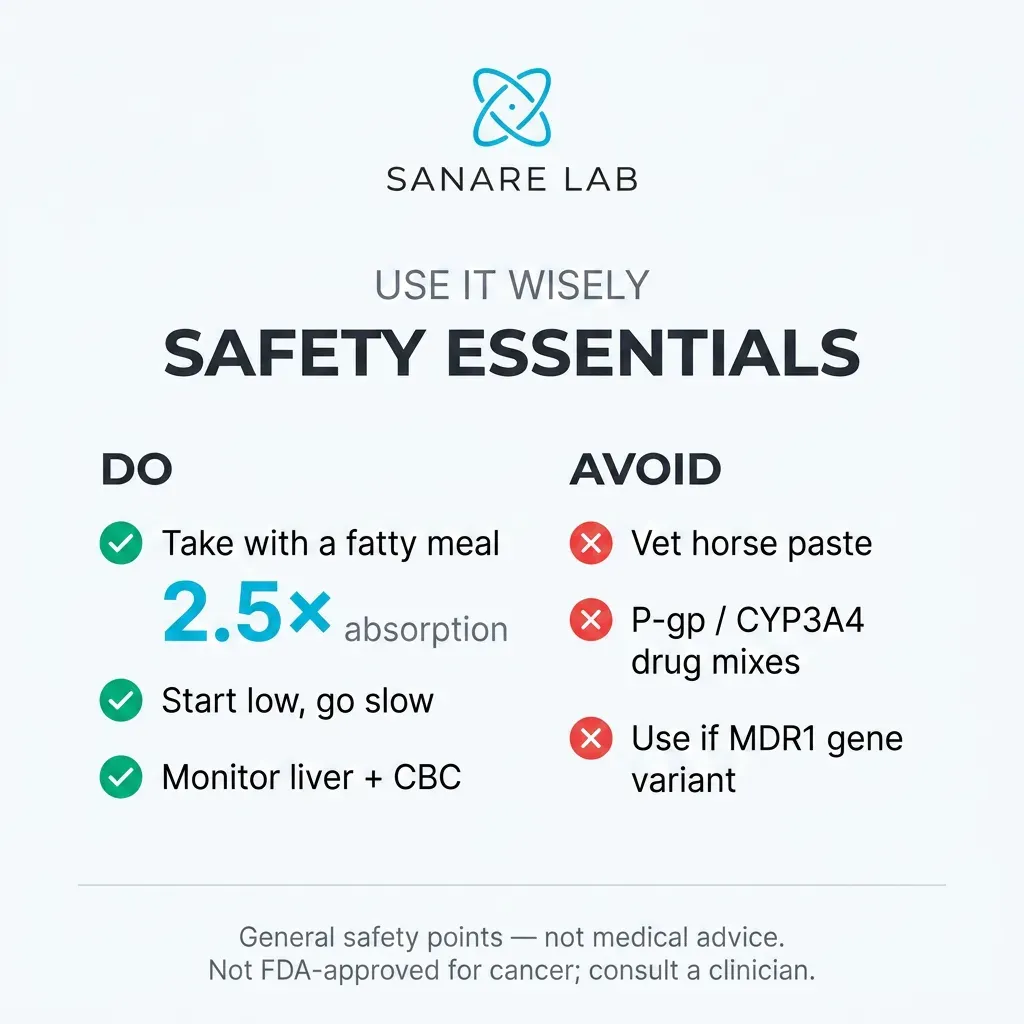
- Timing: With a fatty meal (increases absorption 2.5×)
- Duration: Continuous or cycling schedules
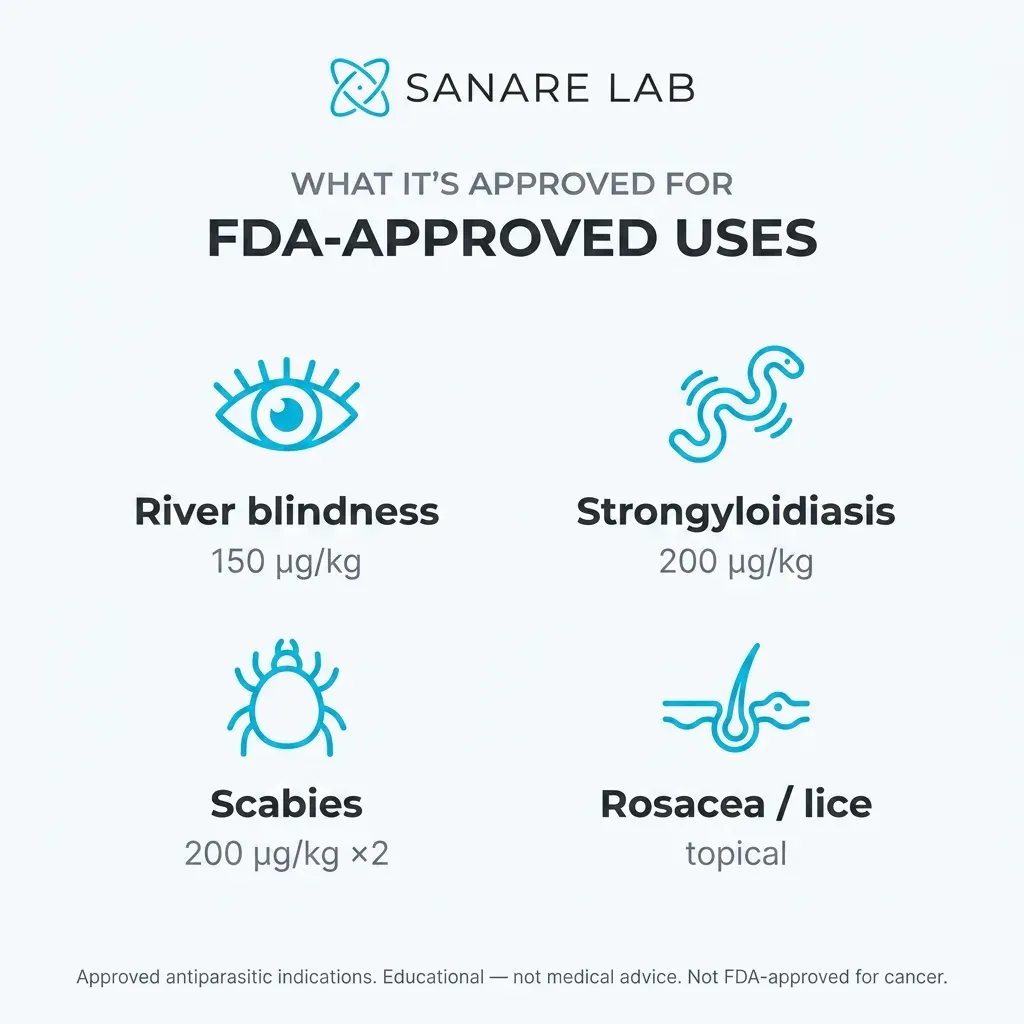
- Combination rationale: Targets PAK1/Wnt (ivermectin) + microtubules (fenbendazole/mebendazole)
- Safety monitoring: Regular liver function tests and neurological assessment required
Clinical Trial NCT05318469 Dosing
The landmark Phase I/II trial at Cedars-Sinai investigating ivermectin + balstilimab (anti-CTLA-4) for metastatic triple-negative breast cancer uses:
- Dose: Oral ivermectin for 3 days every week
- Combined with: IV balstilimab every 3 weeks
- Duration: Up to 35 cycles (~2 years) or until progression
- Status: Preliminary data shows the combination is safe and well-tolerated with encouraging clinical benefit rates
- Results expected: Final report anticipated by end of 2026
How to Take Ivermectin Safely
For FDA-Approved Parasitic Indications
- Take on an empty stomach with a full glass of water (standard recommendation)
- Take the full prescribed dose at once — do not split doses across the day
- Dose is always weight-based: weigh yourself accurately before calculating
- For scabies, a second dose 1–2 weeks later is standard practice
- Inform your healthcare provider of all concurrent medications
For Off-Label Research Protocols
- Take with a high-fat meal — this increases absorption by approximately 2.5× (PMID: 12362927)
- Examples of fatty foods: avocado, full-fat yogurt, eggs cooked in butter, nuts, whole milk
- Follow your specific protocol's timing and frequency instructions exactly
What to Avoid on Dosing Days
- Alcohol: Both ivermectin and alcohol depress the CNS — avoid on dosing days
- Grapefruit juice: Inhibits CYP3A4, can increase ivermectin blood levels
- P-glycoprotein inhibitors: Certain medications can allow ivermectin into the brain (see Drug Interactions)
What NOT to Do: Veterinary Formulation Risks
Using veterinary ivermectin paste intended for horses or livestock is strongly discouraged without medical guidance:
- Concentration issues: Horse paste contains 1.87% ivermectin (18.7 mg/g) — a single notch on the dispensing plunger delivers a dose intended for a 250 lb (113 kg) animal
- Excipient risks: Veterinary formulations contain excipients (inactive ingredients) not tested or approved for human consumption
- Dosing errors are common: Without precise weight-based calculations, overdosing with veterinary paste is easy and can lead to serious toxicity
- Case reports: Multiple cases of severe ivermectin toxicity have been reported following veterinary paste ingestion, including CNS depression, seizures, and hospitalization
Pharmacokinetics & Metabolism
Absorption
Oral ivermectin is well absorbed from the gastrointestinal tract, with peak plasma concentrations achieved at approximately 4 hours post-dose. Bioavailability is estimated at approximately 60% under fasting conditions and significantly higher when administered with a high-fat meal (2.5-fold increase in AUC). The compound is highly lipophilic (logP = 3.2), which influences both its absorption characteristics and its tissue distribution (PMID: 12362927).
Distribution
Ivermectin is extensively distributed throughout body tissues, with particular concentration in adipose tissue (which serves as a depot), liver, and skin. Plasma protein binding exceeds 93%, primarily to albumin. Importantly, ivermectin does not readily cross the blood-brain barrier (BBB) in mammals under normal conditions — this selective exclusion, mediated by P-glycoprotein (P-gp) efflux at the BBB, is a critical safety feature (PMID: 18446504).
Metabolism and Elimination
Ivermectin is metabolized primarily by hepatic CYP3A4 enzymes, with minor contributions from CYP2D6 and CYP2E1. It undergoes extensive first-pass metabolism with formation of several hydroxylated metabolites. Key pharmacokinetic parameters:
- Terminal elimination half-life: ~18 hours (can extend to 28–36 hours due to redistribution from adipose tissue)
- Fecal excretion: >97% of the administered dose
- Urinary excretion: <1%
- Metabolism: Hepatic CYP3A4 (primary), CYP2D6, CYP2E1 (minor)
- Active metabolites: Several hydroxylated derivatives, some with residual activity
The long adipose tissue half-life has implications for both efficacy and safety. In parasitic disease treatment, it provides sustained exposure. For patients using ivermectin in off-label protocols, it means the drug accumulates with repeated dosing and requires careful dose spacing to avoid toxicity.
Safety Profile & Side Effects
Global Safety Record
Ivermectin's safety record is one of the most robust in pharmacology. Over 5 billion doses have been administered since 1987, primarily through mass drug administration programs in Africa, Latin America, and Southeast Asia. Serious adverse events are exceedingly rare when used at approved doses, and the compound has been administered safely to children as young as 5 years (≥15 kg body weight). This extraordinary track record contributed to its placement on the WHO Essential Medicines List and the 2015 Nobel Prize (PMID: 21321478).
Common Side Effects (FDA-Approved Doses)
Side effects are generally mild and often related to the inflammatory response triggered by parasite death (the "Mazzotti reaction" in onchocerciasis) rather than direct drug toxicity:
- Dizziness/lightheadedness: 2–3% of patients
- Nausea: 1–2%
- Diarrhea: 1–2%
- Pruritus (itching): Common in onchocerciasis treatment (Mazzotti reaction)
- Skin rash: Occasional, usually mild and self-limiting
- Fatigue: Transient in some patients
- Abdominal pain: Mild, typically resolves within 24–48 hours
- Myalgia: Occasional muscle aches, usually brief
Most side effects resolve within 24–48 hours without intervention. In mass drug administration programs, the incidence of adverse events requiring medical attention is less than 1 in 10,000 treated individuals.
Serious but Rare Adverse Events
Serious adverse events are rare but include:
- Severe Mazzotti reactions: In heavily infected onchocerciasis patients — may require corticosteroid management
- Encephalopathy: In patients with high Loa loa microfilaremia (>8,000 mf/mL) — a specific contraindication in endemic areas
- Neurotoxicity: In individuals with P-glycoprotein deficiency or disrupted BBB (see MDR1 section below)
- Hepatotoxicity: Very rare; mild transaminase elevations reported with extended use
- Stevens-Johnson syndrome: Extremely rare, case reports only
These events are largely predictable and preventable through appropriate patient screening. The risk of serious adverse events increases with higher doses, repeated administration, and in patients with compromised P-glycoprotein function.
The MDR1 Gene: Why It Matters for Ivermectin Safety
The MDR1 gene (ABCB1) encodes P-glycoprotein, an ATP-dependent efflux transporter that serves as a critical gatekeeper at the blood-brain barrier. Understanding this gene is essential for anyone considering ivermectin use, particularly at higher or repeated doses (PMID: 14975065).
How P-glycoprotein Protects the Brain
Under normal conditions, P-glycoprotein actively pumps ivermectin out of the central nervous system before it can accumulate to toxic levels. This efflux mechanism is the primary reason ivermectin is safe for mammals despite its potent neurotoxic effects on invertebrates. In laboratory studies with P-glycoprotein knockout mice, brain concentrations of ivermectin were 36–60 times higher than in normal mice — demonstrating the critical importance of this protective system (PMID: 19161460).
MDR1 Gene Variants in Humans
While the dramatic P-glycoprotein deficiency seen in certain dog breeds (particularly collies with the 4-base pair mdr1 deletion) has not been identified in humans, numerous single nucleotide polymorphisms (SNPs) in the human ABCB1 gene have been documented. Current evidence suggests that common human ABCB1 haplotypes generally maintain adequate blood-brain barrier functionality, but reduced P-glycoprotein expression or activity could theoretically increase vulnerability (PMID: 17354009).
Risk Factors for Ivermectin Neurotoxicity
- Drug interactions: Co-administration with P-gp inhibitors (see Drug Interactions)
- Compromised blood-brain barrier: Brain tumors, meningitis, recent cranial surgery, or head trauma
- High doses: Risk increases significantly above approved dosing ranges
- Very young or elderly: Immature or deteriorating BBB function
- Genetic variants: While not as well-characterized as in veterinary medicine, individual variation in P-gp expression exists
Symptoms of Ivermectin Neurotoxicity
Symptoms progress from mild to severe:
- Mild: Dizziness, confusion, drowsiness, visual disturbances
- Moderate: Ataxia (difficulty walking), tremors, disorientation
- Severe: Seizures, respiratory depression, coma
If any neurological symptoms occur after taking ivermectin, discontinue immediately and seek emergency medical care. There is no specific antidote; treatment is supportive.
Recommendations
- Consider genetic testing for ABCB1 variants before starting long-term ivermectin protocols
- Always start with lower doses and increase gradually ("start low, go slow")
- Ensure medical supervision for any off-label or research protocol use
- Report any neurological symptoms immediately
- Review all concurrent medications for potential P-gp interactions
Drug Interactions
CYP3A4 Interactions
As a CYP3A4 substrate, ivermectin levels may be significantly affected by other drugs that modulate this enzyme:
CYP3A4 inhibitors (may INCREASE ivermectin levels):
- Ketoconazole, itraconazole, voriconazole (antifungals)
- Ritonavir, cobicistat (HIV antivirals)
- Clarithromycin, erythromycin (macrolide antibiotics)
- Grapefruit juice (significant increase at regular consumption)
- Diltiazem, verapamil (calcium channel blockers)
CYP3A4 inducers (may DECREASE ivermectin levels):
- Rifampin (antibiotic — potent inducer)
- Phenytoin, carbamazepine (anticonvulsants)
- St. John's Wort (herbal supplement)
- Dexamethasone (at high doses)
P-glycoprotein Interactions (CRITICAL)
Drugs that inhibit P-gp may increase ivermectin distribution to the CNS, theoretically increasing the risk of neurotoxicity. This is the most clinically significant interaction category:
- Verapamil, quinidine, amiodarone (cardiovascular drugs)
- Cyclosporine (immunosuppressant)
- Ketoconazole (dual CYP3A4 + P-gp inhibitor)
- Ranolazine (antianginal)
- Dronedarone (antiarrhythmic)
This interaction is particularly relevant for patients using ivermectin in multi-drug cancer research protocols, where multiple compounds may be taken simultaneously. Similar drug interaction concerns apply to other repurposed drugs — see the fenbendazole liver safety guide for comparable considerations.
Warfarin and Anticoagulants
Case reports suggest ivermectin may enhance the anticoagulant effect of warfarin through CYP enzyme competition. Patients on warfarin should have their INR monitored more closely if ivermectin is co-administered. This interaction is clinically relevant for patients using ivermectin in cancer-related protocols alongside anticoagulant therapy.
Alcohol
While no direct pharmacokinetic interaction has been established, both ivermectin and alcohol can cause CNS depression. Avoidance of alcohol around dosing time is prudent, especially at higher doses or with repeated administration.
Contraindications & Precautions
Absolute Contraindications
- Known hypersensitivity to ivermectin or any excipient
- High-density Loa loa microfilaremia (>8,000 mf/mL) — risk of fatal encephalopathy
- Children weighing less than 15 kg (limited safety data)
Relative Contraindications and Precautions
- Pregnancy (FDA Category C) — teratogenic in animal studies at high doses; use only when clearly needed
- Breastfeeding — ivermectin is excreted in breast milk; risk-benefit assessment required
- Severe hepatic impairment — potential for altered metabolism and accumulation
- CNS disorders or compromised BBB — increased risk of neurotoxicity
- Concurrent P-gp inhibitors — increased risk of CNS accumulation
- Elderly patients — may have reduced P-gp function and altered hepatic metabolism
Global-Scale Impact: Billions of Doses Distributed
Ivermectin's significance extends far beyond individual prescriptions. Since the World Health Organization launched the Global Programme to Eliminate Lymphatic Filariasis (GPELF) in 2000, more than 9.7 billion cumulative treatments have been administered worldwide to interrupt parasite transmission — the majority involving ivermectin-based regimens.
The drug's global reach is made possible in part by Merck's Mectizan Donation Program, initiated in 1987, which committed to supplying ivermectin free of charge "for as long as needed" to combat river blindness. This program remains one of the most successful public-private health partnerships in history and has since expanded to include lymphatic filariasis elimination.
By 2018, the number of people infected with lymphatic filariasis had declined by 74% compared to 2000, and 871 million people no longer required preventive chemotherapy. In sub-Saharan Africa, where onchocerciasis and lymphatic filariasis are frequently co-endemic, ivermectin-based mass drug administration (MDA) campaigns have been the cornerstone of elimination strategies for over two decades.
This extraordinary safety dataset — billions of supervised doses across diverse populations — provides a unique pharmacovigilance foundation. While these doses are given at standard antiparasitic levels (150–200 µg/kg), the accumulated evidence confirms that ivermectin at approved doses is remarkably well-tolerated in the general population, with serious adverse events occurring almost exclusively in patients with heavy Loa loa co-infection or MDR1 gene variants.
Topical Ivermectin: Soolantra and Dermatological Uses
Beyond oral tablets, ivermectin is also available as a topical formulation for dermatological conditions. In December 2014, the FDA approved Soolantra (ivermectin 1% cream) for the once-daily treatment of inflammatory lesions associated with rosacea — making it the first ivermectin product specifically approved for a skin condition in the United States.
In two Phase 3 clinical trials involving 1,371 adults with moderate-to-severe papulopustular rosacea, ivermectin 1% cream demonstrated significantly superior results compared to vehicle (placebo) cream. Between 38–40% of patients achieved "clear" or "almost clear" skin on the Investigator Global Assessment scale, compared to 12–19% in the control group. Significant improvement was observed as early as two weeks.
Topical ivermectin is also used off-label for:
- Demodex mite infestations — the antiparasitic mechanism directly targets Demodex folliculorum and D. brevis, which are implicated in many rosacea presentations.
- Head lice (pediculosis) — Sklice (ivermectin 0.5% lotion) was FDA-approved in 2012 for single-application treatment of head lice in patients 6 months and older.
These topical applications are pharmacokinetically distinct from oral dosing. Systemic absorption from ivermectin cream is minimal — plasma levels after topical application are roughly 100-fold lower than after standard oral doses — meaning the drug interaction and safety considerations described elsewhere in this article apply primarily to oral formulations.
Regulatory Landscape: How Access Varies Globally
Ivermectin's regulatory status varies significantly by country, creating a patchwork of access that directly affects patients seeking the medication.
Regardless of local regulatory status, the critical distinction remains: ivermectin is approved globally for parasitic infections. It has no regulatory approval for cancer treatment in any country. Any oncology-related use is experimental and off-label, requiring appropriate medical supervision.
Special Populations: Children, Elderly, and Compromised Patients
While ivermectin's safety in healthy adults is well-established, certain populations require additional caution.
Children
The FDA label historically restricts ivermectin use to children weighing ≥15 kg (33 lbs). However, this threshold was based on limited early data rather than evidence of harm. A 2021 systematic review of 1,088 children under 15 kg found only 1.4% experienced adverse events — all mild and self-limiting, with no serious events reported (PLoS NTD, PMID: 33471839). Pharmacokinetic modeling suggests age-appropriate dosing (0.75 mg for 3–7 months, 1.5 mg for 8–12 months, 3 mg for 13–24 months) can achieve equivalent exposure, though these doses await formal clinical trial validation.
Elderly Patients
No specific dose adjustment is recommended for elderly patients. However, age-related decline in hepatic CYP3A4 activity and renal function may alter drug clearance. Polypharmacy — common in elderly populations — increases the risk of drug interactions, particularly with CYP3A4 inhibitors (see Drug Interactions section above). Liver function monitoring is advisable in older adults taking ivermectin repeatedly.
Pregnancy and Lactation
Ivermectin is classified as Pregnancy Category C by the FDA — animal studies at high doses showed teratogenic effects, but no adequate studies exist in pregnant women. WHO guidelines exclude pregnant women from MDA campaigns during the first trimester. Ivermectin is excreted in breast milk in low concentrations; the WHO considers it compatible with breastfeeding when used at standard antiparasitic doses, but caution is advised for repeated or high-dose use.
Hepatic and Renal Impairment
Because ivermectin is extensively metabolized by hepatic CYP3A4, patients with significant liver disease may experience higher plasma levels and prolonged drug exposure. No formal pharmacokinetic studies exist in patients with hepatic impairment, but clinical caution is warranted — especially relevant for patients considering ivermectin alongside fenbendazole, as both compounds are hepatically processed. Ivermectin undergoes minimal renal excretion, so renal impairment alone does not typically necessitate dose adjustment.
Formulation Quality: How to Verify What You're Taking
The distinction between pharmaceutical-grade and veterinary ivermectin products cannot be overstated. Unlike Panacur C fenbendazole (which contains ~77.8% undisclosed excipients formulated for dogs), human ivermectin tablets are manufactured under strict GMP standards with precise active ingredient content.
Pharmaceutical-grade ivermectin tablets are available in 3 mg, 6 mg, and 12 mg strengths from multiple WHO-GMP certified manufacturers. When verifying product quality, confirm:
- Manufacturer name and GMP certification — legitimate products will list a licensed pharmaceutical manufacturer (e.g., Edenbridge, Mankind Pharma, Sun Pharma).
- USP or equivalent pharmacopoeia compliance — look for USP (United States Pharmacopeia) or equivalent quality standard on the labeling.
- Correct active ingredient and strength — the label should specify "ivermectin" as the only active ingredient, with a defined mg strength.
- Lot number and expiration date — all pharmaceutical products must carry batch identification and shelf-life information.
- No veterinary labeling — products labeled "for animal use only," "horse paste," or "cattle injectable" are NOT formulated for human consumption, regardless of the active ingredient being ivermectin.
Veterinary ivermectin paste (commonly sold as "horse dewormer") is formulated with excipients designed for equine palatability and gut transit — not for human absorption profiles. Concentration differences also create serious dosing errors: horse paste typically contains 1.87% ivermectin (18.7 mg/gram), making accurate human dosing with a syringe dispenser extremely imprecise.
Emerging Cancer Research: Current Evidence
The anticancer potential of ivermectin has become one of the most active areas of drug repurposing research. As detailed in the mechanism section, multiple independent studies have identified diverse anticancer mechanisms. However, it is essential to understand where the evidence currently stands.
Clinical Trial NCT05318469: The Landmark Study
The Phase I/II randomized controlled trial NCT05318469 at Cedars-Sinai Medical Center represents the most significant step toward clinical validation of ivermectin's anticancer potential. Key details:
- Design: Phase I/II, open-label, multi-cohort
- Population: Adults with metastatic triple-negative breast cancer (mTNBC), 1–2 prior lines of therapy
- Intervention: Oral ivermectin + IV balstilimab (anti-CTLA-4)
- Expansion cohorts: Specifically targeting PD-L1 negative tumors to investigate immune sensitization
- Primary endpoints: Safety, tolerability, recommended Phase II dose
- Secondary endpoints: Objective response rate, progression-free survival, biomarker analysis
- Preliminary results: ASCO 2025 abstract reported the combination is well-tolerated with encouraging clinical benefit rates in heavily pretreated patients
- Final results: Expected by end of 2026
For a detailed analysis of this trial's design, scientific rationale, and potential implications, see our dedicated article: Can Ivermectin Enhance Immunotherapy? Inside Trial NCT05318469.
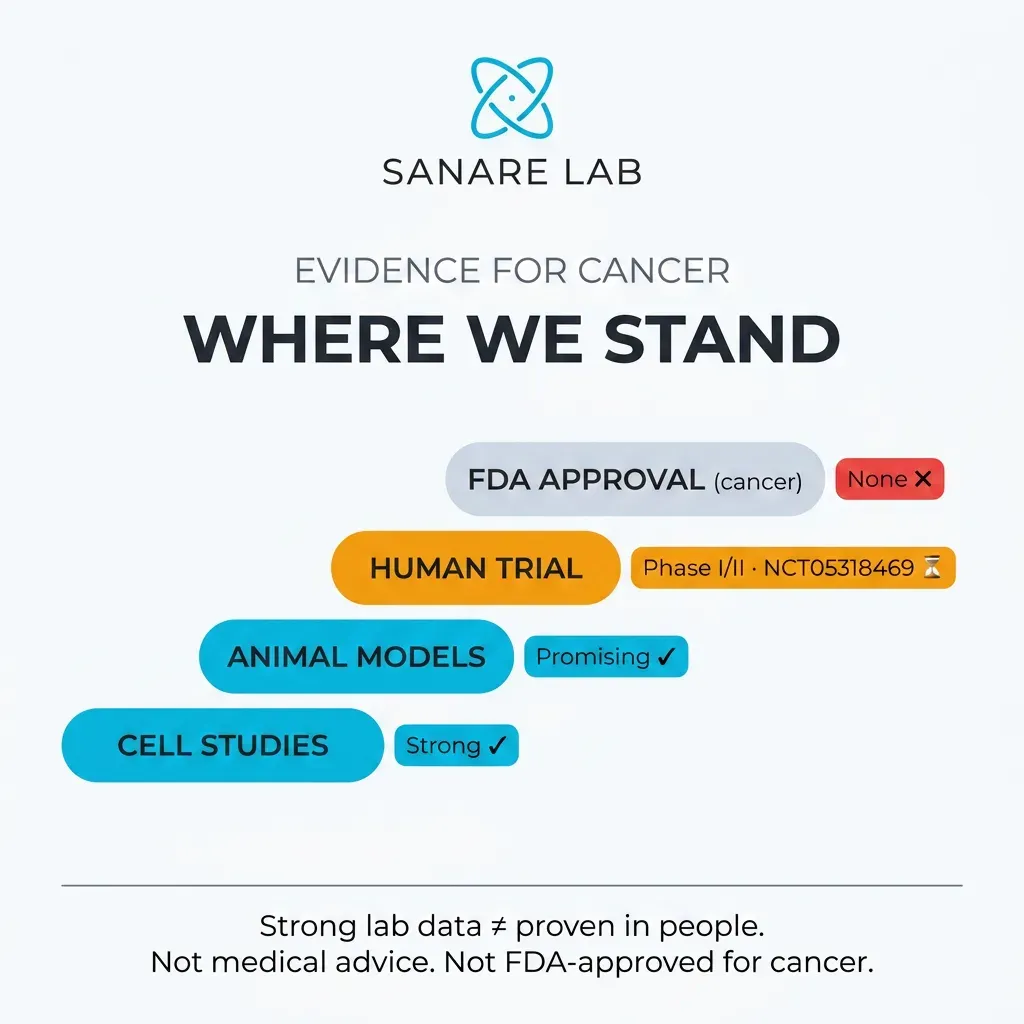
Evidence Hierarchy: Where Are We?
| Evidence Level | Status | Strength |
|---|---|---|
| In vitro (cell studies) | Multiple studies, multiple pathways confirmed | Strong ✅ |
| Animal models | Tumor suppression demonstrated in xenografts | Promising ✅ |
| Human clinical trials | Phase I/II ongoing (NCT05318469) | Early stage |
| FDA approval for cancer | None | Not achieved ❌ |
Cancer Research: What Patients Should Know
Ivermectin has attracted significant scientific attention for potential anticancer properties. Here is what the evidence currently shows.
Clinical Trial NCT05318469
The most significant step toward clinical validation is the Phase I/II trial at Cedars-Sinai investigating ivermectin combined with immunotherapy (balstilimab) for metastatic triple-negative breast cancer. Preliminary data shows the combination is well-tolerated with encouraging clinical benefit. Final results are expected by end of 2026.
Where the Evidence Stands
- Lab studies (in vitro): Multiple anticancer mechanisms confirmed ✅
- Animal models: Tumor suppression demonstrated ✅
- Human clinical trials: Phase I/II ongoing
- FDA approval for cancer: None ❌
Bottom line: Ivermectin is NOT a proven cancer treatment. The research is scientifically promising but still experimental. Never replace standard oncological care with ivermectin. Always discuss with your oncologist first.
Where to Get Ivermectin
Prescription Requirements
In most countries, pharmaceutical-grade ivermectin for human use requires a prescription. Available formulations include oral tablets (Stromectol® and generics in 3 mg, 6 mg, 12 mg), topical cream 1% (Soolantra® for rosacea), and topical lotion 0.5% (Sklice® for head lice).
Quality Verification Checklist
- ✅ Certificate of Analysis (COA) — confirms purity and potency through independent lab testing
- ✅ GMP manufacturing — Good Manufacturing Practices certification
- ✅ Proper labeling — lot number, expiration date, manufacturer information
- ✅ Reputable source — licensed pharmacy or verified supplier with track record
For guidance on evaluating pharmaceutical suppliers, see our quality verification guide.
When to Call Your Doctor
Call 911 / Emergency Services Immediately
- Seizures or convulsions
- Difficulty breathing or shortness of breath
- Loss of consciousness
- Severe confusion or inability to recognize people
- Severe allergic reaction (face/throat swelling, hives)
Contact Your Doctor Within 24 Hours
- Persistent dizziness, confusion, or drowsiness lasting more than 24 hours
- Visual disturbances (blurred vision, seeing double)
- Difficulty walking or loss of balance
- Tremors or involuntary muscle movements
- Dark urine or yellowing of skin/eyes (possible liver problems)
- Severe Mazzotti reaction symptoms (high fever, severe joint pain, facial swelling)
Discuss at Next Appointment
- Mild side effects lasting more than 48 hours
- Questions about drug interactions with new medications
- Interest in using ivermectin for off-label purposes
- Planning pregnancy while taking ivermectin
Ivermectin Brand Names: Stromectol, Soolantra, Sklice & Ivomec
Ivermectin is sold under several brand names depending on the formulation and whether it is intended for humans or animals. Understanding the difference is important for safety — some of the most-searched brand names (such as Ivomec) are veterinary products that should never be used by people.
Human ivermectin brands
Stromectol® is the best-known oral human formulation, available as 3 mg, 6 mg and 12 mg tablets, with numerous generic equivalents worldwide. For skin conditions, Soolantra® (ivermectin 1% cream) is FDA-approved for rosacea, and Sklice® (0.5% lotion) treats head lice. These are pharmaceutical-grade products manufactured to human safety standards. See our dosage guidelines and topical formulations sections for details.
Why people search “Ivomec for humans” — and why it is a mistake
Ivomec® is a veterinary brand of ivermectin made for livestock (cattle, swine, horses). It is one of the most commonly searched terms because the veterinary product is often cheaper and available without a prescription. However, veterinary ivermectin is not appropriate for human use: concentrations are formulated for animals many times the weight of a person, injectable and pour-on products contain carriers and excipients never tested for human safety, and there is no certificate of analysis verifying human-grade purity. Dosing errors with concentrated veterinary paste and pour-on solutions are a leading cause of ivermectin overdose reports. If you need ivermectin, use a pharmaceutical human formulation obtained through a licensed pharmacy — see Where to Get Ivermectin and our quality verification guide.
Practical Guidance for Patients
How to Take Ivermectin
- For FDA-approved indications: take as a single dose on an empty stomach with water (unless your protocol specifies otherwise)
- For oncology research protocols: take with a high-fat meal for enhanced absorption (2.5× increase)
- Standard tablets available in 3 mg, 6 mg, and 12 mg strengths
- Dose is weight-based (150–200 μg/kg depending on indication)
- For scabies, a second dose 1–2 weeks later is standard
- Inform your healthcare provider of all concurrent medications
- Avoid alcohol around the time of dosing
Monitoring Recommendations
For single-dose parasitic treatment: routine monitoring is generally unnecessary.
For repeated/off-label use (such as cancer protocols):
- Complete blood count (CBC) — baseline and quarterly
- Liver function tests (AST, ALT, bilirubin) — quarterly
- Renal function (creatinine, BUN) — quarterly
- Neurological symptom monitoring — ongoing
- INR if on anticoagulants — more frequent monitoring
- Consider ABCB1 genetic testing before long-term protocols
Report any neurological symptoms (confusion, difficulty walking, vision changes) immediately. For a detailed discussion of monitoring during repurposed drug protocols, see the fenbendazole dosage guide which covers similar considerations.
Storage and Handling
- Store at room temperature (20–25°C / 68–77°F)
- Protect from moisture and light
- Stable for 2–3 years under proper storage conditions
- Do not crush or divide tablets unless specifically formulated for this
- Global-Scale Impact: Billions of Doses Distributed
- Topical Ivermectin: Soolantra and Dermatological Uses
- Regulatory Landscape: How Access Varies Globally
- Special Populations: Children, Elderly, and Compromised Patients
- Formulation Quality: How to Verify What You're Taking
- Keep out of reach of children
What People Report Online: Ivermectin and Cancer
Behind the laboratory papers sits a large, restless online conversation. On Reddit and patient forums, people considering ivermectin for cancer — and the relatives caring for them — trade experiences with ivermectin, usually as an add-on to standard cancer care. To save you from digging through dozens of scattered threads, we have gathered the most relevant, on-topic discussions in one place, together with an honest guide to what these accounts can and cannot tell you.
How to read these reports
These are personal stories, not clinical evidence. They are uncontrolled, self-reported, and impossible to verify independently.
In almost every account, the person was also receiving standard treatment — chemotherapy, immunotherapy, radiotherapy, or surgery — at the same time as ivermectin. When someone improves on two therapies at once, the result cannot be credited to ivermectin alone; the conventional treatment is the far more likely explanation.
Encouraging stories are also shared far more often than disappointing ones, so online threads skew positive (survivorship and publication bias).
The useful way to read them is as questions worth raising with your oncologist — not as a protocol to copy on your own.
For a deeper, evidence-based look at how these accounts hold up — including the documented case reports and the peer-reviewed analyses behind them — see our detailed review of fenbendazole success stories and case reports.
Frequently Asked Questions
Is ivermectin safe for humans?
Yes. Ivermectin has one of the most extensive safety records of any medication, with over 5 billion doses administered globally since 1987. At FDA-approved doses (150–200 μg/kg), serious adverse events are exceedingly rare. The WHO includes it on its Essential Medicines List. However, safety depends on proper dosing and medical supervision, especially at higher doses or with chronic use (PMID: 25130507).
What is the correct ivermectin dosage for humans?
The standard FDA-approved dose is 150–200 μg/kg body weight as a single dose. For a 70 kg adult, this is approximately 14 mg (or 4–5 standard 3 mg tablets). Dosing varies by indication — see the Dosage Guidelines section above for a complete weight-based dosing chart.
Can ivermectin cure cancer?
There is NO evidence that ivermectin cures cancer. Preclinical studies show multiple anticancer mechanisms (PAK1, Wnt, STAT3 inhibition), and one Phase I/II clinical trial (NCT05318469) is underway. The evidence is promising but experimental. Ivermectin should never replace standard cancer treatment. See the Cancer Research section for detailed evidence hierarchy.
What is the ivermectin dosage in the ISOM Protocol?
In the ISOM Protocol, the ivermectin component is typically 12–18 mg (0.2–0.4 mg/kg), taken 1–3 times per week with a fatty meal. This is NOT an FDA-approved protocol and requires medical supervision.
Does ivermectin work for COVID-19?
The FDA, WHO, and NIH do not recommend ivermectin for COVID-19 treatment or prevention. Large-scale clinical trials (PRINCIPLE, TOGETHER, ACTIV-6) did not demonstrate clinically meaningful benefit. Early in vitro studies showed antiviral activity, but at concentrations far higher than safely achievable in human plasma.
What are the side effects of ivermectin?
Common side effects (1–3% of patients) include dizziness, nausea, diarrhea, and fatigue. In onchocerciasis treatment, itching and rash related to parasite death (Mazzotti reaction) are common. Serious side effects (neurotoxicity, seizures) are rare and typically associated with high doses or P-glycoprotein deficiency.
Can I use veterinary ivermectin for humans?
This is strongly discouraged. Veterinary formulations (horse paste, cattle injectable) contain excipients not tested for human safety, and the high concentration (18.7 mg/g in horse paste) makes accurate dosing extremely difficult. Multiple cases of serious toxicity have been reported from veterinary ivermectin misuse.
What is the MDR1 gene and why does it matter?
The MDR1 (ABCB1) gene encodes P-glycoprotein, which keeps ivermectin out of the brain. People with certain genetic variants may have reduced P-gp function, increasing the risk of neurotoxicity. See the MDR1 Gene section for complete details and recommendations.
Can I take ivermectin with other medications?
Ivermectin interacts with CYP3A4 inhibitors/inducers and P-glycoprotein inhibitors. Drugs like ketoconazole, verapamil, cyclosporine, and grapefruit juice can increase ivermectin levels and potentially increase toxicity risk. See the Drug Interactions section for a complete list.
How long does ivermectin stay in your system?
Ivermectin has a plasma half-life of approximately 18 hours, but redistribution from adipose tissue can extend the effective half-life to 28–36 hours. Over 97% is eliminated through feces. Complete elimination may take several days after a single dose.
Should ivermectin be taken with food?
For FDA-approved parasitic indications, ivermectin is traditionally taken on an empty stomach. However, for off-label protocols (including oncology research doses), taking ivermectin with a fatty meal increases absorption by approximately 2.5-fold (PMID: 12362927). Follow your specific protocol's instructions.
Is ivermectin FDA-approved for cancer?
No. Ivermectin is NOT FDA-approved for any cancer indication. It is FDA-approved only for parasitic infections (strongyloidiasis, onchocerciasis) and topical conditions (rosacea, head lice). Cancer-related use is entirely experimental and investigational.
What is the difference between ivermectin and fenbendazole?
Ivermectin and fenbendazole are different classes of antiparasitic drugs with different mechanisms. Ivermectin targets chloride channels (parasites) and PAK1/Wnt signaling (cancer cells). Fenbendazole disrupts microtubules. Their distinct mechanisms make them potentially complementary in combination protocols.
Can pregnant women take ivermectin?
Ivermectin is FDA Category C for pregnancy. Animal studies have shown teratogenic effects at high doses. Human data is limited. The WHO advises avoiding ivermectin in early pregnancy. Use during pregnancy should only occur when clearly needed and under medical supervision.
16. What is ivermectin used for in humans?
In humans, ivermectin is FDA-approved to treat several parasitic infections: onchocerciasis (river blindness), strongyloidiasis (intestinal threadworm), and — as topical formulations — rosacea (Soolantra® cream) and head lice (Sklice® lotion). It is also used off-label and in some countries for scabies and lymphatic filariasis. Beyond approved uses, ivermectin is being studied experimentally in oncology, but it is not approved for cancer. See the What Is Ivermectin? section for the full list of indications.
17. What is the ivermectin dosage for scabies?
For scabies, oral ivermectin is typically dosed at 200 μg/kg body weight as a single dose, often repeated after 7–14 days to kill mites that hatch from eggs after the first dose. For a 70 kg adult this is roughly 12–15 mg per dose. Crusted (Norwegian) scabies may require additional doses combined with topical treatment. Dosing should always be confirmed by a clinician — see the Weight-Based Dosing Chart for exact figures by body weight.
18. Is there an ivermectin cream, and what is Soolantra?
Yes. Soolantra® is a topical ivermectin 1% cream FDA-approved in 2014 for the inflammatory lesions of rosacea. In Phase 3 trials, 38–40% of patients achieved clear or almost-clear skin. It works through both anti-inflammatory action and by targeting Demodex mites implicated in rosacea. Systemic absorption from the cream is minimal, so its safety profile differs from oral tablets. See Topical Ivermectin for details.
19. What is the difference between Ivomec and ivermectin for humans?
Ivomec® is a veterinary brand of ivermectin formulated for livestock (cattle, swine, horses) as injectables, oral drenches and pour-on solutions. Human ivermectin (e.g., Stromectol®) is manufactured to pharmaceutical standards with verified purity and human-appropriate dosing. Veterinary products are concentrated for animals weighing hundreds of kilograms and contain carriers never tested for human safety, making accurate and safe dosing in people extremely difficult. Ivomec and other veterinary formulations should not be used by humans — see Ivermectin Brand Names.
20. Is ivermectin available over the counter?
In most countries, oral pharmaceutical ivermectin for human use requires a prescription. Availability varies: some nations sell it over the counter or through pharmacy programs, while topical Sklice® lotion for head lice is OTC in some markets. Regardless of where it is obtained, look for a certificate of analysis (COA), GMP manufacturing and proper labeling. See Where to Get Ivermectin for a quality checklist.
Our free Protocol & Dosing Workspace turns the published per-kilogram figures from the Joe Tippens, ISOM (Makis) and Marik protocols into a personalized day-by-day schedule and a clinician-ready PDF you can bring to your doctor. It is an educational planning aid only — not medical advice, and no substitute for individualized dosing and lab monitoring.
Open the Dosing Calculator →Shop Sanare Lab
Lab-tested products referenced in the research above. Links are provided for convenience — always review the label and consult a professional before use.
6 / 12 / 18 mg — 100 tablets
180 capsules — 99% purity, laboratory tested
120 capsules — with Black Pepper for absorption
Disclaimer: Links are informational and for convenience. This site does not provide medical advice and does not endorse any specific vendor. Always verify product quality, labeling, and consult a licensed professional for health decisions.
References
- Ōmura S, Crump A. Ivermectin: panacea for resource-poor communities? Trends in Parasitology, 2014;30(9):445-455. PMID: 25130507
- Campbell WC. History of avermectin and ivermectin, with notes on the history of other macrocyclic lactone antiparasitic agents. Curr Pharm Biotechnol, 2012;13(6):853-865. PMID: 22882677
- Crump A, Ōmura S. Ivermectin, 'wonder drug' from Japan: the human use perspective. Proc Jpn Acad Ser B Phys Biol Sci, 2011;87(2):13-28. PMID: 21321478
- Wolstenholme AJ, Rogers AT. Glutamate-gated chloride channels and the mode of action of the avermectin/milbemycin anthelmintics. Parasitology, 2005;131(Suppl):S85-95. PMID: 15857678
- Dou Q, et al. Ivermectin induces cytostatic autophagy by blocking the PAK1/Akt axis in breast cancer. Cancer Research, 2016;76(15):4457-4469. PMID: 27302166
- Melotti A, et al. The river blindness drug ivermectin and related macrocyclic lactones inhibit WNT-TCF pathway responses in human cancer. EMBO Mol Med, 2014;6(10):1263-1278. PMID: 25191865
- Shukla N, et al. Ivermectin: an antiparasitic drug with potential anticancer activity. Anticancer Research, 2017;37(11):6005-6011. PMID: 29154816
- Tang M, et al. Ivermectin, a potential anticancer drug derived from an antiparasitic drug. Pharmacol Res, 2021;163:105207. PMID: 33188898
- Juarez M, Schcolnik-Cabrera A, Dueñas-González A. The multitargeted drug ivermectin: from an antiparasitic agent to a repositioned cancer drug. Am J Cancer Res, 2018;8(2):317-331. PMID: 28916782
- Guzzo CA, et al. Safety, tolerability, and pharmacokinetics of escalating high doses of ivermectin in healthy adult subjects. J Clin Pharmacol, 2002;42(10):1122-1133. PMID: 12362927
- González Canga A, et al. The pharmacokinetics and interactions of ivermectin in humans — a mini-review. AAPS J, 2008;10(1):42-46. PMID: 18446504
- Mealey KL. Therapeutic implications of the MDR-1 gene. J Vet Pharmacol Ther, 2004;27(5):257-264. PMID: 14975065
- Lespine A, et al. Interaction of macrocyclic lactones with P-glycoprotein: structure–affinity relationship. Eur J Pharm Sci, 2007;30(1):84-94. PMID: 17354009
- Edwards G. Ivermectin: does P-glycoprotein play a role in neurotoxicity? Filaria J, 2003;2(Suppl 1):S8. PMID: 19161460
- Currie BJ, McCarthy JS. Permethrin and ivermectin for scabies. N Engl J Med, 2010;362(8):717-725. PMID: 20573667
- Suputtamongkol Y, et al. Efficacy and safety of single and double doses of ivermectin versus 7-day high dose albendazole for chronic strongyloidiasis. PLoS NTD, 2011;5(5):e1044. PMID: 17488840
- Laing R, Gillan V, Devaney E. Ivermectin — old drug, new tricks? Trends in Parasitology, 2017;33(6):463-472. PMID: 28285851
- Zeng Z, et al. Pharmacokinetics of ivermectin in humans. J Vet Pharmacol Ther, 1998;21(6):462-468. PMID: 9260020
- ClinicalTrials.gov. NCT05318469: Ivermectin + Balstilimab in Metastatic Triple Negative Breast Cancer. Cedars-Sinai Medical Center.
- WHO Model List of Essential Medicines. 23rd List, 2023. World Health Organization.
- WHO. Lymphatic filariasis: key facts. World Health Organization, 2023. WHO
- FDA. Soolantra (ivermectin) cream, 1% prescribing information. FDA/Galderma, 2014. FDA
- Levy M, Martin L, Bursztejn AC, et al. Ivermectin safety in infants and children under 15 kg treated for scabies: a multicentric observational study. Br J Dermatol, 2020;182(4):1003-1006. PMID: 31344258. PubMed
- Nicolas P, Maia MF, Bassat Q, et al. Safety of oral ivermectin during pregnancy: a systematic review and meta-analysis. Lancet Glob Health, 2020;8(1):e92-e100. PMID: 31839144. PubMed
Medical Disclaimer
This article is for educational and informational purposes only. It is not intended to be a substitute for professional medical advice, diagnosis, or treatment. Always seek the advice of your physician or other qualified health provider with any questions you may have regarding a medical condition. Never disregard professional medical advice or delay in seeking it because of something you have read on this website.

Dr. Andrew Ellison, MD
Science editor and health researcher at Sanare Lab, covering evidence-based wellness, emerging compound research, clinical studies, and practical health protocols. Content is educational and does not replace medical advice.