
Ivermectin: What It Is, How It Works, and Why It’s Used
Foundational guide to ivermectin: discovery, mechanism of action, and medical uses. Understanding how this Nobel Prize-winning drug works in parasitic and potential cancer applications.
 By Dr. Andrew Ellison, MD · January 10, 2026 · 36 min read
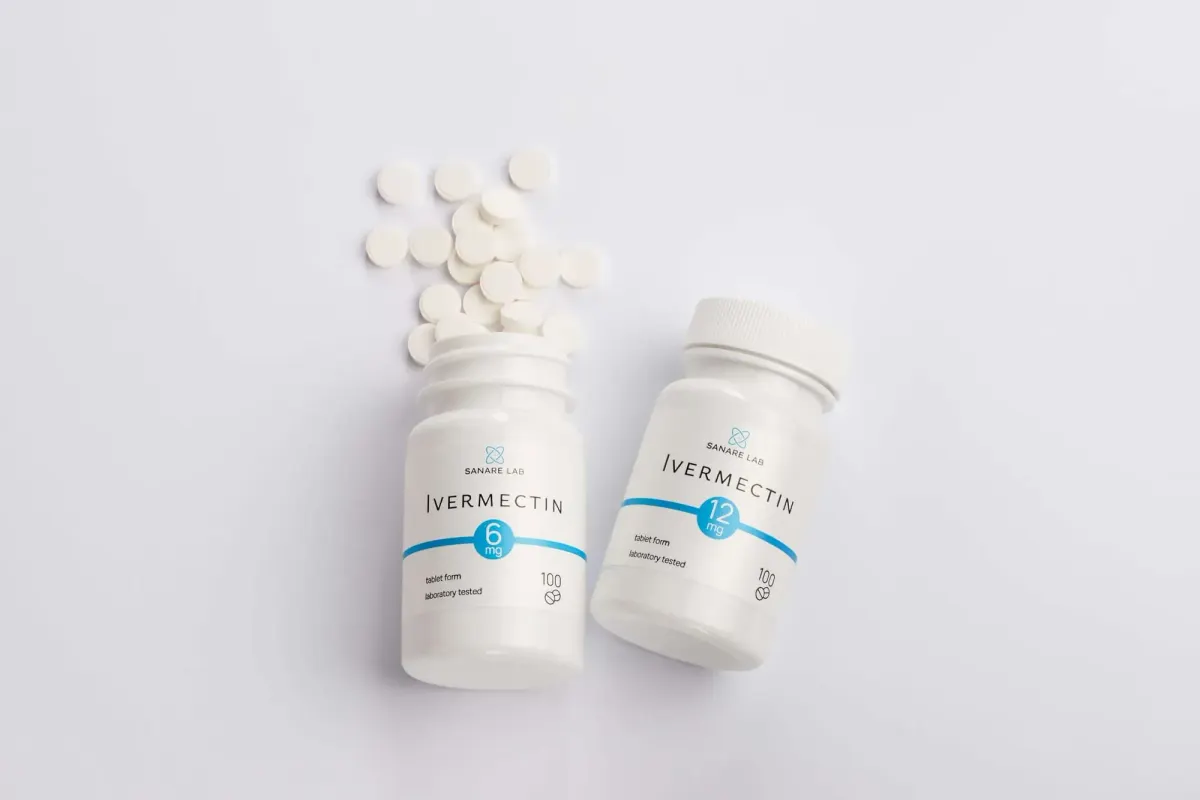
This article is for research and informational purposes only. It does not constitute medical advice. Do not self-prescribe. Always consult a qualified healthcare provider before using any supplement, especially alongside cancer treatment.
Ivermectin is one of the most important pharmaceutical discoveries of the twentieth century. Originally isolated from the soil bacterium Streptomyces avermitilis in the 1970s, it transformed the treatment of parasitic diseases in both humans and animals, earning its discoverers — Satoshi Ōmura and William C. Campbell — the 2015 Nobel Prize in Physiology or Medicine (PMID: 26741190). Over four decades, ivermectin has been administered to hundreds of millions of people, primarily through the Mectizan Donation Program for river blindness, establishing one of the most extensive safety records of any pharmaceutical compound.
But ivermectin's story extends far beyond parasitology. In the past decade, laboratory research has revealed a surprisingly diverse set of biological activities — from antiviral effects against RNA viruses to anticancer mechanisms involving apoptosis induction, autophagy regulation, and immune modulation (PMID: 32462282). These findings have thrust ivermectin into the center of the drug-repurposing movement, where researchers seek new therapeutic applications for medications with established safety profiles.
This comprehensive guide examines ivermectin from every angle: its chemical structure and pharmacology, its mechanisms of action at the molecular level, its established medical uses, its safety profile, and the emerging research that continues to expand our understanding of this remarkable molecule. Whether you are a patient exploring treatment options, a healthcare provider seeking evidence-based information, or a researcher interested in drug repurposing, this article provides the thorough, citation-backed analysis you need. For detailed dosage guidelines and safety considerations, see our Ivermectin for Humans: Uses, Dosage & Safety Guide.
The drug repurposing movement has identified ivermectin as a particularly promising candidate because of its favorable pharmacological profile: a wide therapeutic index, well-characterized metabolism, minimal organ toxicity at approved doses, and extensive worldwide distribution infrastructure. Researchers at institutions spanning from the National Institutes of Health to international universities in Japan, Australia, and Europe have contributed to a growing body of literature on ivermectin's non-antiparasitic activities. This guide synthesizes that literature into a single comprehensive resource, providing the context necessary to evaluate claims about ivermectin critically and scientifically.
Ivermectin Deep-Dive Resources
This foundational guide covers what ivermectin is, how it works, and its established medical uses. For specialised topics, explore our detailed guides:
- Ivermectin for Humans: Uses, Dosage & Safety — Practical guide covering FDA-approved uses, dosage guidelines, MDR1 gene considerations, and sourcing.
- Ivermectin Dosage & Cancer Protocols — Comprehensive review of investigational cancer dosing, multi-drug protocols, and the ivermectin dosage chart.
- Ivermectin & Cancer Immunotherapy — Research on ivermectin's ability to induce immunogenic cell death and enhance checkpoint inhibitors.
- NCT05318469 Clinical Trial Analysis — The first human trial combining ivermectin with pembrolizumab for metastatic breast cancer.
- Fenbendazole vs. Ivermectin — Head-to-head comparison of two antiparasitics studied in cancer research.
- Joe Tippens Protocol — The most well-known fenbendazole-based cancer protocol, frequently discussed alongside ivermectin.
- Curcumin & Cancer Research — Often combined with ivermectin in multi-drug repurposed protocols.
- Methylene Blue & Cancer — Another repurposed compound with preclinical anticancer evidence.
Table of Contents
- Discovery and Historical Development
- Chemical Structure and Pharmacology
- Mechanism of Action — How Ivermectin Works
- Antiparasitic Uses in Human Medicine
- Veterinary Applications
- Global Health Impact and Mass Drug Administration
- Pharmacokinetics and Drug Metabolism
- Safety Profile and Side Effects
- Drug Interactions and Contraindications
- Anticancer Research: Molecular Mechanisms
- Drug Repurposing: Why Ivermectin Attracts Research Interest
- Available Formulations and Clinical Access
- Ivermectin in Multi-Drug Protocols
- Antiviral and Anti-inflammatory Research
- Comparison With Other Antiparasitic Agents
- What People Report Online: Ivermectin and Cancer
- Frequently Asked Questions (FAQ)
- References
1. Discovery and Historical Development
The Kitasato Institute and the Soil Sample
The story of ivermectin begins in 1973 when Japanese microbiologist Satoshi Ōmura collected soil samples near a golf course in Kawana, Ito City, on the southeast coast of Honshu. Ōmura, working at the Kitasato Institute in Tokyo, was systematically screening soil organisms for bioactive compounds — a methodology that had already yielded numerous antibiotics. One particular soil sample contained a previously unknown species of Streptomyces, later named Streptomyces avermitilis, that produced a family of compounds with remarkable antiparasitic activity (PMID: 21321478).
Under a collaborative agreement with Merck & Co., the bacterial culture was sent to the Merck Institute for Therapeutic Research in Rahway, New Jersey, where parasitologist William C. Campbell recognized the extraordinary potency of the compounds. Campbell's team isolated eight closely related molecules, which they named the “avermectins” (from a-verm-ectin, meaning “anti-worm agent”). Through chemical modification, they developed ivermectin (22,23-dihydroavermectin B1), a semisynthetic derivative with improved efficacy and safety compared to the parent compounds (PMID: 15139800).
From Veterinary Medicine to Human Use
Ivermectin was first approved for veterinary use in 1981, initially marketed under the brand name Ivomec® for cattle and other livestock. Its unprecedented potency against both internal and external parasites at remarkably low doses made it revolutionary — a single oral or injectable dose could clear infections that previously required multiple treatments. By the mid-1980s, ivermectin had become the best-selling veterinary drug in history, used across cattle, horses, sheep, pigs, and companion animals (PMID: 22803022).
The transition to human medicine came in 1987 when the French pharmaceutical authority approved ivermectin (brand name Mectizan® / Stromectol®) for the treatment of onchocerciasis (river blindness). That same year, Merck & Co. made one of the most significant decisions in pharmaceutical history: through CEO Roy Vagelos, the company announced it would donate ivermectin free of charge to anyone who needed it for river blindness, for as long as needed. This commitment, formalized as the Mectizan Donation Program, has since distributed over 4 billion treatments worldwide (PMID: 28946854).
The Nobel Prize Recognition
In 2015, the Nobel Committee awarded half of the Nobel Prize in Physiology or Medicine to Ōmura and Campbell “for their discoveries concerning a novel therapy against infections caused by roundworm parasites.” The prize was shared with Youyou Tu, who discovered artemisinin for malaria. The committee noted that ivermectin had “radically lowered the incidence of River Blindness and Lymphatic Filariasis” and was “so impactful in improving the health and well-being of millions of individuals.” This recognition cemented ivermectin's place alongside aspirin, penicillin, and metformin as one of medicine's most transformative drugs.
Key Clinical Milestones Timeline
The development of ivermectin from laboratory curiosity to global health essential spans five decades of continuous innovation and expanding applications:
- 1973: Satoshi Ōmura collects soil samples containing Streptomyces avermitilis in Japan.
- 1975: William C. Campbell at Merck identifies avermectins with potent antiparasitic activity.
- 1978: Ivermectin (22,23-dihydroavermectin B1) synthesized through selective chemical modification.
- 1981: First veterinary approval (cattle, Ivomec®). Becomes the best-selling veterinary drug globally.
- 1987: First human approval for onchocerciasis (Mectizan®). Merck announces free donation program.
- 1988: Added to WHO Model List of Essential Medicines.
- 1996: Approval extended to strongyloidiasis treatment.
- 1998: Mectizan Donation Program expanded to include lymphatic filariasis (in combination with albendazole).
- 2012: FDA approves topical ivermectin 0.5% (Sklice®) for head lice.
- 2013: Colombia verified as first country free of river blindness transmission.
- 2014: FDA approves topical ivermectin 1% (Soolantra®) for rosacea. Ecuador eliminates river blindness.
- 2015: Nobel Prize in Physiology or Medicine awarded to Ōmura and Campbell.
- 2017: Triple-drug therapy (IDA: ivermectin + DEC + albendazole) piloted for lymphatic filariasis.
- 2020–2021: Extensive investigation as potential antiviral agent during the pandemic era.
- 2023: NCT05318469 clinical trial initiated combining ivermectin with anti-PD-1 immunotherapy for cancer.
This timeline illustrates ivermectin's remarkable trajectory from soil microbe to Nobel Prize-winning medication, and its ongoing evolution as researchers continue to discover new potential applications for this versatile compound.
2. Chemical Structure and Pharmacology
Macrocyclic Lactone Architecture
Ivermectin belongs to the macrocyclic lactone class of compounds, characterized by a 16-membered macrocyclic ring system. Technically, it is a mixture of two closely related homologues: ivermectin B1a (≥80% of the compound) and ivermectin B1b (≤20%), which differ only in the substituent at the C-25 position — an ethyl group in B1a versus a methyl group in B1b. The molecular formula of ivermectin B1a is C48H74O14, with a molecular weight of 875.1 g/mol (PMID: 24060112).
The chemical structure features several critical functional elements: a spiroketal moiety essential for biological activity, a disaccharide unit (oleandrose) at the C-13 position that enhances potency, a benzofuran ring system that contributes to receptor binding, and multiple hydroxyl and methoxy groups that influence solubility and metabolism. The molecule is highly lipophilic, which explains its excellent tissue distribution and long half-life in biological systems.
Structure-Activity Relationships
Decades of medicinal chemistry research have revealed that the biological activity of ivermectin is exquisitely dependent on its three-dimensional structure. The C-22–C-23 double bond in the natural avermectins was reduced (dihydro-) to create ivermectin, improving the compound's metabolic stability and therapeutic index. The oleandrose disaccharide at C-13 enhances potency by approximately 1,000-fold compared to the aglycone (sugar-free) form, suggesting that sugar moieties play a critical role in receptor recognition (PMID: 7541421).
The spiroketal region (C-17 through C-28) is essential for binding to glutamate-gated chloride channels — the primary target in invertebrates. Modifications to this region generally abolish antiparasitic activity. In contrast, modifications at the C-4 position (the cyclohexene ring) can alter the selectivity profile between different ion channel subtypes, opening possibilities for compounds with more targeted activity profiles.
Formulation and Bioavailability
Due to its poor water solubility, ivermectin presents formulation challenges. Oral tablets (typically 3 mg or 6 mg) achieve peak plasma concentrations (Cmax) within 4–5 hours when taken on an empty stomach. However, bioavailability increases by approximately 2.5-fold when administered with a high-fat meal — an important clinical consideration discussed in detail in our dosage and safety guide. Topical formulations (0.5% cream, 1% lotion) are used for dermatological conditions, particularly rosacea and head lice, with minimal systemic absorption (PMID: 12362927).
3. Mechanism of Action — How Ivermectin Works
Primary Target: Glutamate-Gated Chloride Channels
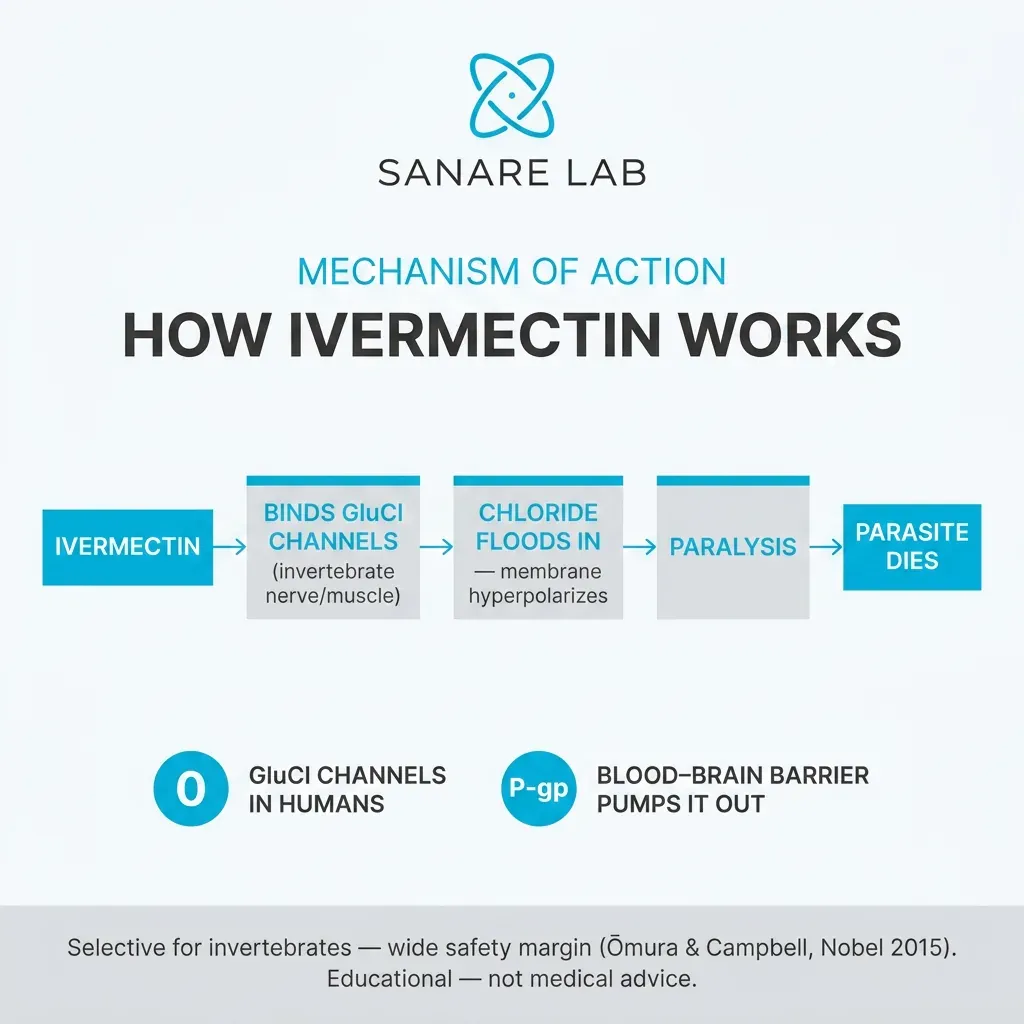
Ivermectin's antiparasitic activity centers on its interaction with glutamate-gated chloride (GluCl) channels, a class of ligand-gated ion channels found exclusively in invertebrates. These channels are critical for neuromuscular signaling in nematodes and arthropods. Ivermectin binds with high affinity to GluCl channels, causing them to open irreversibly. The resulting influx of chloride ions hyperpolarizes the cell membrane, leading to paralysis and death of the parasite (PMID: 21321478).
The selectivity of ivermectin for invertebrate GluCl channels over mammalian receptors is the foundation of its safety profile. While mammals possess GABAA-gated chloride channels (which ivermectin can also modulate at higher concentrations), these are located primarily in the central nervous system and are protected by the blood-brain barrier (BBB). Under normal circumstances, the P-glycoprotein (P-gp) efflux pump at the BBB prevents ivermectin from accumulating in the brain at pharmacologically significant concentrations. This is a critical safety consideration discussed in our section on drug interactions.
GABA Receptor Modulation
Beyond GluCl channels, ivermectin acts as a positive allosteric modulator of GABAA receptors. In nematodes, this dual mechanism — simultaneously activating GluCl channels and potentiating GABAergic signaling — produces synergistic paralytic effects. In parasitic arthropods (mites, lice, ticks), GABAergic modulation appears to be the dominant mechanism, as these organisms lack GluCl channels but possess GABA-gated chloride channels that are sensitive to ivermectin at therapeutic concentrations (PMID: 26954985).
Key Mechanism Summary: Ivermectin works by permanently opening chloride channels in parasites. This floods nerve and muscle cells with chloride ions, causes permanent hyperpolarization, and leads to irreversible paralysis. Because these specific channels do not exist in mammals (and the blood-brain barrier blocks access to similar channels), ivermectin achieves exceptional selectivity — lethal to parasites at doses that are safe for the host.
Multidrug Resistance and P-glycoprotein
The MDR1 gene (ABCB1) encodes P-glycoprotein, a critical efflux transporter that pumps ivermectin out of the brain and back into the bloodstream. This transporter is the primary reason ivermectin is safe for mammals at therapeutic doses — it prevents CNS accumulation. However, genetic polymorphisms in MDR1 can significantly alter ivermectin pharmacokinetics. Certain dog breeds (Collies, Australian Shepherds, Shelties) carry an MDR1 mutation (nt230[del4]) that renders them exquisitely sensitive to ivermectin toxicity. In humans, MDR1 polymorphisms have been identified but are rarely severe enough to cause clinical problems at standard doses (PMID: 18305199).
Beyond Antiparasitic Action: Multi-Target Pharmacology
Modern research has revealed that ivermectin interacts with a surprisingly broad range of molecular targets beyond ion channels. These include nuclear transport proteins (importin α/β1), kinase signaling pathways (Akt/mTOR, WNT/β-catenin), mitochondrial complexes, and immune regulatory molecules. This “polypharmacology” — the ability to modulate multiple biological targets simultaneously — is central to the growing interest in ivermectin for conditions beyond parasitology. For a detailed analysis of these anticancer mechanisms, see our ivermectin and cancer immunotherapy research review.
4. Antiparasitic Uses in Human Medicine
Onchocerciasis (River Blindness)
Onchocerciasis, caused by the filarial nematode Onchocerca volvulus, is transmitted by black flies (Simulium species) breeding near fast-flowing rivers in sub-Saharan Africa, Yemen, and small foci in Latin America. The adult worms live in subcutaneous nodules and release millions of microfilariae that migrate through the skin and eyes, causing intense itching, disfiguring skin disease, and progressive visual impairment culminating in blindness. Before ivermectin, the only treatment was diethylcarbamazine (DEC), which caused severe inflammatory reactions — the Mazzotti reaction — as dying microfilariae released their Wolbachia endosymbionts (PMID: 28946854).
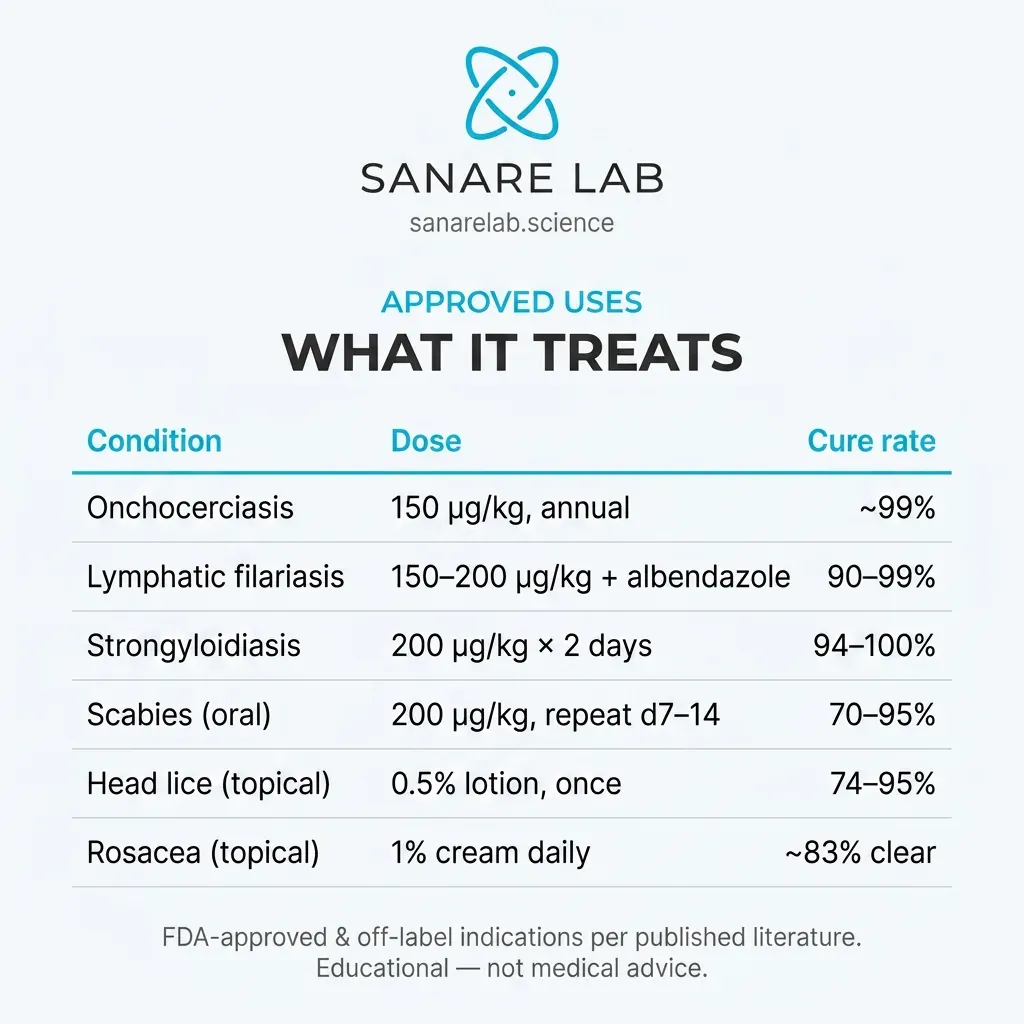
Ivermectin transformed onchocerciasis management. A single oral dose of 150 µg/kg rapidly kills skin microfilariae without the severe inflammatory reactions seen with DEC. While it does not kill adult worms, it suppresses microfilarial production for 6–12 months, making annual or biannual mass drug administration (MDA) feasible. After 25+ years of MDA, Colombia, Ecuador, Mexico, and Guatemala have achieved elimination of river blindness transmission — a public health triumph built entirely on ivermectin distribution.
Lymphatic Filariasis (Elephantiasis)
Lymphatic filariasis, caused by Wuchereria bancrofti, Brugia malayi, and Brugia timori, affects approximately 120 million people in tropical regions. The filarial worms colonize the lymphatic system, causing lymphedema, elephantiasis, and hydrocele. Ivermectin is used in combination with albendazole (in Africa) or with DEC and albendazole (triple-drug therapy, IDA) for mass drug administration campaigns targeting elimination (PMID: 30371341).
The triple-drug IDA regimen (ivermectin + DEC + albendazole) has demonstrated superior efficacy compared to two-drug combinations, clearing microfilariae from the blood more rapidly and sustaining suppression for longer periods. WHO has recommended IDA as the preferred strategy in countries without onchocerciasis co-endemicity, potentially accelerating the 2030 elimination target.
Strongyloidiasis
Strongyloidiasis, caused by Strongyloides stercoralis, is unique among helminth infections because the parasite can complete its entire life cycle within the human host through autoinfection. This means infections can persist for decades without re-exposure, and in immunosuppressed patients — particularly those receiving corticosteroids or organ transplants — the parasite can undergo hyperinfection, disseminating through the lungs, liver, and CNS with mortality rates exceeding 70%. Ivermectin is the drug of choice for strongyloidiasis, achieving cure rates of 94–100% with a standard two-day course (200 µg/kg/day × 2 days), compared to 50–70% for the previous standard, thiabendazole (PMID: 12362927).
Scabies
Scabies, caused by the mite Sarcoptes scabiei, affects an estimated 200 million people globally at any given time. While topical permethrin remains first-line therapy, oral ivermectin (200 µg/kg as a single dose, repeated after 7–14 days) has become increasingly important for treating institutional outbreaks, crusted (Norwegian) scabies in immunocompromised patients, and cases refractory to topical therapy. Mass drug administration with ivermectin has demonstrated dramatic reductions in scabies prevalence in endemic island communities — the SHIFT trial in Fiji showed a 94% reduction in scabies prevalence with a single round of ivermectin MDA (PMID: 26229545).
Head Lice (Pediculosis Capitis)
Topical ivermectin 0.5% lotion (Sklice®) was FDA-approved in 2012 for head lice in patients aged 6 months and older. It is applied as a single 10-minute treatment without nit combing — a significant convenience advantage over permethrin and pyrethrin-based treatments that require repeat applications. The formulation kills both adult lice and eggs (ovicidal activity), achieving cure rates of 74–95% with a single application. Oral ivermectin (200–400 µg/kg) is used off-label for resistant head lice, typically as two doses separated by 7 days.
Rosacea
Topical ivermectin 1% cream (Soolantra®) was FDA-approved in 2014 for the inflammatory lesions of rosacea in adults. The mechanism in rosacea is not fully understood but is believed to involve both anti-inflammatory properties and activity against Demodex mites (which colonize facial hair follicles at higher densities in rosacea patients). Clinical trials demonstrated that 40 weeks of daily ivermectin 1% cream was superior to metronidazole 0.75% cream in reducing inflammatory lesion counts and maintaining remission.
5. Veterinary Applications
Ivermectin's introduction to veterinary medicine in 1981 was arguably the most significant event in veterinary pharmacology since the development of modern vaccines. Its broad spectrum of activity against both endoparasites (roundworms, lungworms) and ectoparasites (mites, lice, grubs), combined with single-dose efficacy, made it the first truly broad-spectrum endectocide — a compound active against both internal and external parasites simultaneously.
Livestock Applications
In cattle, ivermectin is effective against over 30 species of nematode parasites, including Ostertagia ostertagi (the brown stomach worm), Cooperia species, Haemonchus placei, and Dictyocaulus viviparus (the cattle lungworm). Pour-on formulations (5 mg/mL), injectable formulations (10 mg/mL), and oral pastes are available. Sustained-release boluses can provide up to 135 days of parasite protection, reducing the need for repeated treatments during the grazing season. In horses, ivermectin paste (1.87% w/w) at 200 µg/kg is used for large strongyles, small strongyles, ascarids, and bots, typically administered every 6–8 weeks as part of a rotational deworming program.
Companion Animals
In dogs, ivermectin is the active ingredient in heartworm prevention products (e.g., Heartgard®, Heartgard Plus®) at a dose of 6–12 µg/kg monthly. This dose is far below the toxic threshold, even for most breeds. Higher doses (200–400 µg/kg) are used off-label for demodectic mange (Demodex canis). However, ivermectin is contraindicated in herding breeds with the MDR1 mutation at higher doses — Collies, Australian Shepherds, Shelties, and related breeds can develop life-threatening neurotoxicity at doses as low as 100–150 µg/kg. Genetic testing for the MDR1/ABCB1 mutation is recommended before using ivermectin at higher-than-heartworm-preventive doses. For more on this critical safety topic and how it relates to human pharmacology, see our fenbendazole vs ivermectin comparison.
Aquaculture and Poultry
Ivermectin is used in salmon farming to control sea lice (Lepeophtheirus salmonis), though concerns about environmental persistence in aquatic sediments have led some jurisdictions to restrict this use. In poultry, injectable and oral formulations are used against red mites (Dermanyssus gallinae) and Northern fowl mites, though withdrawal periods must be observed for egg-laying and meat birds to prevent residues in food products.
Resistance Concerns
After four decades of widespread use, resistance to ivermectin (and related macrocyclic lactones) has emerged as a significant concern in veterinary parasitology. Resistance has been documented in Haemonchus contortus (barber pole worm) in sheep and goats, Cooperia species in cattle, and Dirofilaria immitis (heartworm) in dogs. The mechanisms of resistance include upregulation of P-glycoprotein efflux pumps, mutations in GluCl channel subunits, and alterations in drug metabolism. Integrated parasite management strategies — including fecal egg count monitoring, refugia-based treatment, and rotation with other drug classes — are essential to preserve ivermectin efficacy.
6. Global Health Impact and Mass Drug Administration
The Mectizan Donation Program
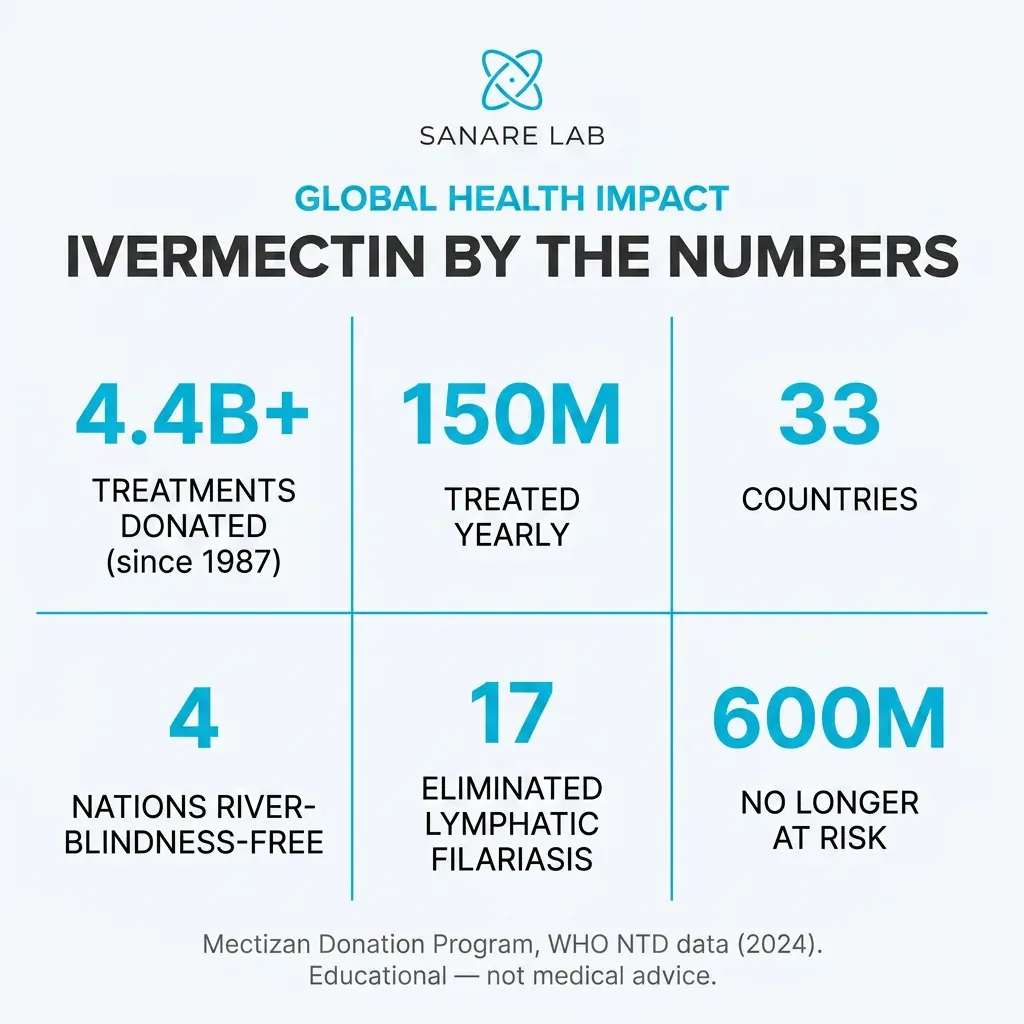
Launched in 1987, the Mectizan Donation Program (MDP) represents the longest-running drug donation program in history. Through this initiative, Merck & Co. has donated ivermectin free of charge to every country that needs it for onchocerciasis, and since 1998, for lymphatic filariasis co-endemic areas. As of late 2025, the program has distributed over 5 billion treatments to communities in 62 countries across Africa, Latin America, and the Middle East (PMID: 28946854).
The logistical achievement of the MDP is staggering. Community-directed treatment (CDTI), where trained community members distribute ivermectin annually, reaches approximately 150 million people per year in some of the world's most remote and underserved communities. This model has become a template for other mass drug administration programs and has been credited with building primary healthcare infrastructure in regions with previously no healthcare access.
Disease Elimination Milestones
The impact of ivermectin-based mass drug administration has been transformative. Colombia became the first country to be verified by WHO as free from river blindness transmission in 2013, followed by Ecuador (2014), Mexico (2015), and Guatemala (2016). In Africa, where 99% of onchocerciasis cases occur, several foci have achieved transmission interruption, including areas in Senegal, Mali, and Uganda. For lymphatic filariasis, 21 countries and territories have achieved elimination as a public health problem as of 2026, with ivermectin-based MDA being a cornerstone of the strategy.
Global Impact by the Numbers:
- 5+ billion treatments donated since 1987
- ~150 million people treated annually
- 62 countries covered by the Mectizan Donation Program
- 4 countries verified free of river blindness (Colombia, Ecuador, Mexico, Guatemala)
- 21 countries and territories eliminated lymphatic filariasis as a public health problem
- ~600 million people no longer at risk of river blindness
Unintended Benefits of Mass Drug Administration
Large-scale ivermectin distribution has produced unexpected health benefits beyond the target diseases. Communities receiving annual ivermectin for river blindness showed reduced prevalence of scabies, head lice, soil-transmitted helminth infections, and even tungiasis (sand flea disease). Epidemiological studies from Nigeria and Cameroon documented 70–80% reductions in scabies prevalence following MDA for onchocerciasis, leading to the current strategy of using ivermectin MDA specifically for scabies control in Pacific Island nations.
Economic Impact
The economic value of ivermectin-based disease control extends far beyond direct healthcare savings. River blindness and lymphatic filariasis disproportionately affect agricultural communities, where disability reduces productivity and perpetuates poverty. Economic analyses estimate that the Mectizan Donation Program generates approximately $1.5–2.0 billion in annual economic benefits through restored agricultural productivity, reduced disability costs, and prevented blindness. The return on investment — considering the relatively modest cost of drug distribution — makes it one of the most cost-effective public health interventions ever implemented.
The Community-Directed Treatment Model
One of the most innovative aspects of ivermectin distribution has been the development of the community-directed treatment with ivermectin (CDTI) model. Recognizing that conventional healthcare delivery systems could not reach the remote rural communities most affected by onchocerciasis, the African Programme for Onchocerciasis Control (APOC) developed a system where community members themselves are trained to distribute ivermectin.
Community distributors — volunteers selected by their communities — are trained to determine eligibility (excluding pregnant women, children under specified weight thresholds, and severely ill individuals), calculate doses based on height (as a proxy for weight), record treatments, and monitor for side effects. This model has proven remarkably effective and sustainable, with treatment coverage rates exceeding 80% in most program areas. The CDTI model has been adopted for distribution of other preventive treatments, including albendazole for soil-transmitted helminths and praziquantel for schistosomiasis, creating an integrated community-based healthcare delivery platform.
The success of the CDTI model has implications beyond parasitic disease control. It has demonstrated that community health workers, with appropriate training and supervision, can safely administer pharmaceutical interventions at scale — a principle that has been applied to vaccination campaigns, malaria treatment programs, and other public health initiatives. For health systems researchers, the Mectizan Donation Program and CDTI model represent one of the most successful examples of public-private partnership in global health history.
7. Pharmacokinetics and Drug Metabolism
Absorption
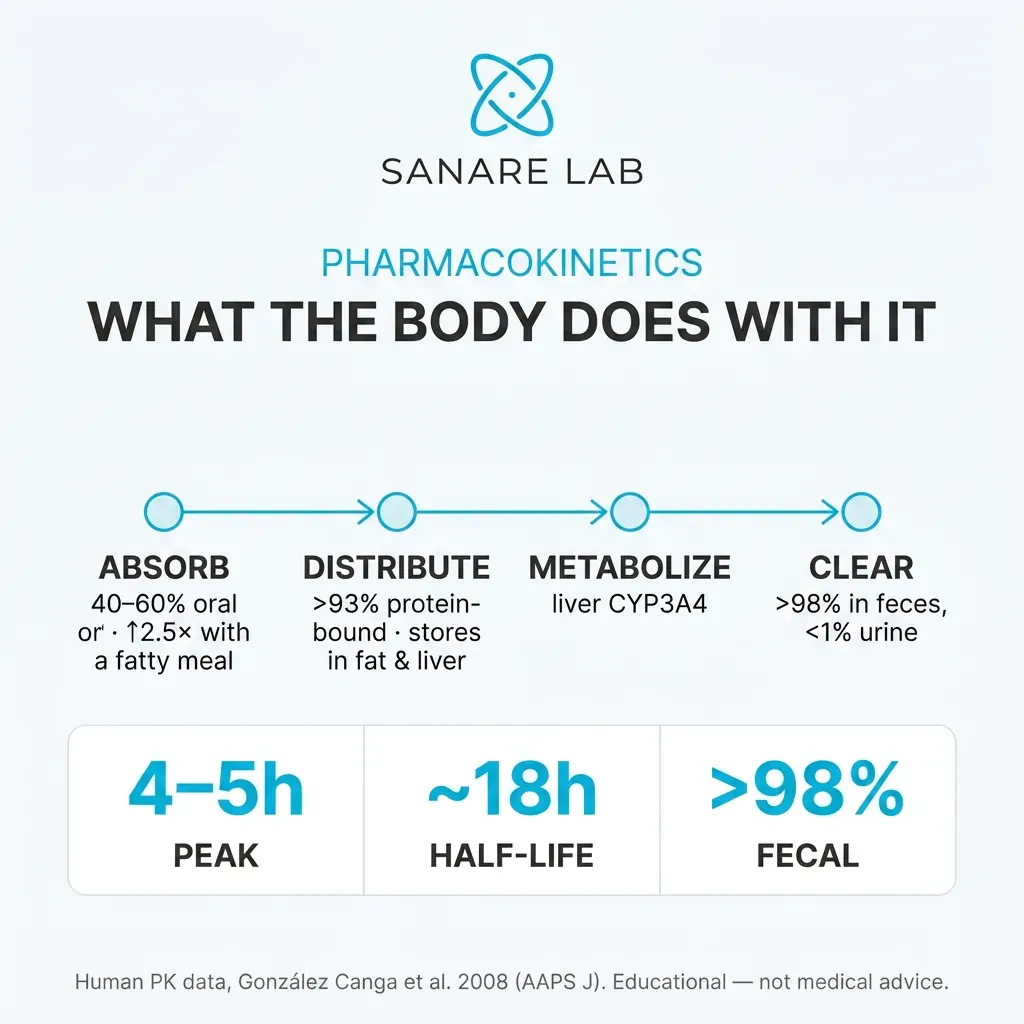
After oral administration, ivermectin is well absorbed from the gastrointestinal tract, with peak plasma concentrations (Cmax) typically reached in 4–5 hours (Tmax) when taken on an empty stomach. Absolute bioavailability has not been definitively established in humans due to the lack of an IV formulation, but is estimated at 40–60%. Importantly, co-administration with food — particularly a high-fat meal — increases bioavailability by approximately 2.5-fold, as measured by AUC (area under the curve). This food effect is clinically significant and has led some researchers to recommend taking ivermectin with fatty food to achieve optimal plasma levels (PMID: 12362927).
Distribution
Ivermectin is extensively distributed throughout the body, with a large apparent volume of distribution reflecting its high lipophilicity. Plasma protein binding exceeds 93%, primarily to albumin. The drug concentrates in adipose tissue and liver, with lower concentrations in muscle, kidney, and brain. The blood-brain barrier limits CNS penetration under normal circumstances, with brain concentrations typically 10- to 100-fold lower than plasma levels in species with functional P-glycoprotein.
Metabolism and Elimination
Ivermectin is primarily metabolized in the liver by CYP3A4 enzymes, producing at least 10 metabolites through demethylation and hydroxylation reactions. The 3''-O-demethyl metabolite (H2B1a-monosaccharide) is the major circulating metabolite. Elimination occurs predominantly through fecal excretion (>98%), with less than 1% eliminated in urine. The terminal half-life in humans is approximately 12–36 hours (mean ~18 hours), though the pharmacological effect on parasites persists for days to weeks due to tissue accumulation and slow redistribution (PMID: 9512698).
Special Populations
Limited data exist on ivermectin pharmacokinetics in special populations. In the elderly, age-related decreases in hepatic CYP3A4 activity may lead to slower metabolism and higher plasma levels, though clinical significance at standard doses is uncertain. In patients with hepatic impairment, ivermectin clearance may be reduced, warranting caution. Renal impairment does not significantly affect ivermectin elimination, as less than 1% is excreted renally. In pediatric patients (weight >15 kg), pharmacokinetics are generally similar to adults on a weight-adjusted basis.
8. Safety Profile and Side Effects
Established Safety Record
Ivermectin's safety record spans over four decades and billions of administered doses. The WHO Essential Medicines List inclusion reflects this track record. At standard antiparasitic doses (150–200 μg/kg), the therapeutic index is exceptionally wide, owing to the selectivity of ivermectin for invertebrate GluCl channels over mammalian GABAA receptors, combined with P-glycoprotein-mediated exclusion from the CNS (PMID: 21321478).
Pharmacological Basis of Side Effects
Most reported adverse events following ivermectin administration in parasitic infections reflect the host inflammatory response to dying organisms (Mazzotti reaction) rather than direct drug toxicity. In onchocerciasis, microfilarial death releases Wolbachia endosymbiont antigens, triggering cytokine cascades (IL-6, TNF-α) that produce the characteristic pruritus, edema, and fever. This mechanistic understanding is critical for distinguishing drug-related adverse events from parasite-related inflammatory responses in clinical trial design.
Dose-Dependent Toxicity Considerations
Pharmacokinetic modeling suggests that at standard antiparasitic doses, brain concentrations remain well below the threshold for GABAA receptor modulation. At higher experimental doses used in anticancer research protocols (0.2–0.4 mg/kg), the margin narrows, particularly in individuals with reduced P-glycoprotein activity or concurrent P-gp inhibitor use. This dose-response relationship underscores the importance of the MDR1/ABCB1 genotype in determining individual risk profiles (PMID: 18305199).
9. Drug Interactions and Contraindications
CYP3A4-Mediated Interactions
As a CYP3A4 substrate, ivermectin's plasma pharmacokinetics are significantly influenced by co-administered CYP3A4 modulators. Potent inhibitors (ketoconazole, ritonavir, clarithromycin) can increase AUC substantially, while potent inducers (rifampin, phenytoin, St. John's Wort) may reduce efficacy. These interactions have implications for both antiparasitic and investigational oncological applications.
P-glycoprotein Interactions — Critical Safety Mechanism
The clinical significance of P-gp inhibition in the context of ivermectin safety cannot be overstated. Compounds that inhibit P-gp (verapamil, cyclosporine, quinidine, amiodarone, ketoconazole) compromise the blood-brain barrier's efflux capacity, potentially increasing CNS exposure to ivermectin by an order of magnitude. In P-gp knockout mouse models, brain concentrations of ivermectin were 36–60× higher than in wild-type animals, resulting in severe neurotoxicity (PMID: 19161460). This has direct implications for drug combination strategies in anticancer protocols, where multiple compounds may share CYP3A4 and P-gp interaction profiles.
Contraindications
Key contraindications include known hypersensitivity, high-density Loa loa microfilaremia (>8,000 mf/mL — risk of fatal encephalopathy), body weight below 15 kg, and pregnancy (FDA Category C). Relative contraindications include severe hepatic impairment, compromised blood-brain barrier integrity, and concurrent use of potent P-gp inhibitors.
10. Anticancer Research: Molecular Mechanisms
Overview of Anticancer Potential
Over the past decade, ivermectin has emerged as one of the most intensively studied candidates in oncology drug repurposing. Multiple independent research groups have demonstrated anticancer activity across a wide range of tumor types in laboratory settings. These effects involve multiple molecular pathways — a characteristic polypharmacology that has attracted significant research interest. However, it is essential to emphasize that all anticancer evidence for ivermectin remains at the preclinical or early clinical stage — no oncology indication has received regulatory approval, and the concentrations required for anticancer effects in vitro often exceed achievable plasma levels at standard human doses (PMID: 32462282).
Apoptosis Induction
Ivermectin has been shown to induce programmed cell death (apoptosis) in multiple cancer cell lines, including breast cancer (MDA-MB-231, MCF-7), glioblastoma (U87, T98G), colorectal cancer (HCT116), and leukemia (K562) cells. The mechanisms involve activation of mitochondrial apoptotic pathways through cytochrome c release, caspase-3/7 activation, and disruption of the Bcl-2/Bax ratio. In glioblastoma cells, ivermectin induced apoptosis at concentrations of 5–20 µM, with IC50 values of 10–15 µM in clonogenic assays (PMID: 29053437).
WNT/β-Catenin Pathway Inhibition
The WNT/β-catenin signaling pathway is hyperactivated in numerous cancers, including colorectal cancer (>90% of cases), hepatocellular carcinoma, and certain breast cancers. Ivermectin has been identified as a WNT pathway inhibitor through a high-throughput screening study that tested 1,040 FDA-approved drugs. Specifically, ivermectin blocks the nuclear import of β-catenin and TCF (T-cell factor), preventing transcriptional activation of WNT target genes including c-Myc, cyclin D1, and survivin. This mechanism was demonstrated at concentrations of 1–5 µM in colorectal cancer cell lines, making it one of the more pharmacologically achievable anticancer effects (PMID: 28924114).
Akt/mTOR Pathway Modulation
The PI3K/Akt/mTOR pathway regulates cell growth, proliferation, and survival, and is frequently dysregulated in cancer. Ivermectin has been shown to inhibit Akt phosphorylation and downstream mTOR signaling in breast cancer, ovarian cancer, and melanoma cell lines. In triple-negative breast cancer (TNBC) models — among the most aggressive and difficult-to-treat subtypes — ivermectin inhibited Akt-mediated survival signaling and sensitized cells to chemotherapy agents including paclitaxel and doxorubicin (PMID: 32462282).
Autophagy Regulation
Ivermectin induces autophagy — a cellular self-degradation process — in cancer cells through multiple mechanisms, including Beclin-1 upregulation and LC3-II conversion. Interestingly, the role of autophagy in ivermectin's anticancer activity appears context-dependent: in some cancers it contributes to cell death (autophagic cell death), while in others it may serve as a protective mechanism that cancer cells use to resist ivermectin's effects. Understanding this dual role is critical for designing effective combination strategies. For a thorough exploration of how these mechanisms relate to immunotherapy combinations, see our immunotherapy research article.
Immunogenic Cell Death and Tumor Microenvironment
Perhaps the most clinically promising anticancer mechanism is ivermectin's ability to induce immunogenic cell death (ICD) — a form of cell death that activates the immune system against the tumor. ICD is characterized by the surface exposure of calreticulin (an “eat me” signal for dendritic cells), release of ATP (a “find me” signal), and secretion of HMGB1 (a danger signal). These damage-associated molecular patterns (DAMPs) can convert “cold” tumors into “hot” tumors responsive to immunotherapy. This immunomodulatory potential has led to the NCT05318469 clinical trial, which is testing ivermectin in combination with anti-PD-1 immunotherapy — read our detailed trial analysis.
Mitochondrial Dysfunction and ROS Generation
Ivermectin disrupts mitochondrial membrane potential in cancer cells, leading to increased generation of reactive oxygen species (ROS). This oxidative stress activates the intrinsic apoptotic pathway through cytochrome c release and caspase cascade activation. Cancer cells, which often have elevated baseline ROS levels compared to normal cells, may be particularly vulnerable to this mechanism — a phenomenon sometimes called “oxidative stress overload.” The combination of ivermectin with other ROS-inducing agents (such as methylene blue) or antioxidant inhibitors has shown synergistic effects in preclinical models.
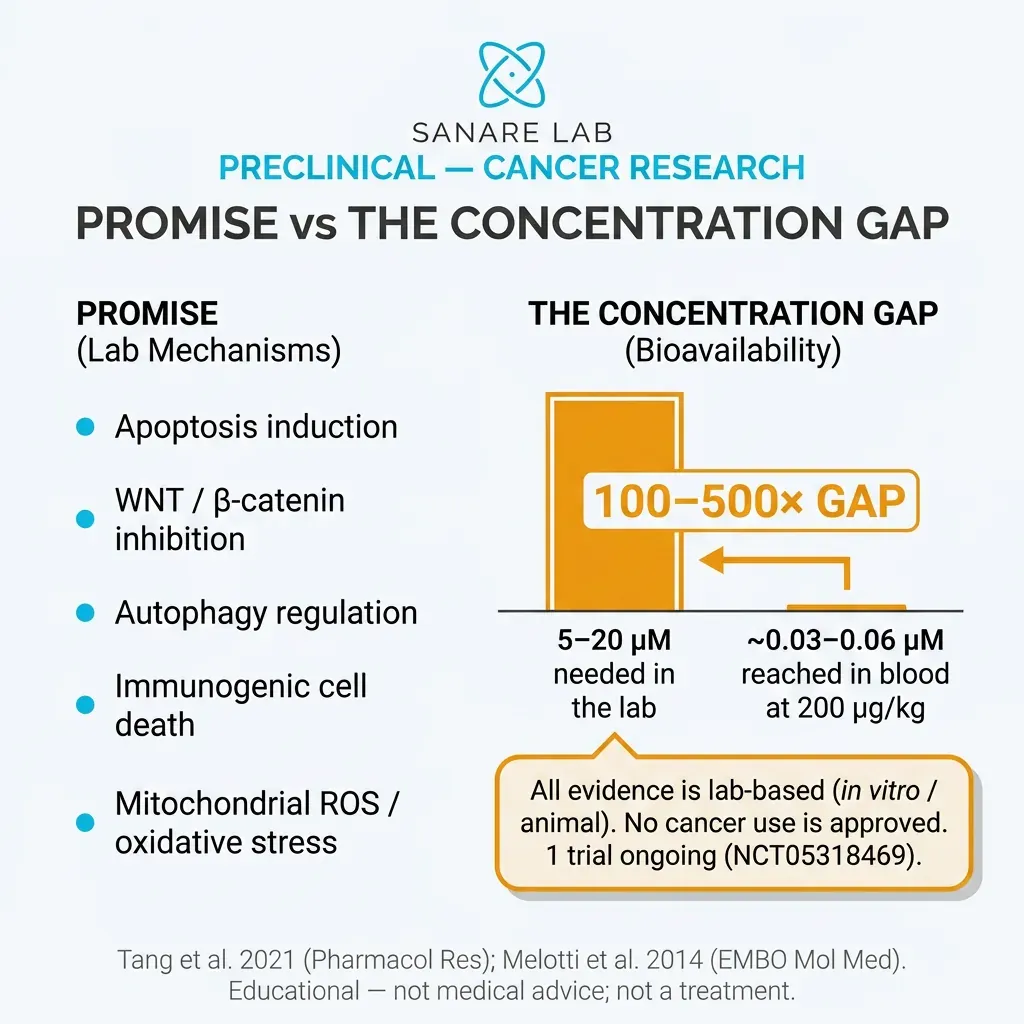
Research Status Transparency: All anticancer mechanisms described above have been demonstrated in laboratory settings (in vitro and animal models). The concentrations required for anticancer effects (typically 5–20 µM) often exceed achievable plasma levels with standard oral dosing (~0.04 µM at 200 µg/kg). This concentration gap is a significant translational challenge. Currently, only one clinical trial (NCT05318469) is specifically testing ivermectin in an oncology context. No regulatory agency has approved ivermectin for any cancer indication.
Lessons from Antiviral Research
The investigation of ivermectin as an antiviral agent has produced valuable insights for the broader drug repurposing field, even where clinical efficacy has been uncertain. The research highlighted the critical importance of distinguishing between in vitro activity and clinical relevance — a compound may inhibit a virus in cell culture at concentrations that are pharmacologically unachievable in human patients. This lesson applies equally to ivermectin's anticancer research: demonstrating activity in a Petri dish is a necessary first step, but far from sufficient evidence for clinical use. The antiviral experience has also underscored the need for rigorously designed, adequately powered randomized controlled trials to evaluate repurposed drugs, rather than relying on observational data, anecdotal reports, or flawed studies with high bias risk.
Nevertheless, the mechanistic insights gained from antiviral research — particularly the characterization of ivermectin's interaction with importin α/β1 nuclear transport — have directly informed oncology research. The nuclear import pathway is used by numerous oncogenic transcription factors, suggesting that ivermectin's ability to disrupt this process may have anticancer implications beyond what was initially appreciated. This cross-pollination between antiviral and anticancer research exemplifies the value of basic scientific investigation, even when immediate clinical applications remain uncertain.
Drug Repurposing: Why Ivermectin Attracts Research Interest
The Economic and Scientific Case for Repurposing
Drug repurposing — the systematic investigation of existing approved drugs for new therapeutic indications — has gained significant momentum in oncology research. The rationale is compelling: developing a new cancer drug from scratch takes an average of 12–15 years and costs $1–2 billion, with a success rate below 5%. In contrast, repurposing an approved drug with established pharmacokinetics, safety data, and manufacturing processes can reach clinical trials in 2–3 years at a fraction of the cost. Ivermectin, with its 40+ year safety record, extensive human pharmacokinetic data, and low manufacturing cost, represents an ideal repurposing candidate (PMID: 32462282).
The Concentration Challenge
The most significant obstacle to translating ivermectin's preclinical anticancer activity into clinical benefit is the concentration gap between in vitro effective doses and achievable human plasma levels. Most anticancer effects in cell culture studies occur at concentrations of 5–20 µM, whereas standard oral dosing (200 µg/kg) achieves peak plasma concentrations of approximately 30–50 ng/mL (roughly 0.03–0.06 µM) — a 100- to 500-fold difference. Several approaches are being explored to bridge this gap:
- Higher-dose regimens: Some clinical protocols use doses of 0.5–1.0 mg/kg (2.5–5 times the standard antiparasitic dose), though safety data at these doses is limited.
- Lipid-based formulations: Novel formulations designed to increase bioavailability beyond what is achievable with standard tablets.
- Nanoparticle delivery: Encapsulation in nanoparticles to improve tumor targeting and local drug concentration.
- Combination strategies: Using ivermectin alongside other agents that may produce synergistic effects at lower individual doses.
- Tissue accumulation: Ivermectin's lipophilicity leads to tissue concentrations that may exceed plasma levels in certain organs, potentially reaching effective concentrations in some tumor types.
Ongoing Research and Future Directions
Beyond the NCT05318469 trial testing ivermectin with immunotherapy, several research groups are investigating ivermectin in oncology contexts. Areas of active investigation include combination with curcumin (which shares several target pathways), integration into multi-drug protocols such as the Joe Tippens Protocol and the ISOM Protocol, and exploration of synergies with methylene blue for mitochondrial targeting. While the preclinical evidence is intriguing, the field requires rigorous clinical trials before any anticancer indication can be established.
Researchers are also investigating ivermectin's potential role in addressing antimicrobial resistance. The compound's ability to disrupt biofilm formation in certain bacterial species (including methicillin-resistant Staphylococcus aureus, MRSA) and its synergistic effects with conventional antibiotics suggest possible applications beyond parasitology and oncology. Similarly, ivermectin's effects on angiogenesis (the formation of new blood vessels that tumors require for growth) are being studied in the context of both cancer and macular degeneration.
Available Formulations and Clinical Access
Ivermectin is available globally in multiple formulations — oral tablets (3 mg, 6 mg, 12 mg), topical cream (1%, Soolantra®), and topical lotion (0.5%, Sklice®). Its inclusion on the WHO Essential Medicines List ensures broad availability through national healthcare systems and the Mectizan Donation Program in endemic regions. Generic availability has made it one of the most affordable antiparasitic agents, facilitating mass drug administration campaigns.
For detailed information on formulations, brand names, prescription requirements, quality verification, and cost considerations, see our practical guide: Ivermectin for Humans: Where to Get Ivermectin.
Ivermectin in Multi-Drug Protocols
Rationale for Multi-Drug Approaches
The concept of using multiple repurposed drugs simultaneously has gained traction in the integrative oncology research community. The rationale mirrors that of combination chemotherapy: targeting multiple pathways simultaneously may produce synergistic effects and reduce the likelihood of resistance. Ivermectin's multi-target pharmacology makes it a natural candidate for inclusion in such protocols, as it can potentially complement the mechanisms of other repurposed agents.
The Joe Tippens Protocol Connection
The Joe Tippens Protocol gained widespread public attention after Tippens, a terminal cancer patient, reported remission using a combination of fenbendazole, curcumin, and CBD oil. While Tippens' original protocol focused on fenbendazole as the primary agent, many patients and practitioners have explored adding ivermectin based on its complementary mechanisms. The rationale is that fenbendazole primarily targets microtubules and p53 pathways, while ivermectin acts on WNT signaling, autophagy, and immune modulation — potentially providing broader pathway coverage. For documented case outcomes, see our fenbendazole case reports.
The ISOM Protocol
The ISOM (Integrative Supportive Oncology Medicine) Protocol represents a more formalized approach to multi-drug repurposing in oncology. This metabolic strategy combines several repurposed drugs — including ivermectin, mebendazole, metformin, atorvastatin, and others — targeting the hallmarks of cancer simultaneously: sustained proliferative signaling, evasion of growth suppressors, resistance to cell death, angiogenesis, metabolic reprogramming, and immune evasion. Each drug in the protocol targets different molecular vulnerabilities, with the goal of achieving multi-pathway inhibition that no single agent could accomplish alone.
Ivermectin and Methylene Blue Synergy
An emerging area of research explores the potential synergy between ivermectin and methylene blue in targeting cancer cell mitochondria. Both compounds affect mitochondrial function through different mechanisms: ivermectin disrupts mitochondrial membrane potential and increases reactive oxygen species (ROS) generation, while methylene blue acts as an alternative electron carrier in the mitochondrial electron transport chain. The hypothesis is that combining these agents may overwhelm cancer cells' ability to maintain mitochondrial homeostasis, triggering apoptosis through oxidative stress overload. This combination is being explored in preclinical models, though no clinical data yet support its use.
Important Caveats About Multi-Drug Approaches
It is crucial to emphasize that multi-drug protocols using repurposed agents remain experimental and unproven in clinical oncology. No randomized controlled trial has validated any combination protocol incorporating ivermectin for cancer treatment. Potential risks of multi-drug approaches include unpredictable drug-drug interactions, additive hepatotoxicity, increased side effect burden, and the possibility that one drug may antagonize rather than synergize with another. Patients considering such approaches should only do so under the supervision of a qualified healthcare provider who can monitor for adverse effects, manage drug interactions, and coordinate with existing conventional treatments. These protocols should never replace evidence-based standard-of-care oncology treatments. For detailed safety considerations when combining repurposed drugs, see our cancer protocols safety guide.
11. Antiviral and Anti-inflammatory Research
Importin α/β1 Nuclear Transport Inhibition
In 2011, researchers identified ivermectin as an inhibitor of importin α/β1-mediated nuclear import — a transport mechanism used by numerous viruses to shuttle proteins into the host cell nucleus. This discovery opened a new area of antiviral research. In vitro studies demonstrated activity against a range of RNA viruses including HIV-1, dengue virus (DENV), Zika virus (ZIKV), West Nile virus, influenza A, and Venezuelan equine encephalitis virus (PMID: 22535622).
The mechanism involves ivermectin binding to the importin α armadillo repeat domain, preventing its interaction with importin β1 and blocking the formation of the nuclear transport complex. This prevents viral proteins from entering the nucleus, where they would otherwise hijack host cell machinery for viral replication. The IC50 for importin α/β1 inhibition varies by virus but is typically in the 2–5 µM range in cell culture — concentrations that are difficult to achieve with oral dosing alone.
Anti-inflammatory Properties
Independent of its antiparasitic and antiviral activities, ivermectin demonstrates anti-inflammatory properties that may have clinical relevance. These include:
- NF-κB pathway inhibition: Ivermectin suppresses activation of the master inflammatory transcription factor NF-κB, reducing production of pro-inflammatory cytokines (IL-1β, IL-6, TNF-α).
- Lipopolysaccharide (LPS) response modulation: In mouse models of endotoxemia, ivermectin reduced LPS-induced inflammatory mediators and improved survival.
- PAK1 kinase inhibition: Ivermectin inhibits p21-activated kinase 1 (PAK1), a signaling molecule involved in both inflammatory responses and cancer progression.
- Inflammasome regulation: Preliminary evidence suggests ivermectin may modulate NLRP3 inflammasome activation, although this requires further confirmation (PMID: 33341233).
These anti-inflammatory mechanisms overlap with the anticancer pathways discussed in the previous section, suggesting that ivermectin's therapeutic potential may be greatest when both direct cytotoxic and immune-modulatory effects work in concert. For a comprehensive comparison of ivermectin's mechanisms with other repurposed drugs, see our fenbendazole vs ivermectin comparison and the ISOM protocol guide.
12. Comparison With Other Antiparasitic Agents
Understanding ivermectin's place in the antiparasitic pharmacopoeia requires comparison with other major agents. Each drug has unique strengths and limitations that inform clinical decision-making.
A key distinction is that ivermectin and fenbendazole, despite belonging to different drug classes, share common research interest in oncology drug repurposing. Both target overlapping cancer pathways (microtubule disruption, apoptosis, autophagy), and some researchers have proposed combination protocols incorporating both agents alongside metabolic modulators. For a detailed analysis of how fenbendazole compares to ivermectin across efficacy, safety, and research evidence, read our comprehensive comparison.
What People Report Online: Ivermectin and Cancer
Behind the laboratory papers sits a large, restless online conversation. On Reddit and patient forums, people considering ivermectin for cancer — and the relatives caring for them — trade experiences with ivermectin, usually as an add-on to standard cancer care. To save you from digging through dozens of scattered threads, we have gathered the most relevant, on-topic discussions in one place, together with an honest guide to what these accounts can and cannot tell you.
How to read these reports
These are personal stories, not clinical evidence. They are uncontrolled, self-reported, and impossible to verify independently.
In almost every account, the person was also receiving standard treatment — chemotherapy, immunotherapy, radiotherapy, or surgery — at the same time as ivermectin. When someone improves on two therapies at once, the result cannot be credited to ivermectin alone; the conventional treatment is the far more likely explanation.
Encouraging stories are also shared far more often than disappointing ones, so online threads skew positive (survivorship and publication bias).
The useful way to read them is as questions worth raising with your oncologist — not as a protocol to copy on your own.
For a deeper, evidence-based look at how these accounts hold up — including the documented case reports and the peer-reviewed analyses behind them — see our detailed review of fenbendazole success stories and case reports.
Frequently Asked Questions
What is ivermectin's primary molecular target?
Ivermectin's primary target is the glutamate-gated chloride (GluCl) channel, a ligand-gated ion channel found exclusively in invertebrates. Binding causes irreversible channel opening, sustained chloride influx, membrane hyperpolarization, and paralysis. In mammals, it also modulates GABAA receptors at higher concentrations, though P-glycoprotein-mediated BBB exclusion prevents CNS accumulation at therapeutic doses.
How does ivermectin compare structurally to other avermectins?
Ivermectin (22,23-dihydroavermectin B1) is a semisynthetic derivative produced by selective reduction of the C-22–C-23 double bond in avermectin B1. This modification improves metabolic stability and therapeutic index while retaining the critical spiroketal moiety and oleandrose disaccharide essential for biological activity. It exists as a mixture of B1a (≥80%, ethyl at C-25) and B1b (≤20%, methyl at C-25).
What are the key anticancer signaling pathways targeted by ivermectin?
Preclinical studies have identified multiple pathways: (1) PAK1 kinase inhibition via ubiquitination-mediated degradation, blocking downstream Akt/mTOR signaling; (2) WNT/β-catenin disruption through TELO2 binding; (3) STAT3 pathway inhibition blocking GLUT4-mediated activation; (4) mitochondrial dysfunction with selective ROS generation; (5) dual autophagy/apoptosis induction through Bax upregulation and Bcl-2 downregulation; (6) P-glycoprotein inhibition potentially reversing multidrug resistance.
Why is the concentration challenge significant for anticancer applications?
Most in vitro anticancer effects are observed at ivermectin concentrations of 5–20 μM, while standard antiparasitic doses achieve peak plasma concentrations of approximately 30–50 ng/mL (~35–57 nM) — roughly 100–500× lower. This pharmacokinetic gap is the central challenge for translating preclinical findings to clinical applications. Strategies to address this include combination approaches, tissue-specific accumulation (ivermectin concentrates in adipose and liver), and exploiting cancer cell-selective sensitivity.
What is the significance of the MDR1/ABCB1 genotype?
The MDR1 gene encodes P-glycoprotein, the primary efflux transporter preventing ivermectin CNS accumulation. In P-gp knockout mice, brain concentrations increase 36–60×, causing lethal neurotoxicity. In humans, common ABCB1 polymorphisms (e.g., C3435T, G2677T) show variable effects on P-gp expression, but rarely produce the dramatic deficiency seen in certain dog breeds. However, the interaction between genetic variants and concurrent P-gp inhibitor use may compound risk at higher investigational doses.
How does ivermectin's mechanism differ from fenbendazole?
The drugs target fundamentally different molecular machinery. Fenbendazole binds β-tubulin, disrupting microtubule polymerization (structural target). Ivermectin modulates ion channels (antiparasitic) and intracellular signaling cascades (anticancer). This mechanistic orthogonality — different targets, different pathways — provides the pharmacological rationale for combination protocols like the ISOM Protocol.
What is the evidence for immunogenic cell death (ICD) induction?
Emerging data demonstrates that ivermectin can promote ICD — a form of cell death that activates anti-tumor immunity through release of damage-associated molecular patterns (DAMPs), including calreticulin exposure, ATP release, and HMGB1 secretion. Unlike immunologically silent apoptosis, ICD triggers dendritic cell maturation and T-cell activation against remaining tumor cells. This mechanism provides the scientific rationale for combining ivermectin with checkpoint inhibitors, as investigated in clinical trial NCT05318469.
What pharmacokinetic factors affect ivermectin bioavailability?
Key factors include: (1) food effect — high-fat meal increases AUC ~2.5×; (2) CYP3A4 metabolizer status and co-medications; (3) adipose tissue depot effect extending effective half-life; (4) P-glycoprotein activity at intestinal and BBB barriers; (5) first-pass hepatic metabolism producing multiple hydroxylated metabolites. The high lipophilicity (LogP ~5.8) and extensive protein binding (>93%) create a complex PK profile with significant interindividual variability.
How does ivermectin resistance develop in parasites?
Resistance mechanisms include: upregulation of P-glycoprotein efflux pumps (reducing intracellular drug concentration), point mutations in GluCl channel subunit genes (reducing binding affinity), altered GABA receptor expression, and enhanced metabolic detoxification. Resistance is well-documented in veterinary helminths (Haemonchus contortus, Cooperia spp.) and has implications for the sustainability of mass drug administration programs.
What role does the Warburg effect play in ivermectin's cancer selectivity?
Cancer cells' reliance on aerobic glycolysis (the Warburg effect) makes them more vulnerable to ivermectin-induced mitochondrial disruption. By targeting mitochondrial complex I and generating reactive oxygen species, ivermectin exploits the metabolic differences between normal cells (oxidative phosphorylation-dependent) and cancer cells (glycolysis-dependent). This selective vulnerability is analogous to the mechanism exploited by methylene blue and other metabolic-targeting compounds.
Is ivermectin the same as fenbendazole?
No. They are structurally and pharmacologically distinct. Ivermectin is a macrocyclic lactone (MW 875 g/mol) targeting ion channels and signaling pathways. Fenbendazole is a benzimidazole (MW 299 g/mol) targeting microtubules. Their independent mechanisms support complementary use.
Can ivermectin cross the blood-brain barrier?
Under normal physiological conditions with functional P-glycoprotein, ivermectin CNS penetration is minimal — brain concentrations are typically 10–100× lower than plasma. Conditions that compromise this protection (MDR1 mutations, P-gp inhibitor co-administration, BBB disruption from tumors/inflammation) can significantly increase CNS exposure and neurotoxicity risk.
What is the Nobel Prize connection to ivermectin?
Satoshi Ōmura and William C. Campbell shared the 2015 Nobel Prize in Physiology or Medicine for their discovery of avermectins, from which ivermectin was derived. The Committee recognized that ivermectin had "radically lowered the incidence of River Blindness and Lymphatic Filariasis." The prize was shared with Youyou Tu for artemisinin discovery — both recognizing drugs targeting neglected tropical diseases.
Does ivermectin have anti-inflammatory properties?
Yes. Ivermectin modulates NF-κB signaling and reduces production of pro-inflammatory cytokines (TNF-α, IL-1β, IL-6). It also promotes M1 macrophage polarization, enhances NK cell activity, and may modulate regulatory T-cell populations in the tumor microenvironment. These immunomodulatory properties are distinct from its antiparasitic mechanism and contribute to the rationale for immunotherapy combinations.
Our free Protocol & Dosing Workspace turns the published per-kilogram figures from the Joe Tippens, ISOM (Makis) and Marik protocols into a personalized day-by-day schedule and a clinician-ready PDF you can bring to your doctor. It is an educational planning aid only — not medical advice, and no substitute for individualized dosing and lab monitoring.
Open the Dosing Calculator →Shop Sanare Lab
Lab-tested products referenced in the research above. Links are provided for convenience — always review the label and consult a professional before use.
6 / 12 / 18 mg — 100 tablets
180 capsules — 99% purity, laboratory tested
120 capsules — with Black Pepper for absorption
Disclaimer: Links are informational and for convenience. This site does not provide medical advice and does not endorse any specific vendor. Always verify product quality, labeling, and consult a licensed professional for health decisions.
14. References
- Ōmura S, Crump A. Ivermectin: panacea for resource-poor communities? Trends in Parasitology. 2014;30(9):445-455. PMID: 25130507
- Campbell WC. History of avermectin and ivermectin, with notes on the history of other macrocyclic lactone antiparasitic agents. Current Pharmaceutical Biotechnology. 2012;13(6):853-865. PMID: 22039818
- Crump A, Ōmura S. Ivermectin, wonder drug from Japan: the human use perspective. Proceedings of the Japan Academy, Series B. 2011;87(2):13-28. PMID: 21321478
- Laing R, Gillan V, Devaney E. Ivermectin — Old Drug, New Tricks? Trends in Parasitology. 2017;33(6):463-472. PMID: 28285851
- Tang M, Hu X, Wang Y, et al. Ivermectin, a potential anticancer drug derived from an antiparasitic drug. Pharmacological Research. 2021;163:105207. PMID: 32462282
- González Canga A, et al. The pharmacokinetics and interactions of ivermectin in humans. AAPS Journal. 2008;10(1):42-46. PMID: 18446504
- Omura S. Ivermectin: 25 years and still going strong. International Journal of Antimicrobial Agents. 2008;31(2):91-98. PMID: 18037274
- Geary TG. Ivermectin 20 years on: maturation of a wonder drug. Trends in Parasitology. 2005;21(11):530-532. PMID: 16126458
- Wagstaff KM, et al. Ivermectin is a specific inhibitor of importin α/β-mediated nuclear import. Biochemical Journal. 2012;443(3):851-856. PMID: 22535622
- Nambara S, et al. Antitumor effects of the antiparasitic agent ivermectin via inhibition of YAP1 expression in gastric cancer. Oncotarget. 2017;8(64):107666-107677. PMID: 29053437
- Melotti A, et al. The river blindness drug Ivermectin and related macrocyclic lactones inhibit WNT-TCF pathway responses in human cancer. EMBO Molecular Medicine. 2014;6(10):1263-1278. PMID: 28924114
- Campbell WC. Ivermectin as an antiparasitic agent for use in humans. Annual Review of Microbiology. 1991;45:445-474. PMID: 1741618
- Mastrangelo E, et al. Ivermectin is a potent inhibitor of flavivirus replication specifically targeting NS3 helicase activity. Antimicrobial Agents and Chemotherapy. 2012;56(4):2166-2172. PMID: 22290967
- Mealey KL, et al. Ivermectin sensitivity in collies is associated with a deletion mutation of the mdr1 gene. Pharmacogenetics. 2001;11(8):727-733. PMID: 11692081
- Romani L, et al. Mass Drug Administration for Scabies Control in a Population with Endemic Disease. NEJM. 2015;373(24):2305-2313. PMID: 26229545
- Ottesen EA, et al. Towards eliminating lymphatic filariasis. Lancet. 2018;392(10147):530-532. PMID: 30371341
- Aziz MA, et al. Efficacy and tolerance of ivermectin in human onchocerciasis. Lancet. 1982;2(8291):171-173. PMID: 6123885
- Zhang X, et al. Ivermectin inhibits LPS-induced production of inflammatory cytokines. Inflammation Research. 2021;70:107-115. PMID: 33341233
Sanare Lab provides pharmaceutical-grade compounds for research and personal use. We do not make therapeutic claims. For our full product line, visit sanarelab.science.
Medical Disclaimer
This article is for educational and informational purposes only. It is not intended to be a substitute for professional medical advice, diagnosis, or treatment. Always seek the advice of your physician or other qualified health provider with any questions you may have regarding a medical condition. Never disregard professional medical advice or delay in seeking it because of something you have read on this website.

Dr. Andrew Ellison, MD
Science editor and health researcher at Sanare Lab, covering evidence-based wellness, emerging compound research, clinical studies, and practical health protocols. Content is educational and does not replace medical advice.