
Care Oncology Protocol (COC): Metabolic Therapy with Metformin, Atorvastatin, Doxycycline & Mebendazole
The COC Protocol combines four repurposed drugs for metabolic cancer therapy. Clinical evidence for metformin, atorvastatin, doxycycline, and mebendazole in multi-modal treatment.
 By Dr. Andrew Ellison, MD · July 22, 2026 · 30 min read
This article is for research and informational purposes only. It does not constitute medical advice. Do not self-prescribe. Always consult a qualified healthcare provider before using any supplement, especially alongside cancer treatment.
The Care Oncology Protocol (COC) is a metabolic drug-repurposing approach associated with Care Oncology. Its commonly discussed components are metformin, atorvastatin, doxycycline and mebendazole. Their established uses do not mean that the combination is an approved or proven cancer treatment.
Care Oncology Clinic vs the COC Protocol
- The clinic: the provider organization. For current contact, eligibility, availability and appointments, use the official Care Oncology website. Sanare Lab is an independent information site and cannot arrange treatment.
- The protocol: the medication approach discussed in this article. A web summary is not an individual prescription; the actual medicines and directions depend on the treating clinician.
- The research: laboratory rationale and clinical reports must be assessed by study design. A provider’s service description is not independent evidence of efficacy.
Care Oncology’s patient medication instructions direct patients to their clinician’s individual treatment letter. Do not copy a fixed dose from this article or an old protocol PDF. Availability can change; check directly with the provider. Official links checked 12 October 2026.
Table of Contents
- The Metabolic Theory of Cancer
- The Four Components Explained
- Clinical Evidence: The METRICS Study
- COC vs. Joe Tippens Protocol: Comparison
- The Warburg Effect & Metabolic Reprogramming
- Metformin: Real Human Evidence
- Atorvastatin & the Mevalonate Pathway
- Doxycycline, Mitochondria & CSCs
- Mebendazole: Clinical Trials
- The METRICS Study: Actual Data
- Why Cocktails Are Hard to Prove
- Drug Interactions & Safety Monitoring
- How COC Is Administered
- Standard of Care for GBM in 2026
- What the Evidence Does NOT Show
- Combining With Other Protocols
- Origins of the Care Oncology Clinic
- Beyond the Four Drugs
- Who Might Consider COC
- A Practical Monitoring Timeline
- What People Report Online: The Care Oncology Protocol
- FAQ
- References
The Metabolic Theory of Cancer
The COC is based on the metabolic reprogramming theory of cancer — the idea that cancer cells depend on altered metabolism (Warburg effect, glutamine addiction, lipid synthesis) that can be exploited pharmacologically.
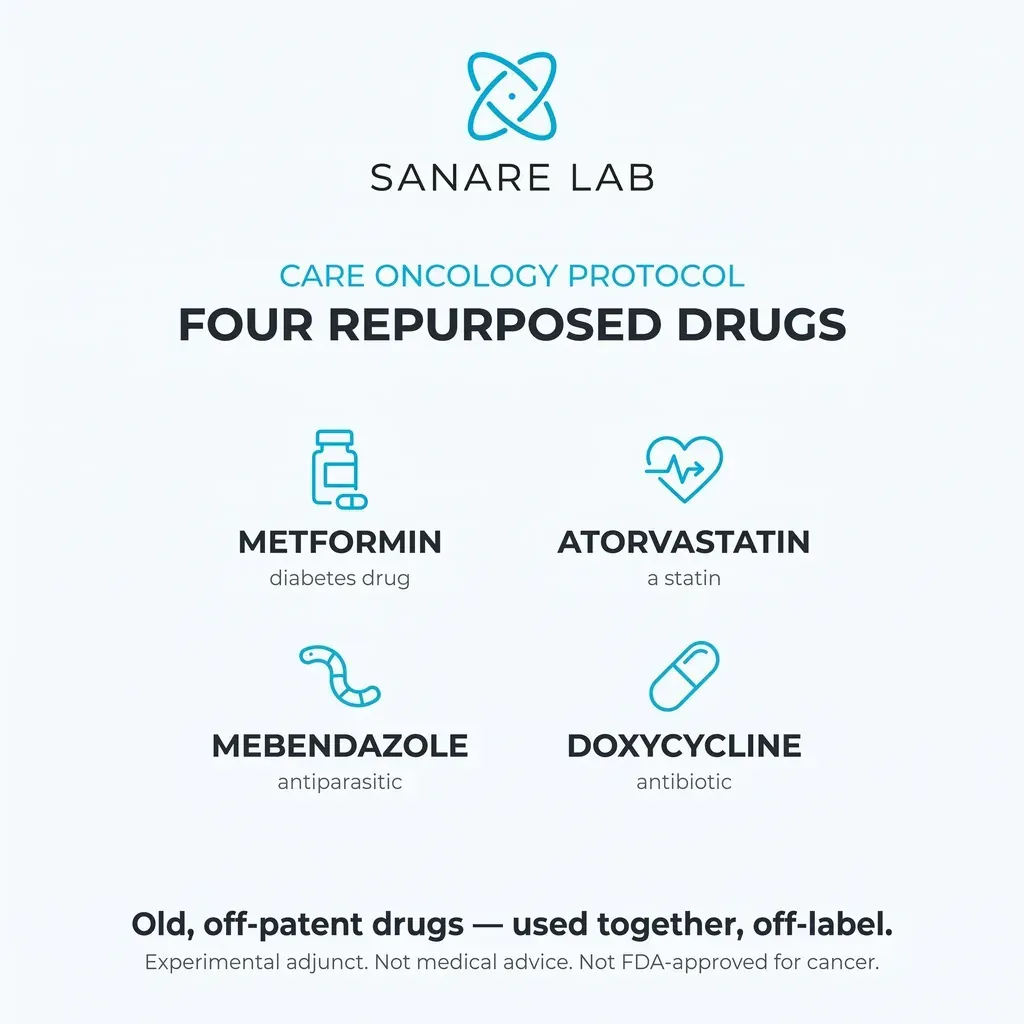
Four old, off-patent drugs — used together, off-label, as an experimental adjunct.
The Four Components Explained
1. Metformin (500-1000 mg BID)
Mechanism: AMPK activator and mTOR inhibitor. For more details, see our guide on Joe Tippens Protocol. Forces cancer cells toward catabolic (energy-depleting) metabolism rather than anabolic (growth-promoting) pathways.
Evidence:
- Preclinical: Strong activity in multiple cancer models
- Clinical: Observational data suggest diabetic patients on metformin have lower cancer incidence, but causal interpretation is unclear
- Randomized trial: The large MA.32 trial (JAMA, 2022) found that adding metformin to standard therapy did not improve survival in high-risk breast cancer (HR ~1.01) — a major negative result that tempered earlier observational optimism
2. Atorvastatin (20-40 mg daily)
Mechanism: Inhibits HMG-CoA reductase, disrupting mevalonate pathway. For more details, see our guide on ISOM Protocol. Cancer cells require cholesterol for membrane synthesis and prenylation of growth-signaling proteins (Ras, Rho).
Evidence:
- Preclinical: Mevalonate inhibition slows cancer cell proliferation
- Clinical: Observational data suggest statin use associates with lower cancer mortality, but causality unclear (confounded by cardiovascular protection, healthier user effect)
3. Doxycycline (50-100 mg daily)
Mechanism: Low-dose doxycycline (sub-antibiotic) inhibits mitochondrial protein synthesis and angiogenesis, reduces pro-inflammatory cytokines. Learn more about fenbendazole dosage guide.
Evidence:
- Preclinical: Multiple studies show anti-proliferative and anti-angiogenic effects
- Clinical: Very limited clinical data specifically in cancer; primarily preclinical
4. Mebendazole (200-400 mg daily)
Mechanism: Microtubule destabilization, p53 stabilization, glucose uptake inhibition (similar to fenbendazole). Learn more about fenbendazole success stories.
Evidence:
- Preclinical: Active against multiple cancer cell lines
- Clinical: Phase I trials completed in glioblastoma (e.g., mebendazole + temozolomide) and pediatric brain tumors, primarily establishing safety rather than efficacy
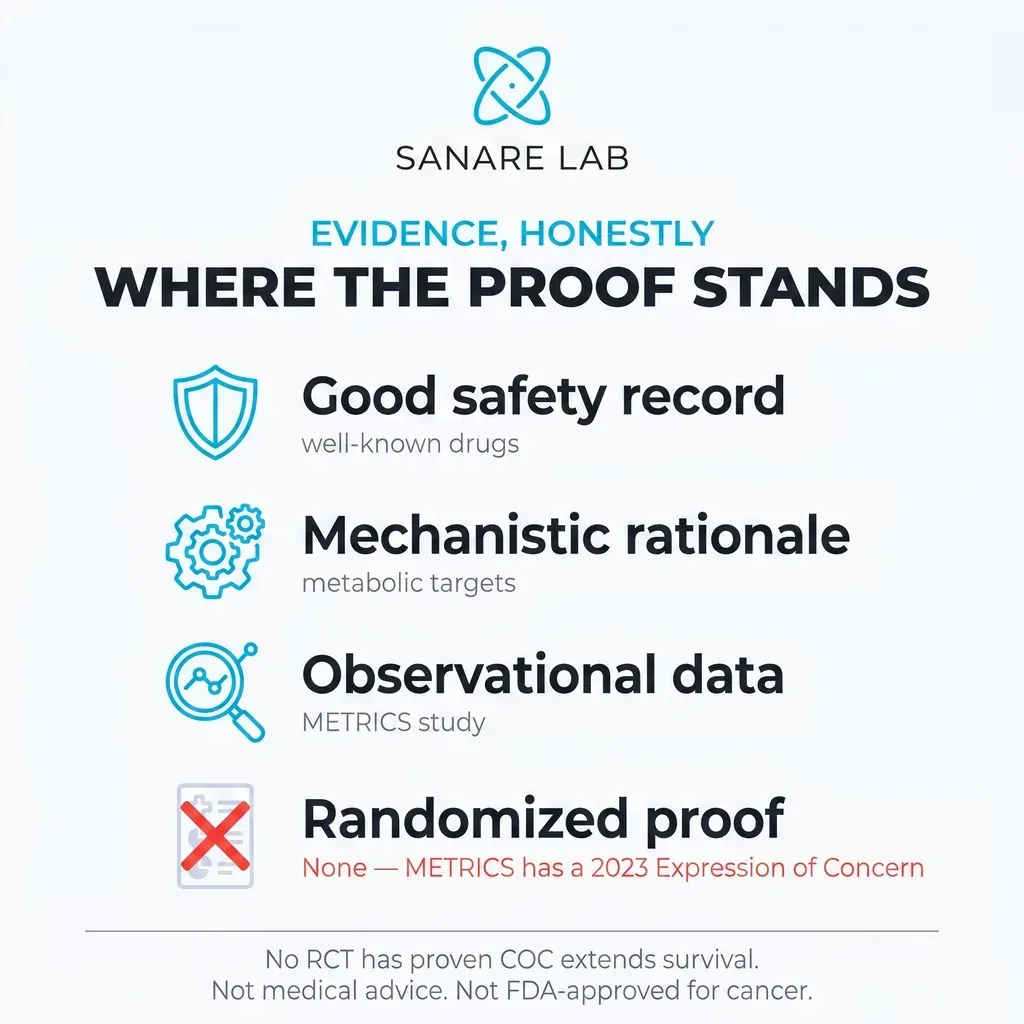
Where the proof stands — no randomized trial has shown COC extends survival.
Clinical Evidence: The METRICS Study
The most substantial human data for COC comes from the METRICS retrospective cohort study (2017-2022) evaluating glioblastoma patients using Care Oncology protocol. Learn more about ivermectin for humans.
Study Design:
- Population: ~95 newly diagnosed, biopsy-confirmed GBM patients (prospective, single-arm) using COC + standard therapy (surgery, RT, TMZ)
- Comparison: Published historical benchmarks for standard-of-care GBM (Public Health England / Brodbelt 2015; Stupp 2005) — not a concurrent randomized control group
- Primary endpoint: Overall survival (OS)
Results:
Interpretation:
- The ~26-month median OS roughly doubles historical benchmarks (~14.8–15.8 months) — a large apparent difference (*comparison is against published historical data, not a concurrent control arm)
- However, there was no randomized concurrent control group; the comparison relies on historical benchmarks from different eras and populations
- Single-arm design with historical controls allows for substantial unmeasured confounding (selection bias toward favorable-prognosis patients)
- No randomization; selection bias possible (more motivated patients in COC group)
- Conclusion: Suggestive but not conclusive. A randomized controlled trial would be needed to establish efficacy
COC vs. Joe Tippens Protocol: Comparison
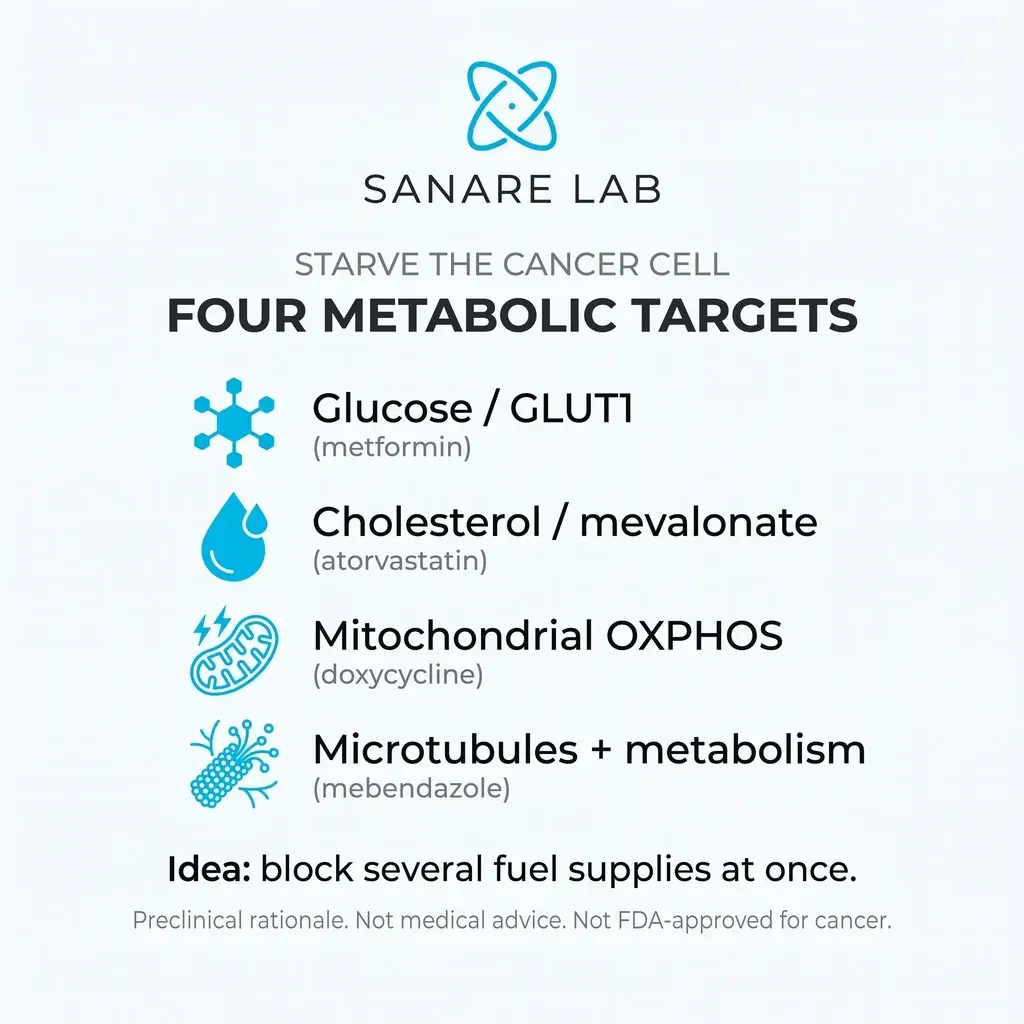
The core idea — block several of the cancer cell’s fuel supplies at once (preclinical rationale).
The Warburg Effect and Metabolic Reprogramming in Depth
To understand why the Care Oncology Clinic protocol targets metabolism, it helps to understand what "metabolic reprogramming" actually means at the level of the cancer cell. In 1924, the German physiologist Otto Warburg observed that tumor cells consume glucose at strikingly high rates and ferment much of it into lactate — even when oxygen is plentiful. This phenomenon, now called aerobic glycolysis or the Warburg effect, is counterintuitive: fermentation yields far less ATP per glucose molecule (2 versus roughly 30–36 from full oxidative phosphorylation), so why would a rapidly dividing cell choose an inefficient pathway? Related reading: survey data on statins in older cancer survivors.
The modern answer is that proliferating cells are not primarily optimizing for ATP. They are optimizing for biosynthesis — the raw carbon, nitrogen, and reducing equivalents (NADPH) needed to build new membranes, nucleotides, and proteins. High glycolytic flux feeds branch pathways such as the pentose phosphate pathway (for nucleotide synthesis and NADPH) and serine/glycine biosynthesis (for one-carbon metabolism). Lactate export also acidifies the tumor microenvironment, which can promote invasion, angiogenesis, and immune suppression. In this framing, the Warburg effect is not a defect but a coordinated program that supports growth.
Metabolic reprogramming extends well beyond glucose. In their landmark 2011 update to the "Hallmarks of Cancer," Hanahan and Weinberg formally added "deregulating cellular energetics" as a core hallmark of malignancy. Cancer cells frequently show:
- Glutamine addiction — many tumors depend heavily on glutamine to refill the tricarboxylic acid (TCA) cycle (anaplerosis) and to supply nitrogen for nucleotide and amino acid synthesis.
- Enhanced lipid synthesis — de novo fatty acid and cholesterol synthesis is upregulated to build membranes and signaling lipids; the mevalonate pathway (the target of statins) is central here.
- Mitochondrial adaptations — contrary to Warburg's original interpretation that mitochondria are "broken" in cancer, most tumors retain functional mitochondria and often rely on them for biosynthetic intermediates and for the metabolic flexibility of cancer stem cells.
The therapeutic logic of the COC protocol flows directly from these observations. If a tumor's growth program leans on specific metabolic dependencies, then drugs that blunt those dependencies might slow the tumor or make it more vulnerable to standard treatments such as radiation and chemotherapy. Metformin nudges cells toward an energy-conserving state via AMPK; statins choke the mevalonate/cholesterol supply line; doxycycline interferes with mitochondrial protein synthesis; and mebendazole disrupts microtubules and may impair glucose handling. The hypothesis is that hitting several metabolic nodes at once — a "metabolic cocktail" — is harder for a heterogeneous tumor to route around than blocking any single pathway. Related reading: a meta-analysis of metformin and bladder cancer risk.
It is essential to be clear about the status of this logic. Metabolic reprogramming is real, well-documented, and an active area of legitimate oncology research. But "cancer cells have metabolic vulnerabilities" does not automatically mean "this specific combination of four generic drugs at these doses will meaningfully extend survival in humans." That gap — between plausible mechanism and proven clinical benefit — is the central tension of the entire repurposed-drug field, and it is the lens through which every claim below should be read.
Metformin: What the Human Evidence Actually Shows
Metformin is the most studied of the four COC drugs, and its story is a useful cautionary tale about how promising a repurposed drug can look before rigorous trials arrive.
The observational signal. Beginning in the mid-2000s, large database studies reported that people with type 2 diabetes taking metformin appeared to have lower cancer incidence and lower cancer mortality than diabetics on other therapies. Mechanistically this was attractive: metformin activates AMP-activated protein kinase (AMPK), indirectly inhibits mTOR (a master regulator of cell growth), and lowers circulating insulin and glucose — all of which could, in theory, starve insulin-responsive tumors. Preclinical models reinforced the enthusiasm, showing reduced tumor growth across breast, colon, prostate, and other models.
The randomized reality. The observational data, however, were confounded. Metformin users differ from non-users in weight, glycemic control, and healthcare engagement; several apparent benefits shrank or vanished once studies corrected for "immortal time bias" and other artifacts. The decisive test came from MA.32, a large phase III randomized trial led by the Canadian Cancer Trials Group (published in JAMA in 2022). More than 3,600 patients with high-risk, non-metastatic breast cancer were randomized to metformin or placebo alongside standard treatment. The result was clear and disappointing: metformin did not improve invasive disease-free survival (hazard ratio ~1.01), and it did not improve overall survival. For hormone-receptor–positive breast cancer specifically, adding metformin provided no benefit.
MA.32 does not prove metformin is worthless in every cancer — glioblastoma, for example, has different biology, and some observational and early-phase data in brain tumors remain of interest. But it powerfully illustrates the danger of extrapolating from observational and preclinical signals. A drug can have a beautiful mechanism, decades of population-level correlation, and still fail to change outcomes when finally tested in a proper randomized trial.
Where metformin stands for COC. Within the protocol, metformin is typically dosed at 500–1000 mg twice daily, similar to its diabetes dosing. Its safety profile is well characterized: gastrointestinal upset is common early on, vitamin B12 absorption can decline with long-term use (worth monitoring), and lactic acidosis is a rare but serious risk in people with significant kidney or liver impairment. The honest summary is that metformin is a safe, cheap drug with a compelling anti-cancer hypothesis and, so far, no high-quality randomized evidence that it extends survival when added to standard cancer care.
Atorvastatin and the Mevalonate Pathway
Statins such as atorvastatin inhibit HMG-CoA reductase, the rate-limiting enzyme of the mevalonate pathway. This pathway does more than make cholesterol: it produces isoprenoid intermediates (farnesyl and geranylgeranyl pyrophosphate) that are attached to signaling proteins — including the Ras and Rho families — in a process called prenylation. Because prenylation is required for these growth- and survival-signaling proteins to anchor to membranes and function, blocking the mevalonate pathway can, in principle, disrupt multiple oncogenic signals at once. Cancer cells also need cholesterol to build new membranes, giving statins a second theoretical angle.
The evidence picture. Preclinical studies consistently show that statins slow proliferation and can trigger apoptosis in a range of cancer cell lines, particularly at concentrations higher than those achieved with standard cardiovascular dosing. Large observational studies have repeatedly linked statin use to lower cancer-specific mortality in several cancers, including prostate, colorectal, and breast. Yet the same confounders that plagued metformin apply here in full force: statin users tend to be under regular medical care, and cardiovascular protection itself extends life, which can masquerade as a "cancer" benefit in survival analyses (the "healthy user" and "competing risks" problems).
Randomized trials designed specifically to test statins as anticancer agents have generally been small, short (often in the neoadjuvant "window of opportunity" before surgery), or focused on biomarkers rather than survival. Some show measurable biological effects — reduced tumor proliferation markers such as Ki-67 — but robust, survival-changing randomized data in common cancers are lacking. Within COC, atorvastatin is typically dosed at 20–80 mg daily. Its safety is well established from cardiovascular medicine: muscle aches are the most common complaint, clinically significant liver enzyme elevation and serious myopathy (rhabdomyolysis) are rare, and drug–drug interactions matter because atorvastatin is metabolized by CYP3A4.
Doxycycline, Mitochondria, and Cancer Stem Cells
Doxycycline is a tetracycline antibiotic, but its proposed anticancer action has nothing to do with killing bacteria. Mitochondria are evolutionary descendants of bacteria and retain bacteria-like ribosomes (the 28S mitoribosome). Tetracyclines inhibit bacterial protein synthesis — and, as an off-target effect, they partially inhibit mitochondrial protein synthesis in human cells. The hypothesis, championed by researchers such as Michael Lisanti and colleagues, is that this mitochondrial inhibition preferentially harms cancer stem cells (CSCs) — a small, treatment-resistant subpopulation thought to drive relapse — because CSCs appear to depend heavily on mitochondrial biogenesis and oxidative metabolism.
The clearest human data. A frequently cited early-phase clinical study (published in Frontiers in Oncology in 2018) treated a small group of breast cancer patients with doxycycline 200 mg/day for roughly two weeks before surgery, then examined the removed tumor tissue. The investigators reported reductions in cancer stem cell markers such as CD44 and ALDH1 in the majority of treated patients compared with untreated controls. This is a genuine, published human signal — but it is a pharmacodynamic biomarker study in about 15 patients, not a survival trial. It tells us doxycycline may do something biologically interesting to stem-cell markers; it does not tell us that it helps patients live longer.
Beyond this, clinical oncology data for doxycycline are sparse and largely preclinical or observational. Within COC, doxycycline is used at a low, often "sub-antibiotic" dose (50–100 mg daily), partly to limit disruption of the gut microbiome and antibiotic-resistance concerns during long-term use. Common issues include photosensitivity (sunburn risk), gastrointestinal upset, esophageal irritation if not taken with adequate water, and — with prolonged antibiotic exposure — potential effects on the microbiome. As with the other agents, the mechanism is intriguing and the early biomarker data are real, but the leap to a proven survival benefit has not been made.
Mebendazole: From Deworming Drug to Investigational Oncology Agent
Mebendazole belongs to the same benzimidazole family as fenbendazole and shares its core proposed mechanism: binding tubulin and destabilizing microtubules, the scaffolding that cells need for mitosis and intracellular transport. Additional proposed effects include stabilization of the tumor-suppressor protein p53, inhibition of pro-survival signaling, anti-angiogenic activity, and interference with glucose transport. Unlike fenbendazole, mebendazole is approved for human use (as an anti-parasitic), which makes it more straightforward to study in human cancer trials.
Actual clinical trials. Mebendazole has moved further into the clinic than fenbendazole. A completed pediatric brain-tumor safety study (a Phase I trial at Johns Hopkins) evaluated mebendazole added to standard chemotherapy in children with newly diagnosed high-grade gliomas and other brain tumors, establishing that the drug could be given with acceptable tolerability. A separate adult trial explored mebendazole combined with temozolomide in glioblastoma. There have also been trials in gastrointestinal cancers. Importantly, "Phase I" means these studies were primarily designed to assess safety and dosing — not to prove efficacy — and several have not reported mature survival outcomes. Formulation is a real challenge: mebendazole is poorly and variably absorbed, so achieving consistent, meaningful blood levels is nontrivial.
Within COC, mebendazole is typically dosed at 100–200 mg daily (sometimes higher), and it is the member of the cocktail most closely related to the fenbendazole that features in the Joe Tippens protocol. The honest status: mebendazole has the most legitimate human clinical-trial activity of any benzimidazole in oncology, its safety in humans is reasonably well characterized, and yet definitive evidence that it extends survival in any adult cancer does not yet exist.
The METRICS Study: What Was Actually Reported
The single most substantial dataset behind the Care Oncology protocol is the METRICS study (Metabolic Treatment Response in Cancer Study; NCT02201381), conducted by the Care Oncology Clinic in London. It is important to describe it accurately, because it is frequently overstated in online discussion.
METRICS was a prospective, single-arm, observational analysis of approximately 95 patients with biopsy-confirmed glioblastoma treated between roughly 2013 and 2016. Every patient received the four-drug COC protocol in addition to standard of care (maximal safe surgical resection, radiotherapy, and temozolomide chemotherapy — the "Stupp protocol"). Crucially, there was no concurrent randomized control group. Instead, the COC-treated cohort was compared against published historical benchmarks for standard-of-care glioblastoma survival.
The reported outcomes were:
- Median overall survival of about 26.3 months in the COC-plus-standard-care cohort.
- Two-year survival of roughly 55.8%.
These were contrasted with historical standard-of-care figures such as a median OS of ~14.8 months and 2-year survival of ~28.7% (Public Health England data, Brodbelt et al., 2015) and ~15.8 months with 2-year survival of ~26.5% (the original Stupp et al. 2005 trial).
On its face, a near-doubling of median survival is dramatic. But the study design imposes major limits on interpretation:
- No randomization and no concurrent control. Comparing a modern, self-selected clinic cohort to historical benchmarks from different eras and populations is not a fair comparison. Diagnostic criteria, imaging, surgical technique, and supportive care all improved over time.
- Powerful selection bias. Patients who seek out and can afford a private metabolic-oncology clinic, and who are well enough to add and tolerate four extra daily drugs, tend to have better performance status, younger age, greater resectability, and other favorable prognostic features — exactly the factors that independently predict longer glioblastoma survival.
- MGMT and molecular status. MGMT promoter methylation strongly influences temozolomide response and survival; imbalances in such markers between the cohort and historical controls could account for much of the apparent difference.
The appropriate conclusion is measured: METRICS generated a genuinely interesting survival signal that justifies a proper randomized controlled trial — and a follow-up effort ("METRICS II") has been discussed. But a single-arm study against historical controls, however encouraging, cannot establish that the COC protocol caused the improved survival. Anyone citing "26 months versus 15 months" as proof that COC works is misrepresenting what this study can support.
Why Repurposed-Drug Cocktails Are So Hard to Prove
The COC protocol embodies a strategy that sounds compelling — hit many metabolic targets at once with cheap, safe drugs — but that is genuinely difficult to validate scientifically. Understanding why is central to reading the evidence honestly.
Combinations multiply the unknowns. A randomized trial of a single drug asks one clean question. A four-drug cocktail added to standard care raises a tangle of questions: Is any benefit real? If so, which drug (or which combination) is responsible? Are there antagonistic interactions where one drug undermines another? Statisticians and regulators generally cannot untangle these from a single-arm study, and factorial trials large enough to isolate each component's contribution are expensive and rarely funded for off-patent drugs.
No commercial incentive. Metformin, atorvastatin, doxycycline, and mebendazole are all generic. No company can recoup the tens of millions of dollars a definitive phase III trial costs, because there is no patent to protect the return. This "valley of death" for repurposed drugs is a well-recognized structural problem in oncology, and it is the main reason promising candidates languish at the preclinical-to-early-clinical stage for years.
Publication and selection bias. Positive anecdotes and favorable case series circulate widely; neutral or negative experiences rarely get written up. Online communities amplify success stories, creating a distorted impression of typical outcomes. This is not unique to COC — it affects the entire alternative and integrative oncology space — but it means that the volume of enthusiastic testimony online is not evidence of efficacy.
Regression, remission, and attribution. Cancer is biologically variable. Spontaneous regressions occur; standard therapy sometimes works better than expected; and people frequently start a protocol like COC at the same time as surgery, radiation, or chemotherapy. When someone does well, it is genuinely difficult — often impossible — to know whether the cocktail contributed at all. This is precisely why controlled trials, not testimonials, are the standard for establishing that a treatment works.
Drug Interactions and Safety Monitoring
Even though all four COC drugs are considered low-toxicity individually, combining them long-term — often alongside chemotherapy and other medications — creates real interaction and monitoring considerations that should be managed by a physician.
Several themes deserve emphasis. First, CYP3A4 interactions are the most clinically important: atorvastatin, several chemotherapy agents, azole antifungals, and other common drugs all funnel through this enzyme system, and combinations can raise statin levels and myopathy risk. Second, liver monitoring matters because at least three of the four drugs (statin, doxycycline, mebendazole) can affect liver enzymes, and cancer patients are frequently on other hepatotoxic medications. Third, patients on active chemotherapy must ensure their oncologist is aware of every drug in the cocktail, because overlapping toxicities (marrow suppression, GI effects) can compound. None of this makes the protocol inherently dangerous — but "low toxicity" is not "no toxicity," and unsupervised long-term poly-pharmacy is a genuine risk.
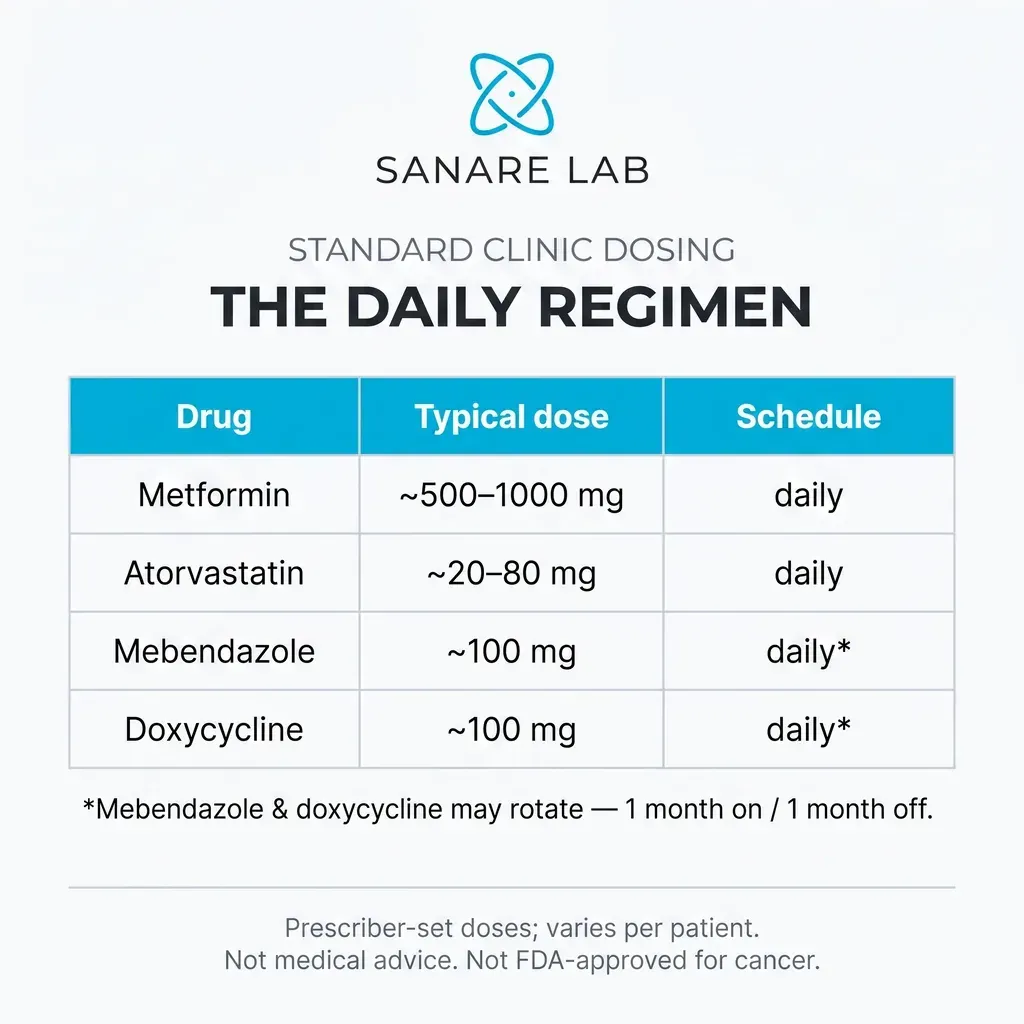
The typical daily regimen — prescriber-set doses that vary per patient.
How the COC Protocol Is Actually Administered
In practice, the Care Oncology protocol was designed to run alongside — never instead of — standard oncology treatment. The clinic's model involves a medical consultation, review of the patient's diagnosis and current treatment, and a prescription for the four drugs at standardized doses, with periodic follow-up and blood monitoring. The drugs are typically continued through and beyond conventional treatment, on the rationale that metabolic pressure should be sustained.
This "adjunctive" positioning is one of the more responsible features of COC compared with protocols promoted purely through social media. The clinic has consistently framed its approach as complementary to surgery, radiation, and chemotherapy, and has emphasized physician oversight and monitoring. That said, prospective patients should understand the practical realities: the clinic is a private, fee-based service; the drugs themselves are inexpensive generics but the consultations are not; and access, prescribing norms, and regulations differ substantially between countries. Some patients and physicians attempt to replicate the protocol independently, which removes the monitoring structure that makes the adjunctive model comparatively safer.
Standard of Care for Glioblastoma in 2026
Because the strongest COC data are in glioblastoma, it is worth stating clearly what proven, standard treatment looks like — the care that any metabolic protocol is meant to complement, not replace.
The backbone remains the Stupp protocol, established in 2005: maximal safe surgical resection, followed by concurrent radiotherapy plus daily temozolomide, then adjuvant (maintenance) temozolomide cycles. This regimen improved median survival and, importantly, long-term survival compared with radiation alone. MGMT promoter methylation status is a key biomarker — methylated tumors respond substantially better to temozolomide. Since 2015, Tumor Treating Fields (TTFields; the Optune device), which deliver low-intensity alternating electric fields to the tumor region via scalp arrays, have been added for many patients and were shown in a randomized trial to extend survival when combined with maintenance temozolomide.
Even with optimal modern therapy, glioblastoma prognosis remains sobering, which is exactly why patients and families explore adjuncts like COC. The responsible message is not to dismiss that search but to anchor it: standard care has randomized-trial evidence behind it; the COC protocol, at present, does not. Adding an investigational metabolic protocol to proven care may be reasonable for some patients under medical supervision — replacing proven care with it is not.
What the Evidence Does NOT Show
Given how easily metabolic-oncology claims are inflated online, it is worth stating the limits plainly:
- No randomized controlled trial has demonstrated that the four-drug COC protocol extends survival in any cancer. The METRICS study was single-arm and observational.
- The strongest single-drug evidence is negative or inconclusive. Metformin failed to improve outcomes in the large randomized MA.32 breast-cancer trial. Statin, doxycycline, and mebendazole data in humans are largely observational, biomarker-based, or early-phase.
- COC does not cure cancer, and it is not a substitute for surgery, radiation, chemotherapy, or immunotherapy. It was explicitly designed as an adjunct.
- Historical-control comparisons overstate benefit. The dramatic "26 vs 15 months" figure reflects, at least in part, selection bias and improvements in care over time, not proven drug effect.
- "Low toxicity" is not "no risk." Long-term four-drug polypharmacy carries real interaction and monitoring burdens, especially alongside chemotherapy.
Presenting these limits is not an argument against interest in metabolic oncology — it is a legitimate, active field. It is an argument for honesty: COC is an investigational, hypothesis-driven protocol with one encouraging but non-definitive human dataset, not a proven treatment.
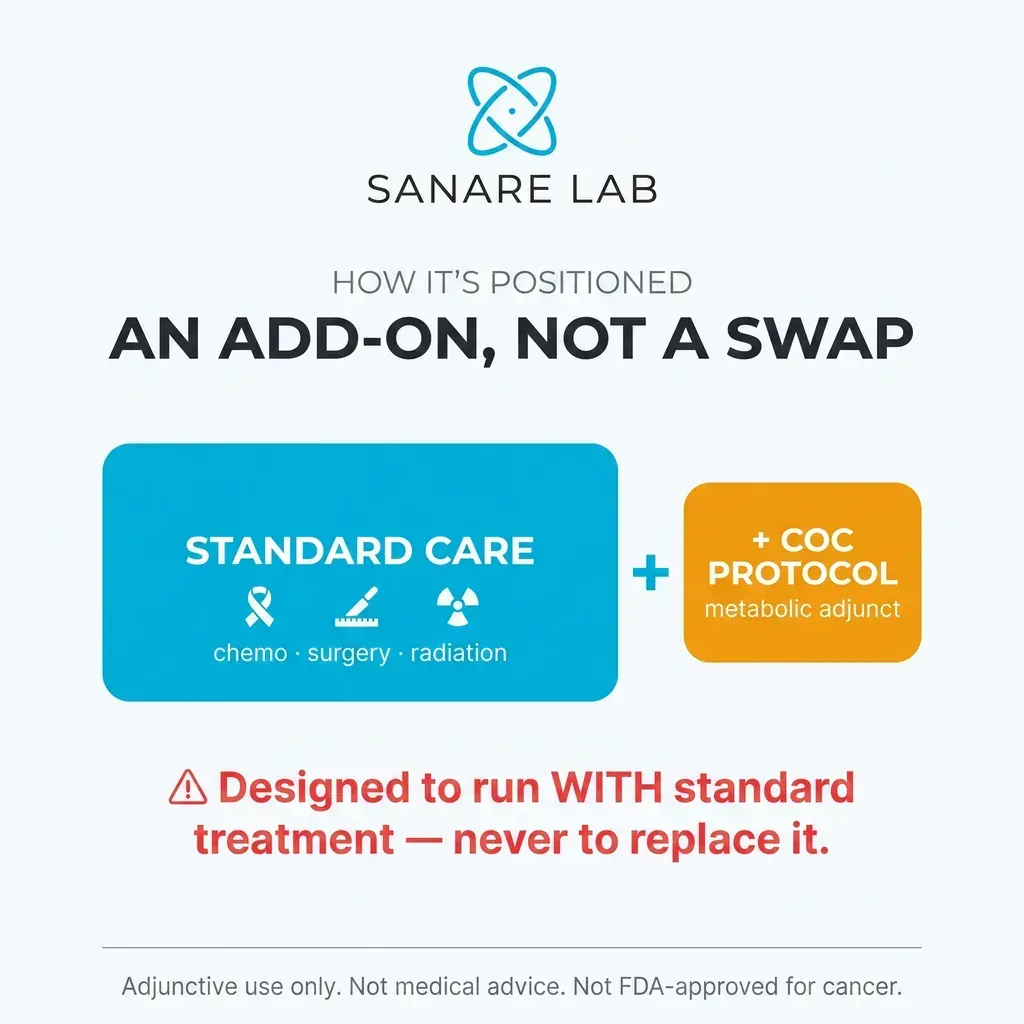
An add-on, not a swap — COC is designed to run with standard treatment, never to replace it.
Combining COC With Other Protocols and Discussing It With Your Oncologist
Patients researching COC are often simultaneously reading about the Joe Tippens (fenbendazole-based) protocol, the ISOM protocol, high-dose vitamin regimens, and various supplements. The temptation to combine everything is understandable but risky. Stacking COC's four drugs on top of fenbendazole, high-dose vitamin E, curcumin, CBD, and others can mean seven, eight, or more active agents daily — dramatically increasing the odds of drug interactions, additive toxicity, and interference with chemotherapy, while making it impossible to attribute any effect (good or bad) to a specific cause.
The single most important practical step for anyone considering COC is to have a candid, non-judgmental conversation with their treating oncologist. A good discussion covers: which drugs and doses are planned; what monitoring (kidney, liver, blood counts, B12) will be done and how often; potential interactions with the specific chemotherapy or targeted agents being used; and clear "stop rules" if side effects or lab abnormalities appear. Many oncologists are more open to well-monitored, adjunctive use of low-toxicity generics than patients expect — but only if they are told, because undisclosed supplements and drugs are a leading cause of preventable interactions in cancer care.
Ultimately, the Care Oncology protocol sits in the same evidentiary category as the other repurposed-drug approaches discussed across this site: mechanistically plausible, supported by preclinical work and one intriguing human dataset, cheap and relatively safe, and — critically — not yet proven in the kind of rigorous randomized trials that change standard practice. That combination is exactly why it deserves neither uncritical hype nor blanket dismissal, but careful, supervised, evidence-aware consideration.
The Origins and Philosophy of the Care Oncology Clinic
The Care Oncology Clinic was founded in London to formalize an idea that had been circulating in the drug-repurposing community for years: that a handful of cheap, well-understood, FDA-approved medicines might, in combination, apply enough metabolic pressure to a tumor to complement conventional oncology. Rather than positioning itself as an "alternative medicine" provider, the clinic deliberately adopted the language and methods of mainstream medicine — physician consultations, standardized prescribing, blood monitoring, and an explicit commitment to running alongside (not instead of) surgery, radiation, and chemotherapy.
This framing matters because it distinguishes COC from much of the online "protocol" landscape. Where the Joe Tippens story spread primarily through social media and word of mouth, COC was built around a clinical service and an attempt to collect prospective data (the METRICS study). The philosophy is essentially pragmatic: even if no single component is individually proven, the drugs are cheap and low-risk enough that trying a rational combination — while carefully documenting outcomes — is a defensible way to generate hypotheses. Critics counter that a clinic charging consultation fees for an unproven protocol has an inherent conflict of interest, and that collecting single-arm data without a control group cannot resolve the efficacy question. Both perspectives contain truth, and a well-informed patient should hold them simultaneously.
Beyond the Four Drugs: The Broader Repurposing Landscape
The COC's four agents are part of a much larger effort to repurpose existing medicines for oncology, exemplified by the Repurposing Drugs in Oncology (ReDO) project, an international collaboration that has systematically reviewed the anticancer evidence for common non-cancer drugs. Understanding this landscape helps place COC in context — it is one curated cocktail drawn from a broad menu of candidates.
Other frequently discussed repurposing candidates include:
- Aspirin — arguably the repurposed drug with the strongest evidence, with randomized and large observational data suggesting reduced incidence and mortality in colorectal cancer, though bleeding risk must be weighed.
- Chloroquine / hydroxychloroquine — autophagy inhibitors studied as chemo/radiation sensitizers, including a small randomized glioblastoma trial.
- Propranolol — a beta-blocker with intriguing data in angiosarcoma and as a perioperative agent that may blunt stress-driven metastasis.
- Itraconazole — an antifungal with anti-angiogenic and Hedgehog-pathway activity studied in several cancers.
- Disulfiram — the alcohol-aversion drug, which has shown proteasome-inhibiting anticancer activity in early studies.
The common thread is the same one running through this entire article: promising mechanisms and encouraging early data, undermined by a chronic lack of the large, expensive, randomized trials needed to prove benefit — largely because these drugs are generic and unpatentable. COC is best understood not as a unique breakthrough but as one physician-led attempt to act on this broad, frustrating, and genuinely interesting body of research.
Who Might Reasonably Consider COC — and Who Should Be Cautious
Because COC is investigational, there is no evidence-based "indication" for it. But some general considerations can help frame a discussion with a physician. Patients who are already receiving full standard-of-care treatment, who have a cancer type where prognosis is poor despite best therapy (such as glioblastoma), who have good organ function (kidney, liver) and are not on medications that heavily interact with the cocktail, and who have access to physician monitoring, are in the best position to consider an adjunctive trial of the protocol with informed consent.
Conversely, particular caution is warranted for patients with significant renal impairment (metformin and lactic-acidosis risk), active liver disease (statin, doxycycline, mebendazole all metabolized/cleared hepatically), those on complex chemotherapy regimens with known CYP3A4 interactions, pregnant patients (several agents are contraindicated), and anyone tempted to substitute COC for proven treatment. The reddest of all flags is any suggestion — from a clinic, a website, or an online community — that a metabolic protocol can replace surgery, radiation, chemotherapy, or immunotherapy. It cannot, and the opportunity cost of forgoing proven therapy can be measured in lives.
A Practical Monitoring Timeline
For patients who, together with their physicians, decide to trial the protocol adjunctively, a sensible monitoring cadence resembles the following. Before starting, establish baseline bloodwork: kidney function (eGFR/creatinine), liver enzymes (ALT/AST), a complete blood count, and vitamin B12. Metformin should generally be paused before any procedure using iodinated contrast, and resumed once kidney function is confirmed stable. In the first one to two months, review tolerability closely — gastrointestinal effects from metformin and doxycycline are most common early — and recheck liver enzymes if any symptoms suggest a problem. Thereafter, periodic monitoring (every few months) of kidney and liver function, blood counts, and B12 is reasonable, with more frequent checks for patients on concurrent chemotherapy or with abnormal baselines.
Equally important is a clear set of "stop rules": significant liver-enzyme elevation, unexplained muscle pain or weakness (possible statin myopathy), new or worsening kidney impairment, persistent severe GI symptoms, or any sign of marrow suppression on the blood count. Because cancer patients frequently start and stop chemotherapy cycles, take antiemetics and steroids, and undergo imaging with contrast, the medication list should be reconciled at every oncology visit. This level of oversight is precisely what separates a considered, physician-supervised adjunctive trial from unsupervised self-medication, and it is the difference that most affects the safety of the whole endeavor.
What People Report Online: The Care Oncology Protocol
Behind the laboratory papers sits a large, restless online conversation. On Reddit and patient forums, people on repurposed-drug protocols like Care Oncology — and the relatives caring for them — trade experiences with these repurposed drugs, usually as an add-on to standard cancer care. To save you from digging through dozens of scattered threads, we have gathered the most relevant, on-topic discussions in one place, together with an honest guide to what these accounts can and cannot tell you.
How to read these reports
These are personal stories, not clinical evidence. They are uncontrolled, self-reported, and impossible to verify independently.
In almost every account, the person was also receiving standard treatment — chemotherapy, immunotherapy, radiotherapy, or surgery — at the same time as these drugs. When someone improves on two therapies at once, the result cannot be credited to these drugs alone; the conventional treatment is the far more likely explanation.
Encouraging stories are also shared far more often than disappointing ones, so online threads skew positive (survivorship and publication bias).
The useful way to read them is as questions worth raising with your oncologist — not as a protocol to copy on your own.
For a deeper, evidence-based look at how these accounts hold up — including the documented case reports and the peer-reviewed analyses behind them — see our detailed review of fenbendazole success stories and case reports.
Frequently Asked Questions
Is Care Oncology Protocol proven to work?
Not definitively. The METRICS study reported a median OS near 26 months in GBM (versus ~15-month historical benchmarks), but this came from a single-arm study compared to historical data, not a randomized trial. It should be considered suggestive, not proof. A randomized controlled trial would provide stronger evidence. COC should be considered investigational, not proven.
Is COC better than the Joe Tippens protocol?
It's impossible to say without head-to-head data. COC has more clinical evidence (METRICS study) and uses FDA-approved drugs. JTP has more public interest and anecdotal reports. Different choice frameworks: COC for patients wanting more medical credibility; JTP for those with internet community support. Discuss with your oncologist.
Can I combine COC and Joe Tippens protocol?
Theoretically possible but not recommended without medical supervision. You'd be taking 7+ active agents (FBZ, metformin, statin, doxycycline, mebendazole, vitamin E, curcumin), significantly increasing drug interaction and toxicity risk. Any combination should be under oncologist guidance with careful monitoring.
What is the cost of Care Oncology protocol?
Generic drugs are inexpensive (~$20-50/month total for metformin, atorvastatin, doxycycline, mebendazole). However, some patients work with Care Oncology Clinic (private practice in London) which charges consultation fees. The protocol itself is affordable; clinic access is optional.
What is the Warburg effect in simple terms?
The Warburg effect is the observation that cancer cells consume large amounts of glucose and ferment much of it into lactate even when oxygen is available — an "inefficient" energy strategy. The modern explanation is that fast-dividing cells prioritize building blocks (for membranes, DNA, and proteins) over pure energy efficiency. This altered metabolism is one of the "hallmarks of cancer," and it is the theoretical basis for metabolic protocols like COC, which try to exploit these dependencies.
Did metformin actually fail in cancer trials?
In the setting that was most rigorously tested, yes. The large randomized MA.32 trial (JAMA, 2022) found that adding metformin to standard treatment did not improve disease-free or overall survival in high-risk breast cancer. This does not rule out possible benefit in other cancers with different biology, but it is a major reality check against the earlier observational optimism. It illustrates why a strong mechanism and population-level correlations are not the same as proven benefit.
How strong is the METRICS study, really?
It is the best human data COC has, but it is not definitive. METRICS was a prospective, single-arm study of about 95 glioblastoma patients that reported a median overall survival near 26 months — roughly double historical benchmarks. However, there was no randomized control group; the comparison used historical data, and the cohort was almost certainly self-selected toward more favorable prognosis. It is a strong signal that justifies a randomized trial, not proof that the protocol works.
Is the COC protocol safe to take with chemotherapy?
The protocol was designed to be adjunctive to standard care, and the individual drugs are low-toxicity. However, "low toxicity" is not "no risk." There are real interaction and monitoring concerns — particularly CYP3A4 interactions with atorvastatin, liver-enzyme effects from several drugs, and overlapping toxicities with chemotherapy. It should only be combined with chemotherapy under the supervision of your oncologist, with appropriate blood monitoring.
Why doesn't someone just run a big definitive trial?
Because all four drugs are generic and off-patent, no company can recover the tens of millions of dollars a phase III trial costs — there is no patent to protect the investment. This "valley of death" for repurposed drugs is a well-known structural problem in oncology and is the main reason promising cheap drugs rarely get the definitive trials that would settle the question.
What does doxycycline do to cancer cells?
Doxycycline partially inhibits mitochondrial protein synthesis (mitochondria evolved from bacteria and retain bacteria-like ribosomes). The hypothesis is that this preferentially stresses cancer stem cells, which depend on mitochondrial metabolism. A small pre-surgery human study reported reductions in stem-cell markers (CD44, ALDH1) after about two weeks of doxycycline. That is a real biological signal, but it is a biomarker study, not evidence of longer survival.
Is mebendazole the same as fenbendazole?
They are close chemical relatives in the benzimidazole family and share a proposed microtubule-disrupting mechanism. The key practical difference is that mebendazole is approved for human use (as an anti-parasitic), so it has been studied in actual human cancer trials (including brain-tumor Phase I studies), whereas fenbendazole is a veterinary drug that has not been through human cancer trials. Neither has proven survival benefit in cancer.
Can I do the COC protocol without going through the clinic?
Some patients and physicians replicate the drug regimen independently, but doing so removes the medical oversight, dosing standardization, and monitoring that make the adjunctive model comparatively safer. If you pursue this route, it is essential to do so with a physician who can prescribe appropriately and monitor kidney function, liver enzymes, blood counts, and B12, and who is aware of your full treatment plan.
Does COC replace standard cancer treatment?
No. The protocol was explicitly designed to be added to standard care — surgery, radiation, chemotherapy, and, for glioblastoma, potentially Tumor Treating Fields. There is no evidence that COC can replace these proven treatments, and doing so would forgo therapies with genuine randomized-trial support. Anyone framing COC as a standalone cure is misrepresenting the evidence.
What should I ask my oncologist about COC?
Useful questions include: Are any of these drugs likely to interact with my specific chemotherapy or targeted therapy? What blood tests should we monitor, and how often? Are there reasons in my case (kidney, liver, blood counts) to avoid a particular drug? What side effects should prompt me to stop? Bringing a written list of the exact drugs and doses, and asking for a shared monitoring plan, turns an awkward conversation into a productive one.
Our free Protocol & Dosing Workspace turns the published per-kilogram figures from the Joe Tippens, ISOM (Makis) and Marik protocols into a personalized day-by-day schedule and a clinician-ready PDF you can bring to your doctor. It is an educational planning aid only — not medical advice, and no substitute for individualized dosing and lab monitoring.
Open the Dosing Calculator →Shop Sanare Lab
Lab-tested products referenced in the research above — order direct from Sanare Lab.
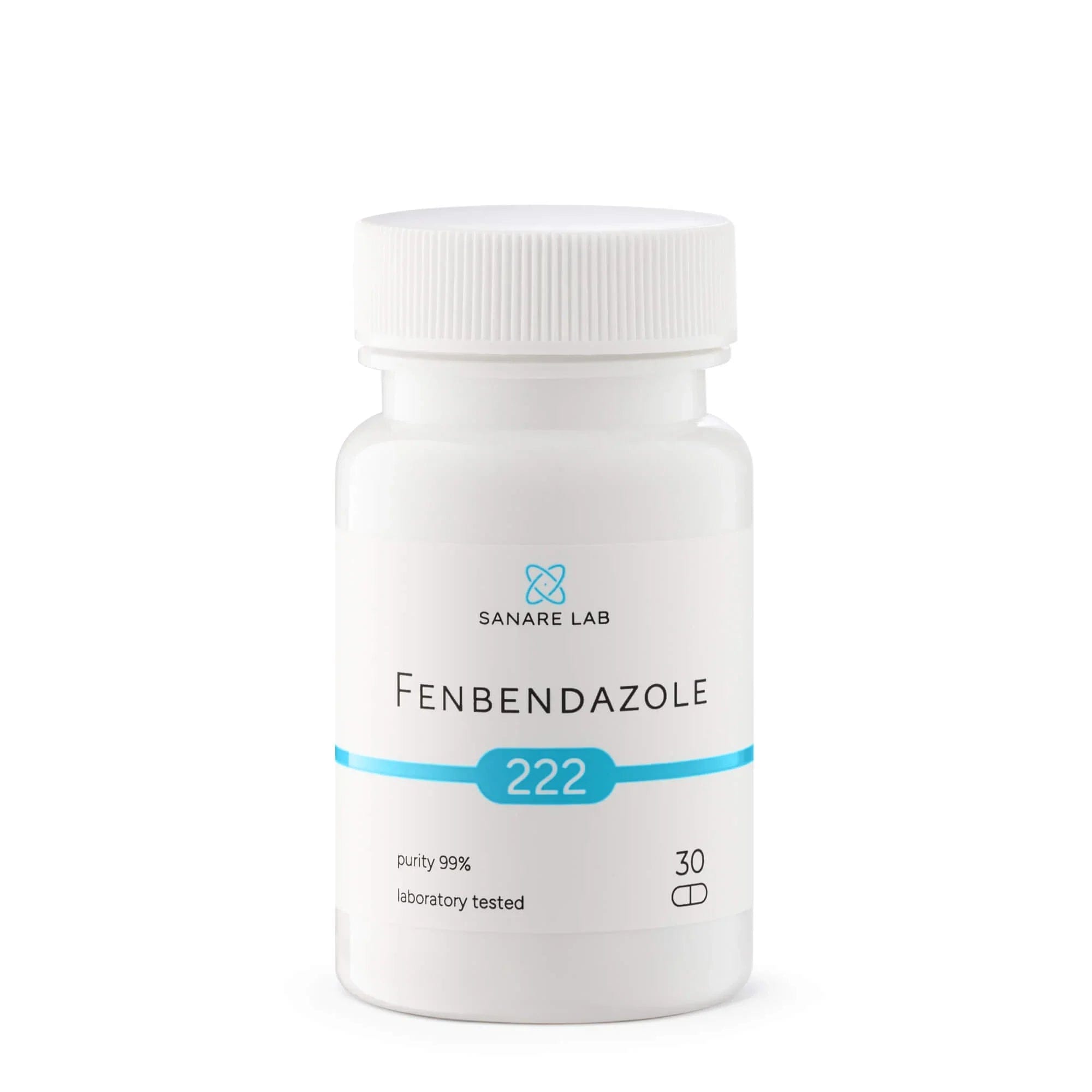
Pharmaceutical grade
Fenbendazole 222 mg
99%+ purity, third‑party lab tested.
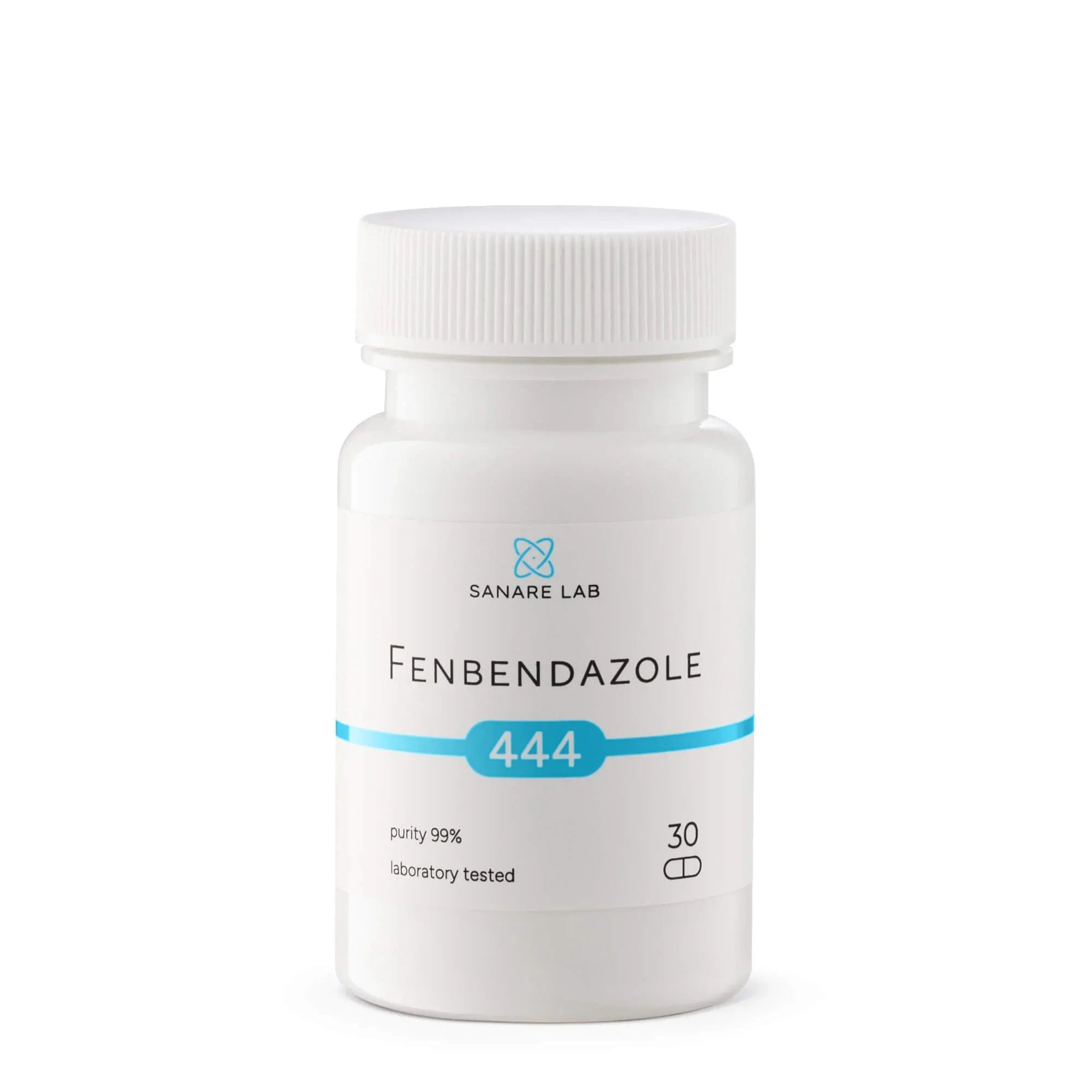
Pharmaceutical grade
Fenbendazole 444 mg
Double strength, 99%+ purity, lab tested.
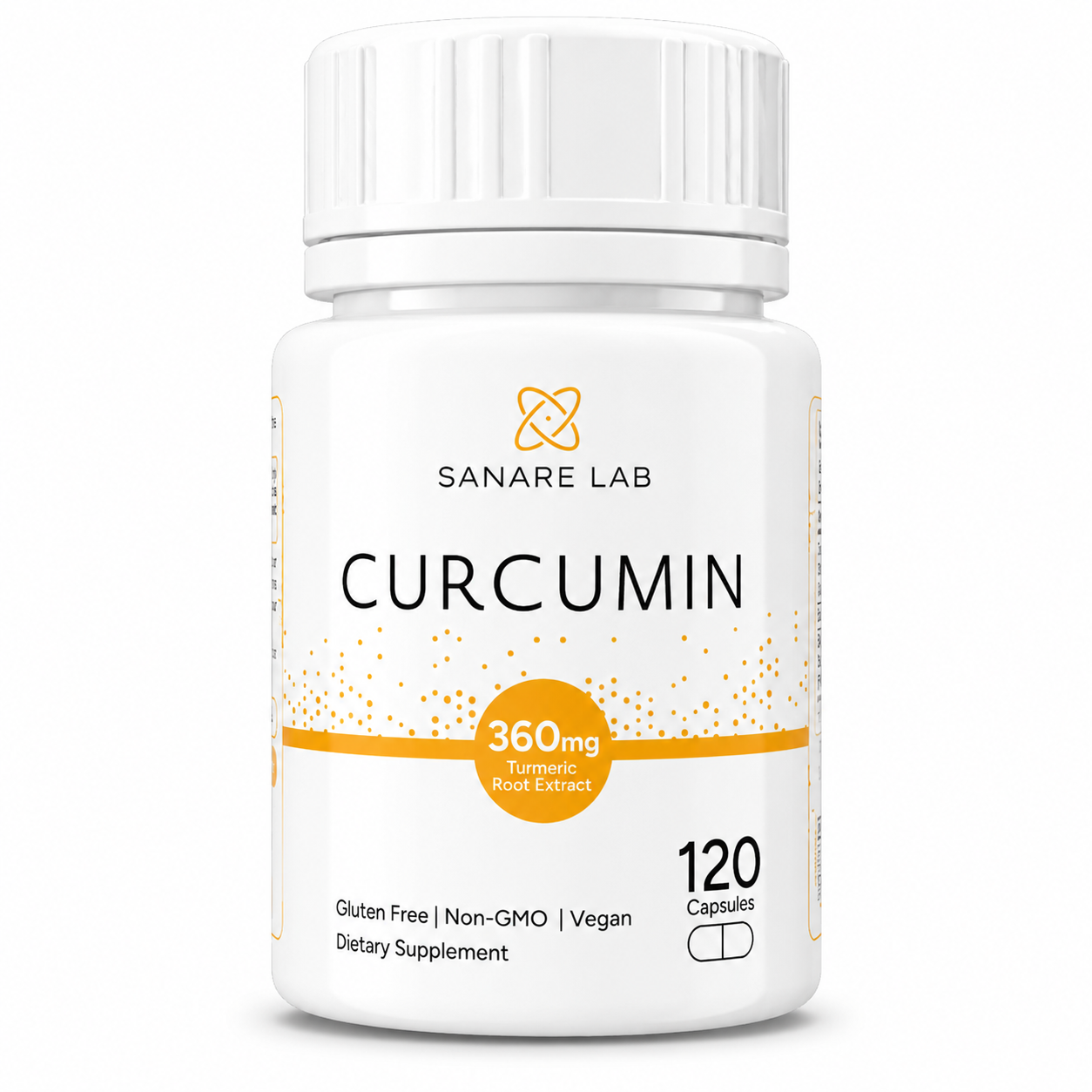
Daily adjunct
Curcumin 360 mg
95% curcuminoids with black pepper extract.
Prices checked September 2026 and may change; the store page shows the current price.
Disclaimer: Links are informational and for convenience. This site does not provide medical advice. Always verify product quality, labeling, and consult a licensed professional for health decisions.
References
- Tippens J. My Cancer Story Rocks (Patient Blog). Personal Account, 2019.
- Makis W, Baghli I, Martinez P. Fenbendazole as an Anticancer Agent? A Case Series of Self-Administration in Three Patients (Retracted Jan 2026). PMID: 40605964. Case Rep Oncol, 2025.
- Pantziarka P, Bouche G, Meheus L et al.. The Repurposing Drugs in Oncology (ReDO) Project. Ecancermedicalscience, 2014. PMID: 25075218. PubMed
- Hanahan D, Weinberg RA. Hallmarks of cancer: the next generation. Cell, 2011. PMID: 21376230. PubMed
- Warburg O. On the origin of cancer cells. Science, 1956. PMID: 13298683. PubMed
- Kroemer G, Pouyssegur J. Tumor cell metabolism: cancer's Achilles' heel. Cancer Cell, 2008. PMID: 18585561. PubMed
- Vander Heiden MG, Cantley LC, Thompson CB. Understanding the Warburg effect: the metabolic requirements of cell proliferation. Science, 2009. PMID: 19460998. PubMed
- Pantziarka P, Bouche G, Sukhatme V et al.. Repurposing drugs in oncology (ReDO) — mebendazole as an anti-cancer agent. Ecancermedicalscience, 2014. PMID: 25075216. PubMed
- Skoda J, Borankova K, Jansson PJ et al.. Pharmacological targeting of mitochondria in cancer stem cells: an ancient organelle at the crossroad of novel anti-cancer therapies. Pharmacol Res, 2019. PMID: 31059790. PubMed
- Sotelo J, Briceño E, López-González MA. Adding chloroquine to conventional treatment for glioblastoma multiforme: a randomized, double-blind, placebo-controlled trial. Ann Intern Med, 2006. PMID: 16520471. PubMed
- Xu Z, Yan Y, Li Z et al.. Metabolic reprogramming and cancer therapy. Signal Transduct Target Ther, 2024. PMID: 38263416. PubMed
- Pushpakom S, Iorio F, Eyers PA et al.. Drug repurposing: progress, challenges and recommendations. Nat Rev Drug Discov, 2019. PMID: 30310233. PubMed
- Bertolini F, Sukhatme VP, Bouche G. Drug repurposing in oncology — patient and health systems opportunities. Nat Rev Clin Oncol, 2015. PMID: 26598945. PubMed
- Goodwin PJ, Chen BE, Gelmon KA et al. Effect of Metformin vs Placebo on Invasive Disease-Free Survival in Patients With Breast Cancer: The MA.32 Randomized Clinical Trial. JAMA, 2022. PMID: 35608580. PubMed
- Care Oncology Clinic. METRICS Study: Metabolic adjuvant therapy in glioblastoma (NCT02201381). ClinicalTrials.gov / PMC6610246, 2019. PMC
- Stupp R, Mason WP, van den Bent MJ et al. Radiotherapy plus concomitant and adjuvant temozolomide for glioblastoma. N Engl J Med, 2005. PMID: 15758009. PubMed
- Stupp R, Taillibert S, Kanner A et al. Effect of Tumor-Treating Fields Plus Maintenance Temozolomide vs Maintenance Temozolomide Alone on Survival in Patients With Glioblastoma: A Randomized Clinical Trial. JAMA, 2017. PMID: 29260225. PubMed
- Scatena C, Roncella M, Di Paolo A et al. Doxycycline, an Inhibitor of Mitochondrial Biogenesis, Effectively Reduces Cancer Stem Cells (CSCs) in Early Breast Cancer Patients: A Clinical Pilot Study. Front Oncol, 2018. PMID: 30364293. PubMed
- Lamb R, Ozsvari B, Lisanti CL et al. Antibiotics that target mitochondria effectively eradicate cancer stem cells across multiple tumor types. Oncotarget, 2015. PMID: 25625193. PubMed
- Bai RY, Staedtke V, Aprhys CM et al. Antiparasitic mebendazole shows survival benefit in 2 preclinical models of glioblastoma multiforme. Neuro Oncol, 2011. PMID: 21764822. PubMed
- Gallia GL, Holdhoff M, Brem H et al. Mebendazole and temozolomide in patients with newly diagnosed high-grade gliomas: Phase I clinical trial. Neurooncol Adv, 2021. PMID: 33604574. PubMed
- Zhang Z, Tan M, Xie Z et al. Metformin and cancer: an existing drug for cancer prevention and therapy. Oncol Lett, 2018. PMID: 29387169. PubMed
- Clendening JW, Penn LZ. Targeting tumor cell metabolism with statins. Oncogene, 2012. PMID: 22706503. PubMed
Medical Disclaimer
This article is for educational and informational purposes only. It is not intended to be a substitute for professional medical advice, diagnosis, or treatment. Always seek the advice of your physician or other qualified health provider with any questions you may have regarding a medical condition. Never disregard professional medical advice or delay in seeking it because of something you have read on this website.
Dr. Andrew Ellison, MD
Science editor and health researcher at Sanare Lab, covering evidence-based wellness, emerging compound research, clinical studies, and practical health protocols. Content is educational and does not replace medical advice.