
Customer Notes & Experiences
Real user experiences and testimonials with fenbendazole and repurposed drug protocols. Unfiltered feedback, side effects, and practical implementation tips.
 By Dr. Andrew Ellison, MD · January 13, 2026 · 15 min read
This article is for research and informational purposes only. It does not constitute medical advice. Do not self-prescribe. Always consult a qualified healthcare provider before using any supplement, especially alongside cancer treatment.
Table of Contents
- How to Read Patient Experiences
- The Joe Tippens Case
- The Published 2025 Case Series
- Reported Experiences by Cancer Type
- What Patients Commonly Report
- Commonly Reported Side Effects
- Patterns Across Reported Cases
- How Fenbendazole Became a Cancer Talking Point
- How to Evaluate a Fenbendazole Success Story
- Why These Reports Are Not Proof
- What to Discuss With Your Doctor
- Frequently Asked Questions
- What People Report Online: Fenbendazole Experiences
- References
How to Read Patient Experiences
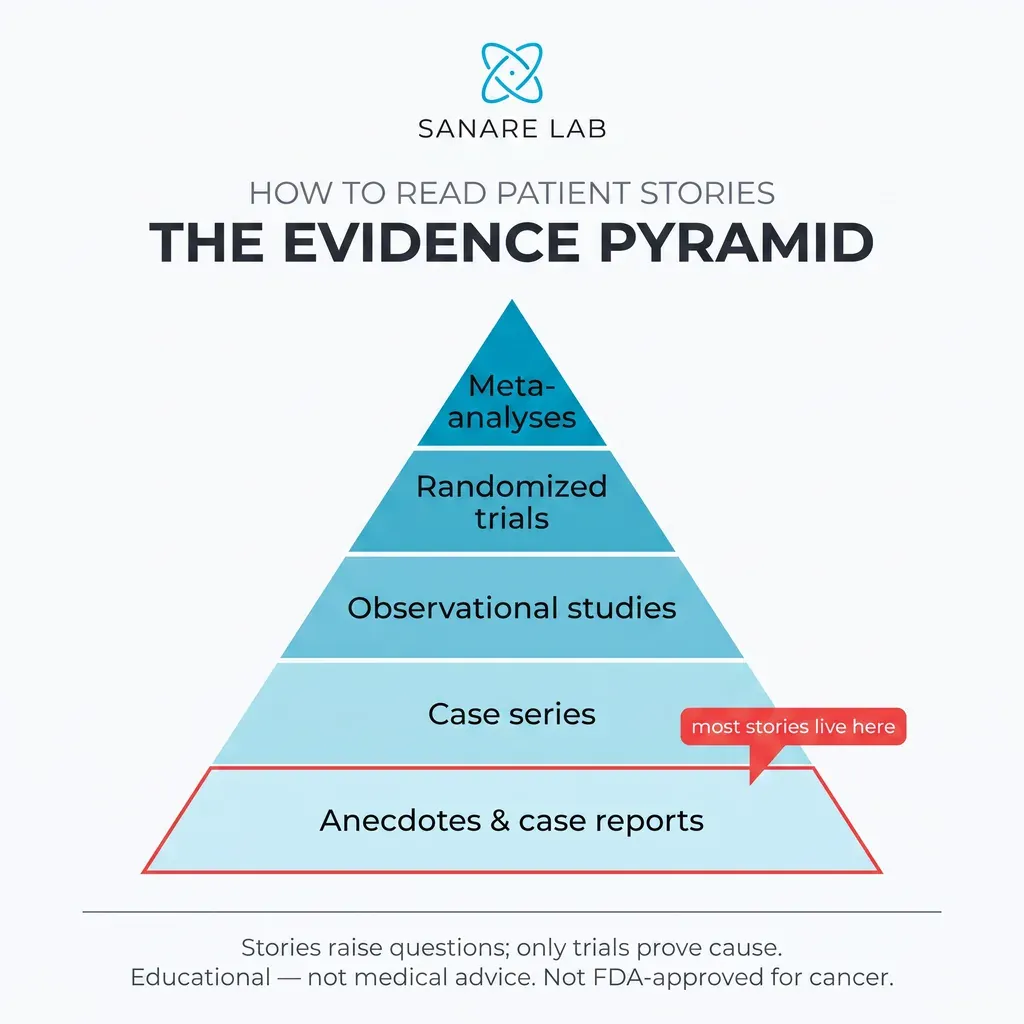
The evidence pyramid — most patient stories live at the base; only trials prove cause.
Patient stories are compelling, but they sit near the bottom of the evidence hierarchy for a reason. Understanding a few concepts helps you interpret them honestly rather than emotionally.
With those caveats in mind, here is what has actually been documented.
It also helps to picture the evidence pyramid. At the broad base sit individual anecdotes and single case reports — easy to generate, but weakest for proving cause and effect. Above them come case series, then observational studies, then randomized controlled trials, and finally systematic reviews and meta-analyses at the narrow top. Almost everything you will read about fenbendazole and cancer in patients lives at the very bottom of that pyramid. This is not a criticism of the people sharing their stories; it is simply where the science currently stands. A report can raise a question worth studying, but it cannot answer it. Keeping the pyramid in mind stops a single vivid story from carrying more weight than a body of controlled data — or the lack of it.
The Joe Tippens Case
Joe Tippens is the single most-cited fenbendazole case. In 2016 he was diagnosed with stage IV small-cell lung cancer and given roughly three months to live. He added fenbendazole and supplements to an immunotherapy clinical trial, and about three months later his scans showed no detectable cancer.
Tippens, an Oklahoma businessman, had metastatic disease that had spread widely. Crucially, he was already enrolled in a clinical trial for the immunotherapy drug pembrolizumab (Keytruda) when, on a veterinarian’s suggestion, he began a daily regimen built around fenbendazole. His original protocol combined four elements:
Within about three months his PET scan reportedly showed no evidence of disease, and he has remained in long-term remission since. Tippens himself has consistently acknowledged that he cannot know whether the outcome came from the immunotherapy, the fenbendazole, or the combination. That honesty is important: his own trial drug (Keytruda) is known to produce durable remissions in a subset of patients. We cover the full story, protocol variations, and caveats in our Joe Tippens protocol guide.
The Published 2025 Case Series
Beyond individual anecdotes, one peer-reviewed case series has directly documented self-administration of fenbendazole. Published in Case Reports in Oncology in 2025 (Makis, Baghli, and Martinez), it followed three patients with stage IV cancer using the CARE reporting guidelines. We summarize the outcomes below and analyze them in depth in our fenbendazole case reports article.
Warning
Important transparency note: This 2025 case series was retracted by the publisher in January 2026. According to the publisher, the retraction was due to the lead author’s failure to disclose a financial conflict of interest — not because the reported clinical data were disproven. We include it here with full disclosure so readers can weigh it accurately. The authors themselves described the findings as “hypothesis-generating” and noted every patient was also receiving standard therapy.
In all three cases, the confounding is obvious: fulvestrant and radiation, androgen-deprivation therapy, and immunotherapy with nivolumab are each independently capable of producing the responses observed. This does not make the reports worthless — they help justify formal study — but it does mean they cannot show that fenbendazole caused the outcomes. For the state of actual trials, see our clinical trials update.
Reported Experiences by Cancer Type
Across public forums, patient communities, and the published literature, fenbendazole interest clusters around particular cancers. Where we have dedicated, sourced articles, we link to them so you can see the actual preclinical and clinical evidence rather than anecdote alone.
Lung cancer
Lung cancer — especially small-cell lung cancer — is the highest-profile category because of the Joe Tippens case. Reported experiences frequently describe fenbendazole added to immunotherapy or chemotherapy. The underlying research is reviewed in our fenbendazole and lung cancer article.
Breast cancer
The published case series included an 83-year-old woman with metastatic breast cancer. Preclinical work on HER2-positive breast cancer and pyroptosis is discussed in our fenbendazole and breast cancer review.
Prostate cancer
Prostate cancer reports often center on PSA trends during androgen-deprivation therapy, as in Case 2 above. Because PSA is heavily influenced by hormone therapy, isolating any fenbendazole effect is particularly difficult.
Colorectal and pancreatic cancer
Interest in gastrointestinal cancers is growing; the preclinical rationale is summarized in our colorectal and pancreatic cancer article.
Melanoma
Case 3 documented a BRAF-mutated melanoma patient whose circulating tumor DNA fell to zero — but during a window that also included surgery and nivolumab immunotherapy.
What Patients Commonly Report
Setting aside outcomes, patients who write about fenbendazole protocols tend to describe a recurring set of practical themes. These are observations, not endorsements:
- Protocol layering: Most combine fenbendazole with curcumin, vitamin E, CBD, or other supplements rather than using it alone.
- Dosing schedules: The classic pattern is 222 mg on a cyclical schedule; some report daily dosing. Our dosage guide explains the trade-offs.
- Liver monitoring: Experienced users frequently mention tracking ALT/AST liver enzymes — see fenbendazole and liver safety.
- Coordination with oncologists: Reports increasingly emphasize telling the treating team, partly because of possible interactions with chemotherapy.
- Sourcing concerns: Purity and product quality are common worries; see where to buy and how to verify fenbendazole.
Commonly Reported Side Effects
The most commonly reported side effects in anecdotal human use are gastrointestinal upset and elevated liver enzymes. Fenbendazole is metabolized by the liver, so periodic liver-function testing is widely recommended by people who use these protocols.
Because there are no controlled human safety trials, the side-effect picture comes from veterinary data, the benzimidazole drug class, and self-reported human experience. Reported effects include:
The liver signal is the one worth taking seriously. Our liver safety article reviews what is known and how monitoring is typically approached.
Patterns Across Reported Cases
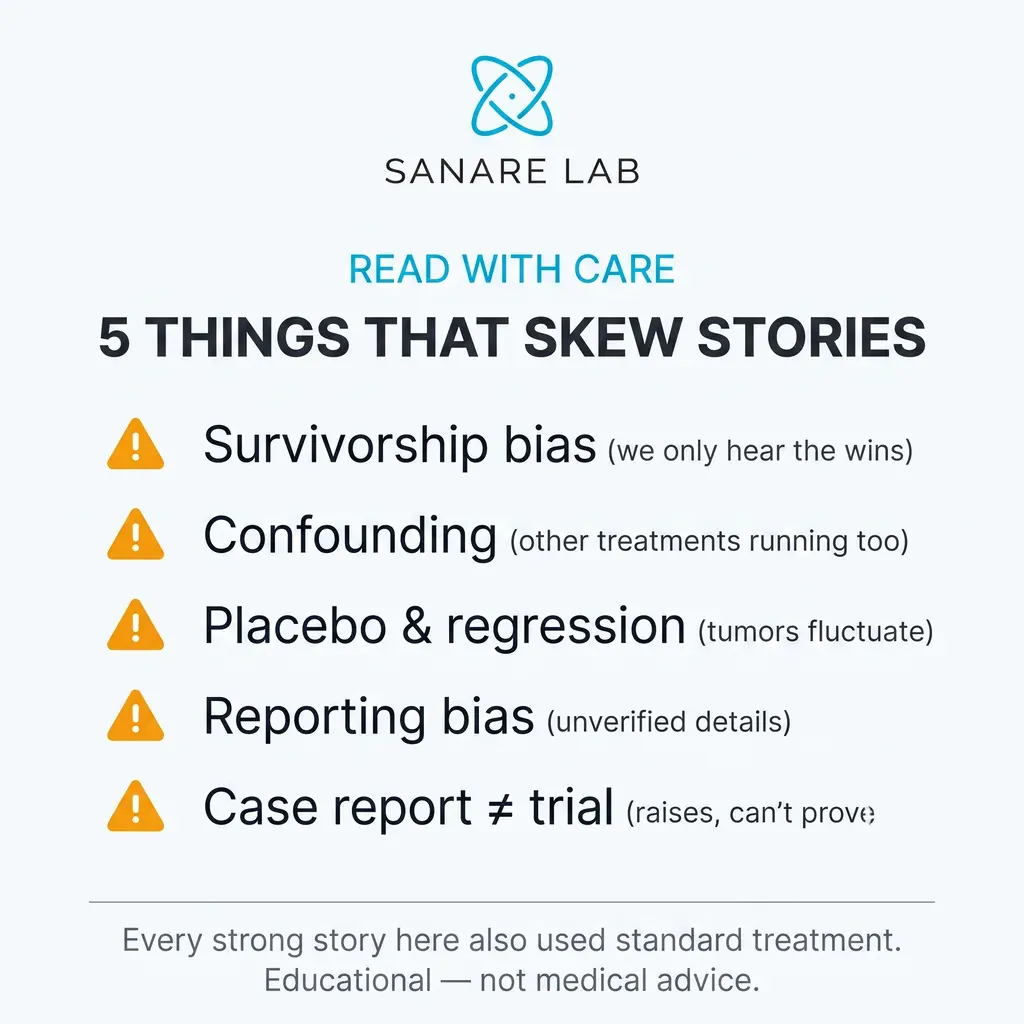
Five biases that make anecdotal cancer stories look more convincing than they are.
When you read many reports together — including the compiled anecdote databases that circulate online — a few consistent patterns emerge:
- Concurrent standard care is nearly universal. The strongest-sounding remissions almost always involve immunotherapy, chemotherapy, radiation, or hormone therapy running at the same time.
- Outcomes are heterogeneous. Reports range from dramatic remissions to no change to disease progression; the negatives are simply shared less often.
- Documentation quality varies enormously. A handful (like the retracted case series) include scans and biomarkers; most are self-described without verification.
- Cancer type matters. Reports concentrate in cancers where immunotherapy is effective, which further muddies attribution.
For a curated, sourced look at the better-documented remission accounts, see our fenbendazole success stories and case reports compilation.
How Fenbendazole Became a Cancer Talking Point
The current wave of patient interest did not appear out of nowhere. It grew from a specific sequence of events that turned a veterinary dewormer into a widely discussed off-label protocol. Understanding that timeline helps explain why the anecdotes cluster the way they do.
The pattern is instructive: interest was driven far more by a viral personal story than by controlled data. That does not make the underlying biology uninteresting — it is genuinely being studied — but it explains why the volume of anecdotes has outpaced the quality of evidence behind them.
How to Evaluate a Fenbendazole Success Story
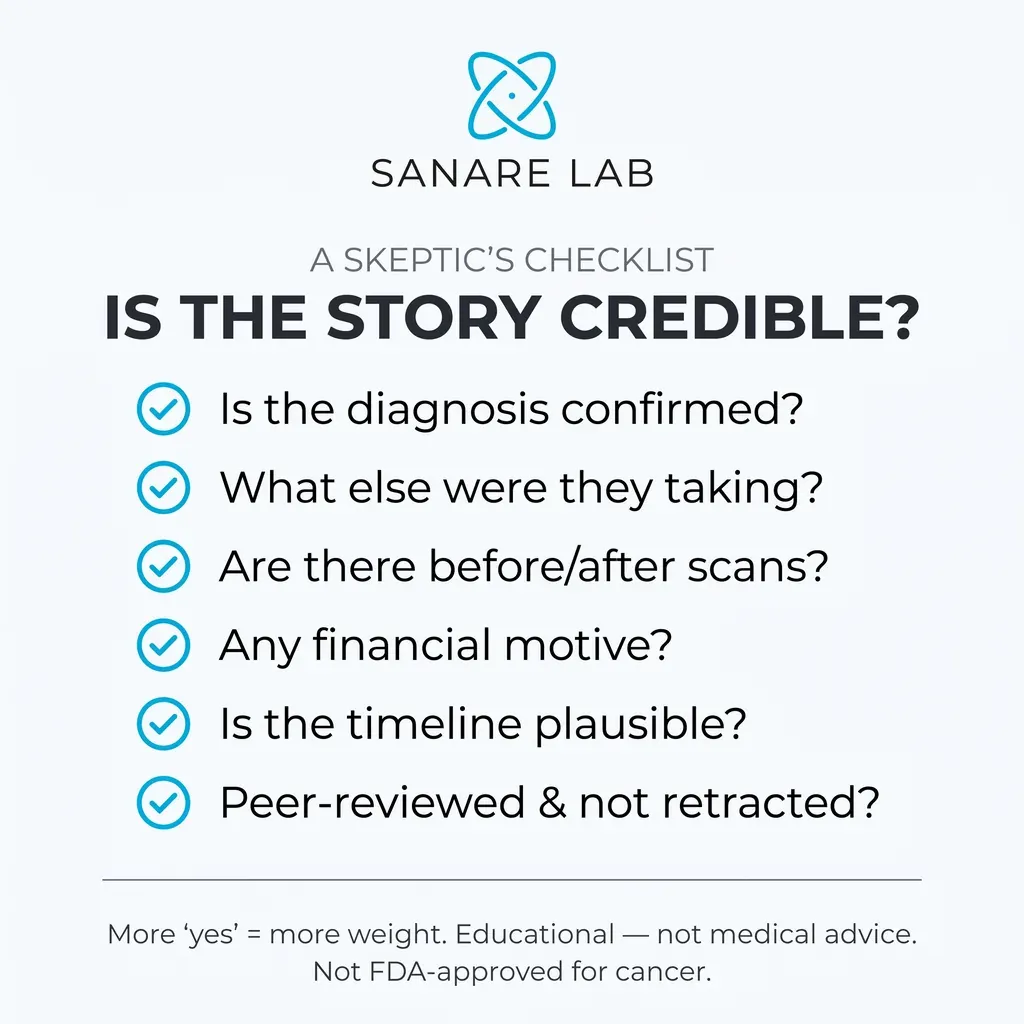
A skeptic’s checklist — more “yes” answers means a story deserves more weight.
Not all reports are equally informative. When you come across a remission story — on a forum, in a video, or in a comment thread — you can gauge how much weight it deserves by asking a short series of questions. The more ‘yes’ answers, the more seriously the account can be taken; a string of ‘unknown’ answers is a signal to stay skeptical.
Applied honestly, this checklist explains why even the best-documented fenbendazole reports — including the published case series — still fall short of proof: in every strong case, concurrent standard treatment was present and could account for the result.
Why These Reports Are Not Proof
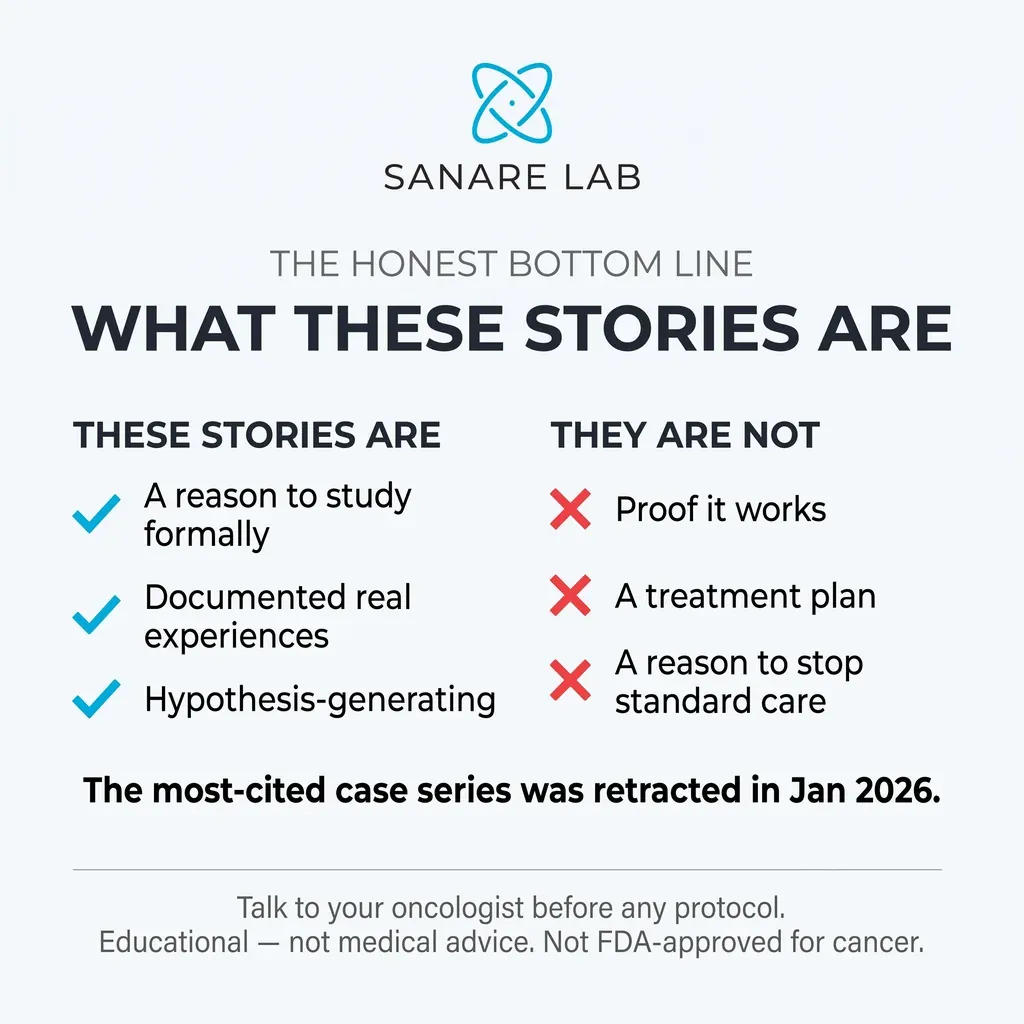
The honest bottom line — the most-cited case series was retracted in January 2026.
It is worth stating plainly: no volume of anecdotes, however moving, can substitute for a controlled clinical trial. Reports cannot rule out that the concurrent standard treatment, the natural variability of cancer, or selective reporting produced the observed results. That is exactly why researchers describe fenbendazole as an interesting candidate for study rather than a proven therapy. The honest scientific position — and the one we take — is that the anecdotes are worth investigating formally, and until they are, they should not guide treatment decisions on their own.
What to Discuss With Your Doctor
If these reports have you curious, the responsible next step is a conversation with your oncology team, not a solo experiment. Useful points to raise:
- Whether an off-label agent could interfere with your specific chemotherapy, immunotherapy, or radiation.
- A plan for monitoring liver enzymes and other bloodwork.
- Realistic expectations given your cancer type and current treatment.
- How to evaluate product quality and purity if you proceed.
Estimate a weight-based regimen with our protocol calculator.
Frequently Asked Questions
Are these customer notes real testimonials?
The accounts on this page are drawn from publicly documented cases (such as Joe Tippens), a peer-reviewed case series, and the medical literature on side effects. They are not solicited or invented testimonials, and they are shared for education, not as endorsements or proof of efficacy.
Does fenbendazole cure cancer?
There is no clinical trial evidence that fenbendazole cures or treats cancer in humans. The available reports are anecdotal or low-tier case reports, and almost all involved concurrent conventional treatment. It remains experimental and unproven.
What was the Joe Tippens outcome?
Joe Tippens reported complete remission of stage IV small-cell lung cancer after adding fenbendazole and supplements to an immunotherapy (Keytruda) clinical trial. He has openly said it is impossible to know which factor was responsible.
Was the fenbendazole case series retracted?
Yes. The 2025 three-patient case series in Case Reports in Oncology was retracted in January 2026 due to the lead author’s undisclosed financial conflict of interest. The publisher did not state that the clinical data were disproven.
What side effects do people report?
The most commonly reported effects are mild gastrointestinal upset and elevated liver enzymes. Serious liver injury is rare but documented. Because there are no controlled human trials, the safety picture is incomplete.
Should I stop my cancer treatment to try fenbendazole?
No. Every credible source, including the case-series authors themselves, stresses not stopping or delaying standard care. Any experimental protocol should be discussed with your oncologist first.
Why do so many stories involve remission?
This largely reflects survivorship and reporting bias — people who improve are far more likely to share their story than those who do not, which distorts the overall picture.
Where can I read the underlying evidence?
See our sourced articles on the case reports, clinical trials, and cancer-specific research such as lung and breast cancer.
Is veterinary fenbendazole the same as what patients report using?
Many public reports describe veterinary or supplement-grade products, whose purity is not guaranteed. Quality verification is discussed in our sourcing guide.
How is liver function monitored on these protocols?
Users commonly track ALT and AST liver enzymes with periodic blood tests. Our liver safety article explains the rationale and typical approach.
Key Takeaway
These documented reports keep interest in fenbendazole alive, but they are hypothesis-generating anecdotes — confounded by concurrent standard treatment and shaped by survivorship bias. The most famous case (Joe Tippens) and the published (later retracted) case series both involved simultaneous conventional therapy. Treat these accounts as a reason for formal research, not as medical guidance, and involve your oncologist in any decision.
Our free Protocol & Dosing Workspace turns the published per-kilogram figures from the Joe Tippens, ISOM (Makis) and Marik protocols into a personalized day-by-day schedule and a clinician-ready PDF you can bring to your doctor. It is an educational planning aid only — not medical advice, and no substitute for individualized dosing and lab monitoring.
What People Report Online: Fenbendazole Experiences
Behind the laboratory papers sits a large, restless online conversation. On Reddit and patient forums, people sharing their own fenbendazole experiences — and the relatives caring for them — trade experiences with fenbendazole, usually following some version of the Joe Tippens protocol. To save you from digging through dozens of scattered threads, we have gathered the most relevant, on-topic discussions in one place, together with an honest guide to what these accounts can and cannot tell you.
How to read these reports
These are personal stories, not clinical evidence. They are uncontrolled, self-reported, and impossible to verify independently.
In almost every account, the person was also receiving standard treatment — chemotherapy, immunotherapy, radiotherapy, or surgery — at the same time as fenbendazole. When someone improves on two therapies at once, the result cannot be credited to fenbendazole alone; the conventional treatment is the far more likely explanation.
Encouraging stories are also shared far more often than disappointing ones, so online threads skew positive (survivorship and publication bias).
The useful way to read them is as questions worth raising with your oncologist — not as a protocol to copy on your own.
For a deeper, evidence-based look at how these accounts hold up — including the documented case reports and the peer-reviewed analyses behind them — see our detailed review of fenbendazole success stories and case reports.
Shop Sanare Lab
Lab-tested products referenced in the research above. Links are provided for convenience — always review the label and consult a professional before use.
Fenbendazole 222 mg
180 capsules — 99% purity, laboratory testedBuy Fenbendazole 222 →Fenbendazole 444 mg
180 capsules — higher-dose optionBuy Fenbendazole 444 →Curcumin Turmeric 360 mg
120 capsules — with Black Pepper for absorptionBuy Curcumin →
Disclaimer: Links are informational and for convenience. This site does not provide medical advice and does not endorse any specific vendor. Always verify product quality, labeling, and consult a licensed professional for health decisions.
References
- Makis W, Baghli I, Martinez P. Fenbendazole as an Anticancer Agent? A Case Series of Self-Administration in Three Patients. Case Rep Oncol, 2025;18(1):856-869. PMID: 40605964. [Retracted Jan 2026 — undisclosed conflict of interest; clinical data not disputed]. PubMed
- Chun KS, et al. Oral Fenbendazole for Cancer Therapy in Humans and Animals. Anticancer Research, 2024;44(9):3725-3735. PMID: 39197912. PubMed
- Dogra N, Kumar A, Mukhopadhyay T. Fenbendazole acts as a moderate microtubule destabilizing agent and causes cancer cell death by modulating multiple cellular pathways. Scientific Reports, 2018;8(1):11926. PMID: 30093705. PubMed
- Yun S, et al. Fenbendazole induces pyroptosis in breast cancer cells through the HK2/caspase-3/GSDME axis. Front Pharmacol, 2025;16. PMID: 40756987. PubMed
- Park H, et al. Anti-cancer effects of fenbendazole on 5-fluorouracil-resistant colorectal cancer cells. Korean J Physiol Pharmacol, 2022;26(5):377-387. PMID: 36039738. PubMed
- Son J, et al. The Antitumor Potentials of Benzimidazole Anthelmintics as Repurposing Drugs. Immune Netw, 2020;20(4):e29. PMID: 32895616. PubMed
- Nygren P, Larsson R. Drug repositioning from bench to bedside: tumour remission by the antihelmintic drug mebendazole in refractory metastatic colon cancer. Acta Oncol, 2014;53(3):427-428. PMID: 24160353. PubMed
- Dayan AD. Albendazole, mebendazole and praziquantel. Review of non-clinical toxicity and pharmacokinetics. Acta Tropica, 2003;86(2-3):141-159. PMID: 12745134. PubMed
- Shoba G, et al. Influence of piperine on the pharmacokinetics of curcumin in animals and human volunteers. Planta Medica, 1998;64(4):353-356. PMID: 9619120. PubMed
- Aggarwal BB, Harikumar KB. Potential therapeutic effects of curcumin, the anti-inflammatory agent. Int J Biochem Cell Biol, 2009;41(1):40-59. PMID: 18662800. PubMed
- Hróbjartsson A, Gøtzsche PC. Placebo interventions for all clinical conditions. Cochrane Database Syst Rev, 2010;(1):CD003974. PMID: 20091554. PubMed
- Gao Q, et al. Repurposing of a clinically used anti-HPV agent to prevent and treat SARS-CoV-2 infection. Signal Transduct Target Ther, 2021;6(1):320. PMID: 34446694. PubMed
Medical Disclaimer
This article is for educational and informational purposes only. It is not intended to be a substitute for professional medical advice, diagnosis, or treatment. Always seek the advice of your physician or other qualified health provider with any questions you may have regarding a medical condition. Never disregard professional medical advice or delay in seeking it because of something you have read on this website.
Dr. Andrew Ellison, MD
Science editor and health researcher at Sanare Lab, covering evidence-based wellness, emerging compound research, clinical studies, and practical health protocols. Content is educational and does not replace medical advice.