
Fenbendazole for Ovarian Cancer: Nanoparticle Delivery & Platinum-Resistant Disease
Breakthrough nanoparticle delivery systems for fenbendazole in ovarian cancer. Targeting platinum-resistant disease and overcoming chemotherapy failure with novel formulations.
 By Dr. Andrew Ellison, MD · July 25, 2026 · 28 min read
This article is for research and informational purposes only. It does not constitute medical advice. Do not self-prescribe. Always consult a qualified healthcare provider before using any supplement, especially alongside cancer treatment.
Ovarian cancer ranks as the fifth leading cause of cancer death among women, with over 200,000 new cases annually worldwide. Platinum-resistant ovarian cancer (PROC) — disease that progresses within 6 months of platinum-based chemotherapy — carries particularly poor prognosis and limited treatment options. Recent preclinical research has explored fenbendazole and related benzimidazole compounds as candidates for PROC, with novel nanoparticle delivery systems designed to enhance efficacy.
Table of Contents
- Ovarian Cancer Challenge
- Benzimidazoles in Ovarian Cancer Models
- Nanoparticle Delivery Systems
- Combination Approaches
- Ovarian Cancer Subtypes & Molecular Landscape
- How Platinum Resistance Develops
- Standard of Care in 2026
- PARP Inhibitors & HRD
- Targeted Delivery: Mirvetuximab
- Albendazole & VEGF/Ascites
- Mebendazole & Cisplatin Resistance
- Fenbendazole Mechanisms
- Advanced Nanoparticle Strategies
- Ascites & Peritoneal Microenvironment
- Other Repurposed Drugs
- Diet, Lifestyle & Supportive Care
- Clinical Trial Landscape
- Second-Line & PROC Treatment Options
- Symptoms, Diagnosis & CA-125
- Hereditary Risk & Genetic Counseling
- Immunotherapy: A Reality Check
- Fenbendazole Dosing & Safety Monitoring
- Survivorship & Quality of Life
- What the Evidence Does NOT Show
- What People Report Online: Ovarian Cancer
- FAQ
- References
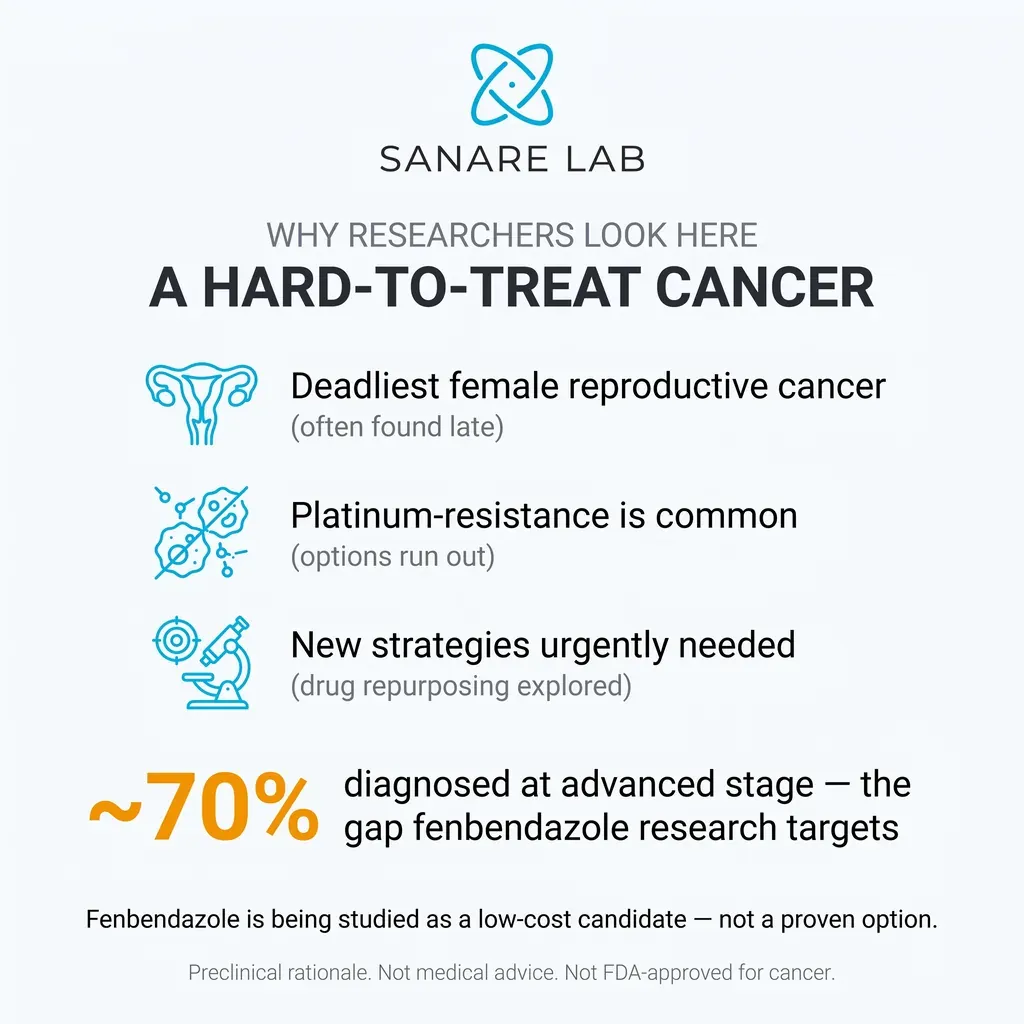
Why researchers look here — fenbendazole is being studied as a low-cost candidate, not a proven option.
Ovarian Cancer Challenge
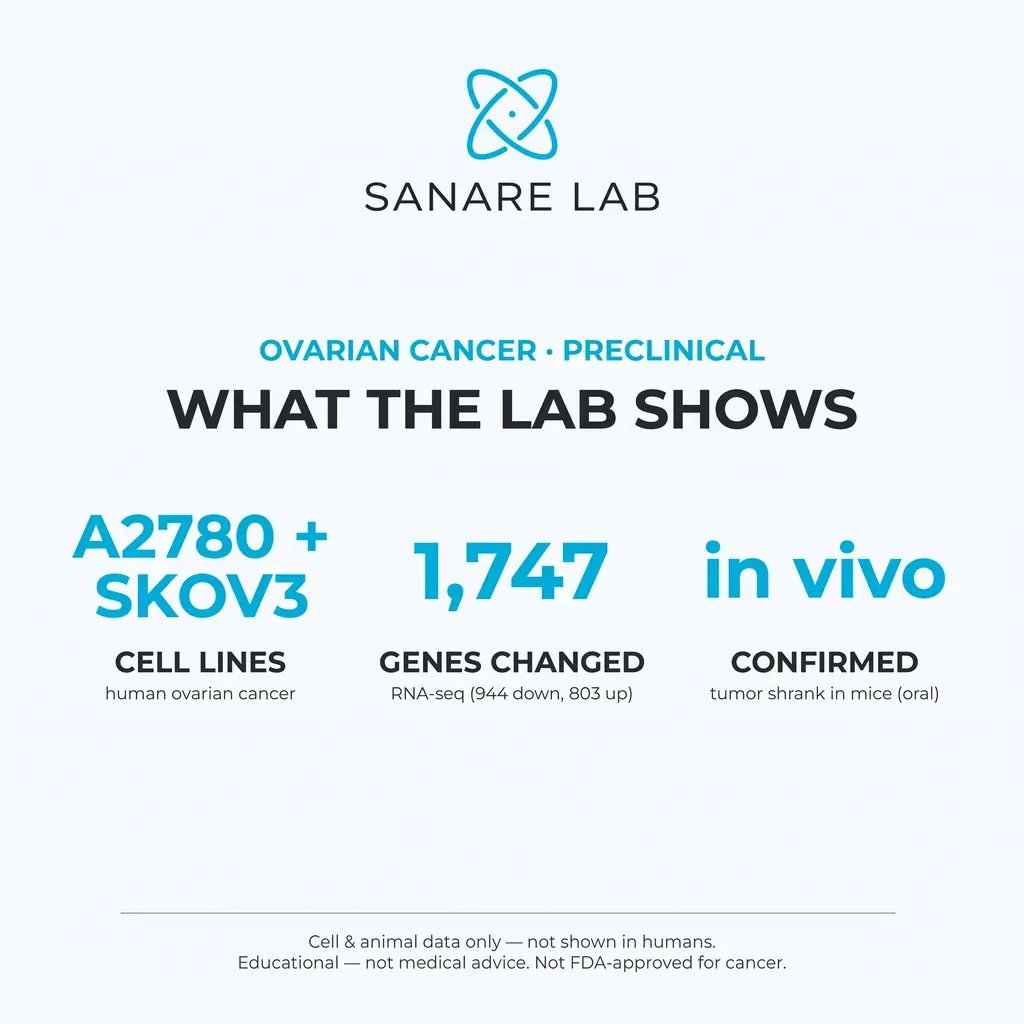
What the lab shows — cell and animal data only, not demonstrated in humans.
Benzimidazoles in Ovarian Cancer Models
Multiple benzimidazoles have been studied against ovarian cancer cell lines and primary tumor samples: Learn more about Joe Tippens Protocol.
Mebendazole
A 2019 study in Anticancer Research evaluated mebendazole against cisplatin-sensitive (A2780) and cisplatin-resistant (A2780cis) ovarian cancer cells: Learn more about fenbendazole dosage guide.
- Mebendazole IC₅₀: 2-8 μM (similar in sensitive and resistant lines)
- Key finding: Mebendazole retained activity in resistant cells, suggesting a different mechanism from platinum drugs
- Mechanism: Microtubule disruption + ROS accumulation
Fenbendazole
Limited direct ovarian cancer studies, but data from related cancer types suggest similar activity: Learn more about fenbendazole and lung cancer.
- Preclinical: Active against SKOV3 ovarian cancer cells (microtubule disruption)
- IC₅₀ estimates: 50-200 nM (highly variable by study)
- Advantage over platinum drugs: Mechanism independent of DNA-crosslinking, potentially active in resistant disease
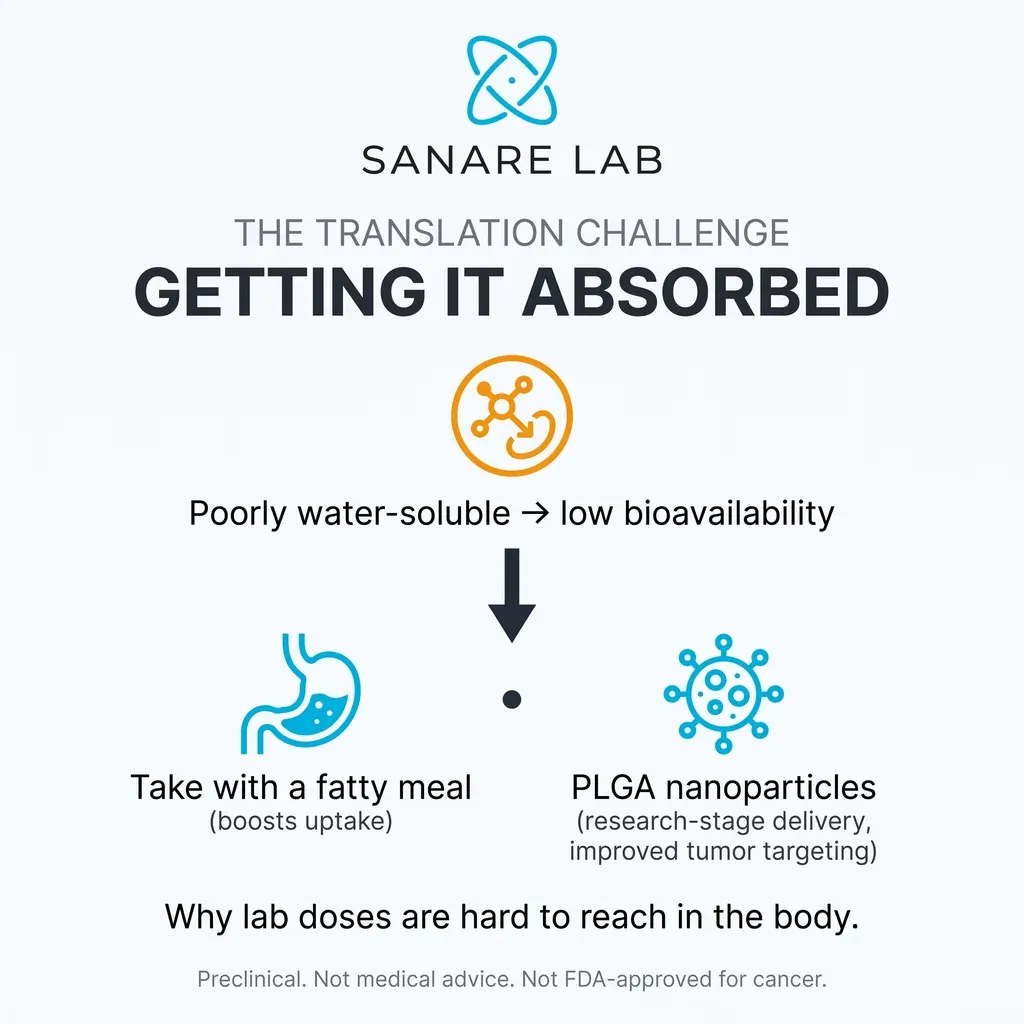
Why lab doses are hard to reach in the body — nanoparticles are a research-stage fix.
Nanoparticle Delivery Systems
A major limitation of benzimidazole anticancer use is poor bioavailability. For more details, see our guide on fenbendazole and breast cancer. To address this, researchers have developed nanoparticle formulations:
PLGA-FBZ (Poly(Lactic-Co-Glycolic Acid) Nanoparticles)
A 2023 study in International Journal of Pharmaceutics tested PLGA-encapsulated fenbendazole in ovarian cancer xenografts: Learn more about fenbendazole case reports showing remission.
Key insights:
- Nanoparticle formulation nearly tripled tumor growth inhibition compared to free FBZ
- Reduced hepatotoxicity (likely due to controlled release)
- Efficacy approaching standard paclitaxel
- Caveat: This is preclinical; human translation is distant
Combination Approaches
FBZ + Paclitaxel in Platinum-Resistant Disease
Theoretical rationale for combining FBZ with paclitaxel (Taxol) in PROC:
- Paclitaxel: Stabilizes microtubules (prevents depolymerization)
- FBZ: Destabilizes microtubules (prevents polymerization)
- Net effect: Opposite mechanisms targeting microtubule dynamics from different angles — potential for convergent pressure
Note: This has not been formally tested in ovarian cancer models. The logic is sound, but efficacy is unproven.
Ovarian Cancer Subtypes and the Molecular Landscape
"Ovarian cancer" is not one disease but an umbrella term for a group of malignancies that differ dramatically in their cell of origin, molecular drivers, natural history, and response to treatment. Understanding which subtype is involved is essential context for interpreting any research — including research on repurposed drugs such as fenbendazole — because a compound active against one subtype may be irrelevant to another.
The great majority of ovarian cancers are epithelial, and within that category high-grade serous ovarian carcinoma (HGSOC) is by far the most common and most lethal, accounting for roughly 70% of epithelial cases and the bulk of deaths. HGSOC is now understood to often arise not from the ovary itself but from the fimbrial end of the fallopian tube. Its defining molecular feature is a near-universal TP53 mutation — present in over 95% of cases — together with widespread genomic instability. A clinically crucial subset carries defects in the homologous recombination DNA-repair pathway, most famously germline or somatic BRCA1/BRCA2 mutations, which sensitize the tumor to platinum chemotherapy and to PARP inhibitors.
| Subtype | Approx. share | Key molecular features | Platinum sensitivity |
|---|---|---|---|
| High-grade serous (HGSOC) | ~70% | TP53 mutation ~universal; ~50% HRD; ~20% BRCA | Initially high; relapse common |
| Endometrioid | ~10% | PTEN, CTNNB1, ARID1A; often early stage | Generally good |
| Clear cell | ~5-10% | ARID1A, PIK3CA; linked to endometriosis | Relatively resistant |
| Mucinous | ~3% | KRAS mutations; often GI-like | Relatively resistant |
| Low-grade serous | ~5% | KRAS/BRAF/NRAS; indolent, hormone-driven | Low chemo sensitivity |
This heterogeneity matters when reading benzimidazole studies. Most preclinical work has used a handful of serous-derived cell lines — A2780, SKOV3, OVCAR-3, OVCAR-8 — that do not capture the full diversity of the disease. When a study reports activity against "ovarian cancer cells," it usually means a specific serous line under specific laboratory conditions, not the whole spectrum of tumors a woman might actually have.
How Platinum Resistance Develops
Platinum-based chemotherapy — carboplatin, usually paired with paclitaxel — remains the backbone of ovarian cancer treatment. Most women respond well initially, but the majority of those with advanced disease eventually relapse, and with each relapse the interval of benefit tends to shorten. When disease progresses within six months of completing platinum therapy, it is termed platinum-resistant ovarian cancer (PROC), a state associated with limited options and short progression-free survival.
Resistance is not a single switch but the sum of several overlapping adaptations. Tumors can enhance DNA-damage repair, effectively reversing the DNA crosslinks that platinum drugs create — this is why restoration of BRCA function through secondary "reversion" mutations is a well-documented resistance mechanism. They can reduce intracellular drug accumulation by downregulating copper transporters that import platinum or upregulating efflux pumps that expel it. They can detoxify the drug through elevated glutathione and metallothioneins, and they can evade apoptosis by rebalancing pro- and anti-survival signaling.
The therapeutic appeal of microtubule-targeting benzimidazoles in this setting rests on a simple logic: because their proposed mechanism (interfering with tubulin polymerization) is independent of the DNA-crosslinking pathway that platinum resistance is built around, they might in principle retain activity where platinum fails. Several laboratory studies support this idea in resistant cell lines. It is important to stress, however, that "retains activity in a dish" is a long way from "extends life in a patient" — the history of oncology is littered with compounds that cleared this bar in the laboratory and then failed in humans.
Standard of Care for Ovarian Cancer in 2026
Before considering any investigational compound, it is vital to understand what proven, guideline-endorsed treatment looks like today — because these are the therapies with demonstrated survival benefit that no unproven agent should displace. Frontline management of advanced epithelial ovarian cancer rests on two pillars: cytoreductive (debulking) surgery aiming for no visible residual disease, and platinum-taxane chemotherapy. The sequence of surgery and chemotherapy is individualized, with neoadjuvant chemotherapy used when upfront optimal debulking is not feasible.
What has transformed outcomes over the past decade is maintenance therapy — treatment given after response to chemotherapy to delay relapse. The two most important classes are anti-angiogenic therapy (bevacizumab) and, above all, PARP inhibitors.
| Therapy | Role | Evidence highlight |
|---|---|---|
| Cytoreductive surgery | Remove maximal tumor bulk | Complete resection is among the strongest prognostic factors |
| Carboplatin + paclitaxel | Frontline chemotherapy backbone | Decades of proven benefit; high initial response |
| Bevacizumab (anti-VEGF) | Concurrent + maintenance | Improves PFS, especially high-risk disease (GOG-0218, ICON7) |
| Olaparib (PARP inhibitor) | Maintenance, BRCA-mutated | SOLO-1: HR ~0.30 for progression; durable remissions |
| Niraparib (PARP inhibitor) | Maintenance, all-comers | PRIMA: PFS benefit regardless of HRD status |
| Mirvetuximab soravtansine | FRα-positive platinum-resistant | MIRASOL: median OS 16.5 vs 12.8 months |
The takeaway is that ovarian cancer treatment is now genuinely biomarker-driven and, for the right patient, offers durable remissions that were unimaginable a decade ago. Any decision to explore a repurposed drug should be made alongside — never instead of — this evidence-based framework, and in consultation with a gynecologic oncologist.
PARP Inhibitors and Homologous Recombination Deficiency
The single most important scientific advance in ovarian cancer this century is arguably the exploitation of homologous recombination deficiency (HRD) through PARP inhibition. The concept is elegant: cancer cells that already cannot repair DNA by the homologous recombination pathway (because of BRCA mutation or broader HRD) become critically dependent on a backup repair enzyme, PARP. Block PARP, and these cells accumulate unrepairable damage and die — a phenomenon called synthetic lethality. Normal cells, with intact repair, are relatively spared.
In the landmark SOLO-1 trial, maintenance olaparib in women with newly diagnosed BRCA-mutated advanced ovarian cancer produced a hazard ratio for progression of roughly 0.30 — a dramatic effect — with a substantial fraction of patients remaining progression-free for years. The PRIMA trial extended the benefit of niraparib maintenance to a broader population, showing improved progression-free survival even in patients without demonstrable HRD, though the magnitude of benefit was greatest in the HRD-positive group. Long-term follow-up of PRIMA reported a five-year progression-free survival of about 35% with niraparib versus 16% with placebo in the HRD population.
This matters to the fenbendazole conversation for two reasons. First, it shows what a proven repurposing-adjacent success looks like — rigorous randomized trials, biomarker selection, regulatory approval. Second, it underscores that patients with BRCA/HRD tumors have access to highly effective, life-extending therapy that should be prioritized. Genomic testing for BRCA and HRD status is now standard and should be performed in essentially every woman with epithelial ovarian cancer.
Targeted Delivery Already in the Clinic: Mirvetuximab Soravtansine
Much of the excitement around fenbendazole in ovarian cancer centers on nanoparticle delivery — the idea that clever packaging could overcome the drug's poor solubility and concentrate it in tumors. It is worth pausing to note that the targeted-delivery concept has already reached the ovarian cancer clinic, not with a repurposed anthelmintic but with a purpose-built antibody-drug conjugate (ADC), mirvetuximab soravtansine (Elahere).
This agent exploits the fact that many high-grade serous ovarian cancers overexpress folate receptor alpha (FRα) on their surface. Mirvetuximab is an antibody against FRα linked to a potent microtubule-disrupting payload (a maytansinoid, DM4). The antibody homes to FRα-positive tumor cells and delivers its toxic cargo directly inside them — precisely the "targeted, high-local-concentration, spare-healthy-tissue" principle that nanoparticle FBZ formulations aspire to.
In the phase III MIRASOL trial of 453 women with FRα-high, platinum-resistant high-grade serous ovarian cancer, mirvetuximab improved median overall survival to 16.5 months versus 12.8 months with investigator's-choice chemotherapy (hazard ratio ~0.67), with a higher response rate (42% vs 16%) and, notably, fewer severe hematologic toxicities — though it carries characteristic ocular side effects such as keratopathy and blurred vision. The lesson for readers exploring fenbendazole is instructive: targeted delivery of a microtubule poison to ovarian cancer is not science fiction; it is approved therapy. The difference is that mirvetuximab earned that status through rigorous randomized trials, which fenbendazole has never undergone.
Albendazole: The Most-Studied Benzimidazole in Ovarian Cancer
Among the benzimidazole family, it is actually albendazole — not fenbendazole — that has the deepest ovarian cancer research record, and its story offers a realistic preview of both the promise and the pitfalls of the class. Work led by Pourgholami and colleagues showed that albendazole not only disrupts tubulin and arrests cells in the G2/M phase, but also markedly reduces vascular endothelial growth factor (VEGF) secretion. In OVCAR-3 ovarian cancer xenograft models, albendazole potently suppressed the formation of malignant ascites — the fluid accumulation in the abdomen that causes so much suffering in advanced ovarian cancer — and reduced tumor burden.
Critically, albendazole progressed to a Phase I clinical trial in patients with advanced refractory cancer to establish a maximum tolerated dose. This trial confirmed that albendazole could lower circulating VEGF in patients, but it also revealed a dose-limiting toxicity: neutropenia (a drop in infection-fighting white cells), particularly in patients with impaired liver function that altered the drug's metabolism. This is a sobering and important data point — it demonstrates that benzimidazoles are not automatically "safe because they are old deworming drugs." At anticancer exposures, real toxicity emerged.
Because albendazole's aqueous solubility is extremely low (around 0.55 μg/mL), researchers developed albumin-bound nanoparticle formulations (nab-ABZ, and smaller 10 nm BSA-ABZ particles). In ovarian cancer cell lines (OVCAR-3, SKOV3) and xenografts, these nanoformulations improved cellular uptake, enhanced tumor and ascites suppression at lower doses, and reduced VEGF and SPARC expression. This body of work is the strongest real-world foundation for the "benzimidazole + nanoparticle" concept in ovarian cancer — and it still has not translated into an approved therapy, which tells you how difficult the path from encouraging preclinical data to clinical benefit truly is.
Mebendazole and the Reversal of Cisplatin Resistance
A second benzimidazole with meaningful ovarian data is mebendazole (MBZ). A 2021 study by Huang and colleagues, published in Aging, reported that mebendazole could re-sensitize cisplatin-resistant ovarian cancer cells (OVCAR-8CR and SKOV3CR) to platinum chemotherapy. Rather than acting purely through tubulin, the study implicated inhibition of multiple oncogenic signaling pathways.
Subsequent mechanistic work pointed to Girdin (CCDC88A) — an actin-binding protein and regulator of AKT signaling — as a key molecular target. Mebendazole appears to modulate a Girdin-mediated AKT/IKKα/β/NF-κB signaling axis, disrupting the migration, invasion, and colony formation of ovarian cancer cells. Molecular docking analyses suggest mebendazole binds stably to Girdin's catalytic domain, and combining mebendazole with Girdin silencing produced greater inhibition than either alone. Importantly, this activity appeared independent of p53 status — relevant because TP53 mutations are near-universal in high-grade serous disease.
Taken together, the mebendazole and albendazole literature suggests the benzimidazole scaffold has genuine, reproducible anticancer activity against ovarian cancer cells in the laboratory, through both microtubule-dependent and microtubule-independent mechanisms. Fenbendazole, being structurally related, is hypothesized to share some of these properties — but it has been studied far less in ovarian models specifically, and no member of the class has yet demonstrated a survival benefit in a randomized ovarian cancer trial.
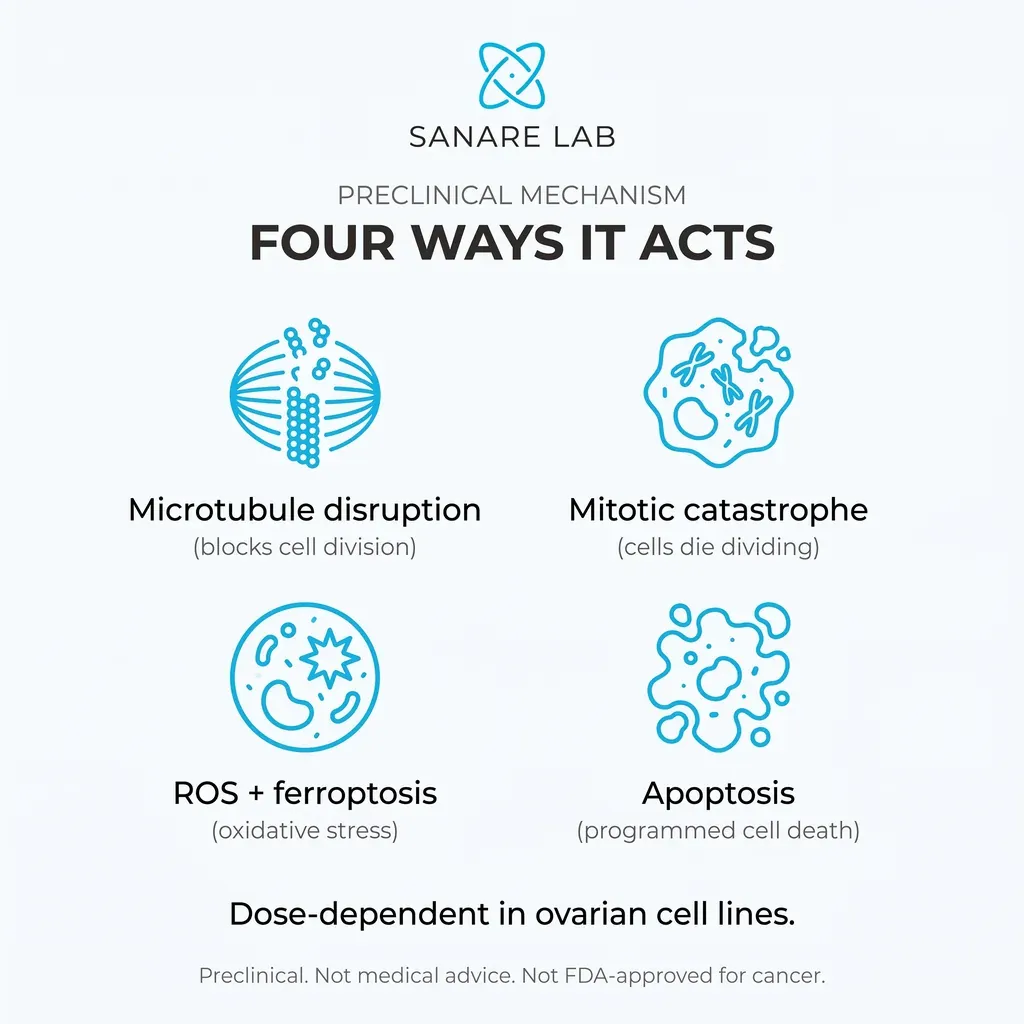
Four preclinical mechanisms — dose-dependent in ovarian cell lines.
Fenbendazole's Proposed Mechanisms in Ovarian Cancer
Where fenbendazole (FBZ) specifically has been examined, the proposed anticancer mechanisms mirror those described in other tumor types. The best-characterized is microtubule destabilization: like its relatives, FBZ binds β-tubulin at or near the colchicine site and interferes with the polymerization dynamics that cells depend on for mitosis and intracellular transport. The 2018 work by Dogra and colleagues in Scientific Reports established FBZ as a "moderate microtubule destabilizing agent" that triggers cancer cell death through several converging pathways.
Beyond tubulin, proposed contributions include interference with glucose uptake (through effects on GLUT transporters and hexokinase, potentially starving glycolysis-dependent tumor cells), reactivation of p53-dependent responses in some models, and generation of reactive oxygen species (ROS) that push stressed cancer cells toward apoptosis or other death pathways. In ovarian-relevant lines such as SKOV3, FBZ has shown activity consistent with microtubule disruption, though reported IC₅₀ values vary enormously between studies and laboratory conditions.
Two honest caveats deserve emphasis. First, many of these mechanisms were demonstrated at drug concentrations that are difficult to achieve in human blood given fenbendazole's poor oral bioavailability — which is precisely why the nanoparticle delivery research exists. Second, mechanistic plausibility in a cell line does not establish clinical efficacy; it establishes a hypothesis worth testing in properly designed studies. As of now, ovarian cancer research with fenbendazole specifically remains preclinical and, in places, frankly theoretical.
Advanced Nanoparticle and Peritoneal Delivery Strategies
Ovarian cancer is, in some respects, an ideal candidate for nanoparticle-based drug delivery, and understanding why helps put the fenbendazole nanoparticle research in context. Unlike many solid tumors, advanced ovarian cancer spreads primarily by seeding the peritoneal cavity rather than through distant blood-borne metastasis. This creates an opportunity for intraperitoneal (IP) delivery — administering drug directly into the abdominal cavity where the disease lives, achieving high local concentrations while limiting systemic exposure.
Nanoparticle platforms explored in ovarian cancer research include PLGA (poly-lactic-co-glycolic acid) particles, which provide controlled, sustained release and are biodegradable; liposomes, the technology behind approved pegylated liposomal doxorubicin (Doxil), a standard PROC chemotherapy; albumin-bound formulations as used for albendazole; and folate-targeted nanoparticles that, like mirvetuximab, exploit FRα overexpression to home to tumor cells. For a poorly soluble drug like fenbendazole, encapsulation can dramatically improve dispersion, protect the payload, prolong circulation, and — with targeting ligands — bias distribution toward tumor tissue.
The PLGA-fenbendazole xenograft data summarized earlier in this article fit squarely within this rationale: encapsulation nearly tripled tumor growth inhibition relative to free drug and reduced hepatotoxicity through controlled release. Yet every one of these platforms faces the same translational hurdles — reproducible manufacturing, stability, regulatory characterization, and demonstration of benefit in humans. Doxil and mirvetuximab crossed those hurdles through years of formal development. A nanoparticle fenbendazole product has not; it exists only in the laboratory.
Ascites and the Peritoneal Microenvironment
One of the most distressing features of advanced ovarian cancer is malignant ascites — the accumulation of fluid in the abdominal cavity that causes bloating, pain, breathlessness, and reduced appetite, and that often signals aggressive disease. Ascites is not merely a symptom; it is a biologically active tumor microenvironment, rich in VEGF-driven vascular leakiness, immunosuppressive cells, growth factors, and free-floating tumor spheroids that reseed the peritoneal surfaces.
This is why the albendazole ascites data are so scientifically interesting: by suppressing VEGF, the drug targeted a driver of ascites formation directly, and preclinical models showed reduced fluid accumulation. It is also why anti-angiogenic bevacizumab has an established role in ovarian cancer management. Any benzimidazole effect on VEGF and the peritoneal microenvironment is therefore mechanistically relevant — but, again, the human evidence bar has been cleared by bevacizumab through randomized trials, not by anthelmintics.
For patients living with ascites today, evidence-based management — therapeutic paracentesis for symptom relief, optimization of systemic anticancer therapy, and in selected cases indwelling catheters — remains the appropriate path. These measurably improve comfort and quality of life. Speculative agents should never delay access to these established supportive measures.
Other Repurposed Drugs Under Study in Ovarian Cancer
Fenbendazole is only one of many existing drugs that laboratory researchers have examined for possible anti-ovarian-cancer activity. Placing it alongside its peers gives a more honest sense of where it sits in the repurposing landscape.
| Drug | Original use | Proposed ovarian relevance | Evidence level |
|---|---|---|---|
| Metformin | Type 2 diabetes | AMPK/mTOR modulation; epidemiologic associations | Observational + early trials; mixed |
| Statins | Cholesterol | Mevalonate pathway inhibition; pro-apoptotic signals | Preclinical + observational |
| Itraconazole | Antifungal | Anti-angiogenic, Hedgehog pathway inhibition | Early-phase signals |
| Albendazole | Anthelmintic | VEGF suppression, ascites reduction | Phase I completed; toxicity seen |
| Mebendazole | Anthelmintic | Reverses cisplatin resistance (Girdin/AKT) | Preclinical, reproducible |
| Fenbendazole | Veterinary anthelmintic | Microtubule disruption; nanoparticle delivery | Preclinical only; sparse ovarian data |
The pattern is consistent across the field: a great deal of encouraging laboratory and observational data, a handful of agents advancing to early clinical trials, and — so far — none of the repurposed anthelmintics achieving the randomized-trial validation that PARP inhibitors, bevacizumab, and mirvetuximab have earned. This is not a reason for cynicism; drug repurposing has produced genuine successes. It is a reason for calibrated expectations and for insisting that hope be paired with honest evidence.
Diet, Lifestyle and Supportive Care
Whatever a woman decides about investigational compounds, the modifiable and supportive-care dimensions of ovarian cancer deserve serious attention, because several are supported by real evidence and materially affect wellbeing. Nutritional status is a genuine concern in ovarian cancer, where ascites, bowel involvement, and treatment side effects frequently impair appetite and cause weight and muscle loss; proactive dietitian involvement to maintain protein and calorie intake is valuable. Physical activity, adapted to individual capacity, helps counter treatment-related fatigue and preserve function.
Venous thromboembolism (blood clots) is notably common in ovarian cancer, and awareness of symptoms plus appropriate prophylaxis is an important, evidence-based safety measure. Attention to bowel function, pain control, and psychological support (anxiety and depression are common and treatable) rounds out comprehensive care.
Where caution is essential is with supplements taken alongside active treatment. Many botanicals and high-dose antioxidants can interact with chemotherapy, PARP inhibitors, or anti-angiogenics — sometimes through shared liver enzymes (CYP3A4), sometimes by theoretically blunting therapies that depend on oxidative stress or DNA damage. This is exactly why any supplement, including fenbendazole and co-administered products, should be disclosed to the oncology team and pharmacist. Transparency enables real interaction checking and liver-function monitoring, converting guesswork into managed risk.
The Clinical Trial Landscape
There is currently no registered human clinical trial of fenbendazole for ovarian cancer, so the honest answer to "where can I enroll?" is that no such fenbendazole trial exists. The broader ovarian cancer trial landscape, however, is exceptionally active — arguably one of the most dynamic in oncology — and enrolling in a well-designed trial is often the fastest legitimate route to promising new therapy.
Active and emerging directions include next-generation antibody-drug conjugates beyond mirvetuximab (targeting NaPi2b, mesothelin, and other antigens), PARP-inhibitor combinations with immunotherapy or anti-angiogenics, bispecific antibodies and cellular therapies, and biomarker-selected precision approaches. The authoritative registry is ClinicalTrials.gov, mirrored by the WHO ICTRP and the EU Clinical Trials Register. When evaluating a trial, patients should clarify the phase and what it is designed to measure, whether randomization involves a placebo or standard-therapy control arm, the biomarker eligibility (BRCA, HRD, FRα status), and the practical burden of visits and monitoring.
A clinical trial is also precisely the setting in which a repurposed drug such as fenbendazole should be tested — under monitoring, with defined endpoints and informed consent — rather than self-administered without oversight. A gynecologic oncologist or a hospital clinical-trial navigator can help match a woman's subtype, genomic profile, and treatment history to appropriate studies.
Symptoms, Diagnosis and the CA-125 Story
Ovarian cancer has earned the unfortunate nickname "the disease that whispers," because its early symptoms are vague and easily attributed to more benign causes. Persistent bloating, early satiety (feeling full quickly), pelvic or abdominal discomfort, and urinary urgency or frequency are the classic quartet. Individually these are extremely common and usually harmless; the concerning pattern is when they are new, persistent, and frequent — occurring most days for more than a few weeks — in a woman who does not usually experience them. This subtlety is a major reason roughly three-quarters of epithelial ovarian cancers are diagnosed at an advanced stage, when disease has already spread within the abdomen.
Diagnostic evaluation typically combines a pelvic examination, transvaginal ultrasound, and the blood biomarker CA-125, often supplemented by CT imaging and, increasingly, the HE4 marker and the ROMA or RMI risk indices. CA-125 deserves careful explanation because it is so often misunderstood. It is a protein that can be elevated in ovarian cancer, but it is neither perfectly sensitive nor specific: it can be normal in early or mucinous cancers and elevated in many benign conditions — endometriosis, fibroids, menstruation, pregnancy, pelvic inflammation, even ordinary peritoneal irritation. For this reason, CA-125 is not a validated screening test for the general population; large trials of CA-125-based screening have failed to demonstrate a clear reduction in ovarian cancer mortality.
Where CA-125 genuinely shines is in monitoring known disease: tracking its trend during and after treatment provides a useful (if imperfect) readout of response and relapse. This is directly relevant to anyone exploring repurposed compounds, because a falling CA-125 during conventional therapy should not be misattributed to a simultaneously-taken supplement, and a rising CA-125 is a signal to seek prompt medical review rather than to intensify self-treatment. Definitive diagnosis ultimately rests on tissue — obtained at surgery or biopsy — with histology and molecular profiling defining the subtype and the treatment path.
Hereditary Risk and Genetic Counseling
Perhaps no area of ovarian cancer has more actionable implications than hereditary risk. Around one in five high-grade serous ovarian cancers is associated with a germline (inherited) mutation, most commonly in BRCA1 or BRCA2, and a smaller share with the mismatch-repair genes of Lynch syndrome or with other homologous-recombination genes such as RAD51C/D, BRIP1, and PALB2. Identifying these mutations does far more than satisfy scientific curiosity — it reshapes treatment, prognosis, and the health of an entire family.
For the patient, a BRCA or HRD-associated tumor typically means greater sensitivity to platinum chemotherapy and eligibility for PARP-inhibitor maintenance, with its potential for durable remission. For blood relatives, a confirmed familial mutation opens the door to cascade testing, allowing unaffected carriers to make informed decisions about heightened surveillance and, crucially, risk-reducing salpingo-oophorectomy (removal of the tubes and ovaries), which substantially lowers ovarian cancer risk in high-risk women and is one of the few genuinely preventive interventions in oncology.
Modern guidelines therefore recommend that essentially every woman diagnosed with epithelial ovarian cancer be offered genetic counseling and germline testing, alongside tumor (somatic) testing for HRD. This is a concrete, evidence-based action with proven benefit — a striking contrast to speculative self-directed use of unproven compounds. Any reader weighing where to invest energy and hope would be far better served ensuring that they and their family have had appropriate genetic evaluation than betting on an untested capsule.
Immunotherapy in Ovarian Cancer: A Reality Check
Given the transformative impact of immune checkpoint inhibitors in melanoma and lung cancer, many patients ask why immunotherapy has not revolutionized ovarian cancer. The honest answer is that ovarian cancer has largely proven to be an immunologically "cold" tumor. Despite some tumor-infiltrating lymphocytes correlating with better prognosis, single-agent checkpoint inhibitors such as pembrolizumab and nivolumab have produced disappointing response rates in unselected ovarian cancer, and several large combination trials have not met their survival endpoints.
The reasons are instructive. Ovarian cancer generally carries a modest mutational burden, giving the immune system fewer neoantigens to recognize; the tumor microenvironment — particularly the ascitic fluid — is richly immunosuppressive, populated by regulatory T cells, myeloid-derived suppressor cells, and inhibitory cytokines; and the physical barriers of peritoneal spread complicate immune access. Meaningful checkpoint-inhibitor benefit is largely confined to the small subset of tumors that are mismatch-repair deficient (dMMR) or MSI-high, which is why microsatellite testing is worthwhile.
This context matters for the fenbendazole discussion because online claims sometimes invoke a vague "immune-boosting" rationale for benzimidazoles. While preclinical work on related compounds has explored effects on macrophage polarization and immune signaling, there is no human evidence that fenbendazole meaningfully engages anti-tumor immunity in ovarian cancer. The most rigorously pursued immune strategies today are next-generation approaches — bispecific antibodies, engineered cellular therapies, and combinations designed specifically to "heat up" cold tumors — being tested in formal clinical trials.
Fenbendazole: Dosing Realities and Safety Monitoring
Because some readers will explore fenbendazole regardless of the limited evidence, responsible harm-reduction information is warranted — framed clearly around safety, not endorsement. The regimens circulating in patient communities (often derived from the widely publicized "Joe Tippens protocol") typically involve intermittent dosing of fenbendazole alongside supplements such as curcumin, vitamin E, and CBD. It is essential to understand that these regimens are anecdotal, were never designed through formal dose-finding studies, and carry no assurance of either efficacy or safety in ovarian cancer.
The most important safety consideration is the liver. Benzimidazoles are metabolized hepatically, and case reports have documented drug-induced liver injury with fenbendazole taken at supraphysiologic doses for cancer, including in patients concurrently receiving other therapies. The albendazole Phase I experience additionally flags bone-marrow suppression (neutropenia) as a real risk of the class at anticancer exposures. Anyone using fenbendazole should therefore have baseline and periodic liver function tests and a complete blood count, and should stop and seek medical care promptly if they develop jaundice, dark urine, right-upper-quadrant pain, unusual fatigue, fever, or signs of infection.
Equally important are drug interactions. Fenbendazole and co-administered supplements can influence the same cytochrome-P450 enzymes (especially CYP3A4) that metabolize many ovarian cancer therapies, including PARP inhibitors and taxanes, potentially altering their levels and effects. High-dose antioxidants may theoretically interfere with treatments that depend on oxidative stress or DNA damage. For all these reasons, the single most protective step a patient can take is full disclosure to their oncology team and pharmacist, enabling genuine interaction checking and monitoring rather than silent, unsupervised use. Fenbendazole should never be a reason to delay, reduce, or abandon proven therapy.
Survivorship and Quality of Life
Advances in maintenance therapy mean that a growing number of women are living longer with ovarian cancer, often experiencing it as a chronic, relapsing condition rather than an acute event. This makes survivorship and quality of life central rather than peripheral concerns. The long treatment journey — surgery, chemotherapy, and prolonged maintenance — carries cumulative physical and emotional costs that deserve deliberate attention.
Common survivorship issues include chemotherapy-induced peripheral neuropathy (particularly from taxanes), fatigue, the effects of surgical menopause in younger women (hot flashes, bone-density loss, sexual health changes), bowel and bladder symptoms, and the psychological weight of living with recurrence risk. Each of these has evidence-informed management strategies — from exercise and physiotherapy for neuropathy and fatigue, to bone-health monitoring, to specialized menopause and sexual-health support, to psycho-oncology services for anxiety and depression, which are common and eminently treatable.
An honest, patient-centered article should acknowledge why unproven remedies hold such appeal in this context: the fear of recurrence, the desire for agency, and the wish to "leave no stone unturned" are entirely understandable human responses. The constructive channel for that energy is a combination of rigorous adherence to proven care, engagement with clinical trials, attention to the modifiable factors and supportive measures that genuinely improve wellbeing, and open dialogue with a trusted oncology team about any complementary approaches being considered. Hope and evidence are not opponents; the best outcomes come from holding both together.
Second-Line and Platinum-Resistant Treatment Options
For women whose disease becomes platinum-resistant, treatment shifts from cure-oriented to disease-control and quality-of-life goals, but meaningful, evidence-based options remain — and understanding them underscores why unproven agents should not displace them. Sequential single-agent chemotherapies form the backbone, chosen to balance efficacy against cumulative toxicity and patient preference.
| Option | Mechanism | Typical role in PROC |
|---|---|---|
| Pegylated liposomal doxorubicin | Liposome-delivered anthracycline | Common single agent; nanoparticle delivery already proven |
| Weekly paclitaxel | Microtubule stabilizer | Active, often combined with bevacizumab |
| Topotecan | Topoisomerase I inhibitor | Established single-agent option |
| Gemcitabine | Antimetabolite | Alternative single agent |
| Bevacizumab (added to chemo) | Anti-VEGF | Improves PFS in PROC (AURELIA trial) |
| Mirvetuximab soravtansine | FRα antibody-drug conjugate | OS benefit in FRα-high disease (MIRASOL) |
The AURELIA trial demonstrated that adding bevacizumab to single-agent chemotherapy improves progression-free survival in platinum-resistant disease, and mirvetuximab has now established an overall-survival benefit for the FRα-high subset. These are real, guideline-supported choices with demonstrated benefit. A repurposed compound like fenbendazole has no comparable evidence in this setting, which is precisely why it belongs in a clinical trial rather than as a substitute for the options above.
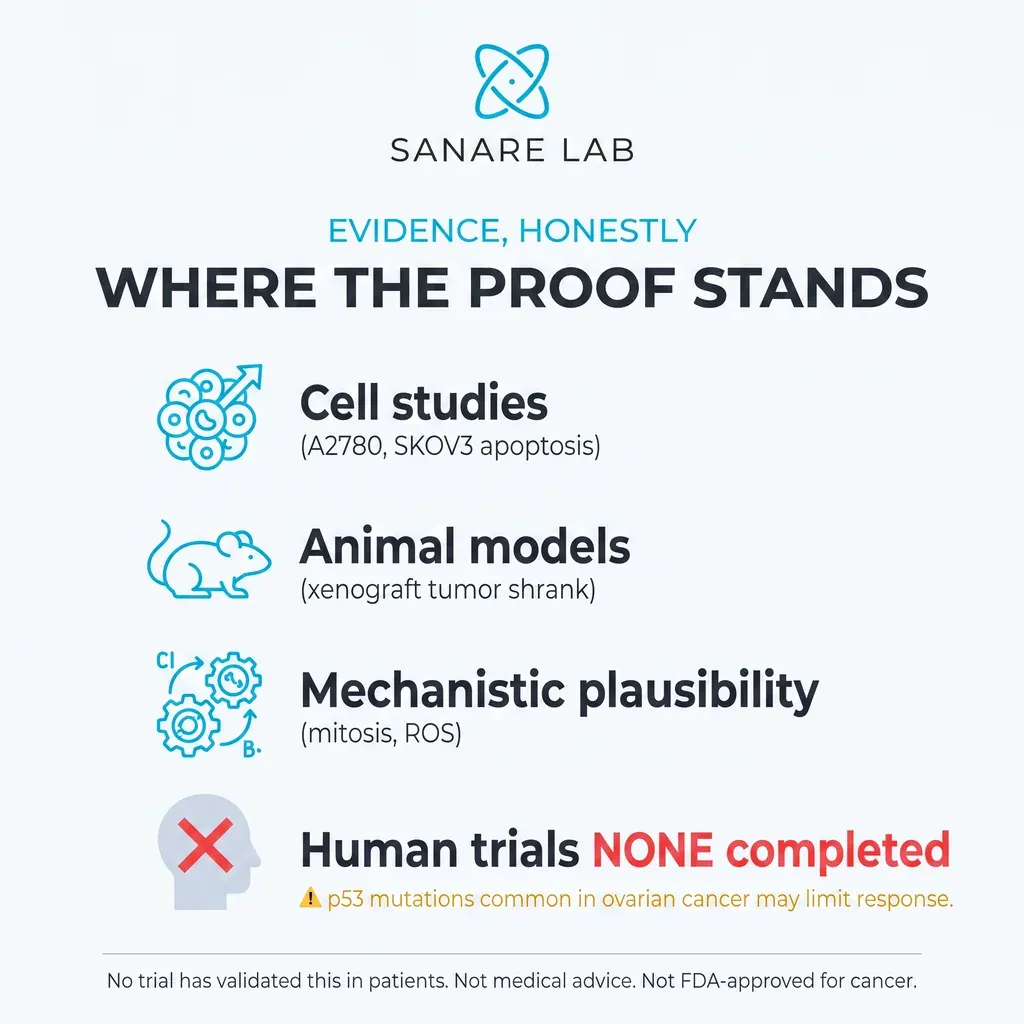
Where the proof stands — no trial has validated this in patients.
What the Evidence Does NOT Show
In the interest of intellectual honesty — the foundation of trustworthy health information — it is worth stating plainly what the current fenbendazole ovarian cancer evidence does not establish:
- It does not show that fenbendazole cures, treats, or shrinks ovarian cancer in humans. There are no human clinical trials and no reliable human efficacy data specific to ovarian cancer.
- It does not show that fenbendazole is a substitute for surgery, platinum-taxane chemotherapy, PARP inhibitors, bevacizumab, or mirvetuximab — all of which have proven, guideline-endorsed benefit.
- It does not establish a safe or effective human anticancer dose. The albendazole Phase I experience — with dose-limiting neutropenia — is a direct warning that benzimidazoles at anticancer exposures can cause real harm.
- It does not show that nanoparticle fenbendazole is available or validated for patients; those formulations remain experimental laboratory constructs.
- It does not support delaying or forgoing evidence-based care in favor of self-administered fenbendazole, which could cost precious time in a disease where early, optimal treatment strongly influences outcome.
The appropriate framing is that fenbendazole and its benzimidazole relatives represent a scientifically interesting hypothesis in ovarian cancer — worthy of formal study — not a treatment. Women facing this disease deserve both hope and honesty, and honesty means anchoring decisions in the therapies that have actually been shown to help while remaining open to what rigorous future research may reveal.
What People Report Online: Ovarian Cancer
Behind the laboratory papers sits a large, restless online conversation. On Reddit and patient forums, people living with ovarian cancer — and the relatives caring for them — trade experiences with fenbendazole, usually following some version of the Joe Tippens protocol. To save you from digging through dozens of scattered threads, we have gathered the most relevant, on-topic discussions in one place, together with an honest guide to what these accounts can and cannot tell you.
How to read these reports
These are personal stories, not clinical evidence. They are uncontrolled, self-reported, and impossible to verify independently.
In almost every account, the person was also receiving standard treatment — chemotherapy, immunotherapy, radiotherapy, or surgery — at the same time as fenbendazole. When someone improves on two therapies at once, the result cannot be credited to fenbendazole alone; the conventional treatment is the far more likely explanation.
Encouraging stories are also shared far more often than disappointing ones, so online threads skew positive (survivorship and publication bias).
The useful way to read them is as questions worth raising with your oncologist — not as a protocol to copy on your own.
For a deeper, evidence-based look at how these accounts hold up — including the documented case reports and the peer-reviewed analyses behind them — see our detailed review of fenbendazole success stories and case reports.
Frequently Asked Questions
Is fenbendazole effective for ovarian cancer?
Preclinical evidence exists, but is more limited than for other cancers (lung, prostate, GBM). FBZ shows activity in ovarian cancer cell lines and nanoparticle formulations show promise in xenografts. However, no human clinical data exist. Ovarian cancer research with FBZ is largely theoretical at this stage.
Does fenbendazole work for platinum-resistant ovarian cancer specifically?
Preclinical studies suggest benzimidazoles retain activity in platinum-resistant ovarian cancer cell lines, which is promising. The mechanism (microtubule disruption) is independent of platinum-based DNA-crosslinking. However, this has not been tested in humans with PROC.
What is the significance of nanoparticle delivery for ovarian cancer?
Nanoparticles enhance drug bioavailability, reduce systemic toxicity, and can potentially target tumors selectively. PLGA-encapsulated FBZ showed superior efficacy to free FBZ in mice. However, nanoparticle formulations remain largely experimental and are not clinically available yet.
Which ovarian cancer subtype is most studied with benzimidazoles?
Most laboratory work uses high-grade serous-derived cell lines (A2780, SKOV3, OVCAR-3, OVCAR-8). High-grade serous carcinoma is the most common and lethal epithelial subtype, but it is only one of several. Findings in these lines do not necessarily apply to clear cell, mucinous, endometrioid, or low-grade serous cancers, which have distinct biology.
Is albendazole better studied than fenbendazole in ovarian cancer?
Yes. Albendazole has the deepest ovarian cancer research record of the benzimidazoles, including work on VEGF suppression and ascites reduction and a completed Phase I trial in advanced cancer. That trial also revealed dose-limiting neutropenia, an important safety signal. Fenbendazole has been studied far less in ovarian models specifically.
What is folate receptor alpha (FRα) and why does it matter?
FRα is a protein overexpressed on many high-grade serous ovarian cancers. It is the target of mirvetuximab soravtansine (Elahere), an approved antibody-drug conjugate that delivers a microtubule-disrupting payload directly to FRα-positive tumor cells. This is targeted delivery of a tubulin poison to ovarian cancer that is already proven and approved — unlike experimental nanoparticle fenbendazole.
Can fenbendazole overcome platinum resistance?
The hypothesis is that because benzimidazoles act on microtubules rather than DNA crosslinking, they might retain activity where platinum fails. Cell-line studies (mainly with mebendazole and albendazole) support this idea in the laboratory. However, "active in a dish" is not "extends survival in patients," and this has never been demonstrated in a human ovarian cancer trial.
What are PARP inhibitors, and should I be tested for BRCA/HRD?
PARP inhibitors (olaparib, niraparib, rucaparib) exploit synthetic lethality in tumors with defective DNA repair. In BRCA-mutated and HRD-positive ovarian cancer they can produce durable remissions (SOLO-1, PRIMA). Essentially every woman with epithelial ovarian cancer should have BRCA and HRD testing, because it directly guides access to these highly effective, life-extending therapies.
Why are nanoparticles especially relevant to ovarian cancer?
Ovarian cancer spreads mainly within the peritoneal cavity rather than through distant blood-borne metastasis, which creates an opportunity for intraperitoneal delivery and for tumor-targeted nanoparticles. Approved examples using related principles include pegylated liposomal doxorubicin and the ADC mirvetuximab. Nanoparticle fenbendazole, by contrast, remains an unvalidated laboratory construct.
Is fenbendazole safe just because it is a deworming drug?
Not necessarily at anticancer exposures. The albendazole Phase I trial showed dose-limiting neutropenia, especially with impaired liver function. Benzimidazoles taken at doses and durations far beyond their antiparasitic use can cause real toxicity, including bone-marrow and liver effects. Routine bloodwork and physician oversight are essential for anyone using them.
Can fenbendazole help with malignant ascites?
Albendazole reduced ascites in preclinical ovarian models by suppressing VEGF, and this is mechanistically interesting. However, there is no human evidence that fenbendazole controls ascites. Proven management includes therapeutic paracentesis, optimized systemic therapy, and in selected cases indwelling catheters — these should not be delayed for speculative agents.
Should I take fenbendazole alongside chemotherapy or a PARP inhibitor?
Do not do so without disclosing it to your oncology team. Supplements and repurposed drugs can interact with chemotherapy, PARP inhibitors, and anti-angiogenics through shared liver enzymes or by theoretically blunting therapies that rely on DNA damage or oxidative stress. Transparency allows real interaction checking and liver-function monitoring.
What should I prioritize if I have ovarian cancer?
Prioritize evidence-based care: cytoreductive surgery, platinum-taxane chemotherapy, appropriate maintenance therapy (PARP inhibitor and/or bevacizumab), BRCA/HRD and FRα testing, and consideration of clinical trials. Discuss any interest in repurposed drugs openly with your gynecologic oncologist so that curiosity never displaces treatments proven to extend life.
Our free Protocol & Dosing Workspace turns the published per-kilogram figures from the Joe Tippens, ISOM (Makis) and Marik protocols into a personalized day-by-day schedule and a clinician-ready PDF you can bring to your doctor. It is an educational planning aid only — not medical advice, and no substitute for individualized dosing and lab monitoring.
Open the Dosing Calculator →Shop Sanare Lab
Lab-tested products referenced in the research above. Links are provided for convenience — always review the label and consult a professional before use.
180 capsules — 99% purity, laboratory tested
180 capsules — higher-dose option
120 capsules — with Black Pepper for absorption
Disclaimer: Links are informational and for convenience. This site does not provide medical advice and does not endorse any specific vendor. Always verify product quality, labeling, and consult a licensed professional for health decisions.
References
- Dogra N, Kumar A, Mukhopadhyay T. Fenbendazole acts as a moderate microtubule destabilizing agent and causes cancer cell death by modulating multiple cellular pathways. Sci Rep, 2018. PMID: 30093705. PubMed
- Song B, Park EY, Kim KJ, Ki SH. Repurposing of benzimidazole anthelmintic drugs as cancer therapeutics. Cancers, 2022. PMID: 35884373. PubMed
- Florio R, Mortimer L, Salomone F et al.. Repurposing veterinary drugs for human cancers: a systematic review of preclinical studies. Drug Discov Today, 2023. PMID: 36878395. PubMed
- Bai RY, Staedtke V, Aprhys CM et al.. Antiparasitic mebendazole shows survival benefit in 2 preclinical models of glioblastoma multiforme. Neuro Oncol, 2011. PMID: 21764822. PubMed
- Duan Q, Liu Y, Bhattacharya S. Fenbendazole as a potential anticancer drug. Anticancer Res, 2013. PMID: 23482766. PubMed
- Mrkvová Z, Uldrijan S, Pombinho A et al.. Benzimidazoles downregulate Mdm2 and MdmX and activate p53 in MdmX overexpressing tumor cells. Molecules, 2019. PMID: 31671553. PubMed
- Park D, Lee JH, Yoon SP. Anti-cancer effects of fenbendazole on 5-fluorouracil-resistant colorectal cancer cells. Korean J Parasitol, 2022. PMID: 36041488. PubMed
- Cáñez-González KE, García-Saucedo BN, Enciso-Benavides J et al.. Evaluation of fenbendazole as an anticancer agent in tumor-bearing mice. J Cancer Res Ther, 2023. PMID: 38047367. PubMed
- Chu SW, Badar S, Morris DL, Pourgholami MH. Potent inhibition of tubulin polymerisation and proliferation of paclitaxel-resistant 1A9PTX22 human ovarian cancer cells by albendazole. Anticancer Res, 2009. PMID: 19528482. PubMed
- Nygren P, Larsson R. Drug repositioning from bench to bedside: tumour remission by the antihelmintic drug mebendazole in refractory metastatic colon cancer. Acta Oncol, 2014. PMID: 24160353. PubMed
- Huang L, Zhao L, Zhang J et al.. Antiparasitic mebendazole (MBZ) effectively overcomes cisplatin resistance in human ovarian cancer cells by inhibiting multiple cancer-associated signaling pathways. Aging, 2021. PMID: 33495418. PubMed
- Guerini AE, Triggiani L, Maddalo M et al.. Mebendazole as a candidate for drug repurposing in oncology: an extensive review of current literature. Cancers, 2019. PMID: 31540055. PubMed
- Son DS, Lee ES, Bhatt SE. Fenbendazole induces apoptosis of HL-60 cells by disrupting the integrity of the tubulin-microtubule system. Korean J Parasitol, 2020. PMID: 33227869. PubMed
- Moore KN, Angelergues A, Konecny GE, et al. Mirvetuximab Soravtansine in FRα-Positive, Platinum-Resistant Ovarian Cancer (MIRASOL). N Engl J Med, 2023. PMID: 38055253. PubMed
- Pourgholami MH, Woon L, Almajd R, et al. In vitro and in vivo suppression of growth of hepatocellular carcinoma cells by albendazole. Cancer Lett, 2001. Source
- Pourgholami MH, Cai ZY, Badar S, et al. Potent inhibition of tumoral angiogenesis and ascites by albendazole in OVCAR-3 ovarian xenografts. Clin Cancer Res, 2006. Source
- Pourgholami MH, Szwajcer M, Chin M, et al. Phase I clinical trial to determine maximum tolerated dose of oral albendazole in patients with advanced cancer. Cancer Chemother Pharmacol, 2010. Source
- Noorani L, Stenzel M, Liang R, et al. Albumin nanoparticles increase the anticancer efficacy of albendazole in ovarian cancer xenograft model. J Nanobiotechnology, 2015. Source
- Huang L, Zhao L, Zhang J, et al. Antiparasitic mebendazole (MBZ) effectively overcomes cisplatin resistance in human ovarian cancer cells by inhibiting multiple cancer-associated signaling pathways. Aging (Albany NY), 2021. PMID: 33495418. PubMed
- Ray-Coquard I, Pautier P, Pignata S, et al. Olaparib plus Bevacizumab as First-Line Maintenance in Ovarian Cancer (PAOLA-1). N Engl J Med, 2019. PMID: 31851799. PubMed
- González-Martín A, Pothuri B, Vergote I, et al. Niraparib in Patients with Newly Diagnosed Advanced Ovarian Cancer (PRIMA/ENGOT-OV26/GOG-3012). N Engl J Med, 2019. PMID: 31562799. PubMed
- Moore K, Colombo N, Scambia G, et al. Maintenance Olaparib in Patients with Newly Diagnosed Advanced Ovarian Cancer (SOLO-1). N Engl J Med, 2018. PMID: 30345884. PubMed
- Burger RA, Brady MF, Bookman MA, et al. Incorporation of Bevacizumab in the Primary Treatment of Ovarian Cancer (GOG-0218). N Engl J Med, 2011. PMID: 22204724. PubMed
Medical Disclaimer
This article is for educational and informational purposes only. It is not intended to be a substitute for professional medical advice, diagnosis, or treatment. Always seek the advice of your physician or other qualified health provider with any questions you may have regarding a medical condition. Never disregard professional medical advice or delay in seeking it because of something you have read on this website.

Dr. Andrew Ellison, MD
Science editor and health researcher at Sanare Lab, covering evidence-based wellness, emerging compound research, clinical studies, and practical health protocols. Content is educational and does not replace medical advice.