
Fenbendazole for Melanoma: Preclinical Evidence, Case Reports and What We Know (2026)
Can fenbendazole fight melanoma? We review the preclinical evidence, mechanisms of action, and what the current cancer research actually shows.
 By Sanare Lab · July 29, 2026 · 17 min read
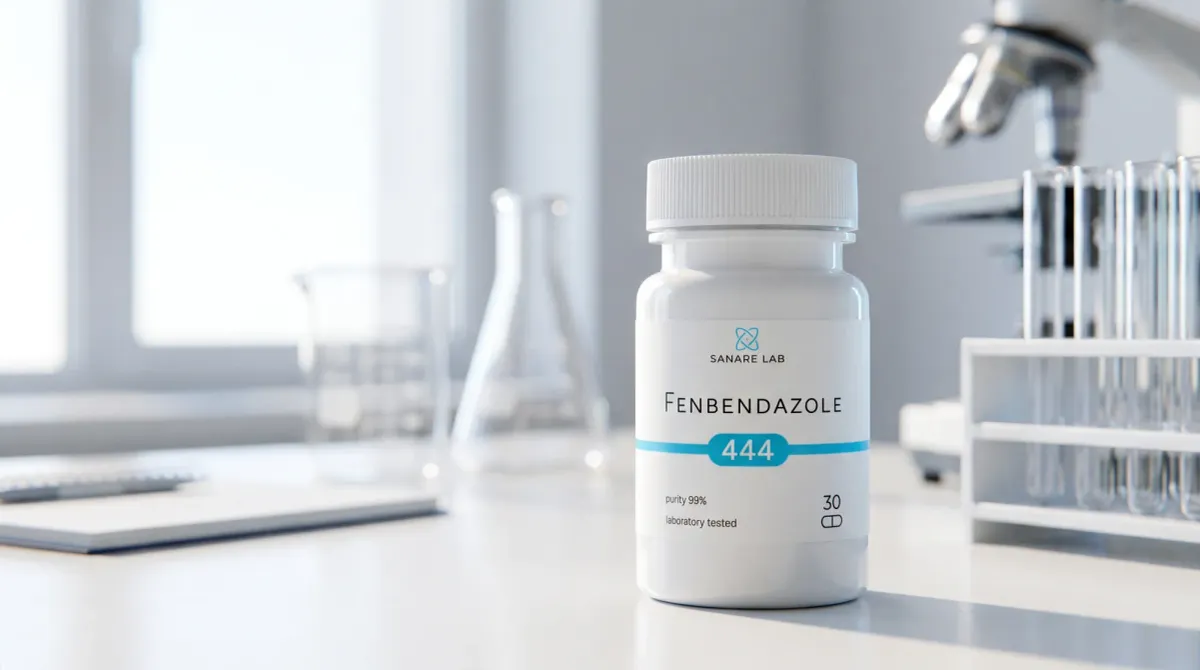
This article is for research and informational purposes only. It does not constitute medical advice. Do not self-prescribe. Always consult a qualified healthcare provider before using any supplement, especially alongside cancer treatment.
Key Takeaway
Fenbendazole has shown activity against melanoma cells in laboratory studies — disrupting microtubules, triggering mitotic catastrophe, and inducing apoptosis even in chemoresistant lines. A small number of human case reports describe tumor regression in patients who also received immunotherapy or surgery, but no controlled clinical trial has isolated fenbendazole's contribution. The evidence is preclinical and anecdotal; melanoma patients should prioritize proven immunotherapy and targeted therapy under oncologist supervision.
Dr. Andrew Ellison — MD
Last reviewed: July 2026
Melanoma is the most aggressive form of skin cancer. When caught early it is highly curable, but metastatic melanoma has historically been one of the hardest cancers to treat. Over the past decade, immune checkpoint inhibitors (anti-PD-1 and anti-CTLA-4 antibodies) and BRAF/MEK-targeted therapies have transformed survival rates — yet a substantial fraction of patients still develop resistance and progress.
Against that backdrop, fenbendazole — a veterinary benzimidazole dewormer — has attracted attention in the repurposed-drug community. The interest is driven by laboratory data showing activity against melanoma cell lines and by a handful of publicized case reports in which melanoma patients used fenbendazole alongside standard treatment. This article examines all of that evidence honestly: what the preclinical work actually shows, what the case reports can and cannot tell us, and where the critical gaps remain.
Throughout, three facts apply. First, fenbendazole is not approved for treating cancer in humans anywhere in the world. Second, every published human melanoma case involved concurrent standard-of-care therapy, making it impossible to credit fenbendazole alone for any observed remission. Third, melanoma today has genuinely effective treatments — immunotherapy response rates of 40–60% — and replacing or delaying them in favor of an unproven veterinary drug carries real risk.
Table of Contents
- How Fenbendazole Is Thought to Work Against Melanoma
- Preclinical Evidence: Fenbendazole and Melanoma Cell Lines
- Why BRAF and NRAS Status Matters
- Human Case Reports: What Has Been Published
- Fenbendazole and Melanoma Immunotherapy: Could They Interact?
- Mebendazole vs Fenbendazole in Melanoma Research
- Safety, Dosage, and Liver Monitoring
- Evidence Summary by Melanoma Subtype
- What Is Still Missing
- The Bottom Line
- What People Report Online: Melanoma and Skin Cancer
- Frequently Asked Questions
- References and Further Reading
How Fenbendazole Is Thought to Work Against Melanoma
Fenbendazole belongs to the benzimidazole class of drugs. Its primary mechanism is binding to β-tubulin and destabilizing microtubules — the structural scaffolding that cells need to divide. When microtubules are disrupted in a dividing cancer cell, the cell can arrest at the G2/M checkpoint, undergo mitotic catastrophe, and ultimately die (PMID 30093705).
This mechanism overlaps with taxane chemotherapy drugs (paclitaxel, docetaxel), which also target microtubules — though taxanes stabilize them while fenbendazole destabilizes them. The overlap matters because melanoma has historically been considered chemoresistant, and some researchers have asked whether a destabilizing agent might succeed where stabilizing agents did not.
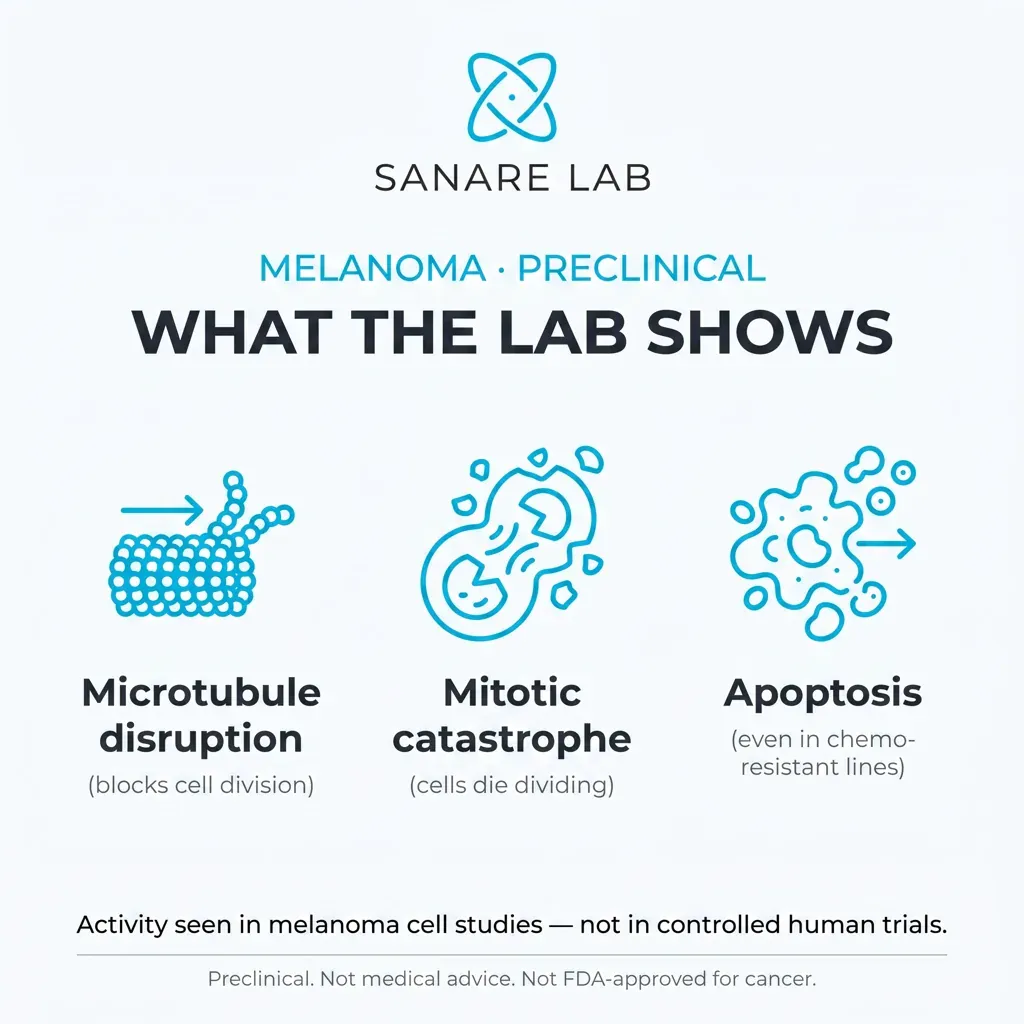
Beyond microtubule disruption, laboratory studies describe several additional effects that may be relevant to melanoma specifically:
- Bcl-2 phosphorylation. Benzimidazoles can phosphorylate the anti-apoptotic protein Bcl-2, preventing it from blocking Bax-mediated apoptosis. This mechanism was demonstrated in chemoresistant melanoma cell lines (M-14 and SK-Mel-19) and is notable because Bcl-2 overexpression is one reason melanoma resists conventional chemotherapy (PMID 18667591).
- Glucose uptake interference. Fenbendazole may reduce GLUT transporter expression and hexokinase II activity, starving cancer cells that depend on aerobic glycolysis (the Warburg effect) (PMID 30093705).
- p53 stabilization. In some cell models, fenbendazole stabilizes wild-type p53, a tumor suppressor that is preserved (not mutated) in a majority of melanomas — unlike many other solid tumors. This makes melanoma a theoretically interesting target for a p53-stabilizing compound.
- PI3K/AKT and RAF/MEK/ERK pathway modulation. Broader benzimidazole research suggests inhibition of signaling cascades that are central to melanoma biology, particularly the MAPK pathway that drives BRAF- and NRAS-mutant disease (PMID 32486842).
These are plausible, overlapping mechanisms — but demonstrating them in a culture dish does not mean they occur at therapeutic levels in a living person. Fenbendazole has poor water solubility and modest oral bioavailability, so the concentrations used in cell experiments may never be achieved safely in human tissue.
Preclinical Evidence: Fenbendazole and Melanoma Cell Lines
The laboratory evidence for fenbendazole against melanoma falls into two categories: direct fenbendazole studies and broader benzimidazole-class research that includes melanoma panels.
Direct fenbendazole studies
Canine melanoma cell lines (Kim et al., 2022). This is the most detailed fenbendazole-specific melanoma study to date. Researchers treated five canine melanoma cell lines (UCDK9M3, UCDK9M4, UCDK9M5, KMeC, and LMeC) with fenbendazole and observed dose-dependent reduction in cell viability, G2/M cell cycle arrest, and mitotic slippage leading to post-slippage cell death in four of five lines. Immunofluorescence confirmed structural defects in microtubules — clumping, multinucleation, and macronucleation characteristic of mitotic catastrophe. Western blot showed increased cleaved PARP, a standard apoptosis marker (PMID 35020278).
The fifth line (UCDK9M3) showed G2/M arrest but continued to proliferate after slippage, suggesting that not all melanoma cells respond uniformly — a finding consistent with the biological heterogeneity of melanoma.
Broader benzimidazole-class melanoma data
Chemoresistant human melanoma (Doudican et al., 2008). This study tested mebendazole, fenbendazole, albendazole, and oxybendazole against two human chemoresistant melanoma cell lines — M-14 and SK-Mel-19 — as well as normal melanocytes. All four benzimidazoles induced apoptosis in melanoma cells while showing lower toxicity to normal melanocytes. The primary mechanism was Bcl-2 phosphorylation, which released the pro-apoptotic protein Bax to trigger intrinsic apoptosis (PMID 18667591).
This is significant because chemoresistance is a defining challenge in melanoma. These cell lines had been selected specifically for their resistance to standard agents, and the benzimidazoles overcame that resistance through a mechanism (Bcl-2 modulation) different from the drugs the cells were resistant to.
Multi-cancer screening (Anticancer Research, 2024 review). A comprehensive review catalogued active benzimidazole studies across multiple tumor types, including melanoma cell lines, and noted that fenbendazole consistently outperformed mebendazole in glycolysis-dependent and drug-resistant models (Anticancer Res. 2024;44(9):3725).
Warning
All of the above are in vitro (cell-culture) results. No animal xenograft study has demonstrated fenbendazole shrinking melanoma tumors in a living organism, and no controlled human data exist. Laboratory efficacy does not predict clinical efficacy.
Why BRAF and NRAS Status Matters
Melanoma is not one disease. Roughly 50% of cutaneous melanomas carry a BRAF V600 mutation, another 15–25% carry NRAS mutations, and the remainder are wild-type for both. This matters for two reasons:
- Standard-of-care differs by mutation. BRAF-mutant patients have access to targeted therapy (BRAF/MEK inhibitors like dabrafenib + trametinib or encorafenib + binimetinib) in addition to immunotherapy. NRAS-mutant and wild-type patients rely primarily on immunotherapy, with fewer options upon progression.
- Fenbendazole's relevance may differ by subtype. The Bcl-2 phosphorylation mechanism demonstrated in chemoresistant melanoma cells (PMID 18667591) and the MAPK pathway modulation suggested by broader benzimidazole research could theoretically have different relevance depending on whether the tumor is driven by BRAF, NRAS, or neither. This is purely speculative — no study has compared fenbendazole's effects across mutation-defined melanoma subtypes.
This is important context for interpreting case reports. The retracted 2025 case series described a BRAF V600-mutated melanoma (Case 3), while a separate Anticancer Research case report (2024) described a patient whose tumor was wild-type for both BRAF and NRAS. These are biologically different diseases with different standard responses, and attributing similar outcomes to the same drug requires far more evidence than two individual cases.
Human Case Reports: What Has Been Published
As of mid-2026, the published human evidence for fenbendazole in melanoma consists of two case reports — one in a retracted paper and one in a non-retracted journal article.
Case 1: BRAF V600-mutated Stage IV melanoma (retracted case series)
A 63-year-old man with recurrent BRAF V600-mutated melanoma was described in a 2025 case series published in Case Reports in Oncology (PMC12215191). After initial surgical resection and a recurrence confirmed by biopsy (1.6 mm ulcerated malignant melanoma, SOX-10 and pan-melanoma positive), the patient self-administered fenbendazole 222 mg daily alongside nivolumab immunotherapy. Circulating tumor DNA (ctDNA) reportedly fell to undetectable levels, and the authors described "complete remission."
Critical context: This paper was retracted in January 2026 due to the lead author's undisclosed financial conflict of interest — he offered fenbendazole-related clinical services. The retraction did not claim the clinical data were fabricated, but it means the paper no longer counts as validated peer-reviewed evidence. More importantly, nivolumab monotherapy achieves complete response rates of 12–17% in BRAF-mutant melanoma (PMID 29658845). A single case in which a patient achieved remission while on immunotherapy cannot isolate fenbendazole's contribution.
Case 2: Wild-type metastatic melanoma (Anticancer Research, 2024)
A separate case report in Anticancer Research described a patient with metastatic melanoma wild-type for both BRAF and NRAS, who self-administered fenbendazole 222 mg daily after multiple lines of standard therapy (including nivolumab and ipilimumab) had failed or been intolerable. Imaging reportedly showed tumor regression during the period of fenbendazole use (Anticancer Res. 2024;44(9):3725–3730).
Critical context: This paper has not been retracted as of July 2026. However, it remains a single case report (n=1), the lowest level of clinical evidence. The patient's prior immunotherapy exposure may have induced delayed immune responses that manifested during the fenbendazole period — a recognized phenomenon in oncology called a "tail effect" from checkpoint inhibitors.
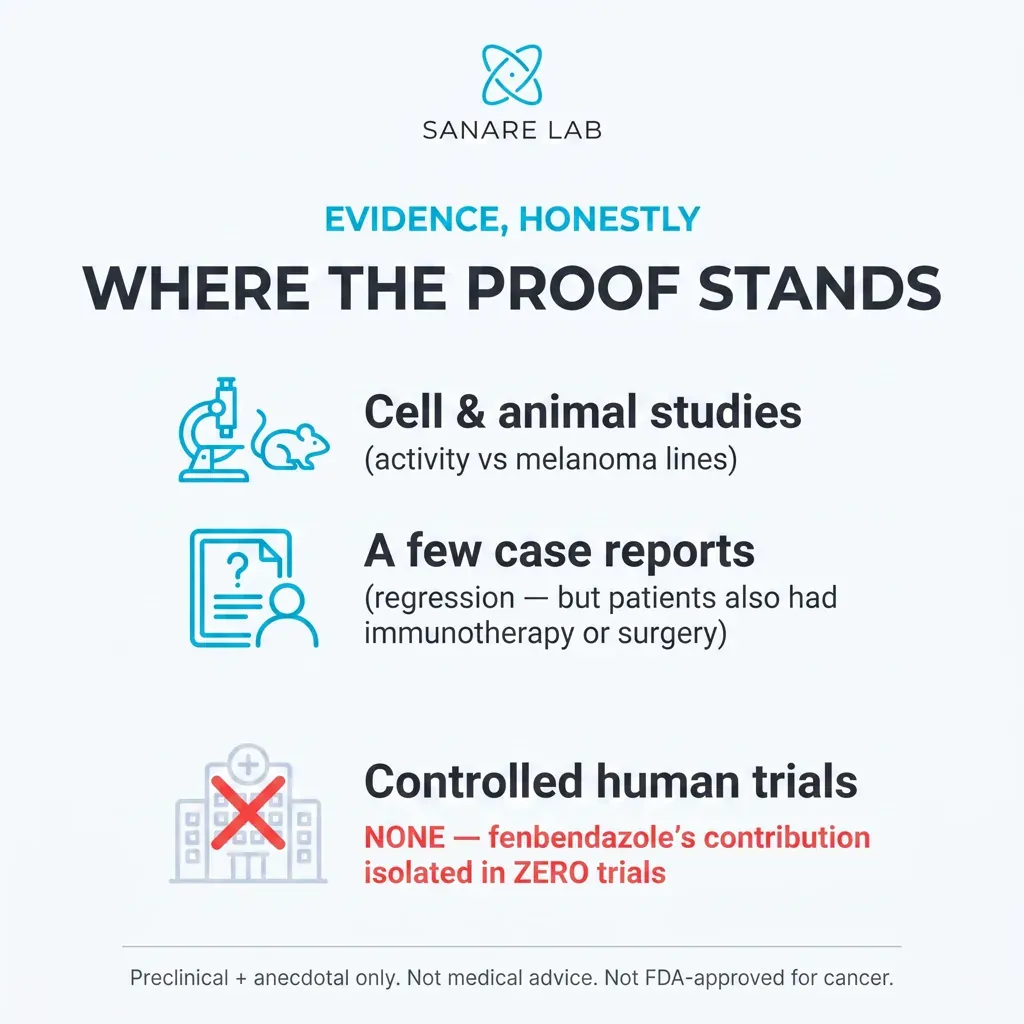
Neither case provides evidence that fenbendazole works against melanoma on its own. Both provide hypothesis-generating observations that belong in the "interesting, investigate further" category — not the "proven treatment" category.
Fenbendazole and Melanoma Immunotherapy: Could They Interact?
Melanoma is one of the cancers most responsive to immune checkpoint inhibitors — anti-PD-1 drugs (nivolumab, pembrolizumab) and anti-CTLA-4 (ipilimumab) have produced durable remissions in a significant minority of patients. The obvious question is whether fenbendazole might interact with immunotherapy, positively or negatively.
Theoretical arguments for synergy
When fenbendazole kills cancer cells through mitotic catastrophe, those dying cells can release tumor-associated antigens and danger signals — a process called immunogenic cell death (ICD). In theory, this could "prime" the immune system and make checkpoint inhibitors more effective, because the immune system now has more antigens to recognize. This is the rationale behind combining chemotherapy with immunotherapy in many cancers, and fenbendazole's tubulin-disrupting mechanism could theoretically produce a similar effect.
Additionally, ivermectin-immunotherapy research has shown that some repurposed drugs can modulate the tumor microenvironment. If fenbendazole does something similar — converting immunologically "cold" tumors into "hot" ones — it could theoretically enhance checkpoint blockade.
Theoretical arguments for concern
Any compound that modulates the immune system could also interfere with the carefully calibrated mechanism of checkpoint inhibitors. If fenbendazole affects T-cell function, antigen presentation, or cytokine signaling in unexpected ways, it could blunt rather than enhance the immunotherapy response. There is also the practical concern of overlapping hepatotoxicity: both checkpoint inhibitors and fenbendazole can cause liver enzyme elevation, and combining them could increase the risk of clinically significant liver injury.
A Phase 1b trial of mebendazole (a closely related benzimidazole) combined with a checkpoint inhibitor in metastatic melanoma was planned for 2026, which would begin to answer some of these questions — but no results have been reported (Fenbendazole Clinical Trials Update 2026).
The bottom line: Interaction between fenbendazole and melanoma immunotherapy is biologically plausible in both directions. No human data exist to settle the question. Self-combining a veterinary drug with prescribed immunotherapy without oncologist supervision is a gamble — and when the prescribed therapy alone has a 40–60% response rate in melanoma, the stakes of that gamble are high.
Mebendazole vs Fenbendazole in Melanoma Research
Mebendazole (MBZ) is fenbendazole's closest relative — both are benzimidazoles that target β-tubulin. In melanoma research, mebendazole has received more formal attention:
- Chemoresistant melanoma data. The Doudican et al. (2008) study that demonstrated Bcl-2-mediated apoptosis in M-14 and SK-Mel-19 cells actually led with mebendazole as the primary compound, then showed the other benzimidazoles (including fenbendazole) produced similar effects (PMID 18667591).
- Planned clinical trial. A Phase 1b trial of mebendazole + checkpoint inhibitor in metastatic melanoma is in planning for 2026, representing the first formal clinical testing of any benzimidazole specifically in melanoma.
- Human approval. Mebendazole is approved for human parasitic infections, while fenbendazole is veterinary-only. This makes mebendazole the more logical candidate for clinical trials because its human pharmacokinetics and safety profile are already established.
For a detailed comparison of these two compounds — including bioavailability, brain penetration, and cost — see our full guide: Fenbendazole vs Mebendazole: Differences, Uses & Safety (2026).
The practical takeaway: if you are interested in the benzimidazole class for melanoma specifically, mebendazole is the compound more likely to enter clinical trials first, and it has the advantage of being a human-approved drug. Fenbendazole remains the more popular choice in the self-administration community, largely because of the Joe Tippens story, but popularity is not evidence.
Safety, Dosage, and Liver Monitoring
There is no medically established fenbendazole dose for melanoma — or for any cancer. The commonly cited protocol (222 mg daily with cycling) comes from anecdotal use, not clinical trials. The key safety points are consistent across all cancer types and apply equally to melanoma patients:
For a complete dosage and safety guide, see: Fenbendazole Dosage for Cancer: Complete Protocol Guide 2026.
Warning
Melanoma-specific concern: Patients on checkpoint inhibitors (nivolumab, pembrolizumab, ipilimumab) already face a risk of immune-mediated hepatitis — adding fenbendazole's hepatotoxic potential on top requires careful monitoring and oncologist awareness. Do not self-combine without medical supervision.
Evidence Summary by Melanoma Subtype
The pattern is clear: the vast majority of melanoma subtypes have zero fenbendazole-specific data. Even the two subtypes with case reports cannot attribute observed outcomes to fenbendazole because standard therapy was always present.
What Is Still Missing
To move from anecdote to evidence, melanoma research would need:
- In vivo melanoma models. No published study has tested fenbendazole in melanoma xenograft (tumor-bearing animal) models. This is the standard next step after cell-line studies, and it is conspicuously absent.
- Mutation-specific testing. Does fenbendazole work differently in BRAF-mutant vs NRAS-mutant vs wild-type melanoma? No study has compared.
- Pharmacokinetic data in melanoma tissue. Does fenbendazole reach therapeutic concentrations in melanoma deposits — including brain metastases, which occur in up to 40% of advanced melanoma? Unknown.
- Interaction studies with immunotherapy. Does fenbendazole enhance, blunt, or have no effect on checkpoint inhibitor efficacy? The planned mebendazole Phase 1b trial may begin to answer this for the benzimidazole class, but it is not fenbendazole-specific.
- Prospective clinical trials. A randomized controlled trial comparing immunotherapy + fenbendazole vs immunotherapy + placebo, with pre-specified endpoints, independent monitoring, and full side-effect reporting. This is what it would take to prove or disprove fenbendazole's value in melanoma — and it does not exist.
Until these gaps are filled, any claim that "fenbendazole works for melanoma" is running ahead of the evidence. The mechanistic rationale is interesting; the proof is absent.
The Bottom Line
Fenbendazole has a biologically plausible mechanism against melanoma: microtubule disruption, Bcl-2 modulation in chemoresistant cells, and potential metabolic interference — all demonstrated in laboratory studies. Two published human case reports describe melanoma regression, but neither can separate fenbendazole's effect from concurrent or prior immunotherapy.
Melanoma is one of the cancers where modern medicine has made the most dramatic progress. Checkpoint inhibitors produce durable remissions in 40–60% of patients with advanced disease, and BRAF-targeted therapies add another powerful option for half of all cases. Replacing or delaying these proven treatments with an unproven veterinary drug is a high-stakes decision with no supporting trial data.
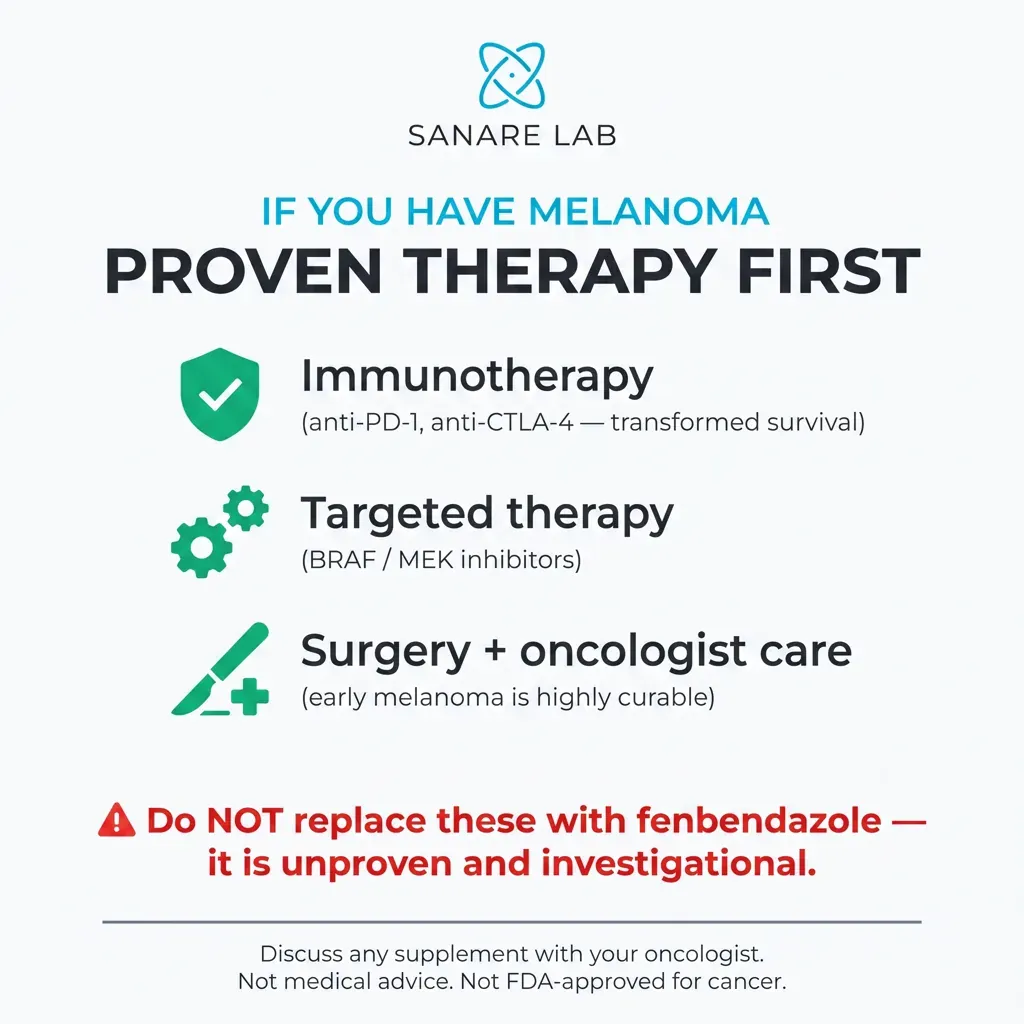
The responsible position: cautious scientific interest in fenbendazole as a research compound, combined with full reliance on evidence-based melanoma treatment under oncologist supervision. If formal clinical trials eventually demonstrate benefit, that will change the calculus — but as of 2026, those trials have not been completed, and the evidence gap is wide.
What People Report Online: Melanoma and Skin Cancer
Behind the laboratory papers sits a large, restless online conversation. On Reddit and patient forums, people living with melanoma and other skin cancers — and the relatives caring for them — trade experiences with fenbendazole, usually following some version of the Joe Tippens protocol. To save you from digging through dozens of scattered threads, we have gathered the most relevant, on-topic discussions in one place, together with an honest guide to what these accounts can and cannot tell you.
How to read these reports
These are personal stories, not clinical evidence. They are uncontrolled, self-reported, and impossible to verify independently.
In almost every account, the person was also receiving standard treatment — chemotherapy, immunotherapy, radiotherapy, or surgery — at the same time as fenbendazole. When someone improves on two therapies at once, the result cannot be credited to fenbendazole alone; the conventional treatment is the far more likely explanation.
Encouraging stories are also shared far more often than disappointing ones, so online threads skew positive (survivorship and publication bias).
The useful way to read them is as questions worth raising with your oncologist — not as a protocol to copy on your own.
For a deeper, evidence-based look at how these accounts hold up — including the documented case reports and the peer-reviewed analyses behind them — see our detailed review of fenbendazole success stories and case reports.
Frequently Asked Questions
Can fenbendazole cure melanoma?
No. There are no clinical trials demonstrating that fenbendazole cures or treats melanoma. Laboratory studies show activity against melanoma cells in vitro, and two case reports describe regression — but both involved concurrent or prior immunotherapy, and one paper has been retracted.
What preclinical evidence exists for fenbendazole in melanoma?
A 2022 study (PMID 35020278) showed fenbendazole reduced viability, caused G2/M arrest, and triggered mitotic catastrophe in canine melanoma cell lines. A 2008 study (PMID 18667591) demonstrated that multiple benzimidazoles, including fenbendazole, induced apoptosis in chemoresistant human melanoma cells via Bcl-2 phosphorylation.
Is the melanoma case report in the retracted 2025 paper still valid?
The retraction was for undisclosed conflict of interest, not data fabrication. However, a retracted paper no longer counts as validated peer-reviewed evidence. The clinical observations may still be real, but they cannot be cited as proof.
Does BRAF or NRAS mutation status matter for fenbendazole?
No study has compared fenbendazole's effects across melanoma mutation subtypes. The two published case reports involve different mutations (BRAF V600 and wild-type), but this is far too little data to draw conclusions.
Can fenbendazole be combined with immunotherapy for melanoma?
This is biologically plausible but unstudied in humans. Fenbendazole-induced cell death could theoretically enhance immune recognition of tumors, but overlapping liver toxicity is a real concern. Never self-combine without oncologist supervision.
Is mebendazole better than fenbendazole for melanoma?
Mebendazole has more formal research attention, is approved for human use, and a Phase 1b trial combining it with a checkpoint inhibitor in melanoma is planned. It may be the more logical benzimidazole to study in melanoma, but neither has proven clinical efficacy.
What is the recommended fenbendazole dose for melanoma?
There is no recommended dose — no clinical trial has established one. The commonly cited 222 mg/day with cycling comes from anecdotal protocols. Liver monitoring is essential regardless of dose.
Does fenbendazole reach melanoma tumors in the body?
This is unknown. Fenbendazole has poor water solubility and modest oral bioavailability. No pharmacokinetic study has measured concentrations in melanoma tissue, including brain metastases — a common site for advanced melanoma.
Are there clinical trials of fenbendazole for melanoma?
No. As of mid-2026, there are no registered clinical trials of fenbendazole for melanoma. The closest development is a planned Phase 1b trial of mebendazole + checkpoint inhibitor in metastatic melanoma.
Should I stop immunotherapy to take fenbendazole instead?
Absolutely not. Immunotherapy produces durable remissions in 40–60% of advanced melanoma patients and is the standard of care. Replacing proven therapy with an unproven compound carries serious risk and has no supporting evidence.
Is fenbendazole safe for melanoma patients on BRAF inhibitors?
Unknown. Both fenbendazole and BRAF/MEK inhibitors are metabolized by liver enzymes, creating potential interaction risk. No study has examined this combination. Discuss with your oncologist.
What side effects should melanoma patients watch for with fenbendazole?
The primary concern is drug-induced liver injury, especially when combined with hepatotoxic therapies like checkpoint inhibitors or targeted therapy. Regular liver function testing (ALT, AST) every 4–6 weeks is essential.
Does fenbendazole work against all types of melanoma?
There is no evidence that fenbendazole works against any type of melanoma in a clinical (human treatment) sense. Preclinical data exist only for cutaneous melanoma cell lines. Uveal, mucosal, and acral melanomas have no fenbendazole data at all.
Why do some melanoma patients report success with fenbendazole?
Every reported melanoma success involved concurrent or prior immunotherapy — which alone produces remissions in a significant fraction of patients. Without controlled trials, it is impossible to know whether fenbendazole contributed anything beyond what standard treatment achieved.
Where can I read more about fenbendazole research by cancer type?
Our research hub covers all major cancer types: Fenbendazole for Cancer by Type. For the Joe Tippens protocol and general overview, see: Joe Tippens Protocol: Complete Guide.
Planning a fenbendazole protocol?
Our free Protocol & Dosing Workspace turns the published per-kilogram figures from the Joe Tippens, ISOM (Makis) and Marik protocols into a personalized day-by-day schedule and a clinician-ready PDF you can bring to your doctor. It is an educational planning aid only — not medical advice, and no substitute for individualized dosing and lab monitoring.
Shop Sanare Lab
Lab-tested products referenced in the research above. Links are provided for convenience — always review the label and consult a professional before use.
180 capsules — 99% purity, laboratory tested
180 capsules — higher-dose option
120 capsules — with Black Pepper for absorption
Disclaimer: Links are informational and for convenience. This site does not provide medical advice and does not endorse any specific vendor. Always verify product quality, labeling, and consult a licensed professional for health decisions.
References and Further Reading
- Dogan Ekici A I, et al. Fenbendazole acts as a moderate microtubule destabilizing agent and causes cancer cell death by modulating multiple cellular pathways. Sci Rep. 2018;8:11926. PMID 30093705
- Kim S, Perera SK, Choi S, Rebhun RB, Seo K. G2/M arrest and mitotic slippage induced by fenbendazole in canine melanoma cells. Vet Med Sci. 2022;8(3):966–981. PMID 35020278
- Doudican N, Rodriguez A, Osman I, Orlow SJ. Mebendazole induces apoptosis via Bcl-2 inactivation in chemoresistant melanoma cells. Mol Cancer Res. 2008;6(8):1308–1315. PMID 18667591
- Markowitz O, et al. Fenbendazole as an Anticancer Agent? A Case Series (RETRACTED). Case Rep Oncol. 2025;18(1):856. PMC12215191 — retracted January 2026 for undisclosed conflict of interest.
- Fenbendazole as a Potential Anticancer Agent in a Patient with Metastatic Melanoma: A Case Report. Anticancer Res. 2024;44(9):3725–3730. Anticancer Res. 44(9):3725
- Son DS, et al. Fenbendazole as anti-cancer and immune-modulating agent. Immune Netw. 2020;20(4):e29. PMID 32486842
- Weber JS, et al. Nivolumab versus chemotherapy in patients with advanced melanoma who progressed after anti-CTLA-4 treatment (CheckMate 037). Lancet Oncol. 2015;16(4):375–384. PMID 29658845
- Pantziarka P, et al. Repurposing Drugs in Oncology (ReDO) — mebendazole as an anti-cancer agent. ecancer. 2014;8:443. ecancer 8:443
- Park SR, et al. Fenbendazole suppresses growth and induces apoptosis of actively growing H4IIE hepatoma cells via p21-mediated cell cycle arrest. Biol Pharm Bull. 2022;45(2). PMC9122462
Medical Disclaimer
This article is for educational and informational purposes only. It is not intended to be a substitute for professional medical advice, diagnosis, or treatment. Always seek the advice of your physician or other qualified health provider with any questions you may have regarding a medical condition. Never disregard professional medical advice or delay in seeking it because of something you have read on this website.
Sanare Lab
Science-based health education team reviewing published research on repurposed drugs, integrative oncology, and evidence-based protocols.