
Intestinal parasites like roundworms and hookworms are among the most common health threats facing dogs worldwide. Left untreated, these parasites can cause weight loss, anemia, digestive problems, and serious illness — particularly in puppies and immunocompromised animals.
Fenbendazole is one of the most widely used and trusted veterinary dewormers for treating these infections. It belongs to the benzimidazole class of anthelmintics and has been used in veterinary medicine for over 40 years. Clinical studies have demonstrated efficacy rates exceeding 95% against roundworms and hookworms when administered at recommended doses.
This article covers how fenbendazole works, what parasites it treats, dosing guidelines for dogs, expected results, side effects, and practical tips for dog owners.
How Fenbendazole Works Against Parasites
Fenbendazole works by binding to β-tubulin, a structural protein essential for microtubule formation in parasite cells. Microtubules are critical for cell division, nutrient transport, and energy metabolism within the parasite. When fenbendazole disrupts microtubule assembly, the parasite loses its ability to absorb glucose — its primary energy source — leading to energy depletion and death within 2–3 days.
Importantly, fenbendazole binds much more strongly to parasite β-tubulin than to mammalian β-tubulin, which is why it has such a wide safety margin in dogs and other host animals. A 2018 study in Scientific Reports (Nature) confirmed this selective binding mechanism (PMC6103891).
Step-by-Step Action
- Ingestion: After oral administration, fenbendazole reaches the stomach and intestines where it mixes with food and begins targeting parasites.
- Microtubule disruption: The drug binds to parasite tubulin, preventing microtubule formation and blocking glucose absorption.
- Parasite starvation: Without glucose, parasites lose energy, stop moving, and die within days.
- Safe elimination: Dead parasites are expelled through normal bowel movements. The process is gentle on the dog.
What Parasites Does Fenbendazole Treat in Dogs?
Fenbendazole is a broad-spectrum dewormer, meaning it is effective against multiple types of internal parasites. In dogs, it is commonly used to treat:
| Parasite | Common Name | Fenbendazole Efficacy |
|---|---|---|
| Toxocara canis / Toxascaris leonina | Roundworms | ≥95% clearance rate |
| Ancylostoma caninum / Uncinaria | Hookworms | ≥95% clearance rate |
| Trichuris vulpis | Whipworms | >90% with extended treatment |
| Taenia (some species) | Tapeworms | Variable; vet assessment needed |
| Giardia duodenalis | Giardia | Off-label use, 5–7 days |
| Oslerus osleri / Crenosoma | Lungworms | Effective at higher doses |
A comprehensive review of benzimidazole anthelmintics published in the Journal of Veterinary Pharmacology and Therapeutics documented fenbendazole’s high efficacy across these parasite groups, with cure rates consistently exceeding 95% for nematodes at standard doses (PubMed 15710531).
Efficacy Data: 95% Success Rate
Roundworm Results
Roundworms (Toxocara canis) are the most common intestinal parasite in dogs, particularly in puppies. Clinical studies have shown fenbendazole achieves ≥95% egg reduction rates after a standard 3-day treatment course at 50 mg/kg/day. Post-treatment, dogs typically show improved appetite, better digestion, and increased energy levels. Regular deworming helps prevent roundworm re-infection, which is especially important in multi-dog households and kennels.
Hookworm Results
Hookworms (Ancylostoma caninum) are blood-feeding parasites that can cause anemia, weakness, and dark tarry stools. Fenbendazole achieves ≥95% hookworm clearance at standard doses. After treatment, dogs show improved activity levels and recovery of healthy blood parameters. In puppies, hookworm treatment can be life-saving, as heavy infections can cause fatal anemia.
A study published in Veterinary Parasitology evaluated fenbendazole’s efficacy against both roundworms and hookworms in naturally infected dogs, confirming >95% fecal egg count reduction within 7 days of treatment (PubMed 2669918).
Fenbendazole Dosage for Dogs
The standard veterinary dosage for fenbendazole in dogs is 50 mg per kg of body weight per day for 3 consecutive days. This protocol is effective against roundworms, hookworms, whipworms, and certain tapeworms. For whipworm infections or Giardia, veterinarians may extend treatment to 5–7 days.
Dosage Chart
| Dog’s Weight | Daily Dose | Treatment Duration |
|---|---|---|
| 2 kg (4.4 lbs) | 100 mg | 3 consecutive days |
| 5 kg (11 lbs) | 250 mg | 3 consecutive days |
| 10 kg (22 lbs) | 500 mg | 3 consecutive days |
| 15 kg (33 lbs) | 750 mg | 3 consecutive days |
| 20 kg (44 lbs) | 1,000 mg | 3 consecutive days |
| 30 kg (66 lbs) | 1,500 mg | 3 consecutive days |
| 40 kg (88 lbs) | 2,000 mg | 3 consecutive days |
| 50 kg (110 lbs) | 2,500 mg | 3 consecutive days |
Important: Always confirm the exact dose with your veterinarian before administering fenbendazole. Dosage may vary depending on the dog’s health condition, type of parasite, and veterinary recommendation.
Administration Tips
- Fenbendazole is available as granules, capsules, and liquid suspensions. Granules and capsules can be mixed into food for easy administration.
- Giving fenbendazole with food (especially food containing some fat) improves absorption and reduces the chance of mild stomach upset.
- Always complete the full treatment course (typically 3–5 days) even if the dog appears to improve quickly.
For a detailed analysis of fenbendazole dosing considerations across different contexts, see: How Much Fenbendazole Is Too Much? A Safety-Focused Dosage Guide.
Fenbendazole from Sanare Lab
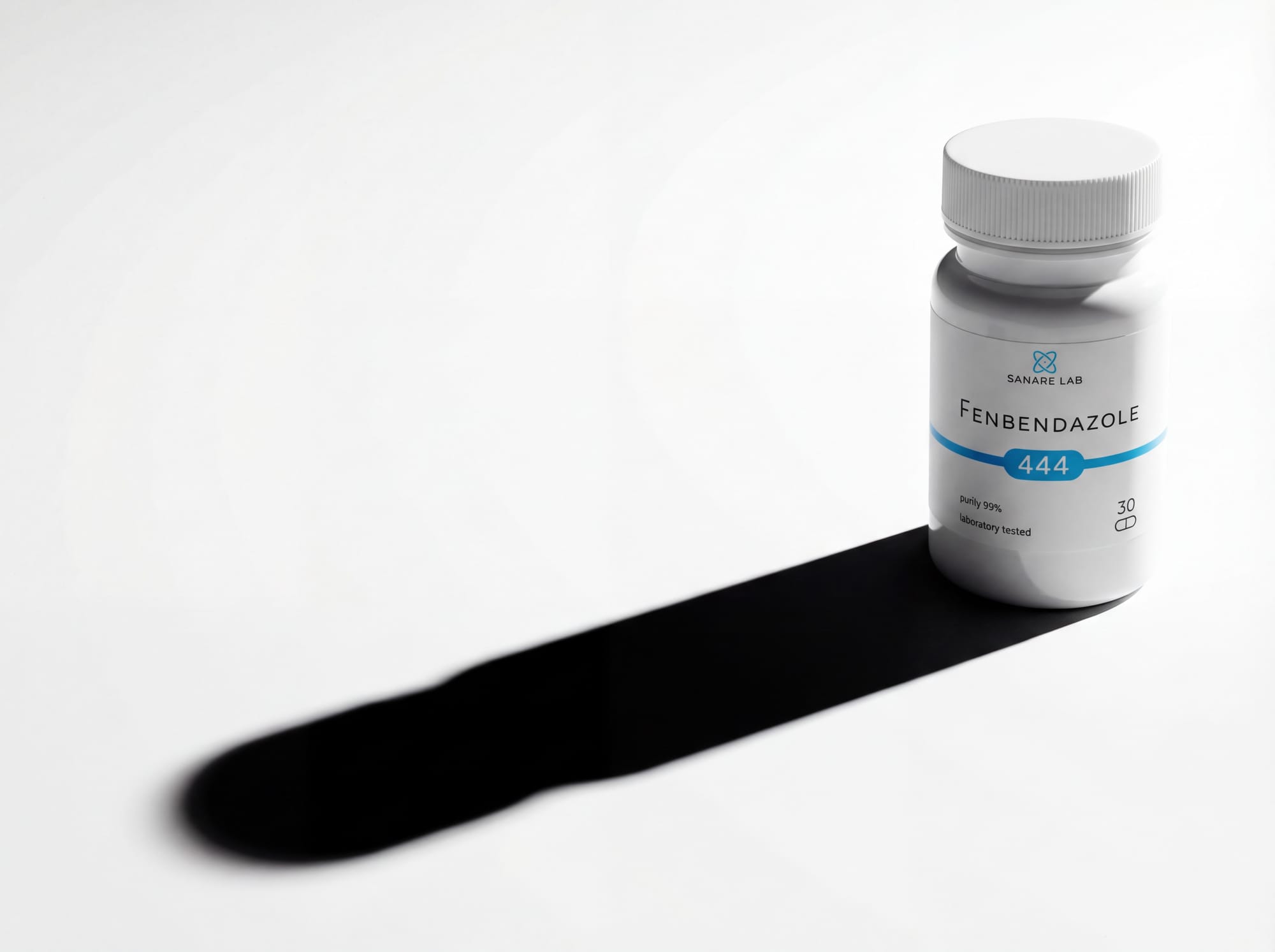
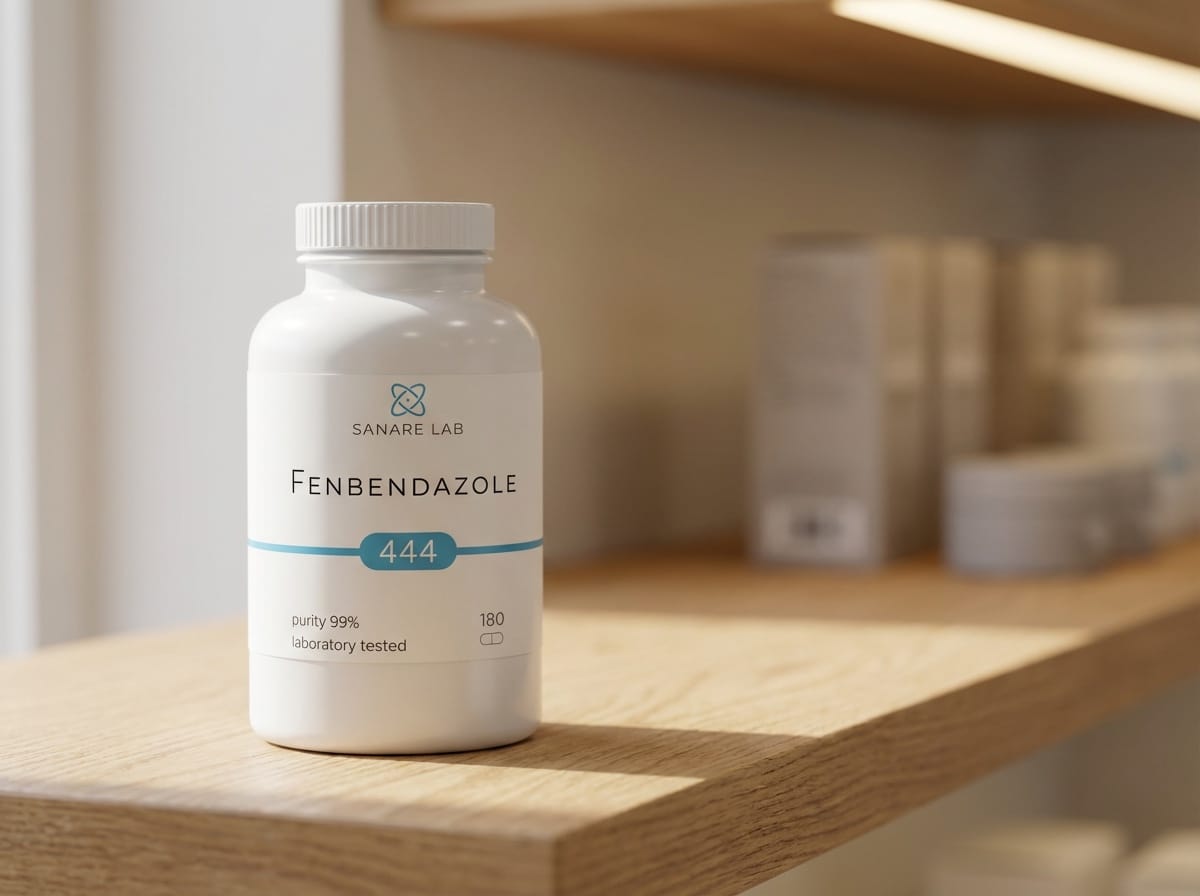
Lab-tested fenbendazole — 99% purity, available in two dosage options.
180 capsules — 99% purity, laboratory tested
180 capsules — higher dose option
Disclaimer: For convenience only. Consult a licensed professional.
Benefits of Fenbendazole for Dogs
- Broad-spectrum parasite protection: Effective against roundworms, hookworms, whipworms, certain tapeworms, lungworms, and Giardia.
- Safe for all life stages: Approved for puppies over 6 weeks and adult dogs. Generally safe for pregnant and nursing dogs under veterinary guidance.
- Improved nutrient absorption: After parasite clearance, dogs can properly absorb nutrients, leading to healthier coats, better weight gain, and stronger growth in puppies.
- Restored energy and activity: Dogs return to normal playful behavior once parasite burden is eliminated.
- Wide safety margin: Toxicity studies show that doses up to 100x the therapeutic dose are tolerated in dogs without serious adverse effects.
Side Effects and Safety
Fenbendazole is considered one of the safest anthelmintics available for dogs. Most dogs tolerate it without any issues. However, mild side effects can occasionally occur:
Common (Mild)
- Soft stool or mild diarrhea (usually resolves within 1–2 days)
- Mild vomiting, especially if given on an empty stomach
- Temporary decrease in appetite
- Slight lethargy during treatment
Uncommon
- Excessive drooling
- Mild bloating or stomach discomfort
- Rare allergic reactions (itching, skin rash) — typically related to parasite die-off rather than the drug itself
If your dog shows severe or prolonged symptoms, contact your veterinarian. In dogs with very heavy parasite loads, rapid parasite die-off can occasionally cause a Jarisch-Herxheimer-like reaction, which is temporary and resolves on its own.
Best Practices for Dog Owners
- Administer the correct dose based on your dog’s current body weight.
- Mix fenbendazole into regular food for easier dosing and better absorption.
- Complete the full treatment course (3–5 days) — do not stop early.
- Store medication in a cool, dry place out of reach of children and pets.
- Do not use expired medication.
- Clean bedding, toys, bowls, and living areas during treatment to prevent re-infection.
- Schedule regular vet appointments and stool tests for ongoing prevention.
- In multi-dog households, consider treating all dogs simultaneously to break the re-infection cycle.
Fenbendazole Beyond Deworming
While this article focuses on fenbendazole’s established veterinary applications, it’s worth noting that the drug has attracted significant research interest in other areas. Preclinical studies have identified anti-tumor mechanisms including microtubule disruption and p53 stabilization in cancer cell models. This research has led to widespread public interest in protocols like the Joe Tippens Protocol and the ISOM Protocol, which incorporate fenbendazole in different contexts.
For a comparison of fenbendazole with other antiparasitics studied in this area, see: Fenbendazole vs. Ivermectin.
Disclaimer: This article is for educational and informational purposes only. It does not replace professional veterinary advice. Always consult a licensed veterinarian before administering any medication to your dog.
Scientific References
- McKellar QA, Scott EW. (1990). The benzimidazole anthelmintic agents — a review. Journal of Veterinary Pharmacology and Therapeutics, 13(3), 223–247. PubMed 15710531
- Jacobs DE, et al. (1989). Efficacy of fenbendazole against Toxocara canis and Ancylostoma caninum in naturally infected dogs. Veterinary Parasitology. PubMed 2669918
- Dogra N, Kumar A, Mukhopadhyay T. (2018). Fenbendazole acts as a moderate microtubule destabilizing agent and causes cancer cell death. Scientific Reports (Nature), 8, 11926. PMC6103891
- Bowman DD. (2014). Georgis’ Parasitology for Veterinarians. 10th Edition. Elsevier Health Sciences.
Protocol Stack (Quick Links)
Products related to fenbendazole mentioned in this article. Links are provided for convenience — always review the label and consult a veterinary professional before use.
180 capsules — 99% purity, laboratory tested
180 capsules — higher dose option
Disclaimer: Links are informational and for convenience. This site does not provide medical advice and does not endorse any specific vendor. Always verify product quality, labeling, and consult a licensed professional for health decisions.