
Sugar-Linked Curcumin Complex Kills Breast Tumor Cells via GLUT Transporters (2026)
A 2026 in-vitro study in Scientific Reports describes a sugar-linked curcumin complex that selectively targets glucose transporters overexpressed in breast cancer cells, achieving cytotoxicity with an IC50 of 7.51 μg/mL.
 By Sanare Lab · August 16, 2026 · 6 min read
Key Takeaway
A 2026 in-vitro study in Scientific Reports reports a sugar-linked curcumin complex that selectively targets glucose transporters overexpressed in breast cancer cells, achieving cytotoxicity with an IC50 of 7.51 μg/mL on MCF-7 cells. The complex, formed by condensing curcumin with glucosamine and chelating with vanadyl, showed DNA-binding activity and downregulated proliferation-related genes. This is preclinical evidence only; clinical translation remains unproven.
Curcumin has long attracted interest in oncology for its pleiotropic anti-inflammatory and pro-apoptotic effects, yet its clinical utility has been limited by poor bioavailability and rapid metabolism. One promising strategy to overcome these barriers is to piggyback the molecule onto the cancer cell's own sugar appetite. In a study published on August 14, 2026, in Scientific Reports, researchers from the Al-Azhar University Faculty of Science and Zagazig University in Egypt report the synthesis and in-vitro evaluation of a glycoconjugate curcumin-vanadyl complex designed to hitch a ride through glucose transporters (GLUTs) that are characteristically overexpressed in malignant breast tissue. Before exploring any adjuvant or off-label use, patients should always check the dosing calculator and consult a licensed clinician. For a broader overview of what the human and preclinical literature actually says about curcumin in cancer, see our dedicated curcumin research guide.
The investigators synthesized a Schiff base ligand (CG) by condensing curcumin with glucosamine, then complexed it with vanadyl to form [VO(CG)₂]·5H₂O. The rationale is straightforward: malignant cells overexpress facilitative glucose transporters to fuel aerobic glycolysis, so a sugar-decorated curcumin scaffold may be selectively internalized by tumor cells while sparing normal tissue. The team characterized the compound by elemental analysis, mass spectrometry, NMR, FT-IR, and magnetic susceptibility measurements, confirming a bidentate coordination mode through the azomethine nitrogen and enolic oxygen. Molecular docking and DNA-binding studies were performed to explore mechanistic targets, and cytotoxicity was assessed on MCF-7 human breast cancer cells using standard viability assays alongside quantitative gene expression analysis. Related reading: curcumin and inflammasome activity in breast cancer macrophages.
Table of Contents
- Study Design and Methods
- What the Results Show
- Strengths, Limitations, and Context
- Frequently Asked Questions
- In Plain Terms
Study Design and Methods
This is an in-vitro mechanistic and pharmacological study. The researchers synthesized and fully characterized the glycoconjugate ligand and its vanadyl complex, then subjected both to cytotoxicity profiling on MCF-7 cells. Molecular docking simulations were run against relevant protein targets, and DNA-binding affinity was measured to assess potential genotoxic or genomodulatory mechanisms. Quantitative polymerase chain reaction (qPCR) was used to evaluate expression changes in proliferation and apoptosis-related genes. No animal models or human subjects were involved; the evidence level is strictly preclinical.
What the Results Show
The free glycoconjugate ligand (CG) exhibited the highest cytotoxic potency against MCF-7 cells, with an IC50 of 7.51 ± 0.12 μg/mL (equivalent to 14.2 μM). The vanadyl complex also showed activity, though the ligand outperformed it, suggesting that the sugar-curcumin scaffold itself drives much of the cytotoxic effect. Molecular docking indicated favorable binding interactions with DNA, and DNA-binding assays supported this, pointing to a possible mechanism of genotoxic stress or transcriptional disruption. Gene expression analysis showed downregulation of proliferation markers and upregulation of apoptotic signaling, consistent with the viability data. Related reading: the curcumin analog CCA-1.1 in 3D triple-negative breast cancer cultures.
The GLUT-targeting hypothesis is supported indirectly: the presence of the glucosamine moiety is intended to exploit the Warburg effect, and the selective cytotoxicity toward malignant cells (versus the implied normal-cell sparing, though direct normal-cell comparison data were not highlighted in the available abstract) aligns with this concept. However, the study did not include a GLUT-knockdown or competitive-inhibition experiment to formally prove that uptake is GLUT-dependent—a gap that would strengthen the mechanistic claim.
Strengths, Limitations, and Context
| Dimension | Assessment |
|---|---|
| Evidence level | In-vitro only (MCF-7 cell line). No animal or human data. |
| Primary source | Scientific Reports, 2026; DOI: 10.1038/s41598-026-65680-5 |
| Key mechanistic claim | GLUT-driven selective delivery via glucosamine-conjugated curcumin. |
| Strength | Rigorous chemical characterization (MS, NMR, FT-IR, TGA, magnetic susceptibility). |
| Limitation | No GLUT-knockdown or competitive inhibition experiment to confirm transporter-mediated uptake. |
| Limitation | Single cell line (MCF-7); no triple-negative or HER2-positive breast cancer models tested. |
| Limitation | No pharmacokinetic or bioavailability data in vivo. |
| Relevance to patients | Interesting mechanistic proof-of-concept; not a basis for self-medication. |
Frequently Asked Questions
What is a glycoconjugate curcumin complex?
It is a chemically modified curcumin molecule linked to a sugar (glucosamine) and chelated with vanadium. The sugar moiety is intended to exploit glucose transporters overexpressed on cancer cells, potentially improving selective uptake compared to unmodified curcumin.
Does this mean curcumin can cure breast cancer?
No. This study is in-vitro only, using a single breast cancer cell line. The results are preclinical and cannot be extrapolated to human treatment outcomes. No clinical trials of this specific complex have been reported.
What is GLUT targeting and why does it matter?
GLUTs (glucose transporters) are membrane proteins that shuttle glucose into cells. Many cancers overexpress specific GLUT isoforms to support rapid glycolysis. Drug-delivery strategies that decorate therapeutic molecules with glucose-like tags aim to hijack this transporter overexpression for selective tumor targeting, potentially reducing off-tissue toxicity.
Can I buy this specific curcumin complex?
No. This is an experimental research compound synthesized in a university laboratory. It is not commercially available, not approved for human use, and has not undergone safety testing in animals or humans. The standard curcumin supplements available to consumers are chemically different from this glycoconjugate complex.
What is the IC50 and how should I interpret it?
IC50 is the half-maximal inhibitory concentration—the dose needed to kill 50% of cells in a dish. An IC50 of 7.51 μg/mL in a cell-culture experiment does not translate to a human dose, absorption rate, or tissue distribution. It is a laboratory metric for comparing compounds, not a clinical dosing guideline.
How does this compare to standard curcumin supplements?
Standard curcumin supplements contain unmodified curcumin, often with piperine or liposomal formulations to improve absorption. This study uses a chemically engineered glycoconjugate-vanadyl complex that is structurally distinct and has not been tested for oral bioavailability, safety, or efficacy in humans. The two should not be conflated.
In Plain Terms
What happened in this study?
Scientists in Egypt created a new chemical version of curcumin by attaching a sugar molecule (glucosamine) to it and adding a vanadium metal center. The idea is that cancer cells eat a lot of sugar, so they have more sugar-doorways (GLUT transporters) on their surface. By attaching a sugar to curcumin, the drug might sneak into cancer cells more easily than into normal cells. In lab dishes of breast cancer cells, this new compound killed about half the cells at a concentration of 7.5 micrograms per milliliter. It also bound to DNA and changed how some growth genes were expressed. But this was only done in plastic dishes with one type of breast cancer cell—no mice, no humans, no pills you can buy.
In plain words
What happened: Researchers made a sugar-linked curcumin compound and tested it on breast cancer cells in a laboratory.
Why it matters: The sugar part was designed to help the compound enter cells that take up large amounts of glucose, like a delivery label directing a package.
How strong is the evidence: This was an in-vitro study of cells, not an animal or human trial. The findings do not establish safety or benefit in patients.
What it means for you: Nothing changes in care today. This lab-made compound is not shown to help people with breast cancer; do not substitute it for prescribed treatment.
Shop Sanare Lab
Lab-tested products referenced in the research above — order direct from Sanare Lab.
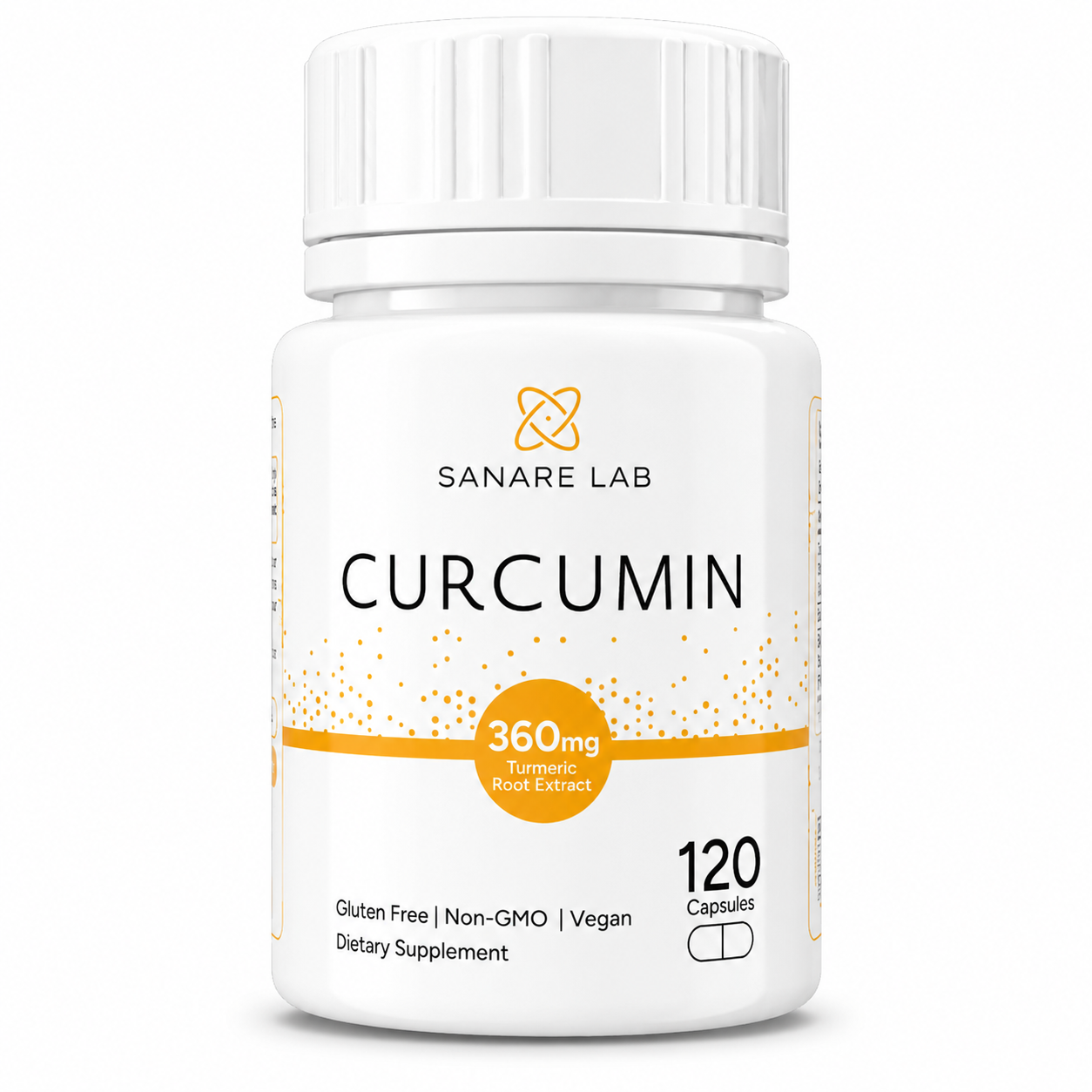
Daily adjunct
Curcumin 360 mg
95% curcuminoids with black pepper extract.
Prices checked September 2026 and may change; the store page shows the current price.
Disclaimer: Links are informational and for convenience. This site does not provide medical advice. Always verify product quality, labeling, and consult a licensed professional for health decisions.
References
- Hassan SS, Rashidi FB, Seddik RG, et al. Glycoconjugate strategy for GLUT-driven curcumin delivery and anticancer activity in breast cancer cells. Sci Rep. 2026;14(1). doi:10.1038/s41598-026-65680-5. PMID: 42601367.
- Warburg O. On the origin of cancer cells. Science. 1956;123(3191):309-314.
- Aggarwal BB, Kunnumakkara AB, Harikumar KB, et al. Potential of spice-derived phytochemicals for cancer prevention. Pharm Res. 2008;25(6):1312-1315.
Medical Disclaimer
This article is for informational and educational purposes only. It does not constitute medical advice, diagnosis, or treatment recommendation. The study described is preclinical (in-vitro only) and has not been tested in humans. Self-medicating with curcumin, glucosamine, vanadium supplements, or any repurposed compound based on preclinical data can be dangerous. Always consult a board-certified oncologist or other licensed healthcare provider before making any changes to your treatment plan. The mention of specific products in the Shop section is for convenience and informational reference only; Sanare Lab does not endorse any particular supplement brand or regimen for cancer treatment.
Sanare Lab
Science-based health education team reviewing published research on repurposed drugs, integrative oncology, and evidence-based protocols.