
Curcumin Analog CCA-1.1 Kills TNBC Cells in 3D Spheroid Culture
A 2026 study in the Asian Pacific Journal of Cancer Prevention tested a synthetic curcumin derivative (CCA-1.1) in a 3D spheroid model of triple-negative breast cancer, showing dose-dependent inhibition and altered EMT markers.
 By Sanare Lab · August 14, 2026 · 5 min read
Key Takeaway
A 2026 study in the Asian Pacific Journal of Cancer Prevention tested a synthetic curcumin derivative (CCA-1.1) in a three-dimensional (3D) agarose spheroid model of triple-negative breast cancer (TNBC). The compound showed dose-dependent inhibition of MDA-MB-231 cells, reduced spheroid formation by 40%, and altered epithelial-mesenchymal transition (EMT) markers, though it required higher concentrations than standard 2D cultures. These findings remain preclinical.
Triple-negative breast cancer (TNBC) accounts for approximately 15–20% of all breast cancers and remains one of the most difficult subtypes to treat, lacking estrogen receptor (ER), progesterone receptor (PR), and HER2 targets. While chemotherapy remains the standard approach, researchers continue to explore natural compounds and their synthetic derivatives as potential adjuncts. Curcumin research has demonstrated preclinical anticancer activity across multiple cancer types, but its clinical utility is limited by poor bioavailability and rapid metabolism.
To overcome these limitations, scientists have developed synthetic curcumin derivatives designed to preserve anticancer activity while improving stability. One such compound is curcumin analog-1.1 (CCA-1.1), a monocarbonyl curcumin derivative. In a 2026 study published in the Asian Pacific Journal of Cancer Prevention, researchers evaluated CCA-1.1 using both traditional two-dimensional (2D) monolayer cultures and a more advanced 3D agarose-based spheroid system. The 3D model was chosen because it better mimics the tumor microenvironment, including cell-to-cell interactions and nutrient gradients that flat cultures cannot replicate.
Patients exploring natural compound approaches may find this line of research relevant, though it is critical to emphasize that no human clinical data exist for CCA-1.1. Those already working with a dosing calculator or established protocols should note that CCA-1.1 is not an available supplement and should not be confused with commercial curcumin products.
Table of Contents
- What Is CCA-1.1 and Why Test It in 3D?
- Key Findings from the 3D Spheroid Model
- Comparison with Doxorubicin and Clinical Implications
- Frequently Asked Questions
What Is CCA-1.1 and Why Test It in 3D?
CCA-1.1 is a synthetic curcumin derivative characterized by a modified monocarbonyl structure. Unlike natural curcumin, which degrades rapidly in physiological conditions, CCA-1.1 was designed to maintain chemical stability while retaining the core pharmacophore responsible for anticancer activity. The compound has been previously tested in 2D cultures, but the 2026 study represents the first evaluation in a 3D spheroid model for TNBC. Related reading: a sugar-linked curcumin complex in breast cancer cells.
The 3D agarose-based spheroid system used in this study embeds MDA-MB-231 cells in a semi-solid matrix, allowing them to form spherical clusters that approximate the architecture of solid tumors. This approach has gained traction in preclinical research because drug responses in 3D models often differ significantly from 2D results, with many compounds showing reduced potency in 3D due to diffusion barriers, hypoxic cores, and altered gene expression patterns. Related reading: the curcumin analog E145 and NF-κB in breast cancer models.
Key Findings from the 3D Spheroid Model
The researchers reported several quantitative findings:
- IC50 values: CCA-1.1 showed an IC50 of 1.48±0.28 µM in 2D cultures versus 6.12±0.27 µM in 3D spheroids. For comparison, the chemotherapy drug doxorubicin showed 0.79±0.22 µM (2D) and 2.65±0.3 µM (3D).
- Spheroid formation: CCA-1.1 reduced spheroid formation capacity by 40% compared to untreated controls, whereas doxorubicin achieved 96% inhibition.
- Structural integrity: Propidium iodide staining revealed that CCA-1.1 induced cell death while largely preserving spheroid architecture, unlike doxorubicin, which caused structural disruption.
- EMT markers: Gene expression analysis showed alterations in epithelial-mesenchymal transition markers, including E-cadherin, MMP2, and MMP9, suggesting that CCA-1.1 may influence metastasis-related pathways.
The higher IC50 in 3D versus 2D is a clinically relevant observation. It suggests that compounds tested only in flat cultures may overestimate their therapeutic potential, reinforcing the importance of more realistic preclinical models.
Comparison with Doxorubicin and Clinical Implications
Doxorubicin, a standard anthracycline chemotherapy, outperformed CCA-1.1 in both potency and spheroid inhibition in this study. However, the researchers noted that CCA-1.1's preservation of spheroid structure while selectively killing cancer cells could indicate a different mechanism of action—one that might be exploitable in combination strategies rather than as a standalone replacement for chemotherapy.
The altered EMT marker expression is particularly noteworthy. MMP2 and MMP9 are matrix metalloproteinases associated with invasion and metastasis. Any compound that modulates these markers without the severe cytotoxicity of conventional chemotherapy warrants further investigation, though it remains years away from clinical application.
Frequently Asked Questions
What is CCA-1.1?
CCA-1.1 (curcumin analog-1.1) is a synthetic curcumin derivative designed to overcome the poor bioavailability and chemical instability of natural curcumin. It has been tested in laboratory cell cultures but is not available as a human supplement or drug.
What is a 3D spheroid model?
A 3D spheroid model is a laboratory technique where cancer cells grow in three-dimensional clusters that mimic the structure and microenvironment of real tumors. These models often provide more clinically relevant data than traditional flat (2D) cell cultures.
Can CCA-1.1 replace chemotherapy?
No. In this study, CCA-1.1 was less potent than doxorubicin. It is an experimental compound tested only in cell cultures, with no human clinical data. It may be explored as a future adjunct, not a replacement.
Why did CCA-1.1 need higher doses in 3D than in 2D?
3D spheroids create diffusion barriers, hypoxic regions, and altered cell behavior that make drugs less accessible. This is why many compounds that appear effective in flat cultures fail in more realistic models—and ultimately in patients.
In Plain Terms
Scientists built a 3D "mini-tumor" to test a synthetic version of curcumin (CCA-1.1) against aggressive triple-negative breast cancer cells. The compound killed cancer cells but needed higher doses in the realistic 3D model than in flat lab dishes. This difference matters: many drugs that look promising in simple cultures fail in real tumors. While CCA-1.1 is not available for patients, the study reinforces why 3D testing is essential and why curcumin derivatives remain an active area of preclinical research.
In plain words
What happened: Researchers tested a lab-made curcumin-like compound on three-dimensional clusters of triple-negative breast cancer cells.
Why it matters: The cell clusters are meant to behave more like a tumor than a flat layer of cells, helping researchers study how the compound affects growth and spread-related cell changes.
How strong is the evidence: This is lab research in a cell model, not a study in animals or people. It does not show that the compound helps patients.
What it means for you: Nothing changes for patients with breast cancer. The experimental compound should not be substituted for care from an oncologist.
Shop Sanare Lab
Lab-tested products referenced in the research above — order direct from Sanare Lab.
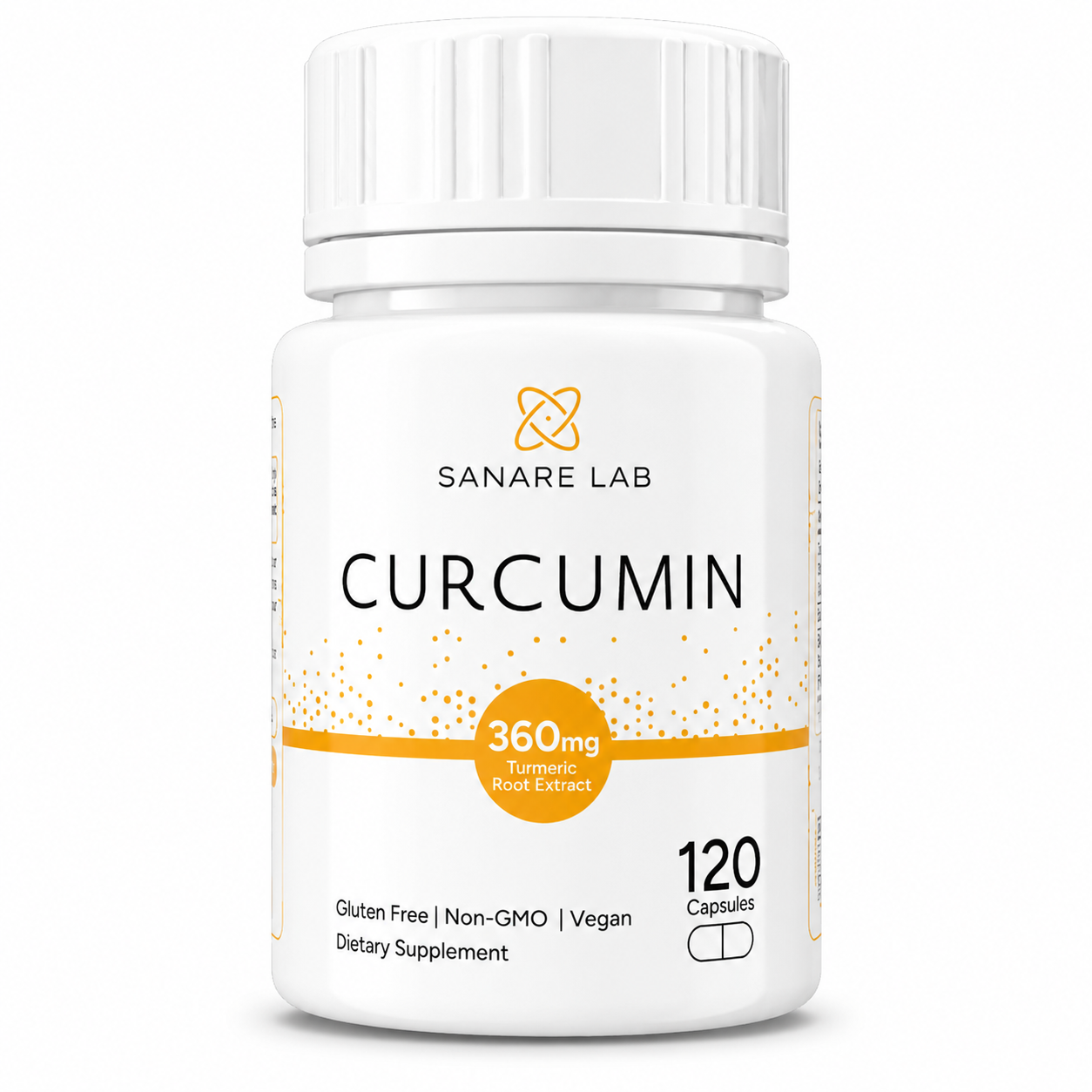
Daily adjunct
Curcumin 360 mg
95% curcuminoids with black pepper extract.
Prices checked September 2026 and may change; the store page shows the current price.
Disclaimer: Links are informational and do not constitute medical advice. Always consult a healthcare provider before using any supplement or medication.
Disclaimer: Links are informational and for convenience. This site does not provide medical advice. Always verify product quality, labeling, and consult a licensed professional for health decisions.
References
- PMID 42522831: Agarose-Based 3D Spheroid Model to Evaluate the Anticancer Activity of the Curcumin Analog CCA-1.1 in Triple-Negative Breast Cancer. Asian Pacific Journal of Cancer Prevention, 2026.
- Curcumin and Cancer: What Human and Preclinical Research Actually Shows — Sanare Lab long-read.
Medical Disclaimer
This article is for informational purposes only and does not constitute medical advice. It is not intended to diagnose, treat, cure, or prevent any disease. Always consult a qualified healthcare provider before making any health decisions. The research described is preclinical and has not been tested in humans.
Sanare Lab
Science-based health education team reviewing published research on repurposed drugs, integrative oncology, and evidence-based protocols.