
The Marik Protocol: Ivermectin and Mebendazole for Cancer — Theory, Evidence, and Risks
A careful, evidence-based review of the Marik ivermectin + mebendazole cancer protocol — the proposed theory, what the human data actually shows, the dosing claims, and the real safety risks.
 By Sanare Lab · August 6, 2026 · 23 min read
This article is for research and informational purposes only. It does not constitute medical advice. Do not self-prescribe. Always consult a qualified healthcare provider before using any supplement, especially alongside cancer treatment.
Critical safety context. The Marik ivermectin + mebendazole combination has never been validated as a cancer treatment in a randomized controlled trial. Every efficacy claim below rests on laboratory studies, animal models, one small chemotherapy add-on trial, and a single uncontrolled, self-reported observational cohort. None of that proves the combination shrinks tumors or extends life when used on its own.
Ivermectin can cause dose-dependent neurotoxicity, mebendazole can cause drug-induced liver injury, and both share metabolic pathways with many chemotherapy agents. Do not start this protocol without a qualified oncologist supervising you, ordering baseline labs, and monitoring you. This article is educational and is not medical advice.
Key takeaways
- What it is: a continuous or pulsed pairing of two antiparasitic drugs — ivermectin and mebendazole — promoted by Dr. Paul Marik as part of a metabolic, cancer-stem-cell strategy, usually added on top of standard care rather than replacing it.
- The theory: both drugs converge on the Wnt/β-catenin stem-cell pathway from different angles; mebendazole also disrupts the microtubules cancer cells need to divide. This is well documented in the lab and unproven in humans.
- The human evidence is weak: one small (n=40) colorectal-cancer trial where mebendazole was added to chemotherapy, and one uncontrolled 2026 cohort with self-reported outcomes and a built-in conflict of interest. There is no randomized trial of the combination as a stand-alone therapy.
- Real risks: ivermectin neurotoxicity, mebendazole liver injury, and largely uncharacterized interactions with chemotherapy.
- Bottom line: biologically interesting and genuinely unproven. If it is explored at all, it should be with an oncology team and alongside standard treatment — not instead of it.
Of all the repurposed-drug cancer protocols circulating in 2025–2026, few have spread faster than the pairing of two old antiparasitic pills: ivermectin and mebendazole. The combination is most closely associated with Dr. Paul Marik, a former critical-care physician and co-founder of the FLCCC, who folded it into a broader "metabolic" cancer framework and published detailed dosing guidance. Telemedicine services now ship compounded ivermectin-plus-mebendazole capsules to patients, and a 2026 observational study reported that roughly 84% of users felt they benefited.
This is an evidence-based review of that specific two-drug protocol. The goal is not to promote it or dismiss it, but to set out clearly what the protocol is, the biology behind combining these two drugs, the doses Marik describes, what the human evidence does and does not show, the real toxicity and drug-interaction risks, and the context around the people promoting it. For related reading, see our guides on the ISOM metabolic protocol, ivermectin dosing in cancer research, and fenbendazole vs. mebendazole.
Table of Contents
- What is the Marik ivermectin + mebendazole protocol?
- The theory: the Mitochondrial–Stem Cell Connection
- How mebendazole is thought to work against cancer
- How ivermectin is thought to work against cancer
- The dosing protocol Marik describes
- The evidence: what supports it and what doesn't
- Safety and toxicity: the risks that matter
- Background on the protocol's proponents
- What mainstream oncology says
- If it is explored anyway: risk-reduction basics
- The bottom line
- What People Report Online: The Marik Protocol
- Frequently Asked Questions
- References
What is the Marik ivermectin + mebendazole protocol?
In short, it is a two-drug antiparasitic pairing that sits at the center of a larger repurposed-drug cancer strategy authored by Dr. Paul Marik. It is not a single fixed prescription — it is a family of dosing options described as flexible, individualized, and "physician-supervised."
The protocol grew out of Marik's monograph Cancer Care: The Role of Repurposed Drugs and Metabolic Interventions in Treating Cancer (published through the Independent Medical Alliance / IMA Health, formerly the FLCCC), and was formalized further in a September 2024 peer-reviewed paper he co-authored in the Journal of Orthomolecular Medicine, titled "Targeting the Mitochondrial-Stem Cell Connection in Cancer Treatment: A Hybrid Orthomolecular Protocol." In that framework, ivermectin and the benzimidazoles (mebendazole and its cousin fenbendazole) are the antiparasitic "core" of a much wider list that also includes vitamin D, vitamin C, zinc, metformin, statins, doxycycline, curcumin, melatonin, and a ketogenic diet.
When people say "the Marik protocol," they usually mean the full stack. When they say the "ivermectin + mebendazole protocol," they mean the stripped-down, two-drug combination that has become the most popular entry point — the version telemedicine platforms dispense as a single compounded capsule. This article focuses on that two-drug pairing.
The theory: the Mitochondrial–Stem Cell Connection
To understand why anyone would pair these two specific drugs, it helps to understand the theory Marik built the protocol on. It is a metabolic model of cancer that leans on two ideas: that cancer behaves partly like a disease of broken cellular energy production (the mitochondria), and that a small population of cancer stem cells (CSCs) drives recurrence and spread.
In this "Mitochondrial-Stem Cell Connection" (MSCC) framing, standard chemotherapy and radiation may shrink the bulk of a tumor while leaving treatment-resistant cancer stem cells behind — and those survivors regrow the tumor and seed metastasis. The protocol's logic is therefore to use agents that (a) pressure the tumor's abnormal metabolism and (b) attack cancer stem cells and the signaling pathways that keep them alive. Ivermectin and mebendazole are attractive to this model because, in laboratory studies, both appear to interfere with the Wnt/β-catenin pathway — a signaling cascade heavily implicated in stem-cell self-renewal.
It is worth stating plainly: the MSCC theory is a hypothesis, not established oncology. The idea that cancer is primarily a metabolic disease is a real, decades-old scientific debate, but mainstream oncology treats metabolic dysfunction as one feature of cancer among many (alongside genetic mutations and immune evasion), not as a master switch. The combination protocol takes a contested theory and builds a specific treatment on top of it. That does not make it wrong — but the foundation itself is not settled science.
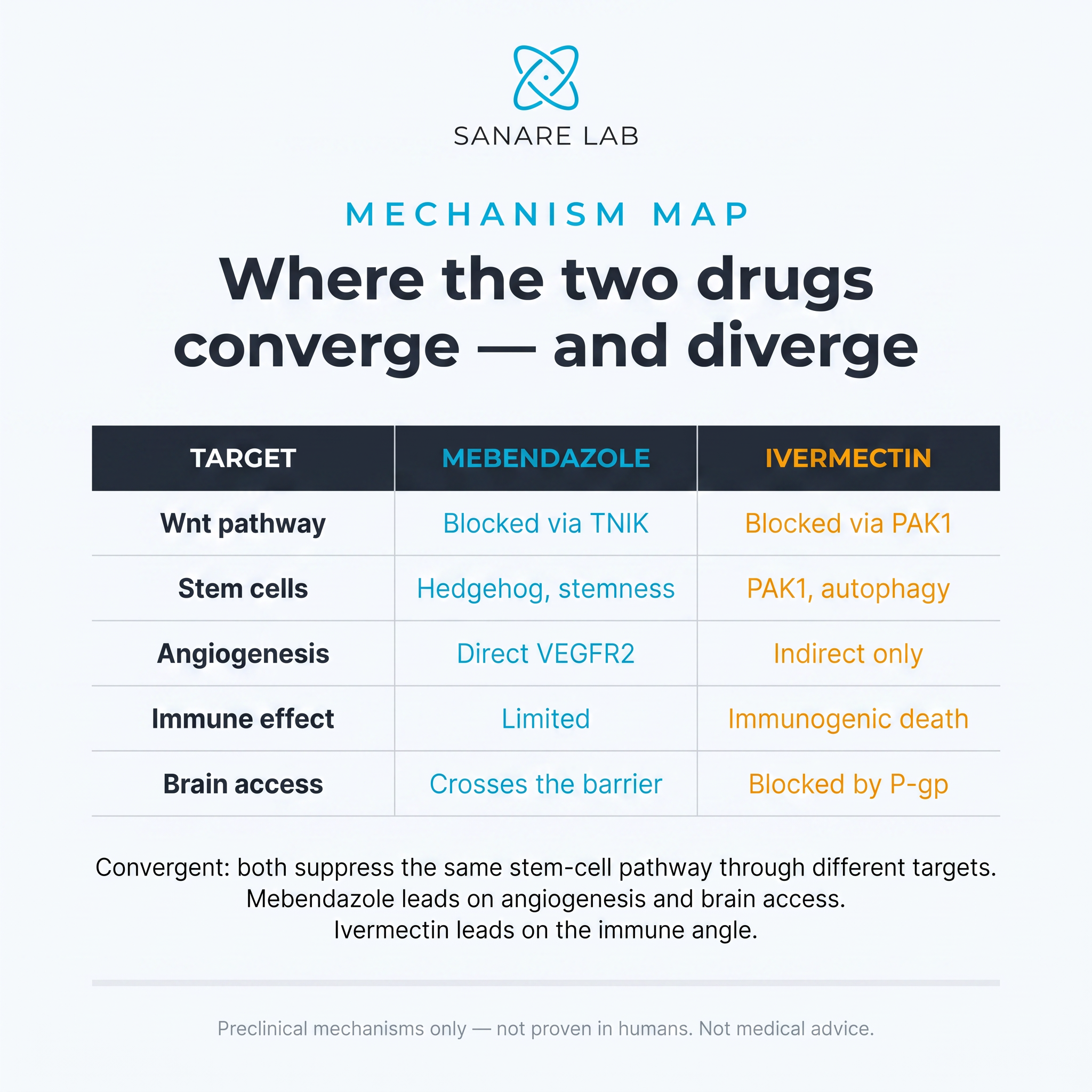
Why these two drugs together? The rationale is complementarity: mebendazole is primarily a microtubule/tubulin poison that also hits Wnt/TNIK, Hedgehog, and angiogenesis; ivermectin comes from a different angle (PAK1 inhibition, autophagy, immunogenic cell death). Two drugs, overlapping stem-cell targets, different primary mechanisms — the theoretical hope is additive pressure with non-overlapping toxicity. Whether that translates into real benefit in a human body is exactly what has never been tested in a controlled trial.
How mebendazole is thought to work against cancer
Mebendazole (MBZ) is the more mechanistically "cancer-like" of the two drugs, because its main action resembles a class of real chemotherapy agents. Here is what preclinical research shows — and where the evidence stops.
1. Microtubule disruption (its headline mechanism). Mebendazole binds the colchicine-binding site of β-tubulin and inhibits microtubule polymerization. Microtubules form the spindle that pulls chromosomes apart during cell division, so blocking their assembly arrests cells in the G2/M phase of mitosis and can trigger apoptosis. This is conceptually similar to how taxane chemotherapies work — except taxanes stabilize microtubules while mebendazole prevents their formation.
2. Wnt/TNIK signaling blockade. Mebendazole promotes degradation of TNIK, a kinase that supports Wnt/β-catenin signaling — a pathway that drives colorectal and many other cancers and helps maintain cancer stem cells.
3. Hedgehog and NF-κB/MYC pathways. In lab models, mebendazole downregulates Hedgehog signaling (linked to stem-cell self-renewal) and NF-κB/MYC signaling (frequently overactive in aggressive tumors).
4. Anti-angiogenesis. Mebendazole can act as a VEGFR2 kinase inhibitor, blunting the VEGF signaling tumors use to build new blood vessels in preclinical models.
5. Cancer stem cell targeting and metabolism. By hitting stemness genes and interfering with glycolysis and glutaminolysis, mebendazole is proposed to deplete tumor-initiating cells.
6. It crosses the blood-brain barrier. Because it is small and lipophilic, mebendazole penetrates the central nervous system — the reason most human clinical interest in mebendazole has centered on brain tumors such as glioblastoma.
The bioavailability problem
Mebendazole is poorly water-soluble and erratically absorbed from the gut. Oral bioavailability is low and highly variable between people. This is precisely why a Swedish clinical trial of individualized mebendazole dosing struggled to maintain target blood levels and was stopped early. The lab mechanisms above assume the drug reaches the tumor at an effective concentration — far from guaranteed with oral dosing, which is why the protocol insists on taking it with fatty food.
How ivermectin is thought to work against cancer
Ivermectin (IVM) attacks cancer from different angles than mebendazole — which is the whole rationale for combining them. Again, this is preclinical biology; treat it as "plausible mechanism," not "proven human benefit." For the chemistry and history, see our complete guide to ivermectin.
1. PAK1 inhibition → Wnt/β-catenin shutdown. Ivermectin is a potent inhibitor of p21-activated kinase 1 (PAK1), which helps β-catenin accumulate and move into the nucleus to switch on pro-growth genes. By inactivating PAK1, ivermectin disrupts the same Wnt/β-catenin cascade mebendazole hits — from a different entry point.
2. Autophagy and apoptosis. Ivermectin can induce PAK1-mediated cytostatic autophagy and caspase-dependent apoptosis in a range of cancer cell lines.
3. Immunogenic cell death and immune modulation. In some models ivermectin promotes "immunogenic cell death," and it has been studied as a way to make "cold" tumors more responsive to immunotherapy — reviewed in our immunotherapy research overview.
4. Other pathways. Ivermectin has been reported to modulate Akt/mTOR, Hippo, and STAT3 signaling, and to downregulate EMT markers such as vimentin and snail — changes associated in the lab with reduced invasion and metastasis.
The concentration gap. Many of ivermectin's anticancer effects appear in the lab only at concentrations far higher than standard antiparasitic dosing produces in human blood. Reaching those levels in a person may require doses that risk neurotoxicity. This "gap between the petri dish and the patient" is the single biggest scientific caveat for ivermectin as a cancer drug — no matter how impressive the cell-culture data look.
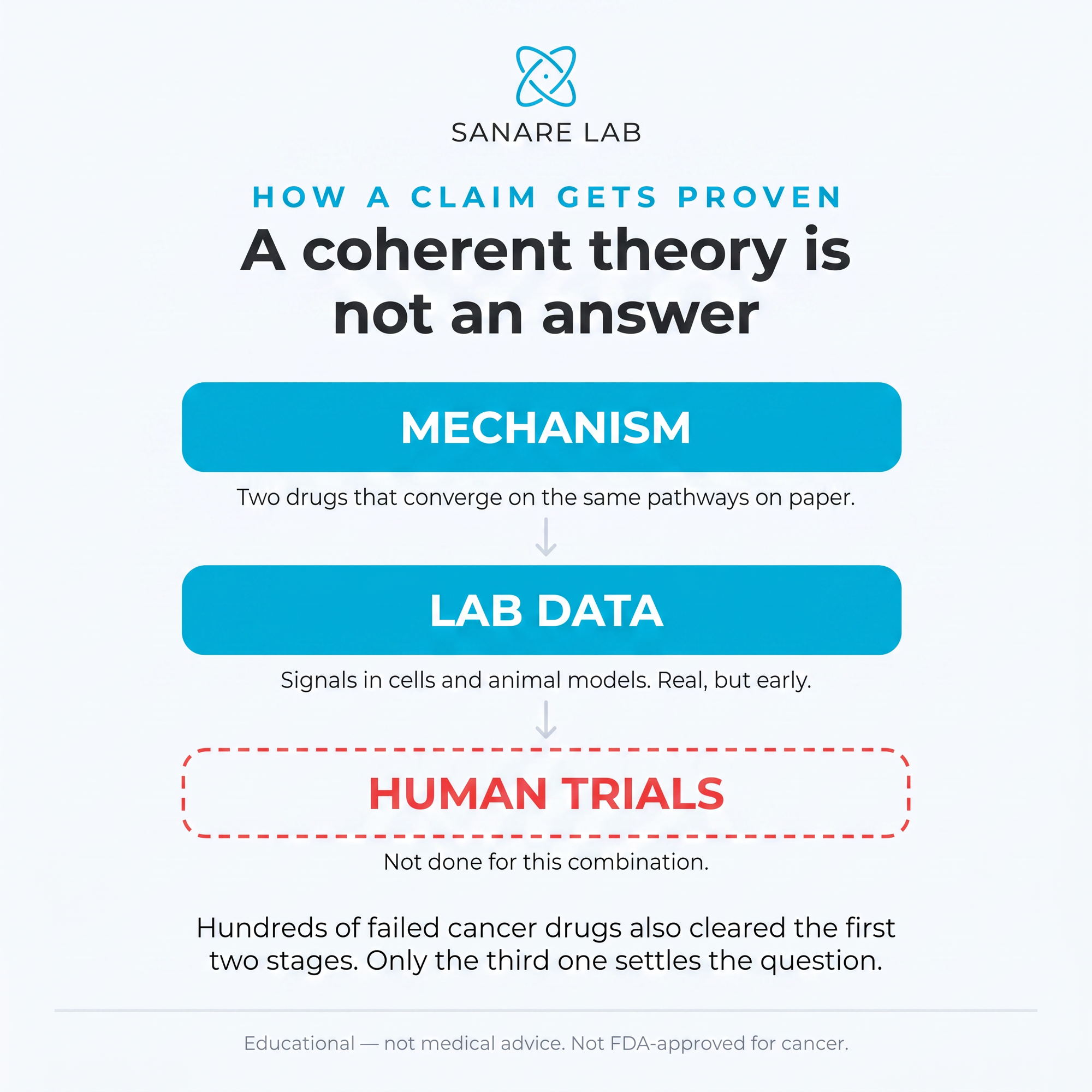
The combination's theoretical appeal is real and internally coherent. But "coherent theory + lab data" is where hundreds of failed cancer drugs also started. Only controlled human trials settle the question — and for this combination, they have not been done.
The dosing protocol Marik describes
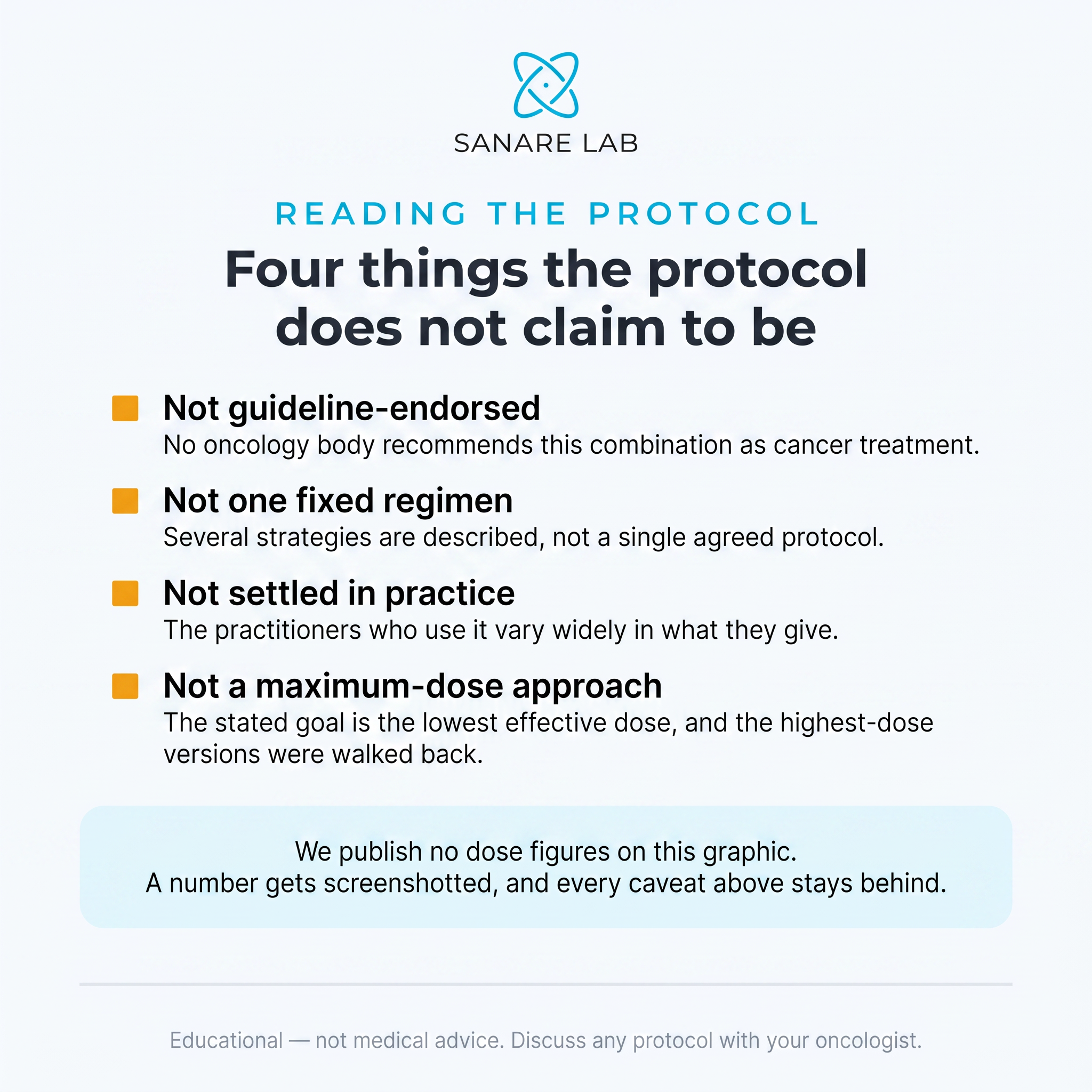
This is the section people search for most, so we will be precise — and precise about the caveats. In his 2026 Substack guidance, Marik lays out several dosing strategies rather than one fixed regimen, and repeatedly stresses that these are not guideline-endorsed, that practitioners vary widely, and that the goal is the lowest effective dose, not the maximum tolerated dose. He has also publicly walked back the highest-dose versions.
These doses are reproduced for information only. The numbers below are what the protocol's author published. Reproducing them is not a recommendation to take them. Ivermectin here is dosed per kilogram of body weight and can reach many times the standard antiparasitic dose — exactly where neurotoxicity risk climbs. Mebendazole at 1,000 mg/day is far above its approved antiparasitic dose and carries liver-injury risk over time. Anyone considering these doses needs a supervising physician, baseline bloodwork, and ongoing monitoring.
Ivermectin dosing strategies
Mebendazole dosing strategies
The telemedicine version most patients actually encounter is simpler: a compounded capsule combining 25 mg ivermectin + 250 mg mebendazole, taken daily — the exact formulation used in the 2026 observational study discussed below. Notice this fixed-dose capsule ignores the per-kilogram individualization in Marik's own written protocol.
Marik's own June 2026 walk-back. In a Substack update, Dr. Marik cautioned that certain high-dose versions of the protocol are potentially toxic and stated explicitly that he does not recommend them. When the person who popularized a protocol warns that some circulating versions are dangerous, that is a signal to take the toxicity risk seriously.
Why "take it with fat" is not a wellness cliché here
Both drugs are fat-soluble and poorly absorbed on an empty stomach. For mebendazole in particular, a fatty meal can be the difference between negligible and meaningful blood levels — which cuts both ways. It means the protocol may do nothing if taken "wrong," and that blood levels (and toxicity risk) can swing unpredictably depending on what was eaten. This variability is a core reason oral benzimidazoles have been so hard to validate in real trials.
The evidence: what supports it and what doesn't
Here is where an honest review has to slow down. The mechanisms above are genuinely interesting. But "interesting mechanism" and "works in patients" are separated by a wide gap that only clinical trials can close. So let us walk through every meaningful piece of human evidence for this combination — in order of strength.
Evidence #1: The 2026 observational cohort (197 patients) — the study everyone cites
This is the study behind the "84% of patients benefited" headline. In April 2026, a group led by Nicolas Hulscher released a prospective observational cohort of 197 cancer patients who received compounded oral capsules (25 mg ivermectin + 250 mg mebendazole) through a telemedicine platform. It was posted as a preprint on Zenodo and is associated with a listing in Anticancer Research.
At first glance that looks impressive. But this study cannot establish that the drugs work, and the authors themselves call it "hypothesis-generating." Here is why:
- No control group. Without randomizing similar patients to "drugs" vs "no drugs," there is no way to know whether outcomes came from the capsules, from the chemo/radiation/surgery many patients were also receiving, or from the natural course of their disease.
- Outcomes were self-reported, not scan-verified. "No evidence of disease" and "tumor regression" were reported by patients on voluntary surveys — not measured by RECIST imaging or a blinded radiologist.
- Survivorship / selection bias. 38% never completed the follow-up survey. Patients who deteriorated or died are the least likely to respond — which mechanically inflates the apparent benefit rate among "completers." The 84.4% figure is of the 122 who responded, not the 197 who started.
- Concurrent standard treatment. Many participants were simultaneously getting conventional cancer therapy — a textbook confounder.
- Conflict of interest. Several authors were affiliated with the organization that prescribed and sold the medication — disclosed, but a serious bias risk.
- Preprint status. As a preprint, it had not passed the independent peer review that catches these problems.
An uncontrolled, self-reported, self-selected cohort run partly by the people selling the product is the weakest tier of clinical evidence — roughly one step above a testimonial. It can justify running a real trial. It cannot prove the drugs work.
Evidence #2: The Hegazy 2022 colorectal-cancer trial — the strongest human data
The single most rigorous piece of human evidence in this area is a small randomized, double-blind, placebo-controlled trial by Hegazy and colleagues, published in Life Sciences in 2022. It enrolled 40 patients with metastatic colorectal cancer and randomized them to standard chemotherapy (bevacizumab + FOLFOX4) with or without mebendazole 500 mg twice daily.
Those are striking numbers, and this trial is the legitimate scientific seed of the benzimidazole-for-cancer movement. But read the fine print:
- It tested mebendazole added to chemotherapy — not mebendazole alone, and not the ivermectin+mebendazole combination at all. Ivermectin was not in this trial.
- It was small (n=40) and single-center. Small single-center trials with dramatic effects frequently shrink or vanish when repeated at larger scale.
- It has not been replicated in a larger, multi-center trial.
- It applies to one cancer type (metastatic colorectal) with a specific chemo regimen — not a blanket endorsement for all cancers or for drug-only use.
So the strongest human evidence supports a narrow claim: mebendazole may enhance a particular chemotherapy in colorectal cancer, in one small trial that needs confirmation. That is a real signal worth studying — and a long way from "ivermectin + mebendazole treats cancer."
Evidence #3: The Swedish mebendazole trial that failed
Rarely mentioned by promoters is the counter-evidence. A Swedish phase 2a study (MEBRUTA, NCT03925662) tested individualized mebendazole dosing in advanced gastrointestinal cancers. It was discontinued early — investigators could not maintain target blood concentrations and saw no treatment benefit. This is a direct demonstration of the bioavailability problem: even a formal trial with dose individualization could not get enough mebendazole into patients to help them.
Evidence #4: The combination as a stand-alone therapy
This is the crucial gap. There is no randomized, placebo-controlled trial evaluating ivermectin + mebendazole as a primary cancer treatment — for any cancer. The combination's entire human track record is the uncontrolled 2026 cohort plus extrapolation from single-drug studies. Everything else is laboratory and animal data.
Safety and toxicity: the risks that matter
"Antiparasitic drugs are safe — people have taken them for decades" is the most common reassurance you will hear. It is half true and half misleading. At approved antiparasitic doses, for short courses, both drugs have long safety records. But this protocol uses higher doses, for months to years, often in combination and alongside chemotherapy — a very different risk profile than deworming.
Ivermectin: neurotoxicity is the ceiling
Ivermectin's dose-limiting toxicity is neurological. Normally a transporter protein called P-glycoprotein (P-gp) pumps ivermectin out of the brain. Problems arise when that protection fails or is overwhelmed:
- High doses can saturate P-gp and let ivermectin reach the brain.
- P-gp–inhibiting drugs — including common cardiac/blood-pressure medications like verapamil and amiodarone — can raise ivermectin's brain and blood levels.
- Liver dysfunction slows clearance and raises exposure.
Symptoms range from dizziness, blurred vision, and confusion to gait instability and — at extreme exposures — seizures and coma. These are rare at conventional doses but become a real concern in the higher-dose tiers, which is why Marik himself flagged high-dose versions as potentially toxic.
Mebendazole: the liver is the vulnerable organ
The main concern with prolonged, higher-dose mebendazole is hepatotoxicity. Long-term use requires periodic liver-function testing (ALT, AST, alkaline phosphatase, bilirubin). Marik's own guidance advises discontinuing if liver enzymes rise above roughly three times the upper limit of normal. A published case report documented drug-induced liver injury in a lung-cancer patient who self-administered a benzimidazole (fenbendazole) — a concrete reminder that "natural-sounding deworming pill" does not mean "harmless to the liver."
Drug interactions with chemotherapy — the underappreciated danger
This is arguably the most serious real-world risk, precisely because the protocol is marketed as an add-on to standard care. Both drugs are handled by liver enzyme systems (CYP pathways) and P-glycoprotein that also process many chemotherapy agents. Adding them can, in principle, alter how fast chemo is cleared — either raising chemo toxicity or blunting its effect. Because the combination has never been formally studied alongside specific chemo regimens, these interactions are largely uncharacterized.
Never add this protocol to active chemotherapy without telling your oncologist. With drugs that share metabolic pathways with chemotherapy, secrecy removes your doctor's ability to watch for interactions, adjust doses, or interpret side effects correctly. Full disclosure to your oncology team is non-negotiable.
Veterinary products are not for humans
Fenbendazole and some ivermectin products are sold for livestock and pets. These are not manufactured, tested, or dosed to human pharmaceutical standards — purity, concentration, and excipients can be unknown or unsafe. If someone chooses to explore this at all, it should only ever be with human pharmaceutical-grade, verified medication.
Background on the protocol's proponents
In oncology, who recommends a treatment and on what evidence matters for patient safety, because cancer decisions are high-stakes and often irreversible. So the background of the protocol's main proponent is relevant context.
- Dr. Paul Marik is not an oncologist. He is a critical-care physician and pulmonologist with no oncology fellowship, no oncology board certification, and no peer-reviewed original cancer research establishing efficacy of this combination. His earlier career was in intensive-care medicine (notably sepsis and a vitamin C protocol for septic shock).
- His board certifications were revoked. In August 2024, the American Board of Internal Medicine (ABIM) revoked Marik's certifications in internal medicine and critical care medicine, citing the dissemination of "false or inaccurate medical information" related to COVID-19.
- Licensing history. Marik's Virginia medical license expired in June 2022 and was not renewed; he has said he is no longer practicing medicine. In 2021 the Virginia Board of Medicine issued a consent order regarding his prescribing of controlled substances.
- The FLCCC's COVID track record. The organization promoting this cancer work first became known for advocating ivermectin against COVID-19 — a use that large randomized trials (TOGETHER, ACTIV-6, PRINCIPLE) and agencies (FDA, WHO) subsequently found ineffective.
None of this proves the cancer protocol is wrong. A non-oncologist can be right, and repurposed drugs are a legitimate research field. But it does mean the recommendation is not coming from oncology expertise or an evidence-based guideline process — context that belongs in any honest evaluation.
What mainstream oncology says
Major oncology bodies do not endorse ivermectin, mebendazole, or fenbendazole as cancer treatments outside of clinical trials. Reporting in 2026 described an American Society of Clinical Oncology (ASCO) clinical notice advising against off-label use of these agents for cancer, citing insufficient evidence and risks of toxicity and drug interactions. Whether or not you weight institutional positions heavily, the practical reality is clear: no NCCN, ASCO, or ESMO guideline recommends this protocol, and no regulator has approved either drug for cancer.
If it is explored anyway: risk-reduction basics
This article does not recommend the protocol. But people facing cancer make their own choices, and a realistic resource should describe what "least-bad" looks like rather than pretend no one will try it. If you are determined to explore ivermectin + mebendazole, the following reduce (not eliminate) the risk:
- Do it with your oncologist, not behind their back. Bring this article, the dosing, and your full medication list. Interactions with chemotherapy are the single biggest hidden danger.
- Keep standard-of-care treatment. The one scenario with any human trial support is mebendazole added to chemotherapy — not replacing it.
- Get baseline bloodwork first. Liver function tests (ALT, AST, ALP, bilirubin) and a complete blood count before starting, then periodically. Stop mebendazole if liver enzymes exceed ~3× the upper limit of normal.
- Avoid the high-dose ivermectin tiers. These carry the most neurotoxicity risk and the least safety data — the versions the protocol's own author cautioned against.
- Review interacting drugs. Tell your doctor about any P-gp inhibitors (e.g., verapamil, amiodarone) that can push ivermectin levels up.
- Human pharmaceutical grade only. Never veterinary product.
- Stop immediately for neurological symptoms (dizziness, confusion, vision changes, unsteadiness) or signs of liver trouble (nausea, right-upper-abdomen pain, jaundice, dark urine).
The bottom line
The Marik ivermectin + mebendazole protocol is the most talked-about repurposed-drug cancer combination of the moment, and it is not fringe nonsense — it rests on a coherent biological theory and a real body of laboratory research showing both drugs hit cancer-relevant pathways, converging on the Wnt/β-catenin stem-cell axis from different angles. That is why serious researchers think the space is worth studying.
But "worth studying" is not "proven," and the gap between the two is where cancer patients are most vulnerable. The human evidence for this specific combination is one small, unreplicated chemotherapy add-on trial (mebendazole, colorectal cancer) and one uncontrolled, self-reported, conflict-laden observational cohort — set against a failed formal trial and a chronic drug-delivery problem. There is no randomized trial of the combination as a stand-alone therapy, no regulatory approval, and no guideline endorsement.
If you take one thing from this review: this combination might one day earn a real place in oncology through proper trials — or it might join the long list of lab-promising, patient-disappointing drugs. Today, nobody actually knows. Treat anyone who tells you otherwise — "miracle cure" or "obvious quackery" — with suspicion. Keep your oncologist in the loop, keep your standard treatment, and make decisions with clear eyes about exactly how thin the evidence is.
Estimate a weight-based regimen with our protocol calculator.
What People Report Online: The Marik Protocol
Behind the laboratory papers sits a large, restless online conversation. On Reddit and patient forums, people following ivermectin-and-mebendazole protocols — and the relatives caring for them — trade experiences with ivermectin and mebendazole, usually as an add-on to standard cancer care. To save you from digging through dozens of scattered threads, we have gathered the most relevant, on-topic discussions in one place, together with an honest guide to what these accounts can and cannot tell you.
How to read these reports
These are personal stories, not clinical evidence. They are uncontrolled, self-reported, and impossible to verify independently.
In almost every account, the person was also receiving standard treatment — chemotherapy, immunotherapy, radiotherapy, or surgery — at the same time as ivermectin and mebendazole. When someone improves on two therapies at once, the result cannot be credited to ivermectin and mebendazole alone; the conventional treatment is the far more likely explanation.
Encouraging stories are also shared far more often than disappointing ones, so online threads skew positive (survivorship and publication bias).
The useful way to read them is as questions worth raising with your oncologist — not as a protocol to copy on your own.
For a deeper, evidence-based look at how these accounts hold up — including the documented case reports and the peer-reviewed analyses behind them — see our detailed review of fenbendazole success stories and case reports.
Frequently Asked Questions
Does the Marik ivermectin + mebendazole protocol cure cancer?
There is no reliable evidence that it cures cancer. No randomized controlled trial has tested this combination as a stand-alone cancer treatment. The widely cited "84% benefited" figure comes from an uncontrolled, self-reported observational study with a built-in conflict of interest — which cannot establish that the drugs caused any benefit.
What are the exact doses in the protocol?
Marik describes ivermectin at 0.2–0.4 mg/kg/day (continuous), various pulse schedules, or 0.6–1.0 mg/kg/day (high-dose, which he has cautioned against), and mebendazole at 100–200 mg twice daily up to 500 mg twice daily, taken with fatty food. The common telemedicine capsule is 25 mg ivermectin + 250 mg mebendazole daily. These are reproduced for information only and require physician supervision.
Is Dr. Paul Marik an oncologist?
No. He is a critical-care physician and pulmonologist with no oncology training or board certification and no peer-reviewed cancer-efficacy research. In August 2024 the American Board of Internal Medicine revoked his internal medicine and critical care certifications, citing "false or inaccurate medical information" related to COVID-19.
Can I take this protocol during chemotherapy?
Only under your oncologist's direct supervision and with full disclosure. Both drugs share liver-enzyme and P-glycoprotein pathways with many chemotherapy agents, so they can alter chemo levels in ways that have not been formally studied. Never add it secretly to active cancer treatment.
What is the biggest safety risk?
Two things: ivermectin neurotoxicity (especially at high doses or with P-gp–inhibiting heart/BP drugs) and mebendazole liver injury with prolonged use — plus largely uncharacterized interactions with chemotherapy. Baseline and periodic liver function tests are considered essential, and high-dose ivermectin should be avoided.
Is the 2022 colorectal cancer trial proof that it works?
No. That trial (Hegazy et al.) tested mebendazole added to chemotherapy — not the ivermectin+mebendazole combination and not mebendazole alone. It was small (40 patients), single-center, and has not been replicated. It is a promising but preliminary signal for one cancer type, not proof for the combination protocol.
Is veterinary-grade product okay if it's cheaper?
No. Products made for animals are not manufactured, tested, or dosed to human pharmaceutical standards. Purity and concentration can be unknown. Using veterinary product on yourself adds avoidable risk on top of an already-unproven protocol.
Why do so many people report feeling better on it?
Several reasons unrelated to the drugs curing cancer: many users are simultaneously receiving effective standard treatment; some cancers progress slowly on their own; placebo and hope are powerful; and self-reported surveys over-represent people who are doing well (those who deteriorate stop responding). This is exactly why uncontrolled testimonials cannot substitute for randomized trials.
How is mebendazole different from fenbendazole in this context?
Both are benzimidazole antiparasitics with similar proposed anticancer mechanisms (tubulin disruption, Wnt interference). Mebendazole is licensed for human use and crosses the blood-brain barrier well; fenbendazole is a veterinary drug with no human formulation. See our detailed fenbendazole vs. mebendazole comparison.
Why combine two drugs instead of using one?
The rationale is complementarity: mebendazole provides a chemotherapy-like microtubule hit and ivermectin adds PAK1 inhibition and immune effects, while both converge on the Wnt/β-catenin stem-cell pathway from different targets. The theoretical hope is additive pressure with non-overlapping toxicity — but this synergy has never been tested in a controlled human trial.
Is this the same as the full Marik or ISOM metabolic protocol?
No. The full stack adds vitamin D, vitamin C, metformin, statins, doxycycline, curcumin, melatonin and a ketogenic diet. The "ivermectin + mebendazole protocol" is the stripped-down, two-drug core. For the broader metabolic approach, see our ISOM protocol overview.
What monitoring is recommended if someone uses it?
Baseline and periodic liver function tests (ALT, AST, ALP, bilirubin) and a complete blood count, a full medication review for P-gp/CYP interactions, and vigilance for neurological or liver-injury symptoms. All of this should be overseen by a qualified physician — ideally the treating oncologist.
Shop Sanare Lab
Lab-tested products referenced in the research above. Links are provided for convenience — always review the label and consult a professional before use.
6 / 12 / 18 mg — 100 tablets
180 capsules — 99% purity, laboratory tested
120 capsules — with Black Pepper for absorption
Disclaimer: Links are informational and for convenience. This site does not provide medical advice and does not endorse any specific vendor. Always verify product quality, labeling, and consult a licensed professional for health decisions.
References
- Marik PE, Baghli I, Martinez P. "Targeting the Mitochondrial-Stem Cell Connection in Cancer Treatment: A Hybrid Orthomolecular Protocol." J Orthomolecular Med, 2024. Article
- Marik PE. "The Ivermectin and Mebendazole Dosing Protocol." Substack, 2026. Source
- Marik PE. "Mebendazole: A Multi-Axis Metabolic Agent." Substack. Source
- Hulscher N, et al. "Real-World Clinical Outcomes of Ivermectin and Mebendazole in Cancer Patients: Results from a Prospective Observational Cohort." Preprint, 2026 (Zenodo) / Anticancer Research. Preprint · DOI
- Hegazy SK, et al. "Mebendazole; from an anti-parasitic drug to a promising candidate for drug repurposing in colorectal cancer" (RCT, n=40, metastatic colorectal). Life Sciences, 2022. Article
- MEBRUTA phase 2a, individualized mebendazole in advanced GI cancer (discontinued early). ClinicalTrials.gov NCT03925662. Registry
- Juarez M, et al. "The multitargeted drug ivermectin: from an antiparasitic agent to a repositioned cancer drug." PMC6982461. Review
- Ivermectin, Wnt5a/b-LRP6 downregulation, endocrine-resistant breast cancer. PLoS One, 2024. Article
- Mebendazole mechanisms: tubulin, TNIK/Wnt, Hedgehog, VEGFR2, CSCs. PMC6769799. Review
- CancerChoices (for health professionals): mebendazole / fenbendazole evidence overview. Overview
- FLCCC / IMA Health, Cancer Care: The Role of Repurposed Drugs and Metabolic Interventions in Treating Cancer. Monograph
- ABIM revokes Marik and Kory board certifications (Aug 2024). MedPage Today. Report
Medical Disclaimer
This article is for educational and informational purposes only. It is not intended to be a substitute for professional medical advice, diagnosis, or treatment. Always seek the advice of your physician or other qualified health provider with any questions you may have regarding a medical condition. Never disregard professional medical advice or delay in seeking it because of something you have read on this website.
Sanare Lab
Science-based health education team reviewing published research on repurposed drugs, integrative oncology, and evidence-based protocols.