
Monensin Demonstrates Antitumor Activity in Diverse Malignancies (2026 Preclinical Overview)
A 2026 review in Molecular Biology Reports summarizes preclinical evidence that monensin, a veterinary ionophore, demonstrates antitumor activity across breast, prostate, pancreatic, ovarian, renal, liver, thyroid, and brain malignancies.
 By Sanare Lab · August 11, 2026 · 5 min read
Key Takeaway
A July 2026 narrative review in Molecular Biology Reports comprehensively catalogues preclinical studies showing that monensin—a polyether ionophore long used in veterinary medicine—exerts selective cytotoxic and anti-progression effects across at least ten distinct cancer types. The evidence remains preclinical (cell culture and animal models), but spans breast, prostate, pancreatic, ovarian, cervical, renal, bladder, liver, thyroid, and brain cancers. No human clinical trials have yet been reported.
Drug repurposing has become one of the most promising avenues in cancer research, leveraging medications with established safety profiles to target malignancies through novel mechanisms. Monensin, a sodium ionophore widely used in veterinary medicine to prevent coccidiosis in livestock, has recently attracted attention as a potential broad-spectrum anticancer agent.
In this article, we examine the findings of a comprehensive July 2026 review published in Molecular Biology Reports, which systematically evaluated preclinical evidence for monensin's anticancer activity across multiple tumor types. Patients researching repurposed drugs for cancer may find this overview helpful in understanding where monensin fits within the broader landscape of metabolic-targeting therapies. For context on how repurposed drugs are used in cancer protocols, see our dosing calculator.
Table of Contents
- How Monensin Targets Cancer Cells
- Preclinical Evidence by Cancer Type
- Translational Challenges and Safety Considerations
- Frequently Asked Questions
How Monensin Targets Cancer Cells
Monensin is a carboxylic ionophore that selectively transports sodium ions across cell membranes. In cancer cells, this activity disrupts the finely tuned ionic balance required for survival, leading to several downstream effects:
- Sodium overload — Elevated intracellular sodium triggers osmotic stress and mitochondrial dysfunction, pushing cells toward apoptosis.
- Autophagy disruption — Monensin interferes with autophagic flux, a process many cancer cells rely on for survival under metabolic stress.
- Signaling pathway inhibition — Preclinical studies report suppression of EGFR, MEK/ERK, AMPK/mTOR, and androgen receptor pathways in specific cancer models.
- Glycosylation alterations — In hematologic malignancies, monensin modifies glycosylation patterns on cell surface proteins, affecting cell adhesion and proliferation.
These mechanisms are not cancer-specific; rather, they exploit metabolic vulnerabilities that are common across many tumor types. This is why monensin has shown activity in such a diverse range of cancers in preclinical models. Related reading: a mini-review of monepantel in oncology.
Preclinical Evidence by Cancer Type
The 2026 review evaluated monensin across multiple cancer types. Below is a summary of the reported preclinical findings for each:
| Cancer Type | Reported Effects in Preclinical Models |
|---|---|
| Breast cancer | Reduced proliferation, apoptosis induction, enhanced chemosensitivity |
| Prostate cancer | Androgen receptor disruption, oxidative stress, mitochondria-dependent apoptosis |
| Pancreatic cancer | EGFR signaling suppression, programmed cell death promotion |
| Ovarian / cervical | Proliferation, migration, and invasion inhibition; EGFR/MEK/ERK modulation; enhanced SUMOylation |
| Renal carcinoma | Cell-cycle arrest, autophagy, apoptosis |
| Bladder / SCC | EGFR-related signaling interference, lectin-mediated interaction disruption |
| Liver cancer | Selective killing via Na⁺ overload and mitochondrial damage |
| Thyroid cancer | Cellular respiration disruption, AMPK/mTOR signaling inhibition |
| Glioblastoma | Anti-tumor and anti-angiogenic effects |
| Leukemia / lymphoma | Apoptosis, cell-cycle arrest, glycosylation alterations |
All evidence cited above is derived from in vitro cell culture and animal model studies. No human clinical trials of monensin in oncology have been published to date.
Translational Challenges and Safety Considerations
Despite the breadth of preclinical evidence, several significant hurdles stand between monensin and clinical translation:
- Species-specific toxicity — Monensin is safe in ruminants but highly toxic to horses and dogs. Its safety profile in humans is not established at therapeutic doses.
- Dosing uncertainty — Preclinical effective doses are extrapolated from animal models; human-equivalent doses are unknown.
- No clinical trials — No phase I, II, or III trials have evaluated monensin as a cancer therapy in humans.
- Formulation barriers — Monensin is poorly water-soluble and would require specialized formulation for human use.
- Regulatory status — Monensin is approved only as a veterinary feed additive; it is not approved for human use in any indication.
These limitations mean that monensin remains a research compound rather than a viable therapy option for patients at this time. Anyone considering off-label use of veterinary compounds should be aware of the substantial risks involved. Related reading: the 2026 review of antiparasitic drugs in oncology.
Frequently Asked Questions
What is monensin?
Monensin is a polyether ionophore antibiotic approved for veterinary use, primarily to prevent coccidiosis in livestock. It works by transporting sodium ions across cell membranes, disrupting the ionic balance of target organisms.
Has monensin been tested in human cancer patients?
No. All published evidence for monensin's anticancer activity comes from in vitro cell culture and animal model studies. No human clinical trials have been conducted to evaluate monensin as a cancer therapy.
Can I take monensin for cancer?
No. Monensin is not approved for human use and is toxic to some species. Self-administering veterinary monensin is dangerous and should not be attempted. Patients should only use approved medications under medical supervision.
In Plain Terms
Monensin is a livestock antibiotic that scientists have recently discovered may kill cancer cells in lab dishes and animal models. It works by disrupting the sodium balance inside cells, which damages mitochondria and triggers cell death. However, it has never been tested in human cancer patients, is not approved for human use, and can be toxic. It remains an interesting research idea but not a treatment option.
In plain words
What happened: A 2026 review gathered preclinical studies of monensin, a veterinary drug, across several types of cancer.
Why it matters: The authors summarized experiments testing whether monensin can disrupt cell processes involved in cancer growth and spread.
How strong is the evidence: The evidence came from cell and animal studies. The review reported no human cancer trials, so there is no established patient benefit.
What it means for you: Nothing changes in cancer care. Monensin is not shown here to help people, and veterinary drugs should not be used for cancer without medical direction.
Shop Sanare Lab
Lab-tested products referenced in the research above — order direct from Sanare Lab.

Pharmaceutical grade
Fenbendazole 222 mg
99%+ purity, third‑party lab tested.
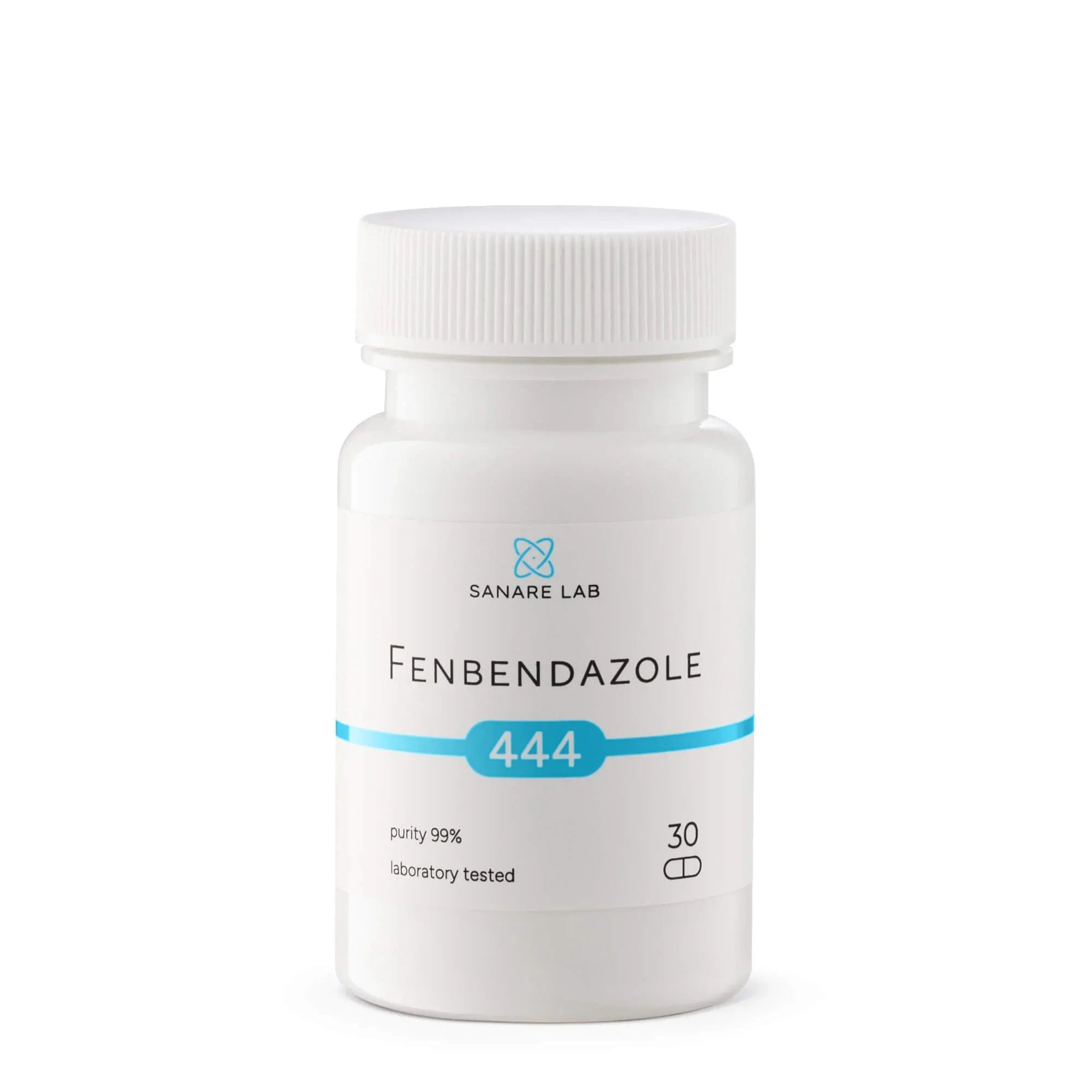
Pharmaceutical grade
Fenbendazole 444 mg
Double strength, 99%+ purity, lab tested.

Daily adjunct
Curcumin 360 mg
95% curcuminoids with black pepper extract.

Prices checked September 2026 and may change; the store page shows the current price.
Disclaimer: Links are informational and do not constitute medical advice. Always consult a healthcare provider before using any supplement or medication.
Disclaimer: Links are informational and for convenience. This site does not provide medical advice. Always verify product quality, labeling, and consult a licensed professional for health decisions.
References
- Darabniya A, Shahriari S, Fazeli R, et al. From veterinary antibiotic to cancer therapy: revisiting anticancer potential of Monensin. Mol Biol Rep. 2026;Jul 30. DOI: 10.1007/s11033-026-12508-0
Medical Disclaimer: This article is for educational and informational purposes only and does not constitute medical advice. Monensin is not approved for human use and has never been tested in human cancer trials. Always consult a qualified healthcare provider before making any decisions about cancer treatment. Self-administering veterinary compounds is dangerous and potentially life-threatening.
Sanare Lab
Science-based health education team reviewing published research on repurposed drugs, integrative oncology, and evidence-based protocols.