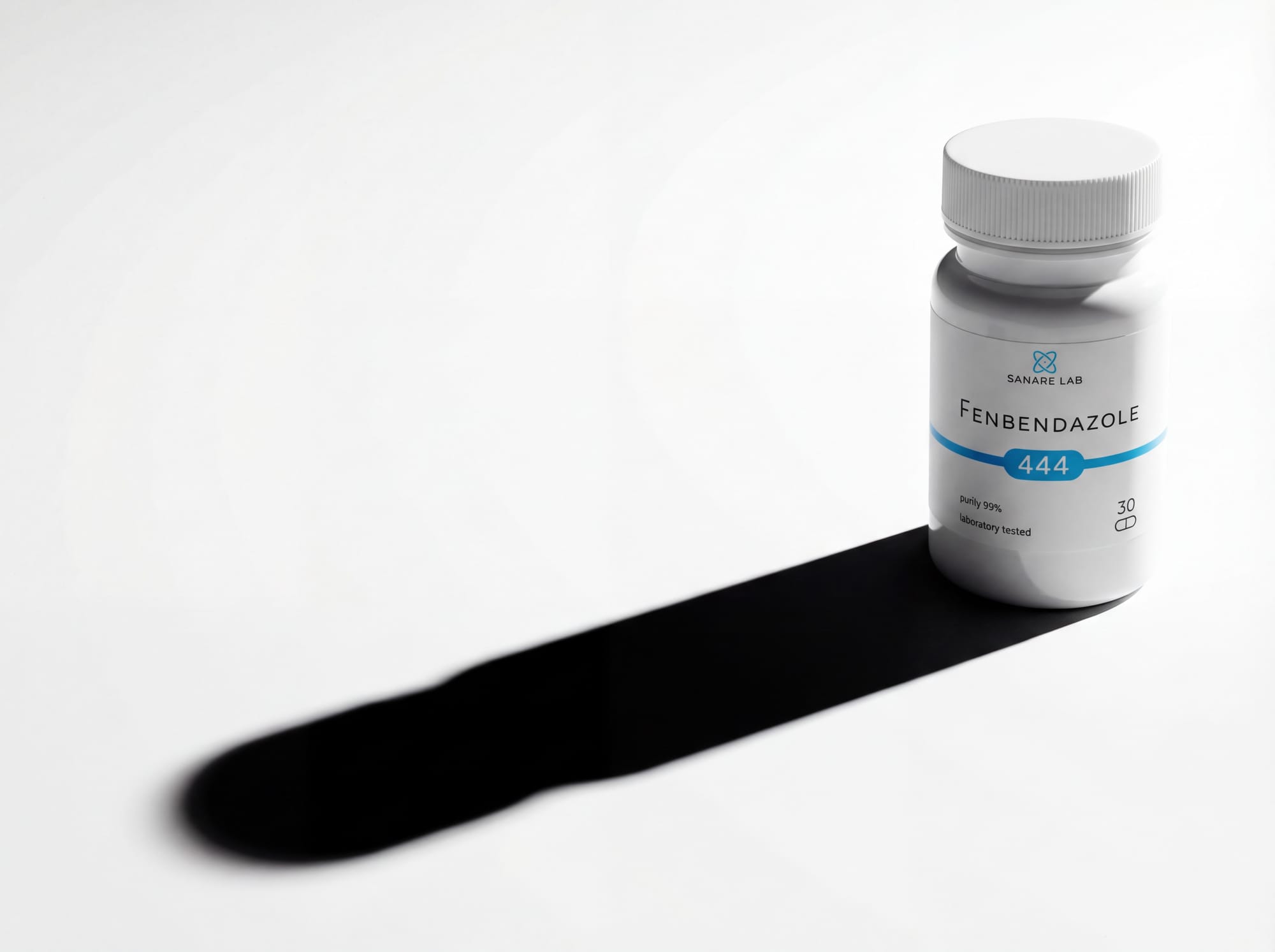
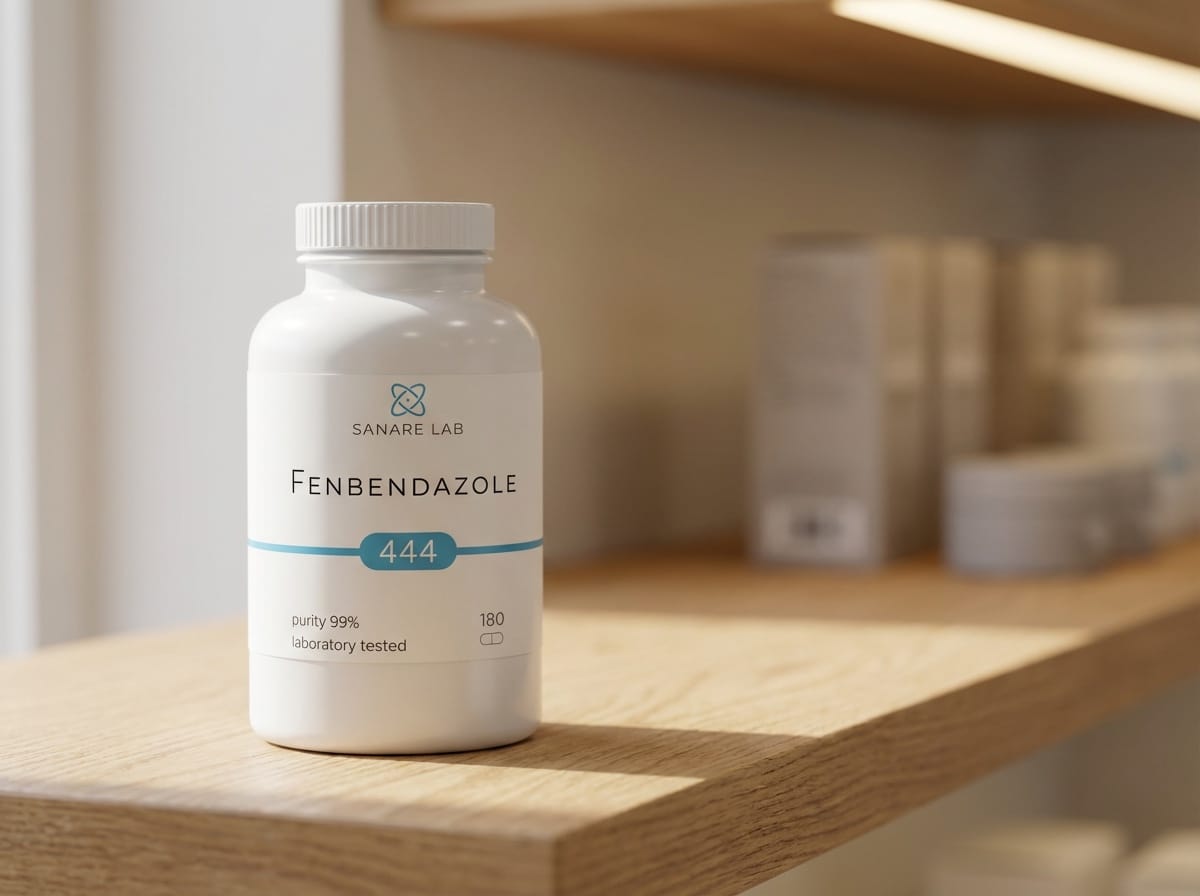
When people start researching repurposed drugs for cancer, the benzimidazole family comes up quickly — and two names appear most often: fenbendazole and mebendazole. Both bind to beta-tubulin and disrupt cancer cell division. But their mechanisms, evidence profiles, and practical advantages are meaningfully different.
This guide breaks down exactly how they compare — so you can understand why fenbendazole has become the most widely used benzimidazole in patient communities worldwide.
⚠️ Educational Disclaimer
This article is for research and informational purposes only. It does not constitute medical advice and is not a substitute for professional oncology consultation. Always discuss any investigational protocol with your physician.
Quick Comparison: Fenbendazole vs Mebendazole
| Feature | Fenbendazole | Mebendazole |
|---|---|---|
| Drug class | Benzimidazole anthelmintic | Benzimidazole anthelmintic |
| Anti-cancer mechanisms | 4 distinct pathways (microtubules, glycolysis, p53, oxidative stress) | 2 primary pathways (microtubules, anti-angiogenic) |
| Drug-resistant cancer cells | ✅ Active against 5-FU resistant, glycolysis-dependent tumors | Weaker activity in glycolysis-heavy, drug-resistant cells |
| Approved for human use | Not as antiparasitic (not relevant to cancer use) | Yes — as antiparasitic only, not for cancer |
| Human cancer trial results | No trials yet — but growing case report base (2024–2026) | Phase I/II completed — no tumor responses as monotherapy |
| Oral bioavailability | Low — requires fatty meal (easy to address) | Higher baseline; still variable |
| Monthly cost | $10–30 (OTC) | $30–80 compounded; up to $10,000 brand Rx |
| Liver monitoring | ✅ Recommended | ✅ Required (especially high doses) |
What Are Benzimidazoles — and Why Does Fenbendazole Stand Out?
Benzimidazoles were developed to treat parasitic worms. They work by binding to beta-tubulin, blocking microtubule formation needed for cell division. The same mechanism caught the attention of cancer researchers: rapidly dividing cancer cells depend heavily on microtubule function.
The family includes albendazole, oxibendazole, flubendazole, mebendazole — and fenbendazole. What separates fenbendazole from the rest is its unusually broad mechanism profile. While most benzimidazoles primarily target microtubules, fenbendazole hits cancer cells through at least four independent pathways simultaneously.
🔬 Key Insight from the Research
A 2024 review in Anticancer Research concluded that fenbendazole "surpasses albendazole and mebendazole in treating drug-resistant cells" — specifically because of its glycolytic inhibition, a mechanism the other benzimidazoles lack.
Nguyen et al., Anticancer Research, 2024;44(9):3725–3735
Fenbendazole's 4 Anti-Cancer Mechanisms
This is where fenbendazole pulls clearly ahead. Rather than relying on a single pathway, it attacks cancer cell biology from multiple angles at once:
|
⚡ Glycolysis Inhibition Blocks GLUT1 and hexokinase — cutting off the glucose supply that cancer cells depend on. This is fenbendazole's most unique advantage: it metabolically starves tumors in a way mebendazole and albendazole cannot replicate. |
🧬 Microtubule Destabilization Binds beta-tubulin and arrests cancer cells in the G2/M phase of the cell cycle — just before division. Cells unable to complete mitosis undergo apoptosis (programmed cell death). |
|
🛡️ p53 Tumor Suppressor Activation Increases expression of p53 — the body's primary tumor suppressor — while downregulating Mdm2/MdmX proteins that normally neutralize p53. Also impairs proteasomal function. |
🔥 Oxidative Stress Induction Increases reactive oxygen species (ROS) in cancer cells, causing mitochondrial injury and caspase-3 activation. Normal cells maintain better antioxidant defenses and are far less susceptible. |
💡 Why this matters: Cancer cells that develop resistance to one mechanism still face three others. This multi-pathway approach is one of the core reasons fenbendazole has attracted researcher and patient interest in drug-resistant and heavily pre-treated cancers.
Mebendazole — What It Does and Where It Falls Short
Mebendazole shares the core microtubule disruption mechanism with fenbendazole. It also has some anti-angiogenic properties and may reduce integrin beta-4 (ITGβ4) expression, which is linked to cancer stemness. These are real properties — but the clinical evidence tells a more complicated story.
✅ Mebendazole Strengths
|
⚠️ Mebendazole Limitations
|
⚠️ Important note on "human approval": Mebendazole is approved as an antiparasitic — not for cancer. The FDA approval it holds is for pinworm and roundworm infections. Neither fenbendazole nor mebendazole is approved as a cancer treatment.
The Evidence: What the Research Actually Shows
Fenbendazole — Broad Preclinical Data + Growing Case Report Base
Preclinical evidence for fenbendazole spans more cancer types than any other benzimidazole. The 2024 Anticancer Research review catalogued active studies across lung cancer (A549, H460), colorectal cancer, breast cancer, hepatocellular carcinoma, cervical cancer, lymphoma, and melanoma cell lines — with fenbendazole consistently outperforming mebendazole in glycolysis-dependent and drug-resistant models.
📌 The Joe Tippens Case — Where It All Started
In 2016, Joe Tippens was diagnosed with Stage 4 small-cell lung cancer and given three months to live. After self-administering 222 mg fenbendazole alongside vitamin E succinate, CBD oil, and curcumin, he reported complete remission — confirmed by PET scan. His case sparked a global patient movement and triggered multiple research reviews.
Since then, Dr. William Makis — who runs the world's largest high-dose ivermectin and fenbendazole cancer practice — has compiled hundreds of case reports documenting responses across endometrial, pancreatic, bladder, and lung cancers, many in patients who had exhausted conventional options.
→ Read the full Joe Tippens Protocol breakdown
Mebendazole — Human Trial Data, But Disappointing Monotherapy Results
Mebendazole has completed more human trials than fenbendazole — but the results have been sobering:
- Scandinavian Phase 2a trial (NCT03628079), GI cancers: acceptable safety, but zero tumor responses as monotherapy
- One small GI cancer study: accelerated disease progression in all treated patients — a significant safety concern
- Glioblastoma trials: Some positive signals in combination with standard chemotherapy — the most promising area for mebendazole
The pattern that emerges from mebendazole trials is that it may have a role as a combination agent in specific cancers (particularly brain tumors), but shows limited activity as a standalone drug — and carries real risks in certain populations.
Products Referenced in This Article
Pharmaceutical-grade fenbendazole discussed above — with full lab documentation and certificates of analysis.
180 capsules — 99% purity, laboratory tested
180 capsules — higher dose option
Disclaimer: For convenience only. Consult a licensed professional.
Cost and Accessibility
|
💰
$10–30 / month
Fenbendazole |
💊
$30–10,000 / month
Mebendazole |
For patients already dealing with high treatment costs, fenbendazole's price point is a meaningful practical advantage. A month's protocol costs less than a single doctor's visit.
Can They Be Combined?
Many advanced protocols do use both — and there is a pharmacological rationale for it. Fenbendazole's glycolysis inhibition and p53 activation may complement mebendazole's anti-angiogenic properties, targeting tumor biology from multiple angles simultaneously.
🔗 Combination Protocols
Dr. William Makis has published case reports (2025–2026) of patients receiving fenbendazole + mebendazole + ivermectin concurrently, with reported responses in Stage 4 lung cancer, pancreatic cancer, tongue cancer, and lymphoma.
The ISOM Hybrid Protocol incorporates fenbendazole as a core agent alongside ivermectin. When combining benzimidazoles, liver enzyme and CBC monitoring is essential due to compounded hepatic load.
The key point: fenbendazole works well as a standalone foundation. Mebendazole can be added to an existing fenbendazole protocol — not the other way around.
Which Is the Better Starting Point?
Start with Fenbendazole when:
|
Consider Adding Mebendazole when:
|
For most patients exploring benzimidazoles, fenbendazole is the natural foundation — more mechanisms, more case report data, and a fraction of the cost. See also our fenbendazole vs ivermectin comparison for how these compounds work together in combination protocols.
Safety Monitoring for Both Drugs
🩺 Recommended Monitoring
| Baseline CMP | Before starting — establishes liver and kidney baseline |
| CMP at 4 weeks | First checkpoint — liver enzyme elevation (AST, ALT, ALP) |
| CBC | Monitor for myelosuppression, especially at higher doses |
| Monthly ongoing | Increase frequency if liver enzymes are elevated |
| Dose adjustment | Reduce or stop if enzymes exceed 2–3× upper limit of normal |
Fenbendazole is generally well-tolerated. Case reports of liver enzyme elevation have been documented, but resolve upon dose reduction or discontinuation. For full dosage guidance, see our safety-focused dosage guide.
Scientific References
- Nguyen J et al. Oral Fenbendazole for Cancer Therapy in Humans and Animals. Anticancer Research. 2024;44(9):3725–3735.
- Dogra N et al. Fenbendazole acts as a moderate microtubule destabilizing agent and causes cancer cell death by modulating multiple cellular pathways. Scientific Reports. 2018;8(1):11926.
- Duan Q et al. Fenbendazole as a potential anticancer drug. Anticancer Research. 2013;33(2):355–362.
- Yoon SP et al. Anti-cancer effects of fenbendazole on 5-fluorouracil-resistant colorectal cancer cells. Korean J Physiol Pharmacol. 2022;26(5):377–387.
- Park D et al. Fenbendazole suppresses growth and induces apoptosis of H4IIE hepatocellular carcinoma cells via p21-mediated cell-cycle arrest. Experimental Animals. 2020;69(1):95–102.
- Nygren P, Larsson R. Drug repositioning: tumour remission by mebendazole in refractory metastatic colon cancer. Acta Oncologica. 2014;53(3):427–428.
- Bai RY et al. Antiparasitic mebendazole shows survival benefit in 2 preclinical models of glioblastoma multiforme. Neuro-Oncology. 2011;13(9):974–982.
- Larsen AR et al. Repurposing the antihelmintic mebendazole as a hedgehog inhibitor. Molecular Cancer Therapeutics. 2015;14(1):3–13.
- Martarelli D et al. Mebendazole inhibits growth of human adrenocortical carcinoma cell lines implanted in nude mice. Cancer Chemother Pharmacol. 2008;61(5):809–817.
- European Medicines Agency. Fenbendazole: Summary Report, Committee for Veterinary Medicinal Products.
Shop Sanare Lab
Below are commonly referenced items. Links are provided for convenience — always review the label and consult a professional before use.
180 capsules — 99% purity, laboratory tested
180 capsules — higher dose option
6 / 12 / 18 mg — 100 tablets
120 capsules — with Black Pepper for absorption
Disclaimer: For convenience only. Consult a licensed professional.