
Fenbendazole Encapsulated by Cucurbiturils: New Nanocarrier Design for Cancer Drug Delivery (2026)
A 2026 computational study investigates encapsulating fenbendazole within cucurbituril nanocarriers to improve aqueous solubility and stability for potential cancer therapy applications.
 By Sanare Lab · August 18, 2026 · 6 min read
Key Takeaway
A 2026 computational study in the Journal of Molecular Graphics and Modelling used density functional theory (DFT) to evaluate fenbendazole encapsulation within cucurbit[7]uril (CB[7]) and cucurbit[8]uril (CB[8]) hosts. The simulations suggest favorable host-guest interactions, enhanced stability, and potential for improved solubility and bioavailability—key barriers to fenbendazole's clinical application in cancer. These findings are purely computational and require experimental validation before any clinical relevance can be established.
Fenbendazole, a benzimidazole anthelmintic originally developed for veterinary parasitic infections, has gained attention in recent years for its preclinical anticancer activity across multiple tumor types. However, a major obstacle to its clinical translation is its poor aqueous solubility, which severely limits absorption and bioavailability in human patients. Researchers are increasingly exploring nanocarrier-based drug delivery systems to overcome this pharmacological barrier, and a new computational study offers fresh insights into one promising approach. Patients and researchers interested in dosing strategies for repurposed agents can reference the dosing calculator as a structured resource.
Published in the Journal of Molecular Graphics and Modelling in 2026, the study used density functional theory (DFT)—a quantum mechanical modeling method—to simulate how fenbendazole interacts with cucurbituril macrocycles, a class of barrel-shaped host molecules that can encapsulate guest drug compounds. The researchers compared two cucurbituril variants: CB[7] and CB[8], differing in cavity size. By analyzing structural, electronic, thermodynamic, and spectroscopic parameters, the team mapped the energetics and stability of fenbendazole encapsulation within each host.
For readers seeking broader context on how fenbendazole fits into the landscape of repurposed benzimidazoles, the fenbendazole vs. mebendazole comparison provides a detailed breakdown of structural similarities, mechanistic differences, and clinical positioning. Those researching brain tumor applications may also find the fenbendazole and glioblastoma overview relevant for understanding the blood-brain barrier considerations that make solubility enhancement especially critical.
Table of Contents
- Why Solubility Matters for Fenbendazole
- Computational Methods and Findings
- Cucurbituril as a Drug Delivery Platform
- Implications for Cancer Therapy
- Frequently Asked Questions
Why Solubility Matters for Fenbendazole
Fenbendazole's poor aqueous solubility is a well-documented pharmacokinetic limitation. In oral dosing, low solubility reduces the fraction of drug absorbed from the gastrointestinal tract, leading to variable plasma concentrations and unpredictable systemic exposure. For cancer applications—where consistent dosing is critical to achieve therapeutic concentrations in tumor tissue—this variability is a serious concern.
Furthermore, high doses of poorly soluble drugs can require large capsule volumes or frequent dosing, which reduces patient compliance. The veterinary-grade formulations (e.g., Panacur C) that some patients have self-administered are not designed for human pharmacokinetics and contain excipients that may pose additional safety risks. For a detailed discussion of veterinary vs. pharmaceutical-grade formulations, see the benzimidazole comparison guide.
Computational Methods and Findings
The study employed density functional theory (DFT) calculations to model the three-dimensional structure of fenbendazole within the cucurbituril cavities. DFT is a widely used computational chemistry method that predicts molecular geometries, electronic properties, and reaction energetics by solving the Schrödinger equation for electron density rather than for the full wavefunction.
Key findings from the computational analysis included:
Host-guest geometry: Fenbendazole was found to fit within both CB[7] and CB[8] cavities, with the larger CB[8] providing more spatial freedom and potentially accommodating multiple fenbendazole molecules or co-guests. The smaller CB[7] formed a tighter, more constrained inclusion complex.
Thermodynamic stability: Binding energy calculations indicated favorable encapsulation energetics for both hosts, suggesting that fenbendazole would spontaneously associate with cucurbituril under physiological conditions. The exact binding free energies were not reported in the available abstract.
Electronic properties: DFT-derived frontier molecular orbitals (HOMO and LUMO) and electrostatic potential maps revealed how encapsulation alters the electronic distribution of fenbendazole. These changes can influence the drug's reactivity and its interaction with biological targets such as tubulin.
Spectroscopic predictions: Theoretical infrared (IR) and ultraviolet-visible (UV-Vis) spectra were generated to provide experimental signatures that could guide future laboratory validation of the encapsulation complex.
Cucurbituril as a Drug Delivery Platform
Cucurbiturils are a family of macrocyclic host molecules made from glycoluril units linked by methylene bridges. They have a hydrophobic interior cavity and polar carbonyl portals at both rims, making them ideal for encapsulating hydrophobic drug molecules while maintaining water solubility through the charged portals.
Unlike more commonly discussed nanocarriers such as liposomes, polymeric micelles, or lipid nanoparticles, cucurbiturils are molecular-scale containers rather than colloidal particles. This means they can potentially cross biological membranes through different transport mechanisms and may avoid the reticuloendothelial system (RES) uptake that often clears larger nanoparticles from circulation.
The study also explored the potential for cucurbituril to serve as a building block for more complex supramolecular assemblies. For example, CB[8] can host two guests simultaneously, opening the door to co-delivery systems where fenbendazole is paired with a targeting ligand or a synergistic agent.
Implications for Cancer Therapy
While the study is purely computational, it addresses a real and pressing need in the fenbendazole repurposing field. Improved solubility and stability through supramolecular encapsulation could translate to:
More predictable pharmacokinetics: Encapsulated fenbendazole may exhibit more consistent absorption profiles, enabling better dose optimization and reducing the inter-patient variability seen with raw powder formulations.
Reduced dosing requirements: Enhanced bioavailability could mean that lower doses achieve the same systemic exposure, potentially improving the safety margin and reducing the risk of gastrointestinal or hepatic adverse effects.
Tumor-targeting potential: Functionalized cucurbiturils or their assemblies could be decorated with ligands that recognize tumor-specific markers, enabling active targeting rather than passive distribution.
It is critical to emphasize that no experimental validation—let alone animal or human studies—has been reported for the CB[7]/CB[8]-fenbendazole system. Computational modeling provides hypotheses and guides experimental design, but cannot demonstrate therapeutic efficacy or safety. All translational steps remain ahead.
Frequently Asked Questions
What are cucurbiturils?
Cucurbiturils are a family of barrel-shaped macrocyclic molecules made from glycoluril units. They have a hydrophobic interior cavity that can encapsulate drug molecules, and polar carbonyl groups at the rims that confer water solubility. They are used as molecular hosts in supramolecular chemistry and drug delivery research.
Is this study experimental or just computational?
This study is purely computational. The researchers used density functional theory (DFT) to simulate molecular interactions. No laboratory experiments, animal studies, or human trials were performed. The predictions need experimental validation before any clinical relevance can be established.
What is density functional theory (DFT)?
Density functional theory (DFT) is a computational quantum mechanical method used in chemistry and materials science to model the electronic structure of molecules. It predicts molecular geometries, energies, and electronic properties by solving for electron density rather than for the full wavefunction.
In Plain Terms
Scientists used computer simulations to test whether fenbendazole could be packed inside tiny barrel-shaped molecules called cucurbiturils. The simulations suggest this packaging could improve the drug's ability to dissolve in water and reach the body more effectively. This is purely a computer prediction—no lab tests or animal studies have been done yet—and it does not mean this delivery system is ready for human use.
In plain words
What happened: Researchers used computer simulations to see whether fenbendazole could fit inside tiny ring-shaped molecules called cucurbiturils.
Why it matters: The proposed carrier could help a drug that mixes poorly with water stay dissolved and stable.
How strong is the evidence: This is computational work only. No lab experiments, animal tests, or patient results are reported.
What it means for you: Nothing changes for patients. This simulated carrier is an early research idea, not a cancer treatment.
Shop Sanare Lab
Lab-tested products referenced in the research above — order direct from Sanare Lab.
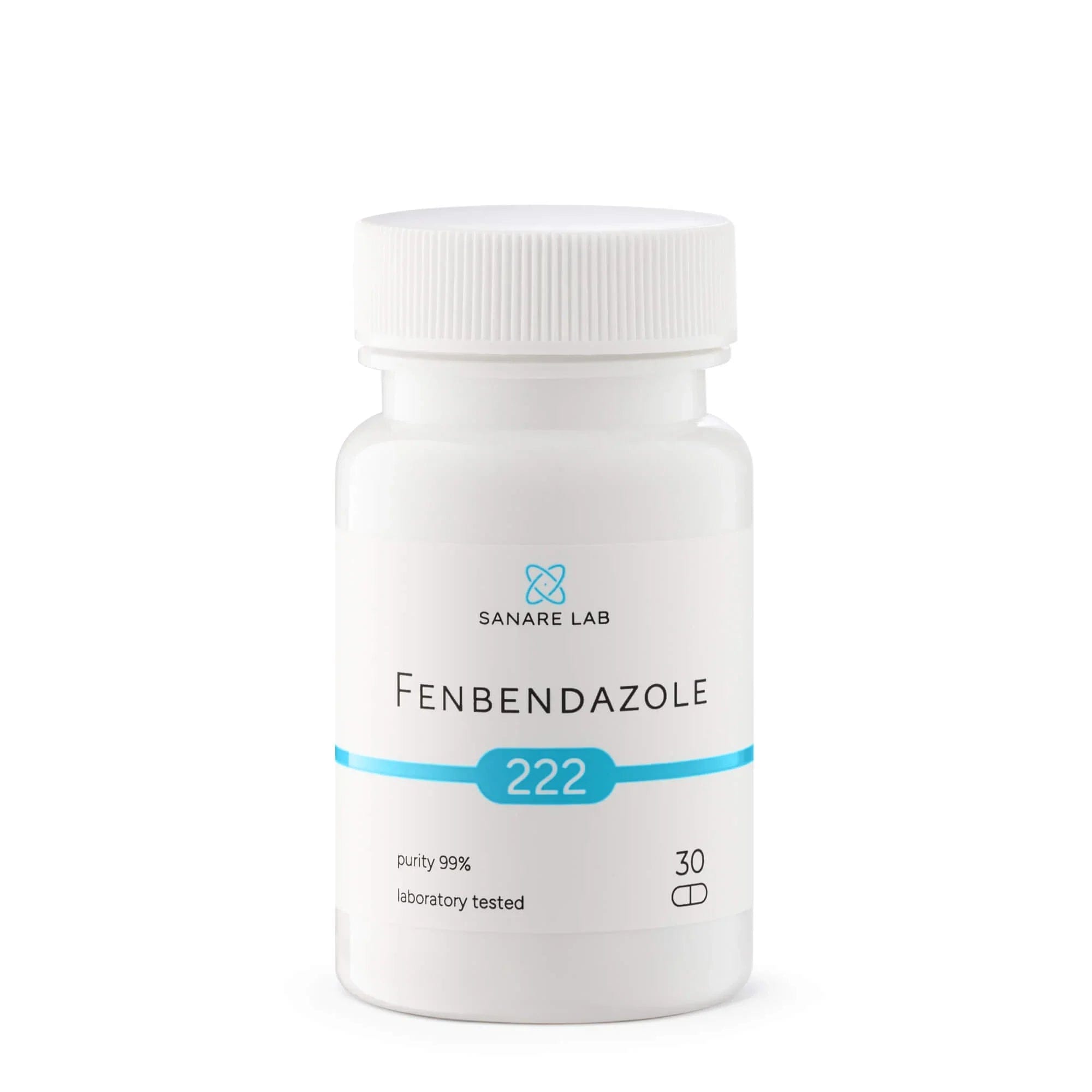
Pharmaceutical grade
Fenbendazole 222 mg
99%+ purity, third‑party lab tested.
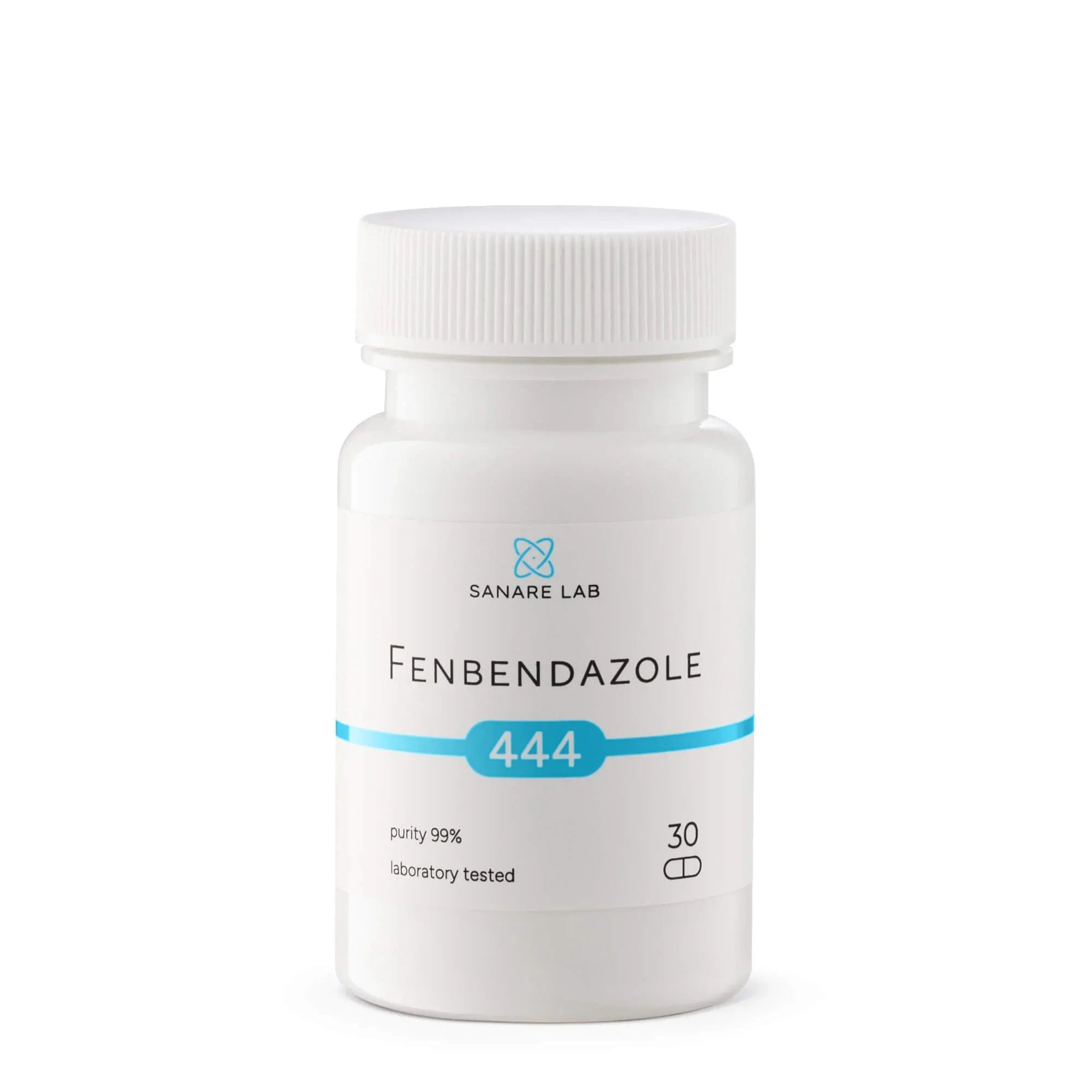
Pharmaceutical grade
Fenbendazole 444 mg
Double strength, 99%+ purity, lab tested.
Prices checked September 2026 and may change; the store page shows the current price.
Disclaimer: Links are informational and for convenience. This site does not provide medical advice. Always verify product quality, labeling, and consult a licensed professional for health decisions.
References
- Computational insights into fenbendazole encapsulation by Cucurbit[n]urils (n = 7, 8). J Mol Graph Model. 2026. PMID: 42013618.
Medical Disclaimer
This article is for informational and educational purposes only. It does not constitute medical advice, diagnosis, or treatment recommendation. The research described is computational (in-silico modeling) and has not been validated in laboratory, animal, or human studies. Always consult a qualified healthcare provider before making any decisions about cancer treatment, drug use, or dietary changes. Sanare Lab does not provide personalized medical advice and does not endorse self-treatment with investigational agents.
Sanare Lab
Science-based health education team reviewing published research on repurposed drugs, integrative oncology, and evidence-based protocols.