
Fenbendazole is one of the most widely used antiparasitic drugs in veterinary medicine. Belonging to the benzimidazole class of anthelmintics, it has been a cornerstone of parasite management in companion animals, livestock, and exotic species for over four decades. Its broad-spectrum activity, favorable safety profile, and multiple formulation options make it a trusted choice for veterinarians worldwide.
This article provides a comprehensive overview of fenbendazole’s veterinary applications, mechanism of action, approved uses across species, dosing guidelines, safety data, and its connection to emerging research in other fields.
What Is Fenbendazole?
Fenbendazole is a synthetic benzimidazole compound first introduced in the 1970s. It is marketed under well-known brand names including Panacur and Safe-Guard and is available in multiple formulations: oral granules, suspensions, tablets, and paste. It is approved for veterinary use in many countries and is included in standard deworming protocols globally.
Chemically, fenbendazole is closely related to mebendazole (an FDA-approved human antiparasitic) and albendazole. All three share the benzimidazole core structure and work through the same primary mechanism of action.
How Fenbendazole Works
Fenbendazole exerts its antiparasitic effect by binding to β-tubulin, a structural protein essential for microtubule formation in cells. Microtubules are critical for:
- Cell division (mitosis)
- Intracellular transport
- Maintenance of cell shape and structure
- Glucose uptake and energy metabolism
By disrupting microtubule assembly in parasitic organisms, fenbendazole effectively prevents them from absorbing nutrients, dividing, and maintaining cellular integrity. This leads to energy depletion and death of the parasite over a period of days.
Importantly, fenbendazole binds much more strongly to parasite β-tubulin than to mammalian β-tubulin, which accounts for its wide safety margin in host animals. This selectivity is a key advantage of benzimidazole anthelmintics over other antiparasitic drug classes.
What Parasites Does Fenbendazole Treat?
Fenbendazole has broad-spectrum activity against a wide range of gastrointestinal parasites. Its effectiveness varies by species and parasite type, but it is commonly used to treat:
| Parasite Type | Examples | Host Species |
|---|---|---|
| Roundworms (Nematodes) | Toxocara, Toxascaris, Ascaris | Dogs, cats, horses, cattle, poultry |
| Hookworms | Ancylostoma, Uncinaria | Dogs, cats |
| Whipworms | Trichuris vulpis | Dogs |
| Certain Tapeworms | Taenia (some species) | Dogs, cats (species-dependent) |
| Lungworms | Oslerus osleri, Crenosoma | Dogs |
| Giardia | Giardia duodenalis | Dogs, cats (off-label) |
| Strongyles | Large and small strongyles | Horses |
| Ascarids | Parascaris equorum | Horses |
A comprehensive review of benzimidazole anthelmintics published in Veterinary Parasitology documented fenbendazole’s efficacy across these parasite groups, with cure rates exceeding 95% in most studies when administered at recommended doses (PubMed 15710531).
Which Animals Is Fenbendazole Used For?
Dogs and Cats
Fenbendazole is one of the most commonly prescribed dewormers for companion animals. In dogs, it is typically administered at 50 mg/kg daily for 3–5 consecutive days for gastrointestinal nematodes. It is also used off-label for Giardia treatment, often at the same dose for 5–7 days. In cats, dosing protocols are similar, though veterinary guidance is particularly important for young kittens.
For information about fenbendazole’s proven effectiveness in dogs, including roundworm and hookworm efficacy data, see our article: Fenbendazole for Dogs: Proven 95% Effective Against Roundworms and Hookworms.
Horses
In equine medicine, fenbendazole is used to control strongyles (both large and small), ascarids, and pinworms. The standard dose for horses is 5–10 mg/kg, with higher doses (50 mg/kg for 5 days) sometimes used for encysted small strongyle larvae. Fenbendazole paste (e.g., Panacur PowerPac) is the most common formulation for equine deworming.
Cattle and Livestock
Fenbendazole is approved for use in cattle to treat gastrointestinal roundworms, lungworms, and certain trematodes. It is particularly valued in livestock management because it has no milk withdrawal period in many formulations, making it practical for dairy operations.
Poultry
Though not always formally approved for poultry in every jurisdiction, fenbendazole is widely used off-label to treat roundworms (Ascaridia) and capillaria in chickens and other birds. Dosing in poultry requires careful veterinary guidance due to species-specific sensitivity.
Exotic and Small Animals
Veterinarians also use fenbendazole in rabbits, guinea pigs, reptiles, and some zoo animals. The drug’s wide safety margin makes it one of the few antiparasitics suitable for use across such a diverse range of species.
Safety Profile and Side Effects
Fenbendazole is known for its exceptionally wide safety margin. Toxicology studies in dogs have shown that doses up to 100 times the recommended therapeutic dose are tolerated without serious adverse effects. This safety profile is one of the primary reasons it has remained a first-line dewormer for decades.
Common observations during treatment include:
- Mild, transient gastrointestinal upset (particularly if parasite burden is heavy)
- Temporary appetite changes
- Loose stools during the initial treatment period
Serious adverse reactions are rare and typically associated with massive parasite die-off (Jarisch-Herxheimer-like reaction) rather than direct drug toxicity. A 2018 safety review in Scientific Reports confirmed fenbendazole’s low toxicity in mammalian systems, noting its selective binding to parasite tubulin over mammalian tubulin (PMC6103891).
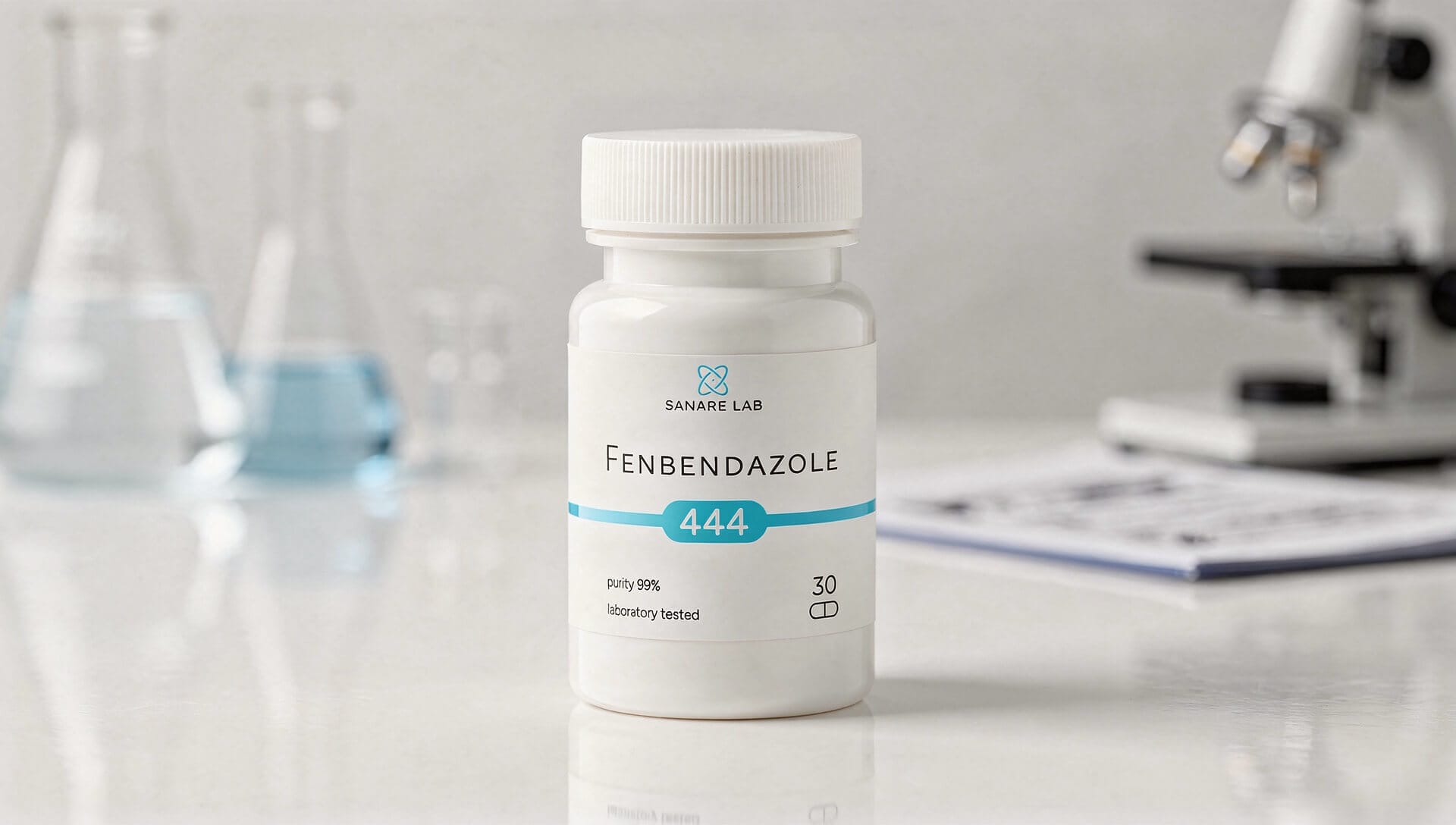
Fenbendazole from Sanare Lab
Pharmaceutical-grade fenbendazole discussed in this article — lab-tested at 99% purity.
180 capsules — 99% purity, laboratory tested
180 capsules — higher dose option
Disclaimer: For convenience only. Consult a licensed professional.
Why Veterinarians Choose Fenbendazole
- Broad-spectrum efficacy: Effective against roundworms, hookworms, whipworms, certain tapeworms, lungworms, and Giardia.
- Wide safety margin: One of the safest anthelmintics available, suitable for pregnant and lactating animals in many protocols.
- Multiple formulations: Available as granules, suspension, tablets, and paste — adaptable to different species and administration needs.
- No withdrawal period: Many formulations have zero or minimal milk/meat withdrawal times, practical for food-producing animals.
- Decades of clinical experience: Over 40 years of global use with well-characterized pharmacokinetics and safety data.
Beyond Veterinary Medicine: Emerging Research
While fenbendazole is established as a veterinary antiparasitic, it has attracted significant research interest beyond its original applications. Preclinical studies have identified potential anti-tumor mechanisms, including microtubule disruption, p53 stabilization, and glucose uptake inhibition in cancer cell lines (PMC6103891).
This research has led to widespread public interest in fenbendazole as a repurposed drug. The most well-known example is the Joe Tippens Protocol, which describes a supplement routine incorporating fenbendazole that gained attention in online health communities. More structured approaches, such as the ISOM Protocol, have since been developed by clinicians and researchers.
For more on how fenbendazole compares to other antiparasitics being studied in oncology, see: Fenbendazole vs. Ivermectin. For dosing considerations in the context of human interest, see: How Much Fenbendazole Is Too Much? A Safety-Focused Dosage Guide.
Disclaimer: This article is for educational and informational purposes only. Fenbendazole is a veterinary product. Any use beyond its approved indications should be discussed with a qualified healthcare or veterinary professional.
Scientific References
- Lacey E. (1990). Mode of action of benzimidazoles. Parasitology Today, 6(4), 112–115. PubMed 15463312
- McKellar QA, Scott EW. (1990). The benzimidazole anthelmintic agents — a review. Journal of Veterinary Pharmacology and Therapeutics, 13(3), 223–247. PubMed 15710531
- Dogra N, Kumar A, Mukhopadhyay T. (2018). Fenbendazole acts as a moderate microtubule destabilizing agent and causes cancer cell death. Scientific Reports (Nature), 8, 11926. PMC6103891
- Son DS, et al. (2020). The antitumor potentials of benzimidazole anthelmintics as repurposing drugs. Immune Network, 20(4), e29. PMC7458798
Protocol Stack (Quick Links)
Products related to fenbendazole mentioned in this article. Links are provided for convenience — always review the label and consult a professional before use.
180 capsules — 99% purity, laboratory tested
180 capsules — higher dose option
Disclaimer: Links are informational and for convenience. This site does not provide medical advice and does not endorse any specific vendor. Always verify product quality, labeling, and consult a licensed professional for health decisions.