
Curcumin and Oral Cancer: New Review Maps the Attack Routes — and the Absorption Problem Holding It Back
A new review synthesizes how curcumin and its analogs suppress oral cancer growth, invasion and angiogenesis via NF-kB, PI3K/Akt and MAPK — and why low bioavailability still blocks the clinic.
 By Sanare Lab · October 7, 2026 · 2 min read
Key Takeaway
Curcumin — the yellow pigment in turmeric — attacks oral cancer cells through several routes at once, a new review concludes. But the body barely absorbs it, so it stays experimental, not a medicine. It summarizes earlier studies — no new experiments.
Oral cancer often returns and resists therapy, and treatment can damage speech and eating. The authors gathered what is known about curcumin against this disease.
In the collected studies, curcumin and its derivatives curbed proliferation (uncontrolled cell division), metastasis (spread to other organs), angiogenesis (tumor-feeding blood-vessel growth), and inflammation. They pressed several master switches — NF-κB, PI3K/Akt and MAPK, protein chains that tell cells to grow and survive — and pushed cells toward apoptosis (programmed self-destruction).
The catch is pharmacokinetics — how the body handles a substance: curcumin is poorly absorbed, fast broken down, and quickly cleared (short half-life), so little reaches tissues (low bioavailability). Hence improved analogs (chemically tuned versions) and smarter carriers; curcumin stays an investigational scaffold awaiting rigorous human trials. See an oral-cancer curcumin study we covered earlier and the overall evidence map; dosing: our dosing calculator.
In plain words
What happened: Scientists reviewed research on curcumin, the yellow pigment in turmeric, against oral cancer — no new experiments.
Why it matters: Curcumin hits many growth switches at once, but the body barely absorbs it — so chemists design improved versions.
How strong is the evidence: Mostly lab and animal studies, no new human trial results. For oral cancer, curcumin is still experimental.
What it means for you: Nothing changes today. Turmeric or curcumin supplements are not proven oral-cancer treatments — questions belong with your oncology team.
Shop Sanare Lab
Lab-tested products referenced in the research above — order direct from Sanare Lab.
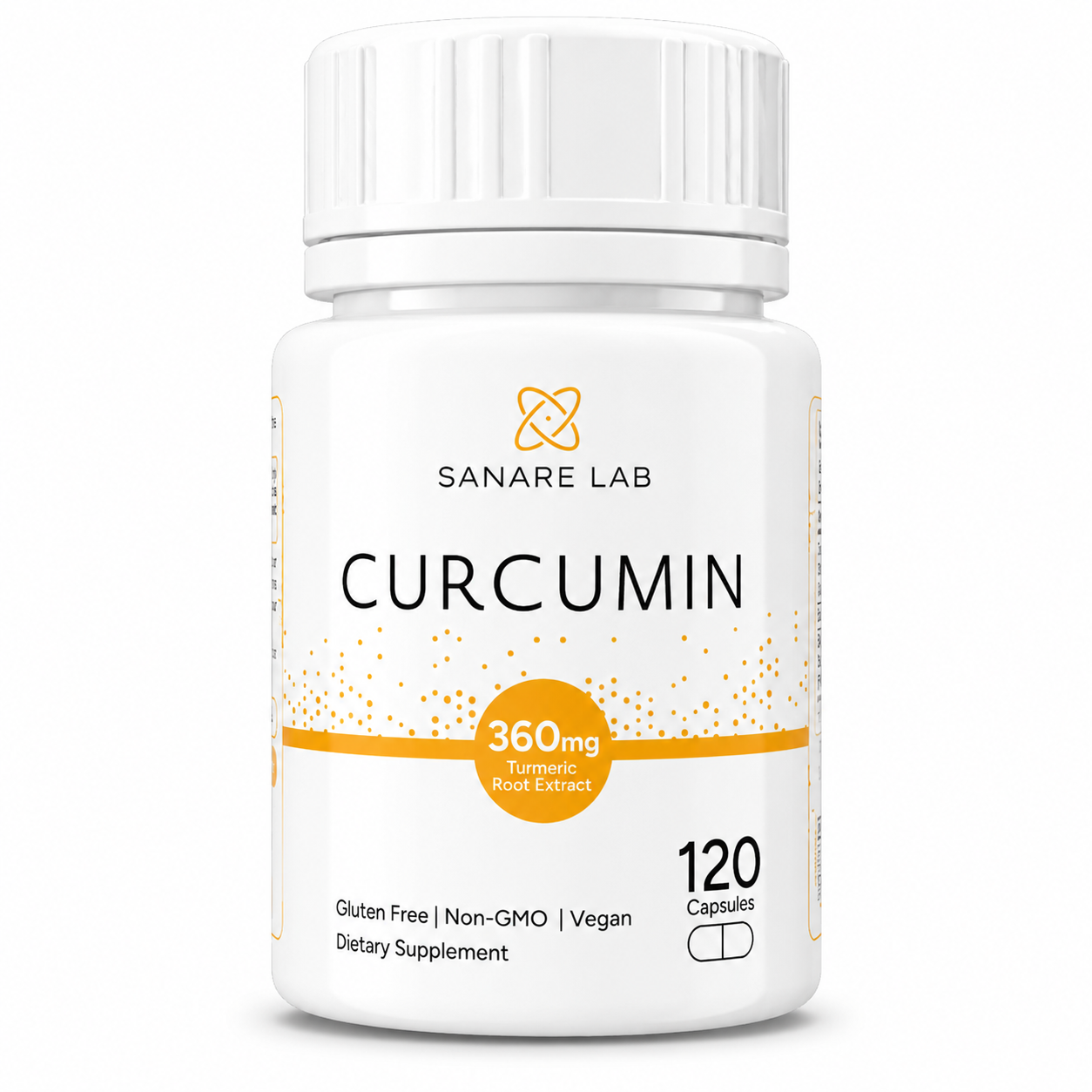
Daily adjunct
Curcumin 360 mg
95% curcuminoids with black pepper extract.
Prices checked September 2026 and may change; the store page shows the current price.
Disclaimer: Links are informational and for convenience. This site does not provide medical advice. Always verify product quality, labeling, and consult a licensed professional for health decisions.
References
- Targeting oral cancer with curcumin and its structural analogs: molecular mechanisms, pharmacokinetic optimization, and clinical translation (a review — analysis of earlier studies). Archives of Pharmacal Research. 2026 Oct 6. doi:10.1007/s12272-026-01635-8. PMID: 42836892.
Medical Disclaimer
This article is for informational purposes only and is not medical advice. The paper is a review of earlier studies, not a new trial. Never start, stop or change any medication or supplement without consulting your doctor.
Sanare Lab
Science-based health education team reviewing published research on repurposed drugs, integrative oncology, and evidence-based protocols.