
Arctigenin and Curcumin Combination Induces Redox Stress and Apoptosis in Prostate Cancer Cells: Nutrients 2026
A September 2026 Nutrients study demonstrates that combining arctigenin with curcumin produces synergistic redox stress, AMPK activation, and apoptosis in PC-3 prostate cancer cells, with marked selectivity over normal prostate epithelial cells.
 By Sanare Lab · September 27, 2026 · 11 min read
Key Takeaway
A September 2026 study published in Nutrients demonstrates that combining arctigenin (ATG) — a lignan from burdock seeds — with curcumin produces synergistic anticancer effects in prostate cancer cells. In PC-3 prostate cancer cells and three-dimensional (3D) spheroids, the combination increased reactive oxygen species (ROS), depleted glutathione (GSH), reduced adenosine triphosphate (ATP) levels, activated AMP-activated protein kinase (AMPK) phosphorylation, and triggered apoptosis via caspase-3/7 activation and poly(ADP-ribose) polymerase (PARP) cleavage. Notably, the combination was far less toxic to normal human prostate epithelial cells, suggesting selective targeting of cancerous tissue. This remains preclinical evidence; no human clinical trials have tested this combination in prostate cancer patients.
Prostate cancer remains the second most common malignancy in men worldwide and the fifth leading cause of cancer-related death globally. While androgen deprivation therapy, chemotherapy with docetaxel, and newer agents such as enzalutamide and abiraterone extend survival, treatment resistance frequently develops, driving the need for adjunct strategies that target cancer-specific metabolic vulnerabilities. Over the past decade, natural compounds with pleiotropic anticancer mechanisms have attracted substantial research interest as potential adjuncts to conventional therapy, particularly when they can be combined to achieve synergistic effects at lower individual doses.
Curcumin, the primary bioactive polyphenol in turmeric (Curcuma longa), has been extensively studied for its anticancer, anti-inflammatory, and antioxidant properties across dozens of cancer cell lines and animal models. Despite promising preclinical data, its clinical translation has been limited by poor aqueous solubility, rapid hepatic metabolism, and low systemic bioavailability. Researchers have attempted to overcome these barriers through nanoformulation, piperine co-administration, and structural analog development. Arctigenin — a lesser-known lignan extracted from the seeds of Arctium lappa, commonly called burdock — has independently demonstrated anticancer activity in breast, lung, and colorectal cancer preclinical models through mechanisms involving cell-cycle arrest, autophagy induction, and inhibition of signal transducer and activator of transcription 3 (STAT3) signaling. The logical next question is whether combining these two plant-derived compounds could create a synergistic metabolic assault that selectively kills prostate cancer cells while sparing healthy tissue. Related reading: mebendazole with flutamide in prostate cancer cell lines.
A research team at Soonchunhyang University in South Korea addressed this question in a study published in Nutrients on September 10, 2026. The investigators treated PC-3 human prostate cancer cells and normal human prostate epithelial cells (HPrEC) with arctigenin and curcumin — alone and in combination — and measured viability, synergy, redox status, energy metabolism, and apoptotic signaling. They further validated their findings in 3D spheroid cultures, which more closely mimic the spatial architecture and drug penetration barriers of solid tumors than conventional two-dimensional monolayers. For patients exploring metabolic adjunct therapies, the dosing calculator provides a structured approach to estimating personalized schedules for repurposed-drug protocols, though it does not replace oncologist guidance.
Table of Contents
- What the Study Investigated
- Redox Stress and AMPK Activation
- Selectivity and 3D Spheroid Validation
- Why This Matters for Patients
- Limitations and Open Questions
- Frequently Asked Questions
What the Study Investigated
The researchers designed a multi-endpoint in-vitro study to evaluate whether arctigenin and curcumin, administered alone or together, could selectively kill PC-3 prostate cancer cells. PC-3 is an androgen-independent human prostate cancer cell line widely used in prostate cancer research because it lacks functional androgen receptor signaling, making it representative of castration-resistant disease — the stage at which most treatment failures occur. As a normal-cell control, the team used HPrEC, commercially available human prostate epithelial cells that retain normal growth regulatory pathways. Related reading: a curcumin hydrogel in postoperative prostate cancer models.
Cell viability was quantified using the 3-(4,5-dimethylthiazol-2-yl)-2,5-diphenyltetrazolium bromide (MTT) assay, which measures mitochondrial metabolic activity as a proxy for living cells. To determine whether the combination was synergistic, additive, or antagonistic, the authors applied the combination index (CI) method developed by Chou and Talalay. A CI value below 1.0 indicates synergy (the combination produces more effect than expected from simple additivity), a value of 1.0 indicates pure additivity, and values above 1.0 indicate antagonism. This mathematical framework is the standard for quantifying drug interactions in preclinical oncology.
Beyond viability, the study assessed several mechanistic endpoints. Reactive oxygen species (ROS) were measured using fluorescent probes to determine whether oxidative stress contributed to cell death. The ratio of reduced glutathione (GSH) to its oxidized form (GSSG) was quantified to assess the cellular antioxidant defense capacity. Intracellular ATP levels were measured to evaluate energy crisis — a common trigger of AMPK activation. AMPK phosphorylation at threonine 172 was detected by Western blotting, reflecting activation of this master energy-sensing kinase. Apoptosis was confirmed through two canonical assays: increased caspase-3/7 enzymatic activity and cleavage of PARP, a DNA repair enzyme that is specifically cleaved during programmed cell death.
To better approximate solid tumor physiology, the researchers cultured PC-3 cells as three-dimensional spheroids — compact, self-organized cell aggregates that recapitulate cell-cell contact, nutrient gradients, hypoxic cores, and extracellular matrix deposition more faithfully than flat monolayers. Drugs that perform well in 2D but fail in 3D often suffer from poor penetration, hypoxia-driven resistance, or altered metabolism in the tumor microenvironment. Testing in 3D spheroids therefore provides a more rigorous preclinical filter before advancing to animal models or clinical trials.
The study design was methodologically sound for a preclinical investigation. The use of multiple mechanistic endpoints, a normal-cell comparator, mathematical synergy quantification, and 3D validation strengthens the internal validity of the findings. However, the absence of an in-vivo animal model, pharmacokinetic analysis, or human tissue samples means the results should be interpreted as mechanistic proof-of-concept rather than clinical evidence. This work extends the existing curcumin cancer research base, which has documented the compound's capacity to modulate inflammation, angiogenesis, cell-cycle progression, and epigenetic regulation across multiple cancer types.
Redox Stress and AMPK Activation
The central mechanistic finding was that arctigenin and curcumin together produced genuine synergy in PC-3 cells, with a combination index (CI) consistently below 1.0 across tested concentrations. Either compound alone reduced viability, but the combination achieved substantially greater growth inhibition at lower doses — the pharmacological definition of synergy. This means that, in principle, a patient could achieve stronger anticancer effects with lower doses of each compound, potentially reducing off-target toxicity.
The mechanism traced directly to redox imbalance. Combined treatment significantly elevated intracellular ROS levels, creating a state of oxidative stress that overwhelmed the cells' antioxidant defenses. The GSH/GSSG ratio collapsed under combination treatment, indicating that the cells' primary antioxidant buffer — glutathione — was being consumed faster than it could be regenerated. Glutathione depletion is a critical event in cancer cell death because it removes protection against lipid peroxidation, protein oxidation, and DNA damage, all of which can trigger apoptosis.
Concurrent with ROS accumulation and glutathione collapse, intracellular ATP levels dropped sharply. This energy crisis is significant because cancer cells, particularly aggressive ones like PC-3, have elevated energy demands driven by rapid proliferation, macromolecule synthesis, and ion pump activity. The ATP depletion observed in this study likely reflects both mitochondrial dysfunction (impaired oxidative phosphorylation) and glycolytic inhibition, effectively starving the cancer cells of the energy currency required for survival.
The energy deficit activated AMP-activated protein kinase (AMPK), a highly conserved serine/threonine kinase that acts as a cellular energy sensor. Under normal conditions, AMPK maintains energy homeostasis by promoting catabolic pathways such as glucose uptake, fatty acid oxidation, and autophagy. However, under severe or prolonged energy stress — as induced by the ATG+CUR combination — AMPK activation can trigger cell-cycle arrest and pro-apoptotic signaling through downstream targets including p53, mTORC1, and BCL-2 family proteins. In this study, Western blotting confirmed increased AMPK phosphorylation at threonine 172, the canonical activation site, following combination treatment.
The apoptotic cascade was confirmed by two complementary assays. Caspase-3/7 activity — the executioner caspases that cleave structural and repair proteins during programmed cell death — was significantly elevated in PC-3 cells treated with the combination. Additionally, cleaved PARP was detected by immunoblotting. PARP cleavage is a hallmark of apoptosis because it irreversibly inactivates the enzyme responsible for DNA single-strand break repair, ensuring that damaged cells cannot recover and are committed to death.
These findings align with a broader pattern in repurposed-drug cancer research: compounds that disrupt cancer cell metabolism — particularly redox and energy metabolism — often show selective toxicity because cancer cells operate closer to their metabolic limits than normal cells. The AMPK activation pathway is especially relevant because it converges with other metabolic therapies under investigation. Preclinical research on metabolic-targeted drug combinations in breast cancer models also demonstrates AMPK phosphorylation and autophagy induction, suggesting that multiple drug classes may exploit similar metabolic vulnerabilities across cancer types. The convergence strengthens the biological rationale for further exploring metabolic-targeted combinations.
Selectivity and 3D Spheroid Validation
One of the most clinically meaningful findings was the selectivity of the ATG+CUR combination for cancer cells over normal cells. At concentrations that potently killed PC-3 prostate cancer cells, the same treatment had substantially weaker effects on normal HPrEC prostate epithelial cells. This selectivity is critical because many conventional chemotherapeutic agents — including docetaxel, cisplatin, and doxorubicin — lack such discrimination, causing dose-limiting toxicities in bone marrow, gastrointestinal mucosa, and peripheral nerves. A combination that selectively targets malignant tissue while sparing healthy tissue represents an attractive therapeutic profile.
The researchers confirmed the mechanistic driver of this selectivity using N-acetyl-L-cysteine (NAC), a well-characterized ROS scavenger and glutathione precursor. When PC-3 cells were pre-treated with NAC before receiving the ATG+CUR combination, the cytotoxic effect was partially reversed. This rescue experiment establishes causality: ROS accumulation is not merely correlated with cell death but is a key driver of it. The partial rather than complete reversal suggests that additional mechanisms — such as direct mitochondrial damage or ATP depletion — also contribute to the overall cytotoxicity.
The selectivity likely arises from fundamental differences in redox metabolism between cancer cells and normal cells. Cancer cells typically exhibit higher baseline oxidative stress due to oncogene-driven proliferation, mitochondrial dysfunction, and altered metabolism. They also frequently downregulate antioxidant enzymes or rely more heavily on glutathione-based defenses. Consequently, an additional oxidative insult — such as that delivered by ATG+CUR — may push cancer cells past their tolerance threshold while normal cells, with more robust antioxidant reserves and lower baseline ROS, remain viable. This concept, known as "redox addiction," is a well-established principle in cancer biology and underpins the development of ROS-inducing anticancer therapies.
Validation in 3D spheroid cultures strengthened the findings. In these compact, multi-layered cell aggregates, the combination continued to suppress growth and induce apoptotic markers (caspase-3/7 activation and PARP cleavage). This is important because 3D models often reveal resistance mechanisms absent in 2D cultures: limited drug diffusion into the spheroid core, hypoxia-driven upregulation of survival pathways, and cell adhesion-mediated drug resistance. The fact that ATG+CUR retained activity in 3D suggests the combination may overcome at least some of these microenvironmental barriers, though animal tumor models would be needed to confirm this in a complete biological system.
Why This Matters for Patients
For men diagnosed with prostate cancer — particularly those with castration-resistant or metastatic disease — the search for safe, effective adjunct therapies is driven by the reality that current treatments eventually fail for many patients. The preclinical evidence presented in this study offers a plausible mechanistic rationale for combining two widely available natural compounds, but it is essential to separate what the data actually show from what patients might hope they mean.
What the data show: in a laboratory dish, the combination of arctigenin and curcumin kills prostate cancer cells through a well-defined cascade of ROS accumulation, glutathione depletion, energy crisis, AMPK activation, and caspase-mediated apoptosis. The effect is synergistic, dose-dependent, selective for cancer over normal cells, and reproducible in 3D tumor-like cultures. What the data do not show: any evidence that this combination works in living animals, let alone humans; any information about oral bioavailability, tissue distribution, or optimal dosing; any data on drug-drug interactions with standard prostate cancer therapies; and any safety profile in patients with comorbidities such as liver disease, diabetes, or cardiovascular conditions.
The clinical translation gap between cell culture and human therapy is substantial. Curcumin's poor bioavailability is a well-documented barrier: even oral doses of several grams per day yield very low plasma concentrations. Arctigenin's pharmacokinetic profile in humans is even less characterized. Without formulation strategies — such as lipid nanoparticles, phospholipid complexes, or co-solvent systems — it is unlikely that oral consumption of these compounds would achieve the concentrations used in this in-vitro study. This does not mean the research is without value; rather, it means the next step should be formulation optimization and animal pharmacokinetic studies, not human self-experimentation.
Patients already on androgen deprivation therapy, chemotherapy, or immunotherapy should be particularly cautious about adding unregulated supplements. Curcumin can inhibit cytochrome P450 enzymes and affect drug metabolism, while arctigenin's interaction profile is essentially unknown. Any decision to incorporate these compounds should be made in consultation with a medical oncologist and a pharmacist who can evaluate potential interactions with the patient's current regimen.
Limitations and Open Questions
Like all preclinical studies, this work has important limitations that constrain its clinical relevance. First, the experiments were conducted entirely in cell culture — there is no animal model data, no tumor-bearing mouse study, and no pharmacokinetic or pharmacodynamic analysis. Second, only one prostate cancer cell line (PC-3) and one normal cell line (HPrEC) were used. Prostate cancer is a heterogeneous disease with molecular subtypes ranging from indolent to highly aggressive; findings in PC-3 may not generalize to LNCaP (androgen-sensitive), DU-145, or patient-derived cultures. Third, the study did not evaluate the combination's effects on prostate cancer stem cells, which are increasingly recognized as drivers of recurrence and treatment resistance. Fourth, no long-term toxicity data are available, and chronic ROS induction could theoretically damage healthy tissues over time despite short-term selectivity.
Open questions for future research include: Does the combination retain efficacy in patient-derived xenograft models? What formulation achieves therapeutic plasma concentrations of both compounds? Does the combination enhance or antagonize standard-of-care therapies such as enzalutamide, abiraterone, or docetaxel? Are there biomarkers that predict which patients would benefit most from this approach? These questions can only be answered through systematic preclinical and clinical investigation.
Frequently Asked Questions
What is arctigenin and where does it come from?
Arctigenin is a bioactive lignan compound extracted primarily from the seeds of Arctium lappa, commonly known as burdock. It has been studied for anti-inflammatory, antiviral, and anticancer properties in preclinical models, though human clinical data remain very limited.
How does the curcumin-arctigenin combination kill prostate cancer cells?
The combination increases reactive oxygen species (ROS) inside cancer cells, depletes the antioxidant glutathione (GSH), reduces ATP production, and activates AMPK phosphorylation. These metabolic stress signals trigger caspase-3/7-mediated apoptosis, a form of programmed cell death.
Is this research strong enough to guide patient decisions?
No. This is an in-vitro study using cell lines and 3D spheroids. No human clinical trials have tested this combination in prostate cancer patients. Any use of these compounds should be discussed with a qualified oncologist, and they should not replace standard-of-care treatment.
Why was the combination selective for cancer cells?
Cancer cells typically have higher baseline oxidative stress and altered antioxidant defenses compared to normal cells. The additional ROS burden from the ATG+CUR combination may overwhelm the cancer cells' defenses while normal cells, with intact antioxidant capacity and lower baseline ROS, remain relatively protected.
In Plain Terms
This Korean laboratory study found that mixing two plant chemicals — curcumin from turmeric and arctigenin from burdock seeds — killed prostate cancer cells more effectively than either chemical alone. The combo worked by flooding the cancer cells with oxidative stress, draining their energy reserves, and flipping on cellular self-destruct switches. Importantly, normal prostate cells were largely spared. The research was done in lab dishes and small tumor-like balls called spheroids, not in human patients. It offers a promising mechanism to explore further but does not yet justify clinical use or self-medication.
In plain words
What happened: Researchers combined curcumin and arctigenin and tested them on prostate cancer cells and three-dimensional cell clusters.
Why it matters: The combination stressed the cells’ energy and protective systems, which may push them toward a built-in cell-death process.
How strong is the evidence: This is preclinical lab research, including cell clusters. No patient trial results are reported.
What it means for you: Nothing changes for people with prostate cancer. This combination has not been tested as a patient treatment; talk with your oncologist.
Shop Sanare Lab
Lab-tested products referenced in the research above — order direct from Sanare Lab.
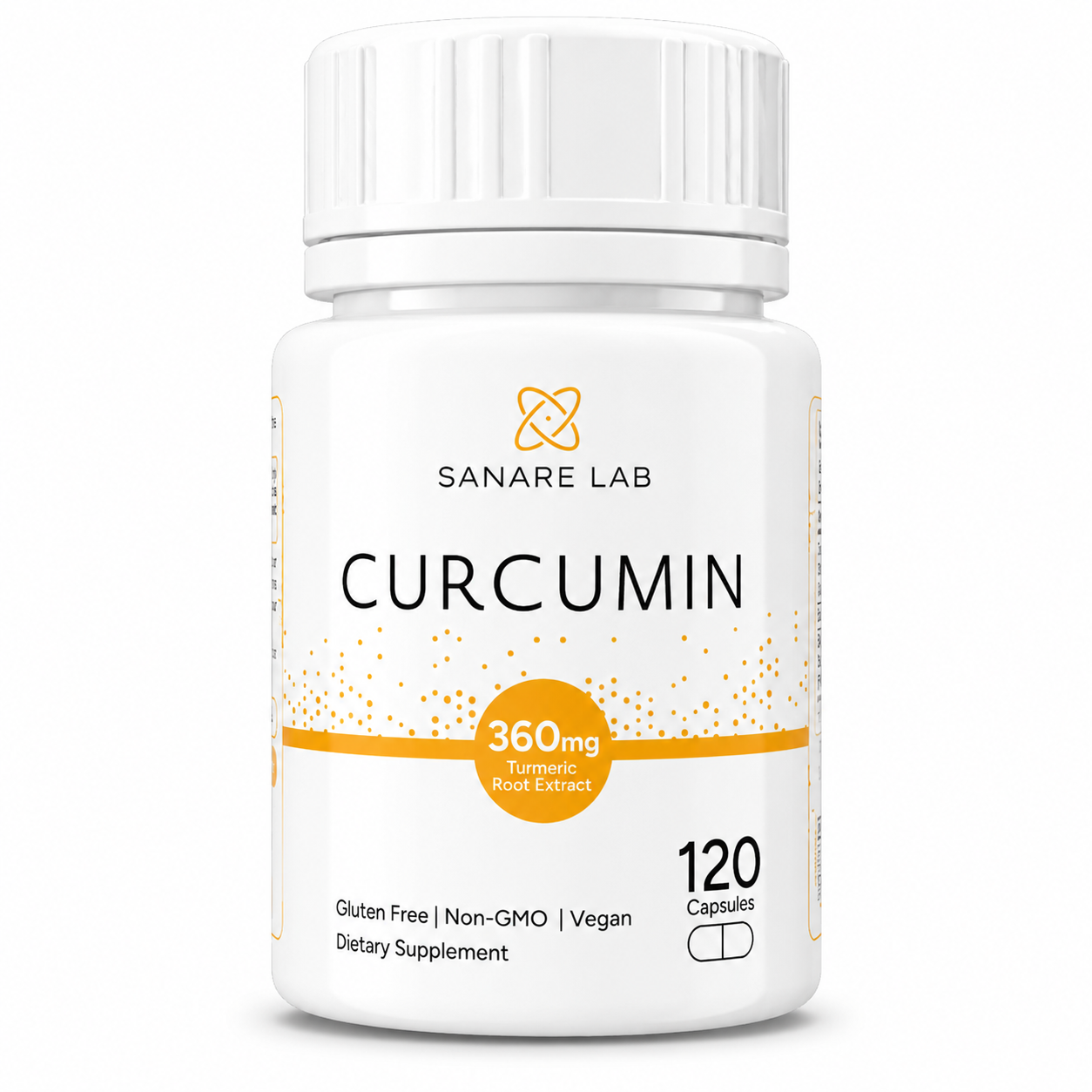
Daily adjunct
Curcumin 360 mg
95% curcuminoids with black pepper extract.
Prices checked September 2026 and may change; the store page shows the current price.
Disclaimer: Links are informational and for convenience. This site does not provide medical advice. Always verify product quality, labeling, and consult a licensed professional for health decisions.
References
- Cho MK, Lee SH, Nam HS, Choi D, Lee YJ. Combined Arctigenin and Curcumin Treatment Induces Redox and Metabolic Stress, AMPK Phosphorylation, and Apoptotic Signaling in Prostate Cancer Cells. Nutrients. 2026 Sep 10;18(18):2968. doi: 10.3390/nu18182968. PMID: 42796951.
Medical Disclaimer
The content on this site is for informational and educational purposes only and does not constitute medical advice, diagnosis, or treatment. Always consult a qualified healthcare provider before making any health-related decisions, starting any supplement, or changing your treatment plan. Never disregard professional medical advice or delay seeking it because of information read here. The authors and publishers of this content are not liable for any adverse effects or consequences resulting from the use of any suggestions, preparations, or procedures discussed.
Sanare Lab
Science-based health education team reviewing published research on repurposed drugs, integrative oncology, and evidence-based protocols.