
Ivermectin is a broad-spectrum antiparasitic medication derived from avermectins — natural compounds produced by the soil bacterium Streptomyces avermitilis. First discovered in 1975 by Satoshi Ōmura and William C. Campbell, it was introduced for veterinary use in 1981 and approved for human medicine in 1987. The significance of this discovery was recognized with the 2015 Nobel Prize in Physiology or Medicine, reflecting ivermectin's transformative impact on global health — particularly in controlling neglected tropical diseases affecting hundreds of millions of people.
Today, ivermectin is used worldwide to treat and prevent parasitic infections in both humans and animals. It appears on the World Health Organization's List of Essential Medicines and remains one of the most widely administered drugs in mass drug administration (MDA) programs. This article provides a foundational overview of what ivermectin is, how it works, its uses in human and veterinary medicine, its safety profile, and how it compares to other antiparasitic treatments. For a detailed, human-focused guide including dosage charts and clinical guidelines, see our comprehensive article on ivermectin for humans.
Mechanism of Action — How Ivermectin Works
Ivermectin exerts its antiparasitic effect by targeting glutamate-gated chloride (GluCl) channels — ion channels found exclusively in invertebrate nerve and muscle cells. When ivermectin binds to these channels, it forces them open, causing an influx of chloride ions. This hyperpolarizes the cell membrane, leading to flaccid paralysis and death of the parasite.
This mechanism is highly selective. Mammals, including humans, do not possess GluCl channels in their peripheral tissues. While ivermectin can interact with GABA-gated chloride channels (present in the mammalian central nervous system), the blood-brain barrier normally prevents the drug from reaching these receptors at standard therapeutic doses. This selectivity accounts for ivermectin's wide safety margin in human and veterinary use.
At the pharmacokinetic level, ivermectin is well absorbed orally, highly lipophilic, and distributes extensively into skin, fat, and subcutaneous tissue. It is metabolized by hepatic CYP3A4 enzymes and excreted primarily in feces. Its tissue distribution pattern contributes to efficacy against both internal parasites and ectoparasites such as scabies mites and lice.
Ivermectin in Human Medicine
Following its 1987 approval for human use, ivermectin became a cornerstone medication for several parasitic diseases. Its most significant contributions have been in the control and elimination of neglected tropical diseases through mass treatment programs.
Onchocerciasis (River Blindness)
River blindness, caused by the filarial nematode Onchocerca volvulus, was once a leading cause of preventable blindness in sub-Saharan Africa and Latin America. Ivermectin does not kill adult worms but effectively eliminates microfilariae — the larval stage responsible for skin and eye damage. Through the Mectizan Donation Program (established 1987), over 4 billion treatments have been distributed, dramatically reducing disease burden across endemic regions.
Lymphatic Filariasis
In combination with albendazole, ivermectin is administered annually in MDA campaigns to interrupt the transmission of lymphatic filariasis. While it suppresses circulating microfilariae rather than killing adult worms, consistent annual treatment breaks the transmission cycle within communities.
Strongyloidiasis and Intestinal Helminths
Ivermectin is the treatment of choice for intestinal strongyloidiasis caused by Strongyloides stercoralis, achieving cure rates above 95%. This is particularly important for immunocompromised patients at risk of hyperinfection syndrome, where the parasite's autoinfection cycle can become life-threatening. For detailed dosage information, see our complete ivermectin dosage guide.
Scabies and Head Lice
Oral ivermectin (200 µg/kg) is increasingly used for scabies, particularly in institutional outbreaks or cases resistant to topical permethrin. For head lice, both oral and topical (0.5% lotion) formulations are available, offering alternatives when conventional pediculicides fail.
Ivermectin in Veterinary Medicine
Ivermectin's first and largest application domain remains veterinary medicine. It is used across virtually all domesticated species — dogs, cats, horses, cattle, sheep, goats, pigs, and poultry — to control a broad range of internal and external parasites.
Key veterinary applications include heartworm prevention in dogs and cats (as a monthly prophylactic), treatment of gastrointestinal nematodes in livestock, control of mites and mange in cattle and horses, and elimination of bots and warbles. Ivermectin's efficacy against such a wide range of parasites, combined with its safety profile in animals, made it one of the best-selling veterinary drugs in history. For a comparison of ivermectin with fenbendazole in veterinary contexts, see our article on fenbendazole in veterinary medicine.
Available from Sanare Lab
Pharmaceutical-grade compounds discussed in this article — with full lab documentation.
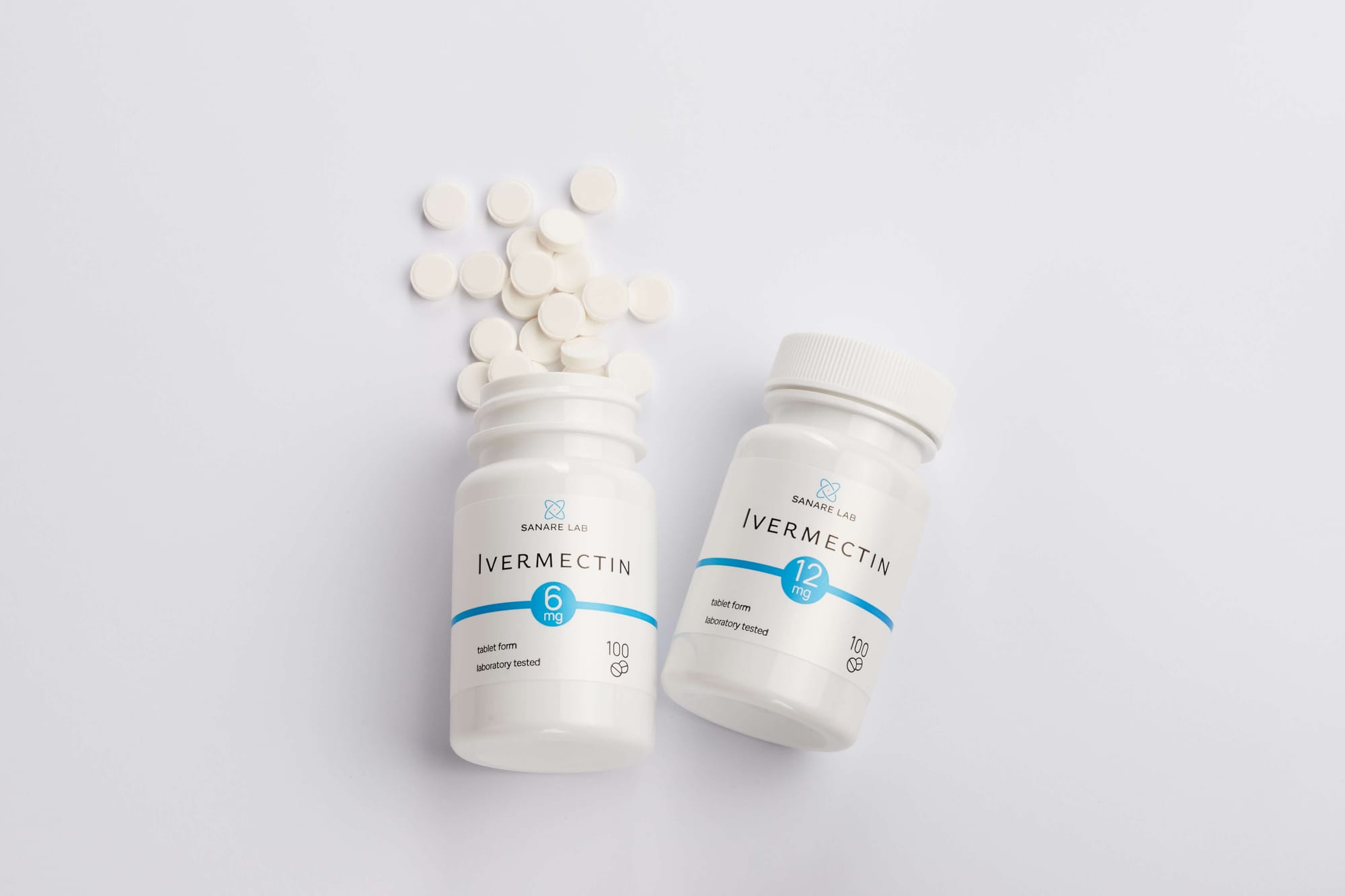
6 / 12 / 18 mg — 100 tablets
180 capsules — 99% purity, laboratory tested
Disclaimer: For convenience only. Consult a licensed professional.
Comparison With Other Antiparasitic Treatments
| Medication | Mechanism | Spectrum | Duration | Primary Use |
|---|---|---|---|---|
| Ivermectin | GluCl channel agonist | Broad (nematodes + ectoparasites) | Long-lasting tissue distribution | Human parasitic infections, veterinary care |
| Albendazole | Tubulin inhibitor | Moderate (intestinal helminths) | Short to medium | Soil-transmitted helminths, hydatid disease |
| Fenbendazole | Tubulin inhibitor | Broad (nematodes + some cestodes) | Medium | Veterinary; off-label human (Joe Tippens Protocol) |
| Moxidectin | GluCl channel agonist | Narrower | Longer duration than ivermectin | Heartworm prevention in animals |
| Permethrin | Sodium channel disruptor | Narrow (ectoparasites only) | Short (topical) | Lice and scabies treatment |
| Praziquantel | Calcium channel disruptor | Moderate (flatworms) | Short | Tapeworms and flukes |
For a detailed head-to-head analysis of ivermectin and fenbendazole — including safety profiles, mechanism differences, and research context — see our fenbendazole vs. ivermectin comparison.
Safety Profile and Side Effects
Ivermectin is generally well tolerated at standard therapeutic doses. The most commonly reported side effects are mild and transient: headache, nausea, dizziness, diarrhea, and fatigue. In patients being treated for onchocerciasis, the Mazzotti reaction — caused by the rapid death of microfilariae — may produce more pronounced inflammatory symptoms including fever, pruritus, rash, and hypotension.
Serious adverse events are rare and are primarily associated with Loa loa co-infection (where high microfilarial loads can cause encephalopathy upon treatment) or with massive overdoses of veterinary-grade formulations. The blood-brain barrier normally prevents CNS toxicity at approved doses, but caution is warranted in patients with P-glycoprotein deficiency or compromised BBB integrity.
Key safety precautions: Use only under medical guidance. Dosing should be weight-based and condition-specific. Do not use veterinary formulations for human treatment. Avoid in children under 15 kg, during pregnancy, and during breastfeeding unless specifically directed. Inform your provider about all concurrent medications, especially CYP3A4 substrates.
Emerging Research Areas
Beyond its established antiparasitic role, ivermectin has attracted preclinical research interest in several new areas. Laboratory studies have demonstrated effects on cancer cell proliferation, nuclear transport proteins (importin α/β1), and immune signaling pathways. A registered clinical trial (NCT05318469) is investigating whether ivermectin can enhance immune checkpoint inhibitor efficacy in solid tumors. Separately, researchers have explored its immunomodulatory properties in preclinical models.
Ivermectin also features in the ISOM Protocol, a metabolic combination framework under investigation. It is essential to note that all oncology and immunology applications of ivermectin remain experimental and should not replace standard medical treatment. For community experiences with antiparasitic protocols, see our customer notes section.
Scientific References
- Campbell, W.C. (2012). History of avermectin and ivermectin, with notes on the history of other macrocyclic lactone antiparasitic agents. Current Pharmaceutical Biotechnology, 13(6), 853–865. PubMed
- Crump, A., Ōmura, S. (2011). Ivermectin, 'wonder drug' from Japan: the human use perspective. Proceedings of the Japan Academy, Series B, 87(2), 13–28. PubMed
- Ottesen, E.A., Campbell, W.C. (1994). Ivermectin in human medicine. Journal of Antimicrobial Chemotherapy, 34(2), 195–203. PubMed
- Omura, S., Crump, A. (2014). Ivermectin: panacea for resource-poor communities? Trends in Parasitology, 30(9), 445–455. PubMed
- Laing, R., Gillan, V., Devaney, E. (2017). Ivermectin — old drug, new tricks? Trends in Parasitology, 33(6), 463–472. PubMed
Protocol Stack (Quick Links)
Below are commonly referenced items mentioned in this article. Links are provided for convenience — always review the label and consult a professional before use.
6 / 12 / 18 mg — 100 tablets
Capsules — referenced in comparative antiparasitic protocols
Disclaimer: Links are informational and for convenience. This site does not provide medical advice and does not endorse any specific vendor. Always verify product quality, labeling, and consult a licensed professional for health decisions.