
Triple-negative breast cancer (TNBC) is one of the most challenging subtypes of breast cancer to treat. It lacks the three most common receptors — estrogen, progesterone, and HER2 — which means it does not respond to many targeted therapies. In the metastatic setting, even immune checkpoint inhibitors like pembrolizumab have limited durability for many patients.
This is why clinical trial NCT05318469 has attracted significant attention in the research community and among patients exploring complementary approaches. The trial is evaluating whether ivermectin — a widely used antiparasitic drug with an emerging preclinical profile in oncology — can enhance the effectiveness of immune checkpoint inhibitors in metastatic TNBC. This article provides a detailed, evidence-based breakdown of the trial design, scientific rationale, and what it can realistically tell us.
What Is NCT05318469?
NCT05318469 is a Phase I/II clinical trial being conducted at Cedars-Sinai Medical Center in Los Angeles. It is actively recruiting patients with metastatic triple-negative breast cancer who have received prior therapy. The study evaluates the safety, tolerability, and preliminary efficacy of combining oral ivermectin with either balstilimab or pembrolizumab — two PD-1/PD-L1 immune checkpoint inhibitors.
The trial is sponsored independently and represents one of the first structured human studies to formally test ivermectin as an immunotherapy adjunct in a solid tumor setting. It is registered on ClinicalTrials.gov and follows standard Phase I/II dose-escalation and expansion protocols.
Why Ivermectin? The Scientific Rationale
The decision to test ivermectin in this context is not arbitrary. A growing body of preclinical research has identified several mechanisms by which ivermectin may interact with tumor biology and immune function.
A 2020 review published in Pharmacological Research (PMC7505114) summarized ivermectin's anti-tumor mechanisms, including inhibition of the PAK1 signaling pathway, induction of mitochondrial dysfunction in cancer cells, disruption of the Wnt/β-catenin pathway, and modulation of immune cell activity. These effects were demonstrated primarily in preclinical models, but they provide a mechanistic basis for testing the compound in combination with immunotherapy.
A separate 2021 study published in eClinicalMedicine (PMC8248985) analyzed population-level cancer outcomes in regions with high ivermectin use and noted associations warranting prospective investigation. Specifically in TNBC models, researchers have observed that ivermectin may sensitize tumor cells to immune-mediated killing by reducing immunosuppressive signaling. You can read more in our article on ivermectin and cancer immunotherapy.
Trial Design: How the Treatment Schedule Works
The protocol is structured around 21-day cycles. Participants receive ivermectin orally on specific days within each cycle, while immunotherapy is administered intravenously on Day 1.
| Component | Schedule | Notes |
|---|---|---|
| Ivermectin (oral) | Days 1–3, 8–10, and 15–17 | Within each 21-day cycle |
| Balstilimab (450 mg IV) | Day 1 of each cycle | Anti-PD-1 checkpoint inhibitor |
| Pembrolizumab (200 mg IV) | Day 1 of each cycle | Alternative checkpoint inhibitor arm |
| Duration | Up to 35 cycles (~2 years) | Or until progression, toxicity, or withdrawal |
Patient Eligibility: Who Can Participate?
- Confirmed metastatic triple-negative breast cancer (HER2-, ER-, PR-)
- Prior systemic therapy (at least one prior line in the metastatic setting)
- Measurable disease per RECIST criteria
- Adequate organ function (liver, kidney, bone marrow)
- ECOG performance status 0–1
- No prior severe immune-related adverse events from checkpoint inhibitors
Patients interested in participating should check the official ClinicalTrials.gov listing for NCT05318469 for current recruitment status and full inclusion/exclusion criteria.
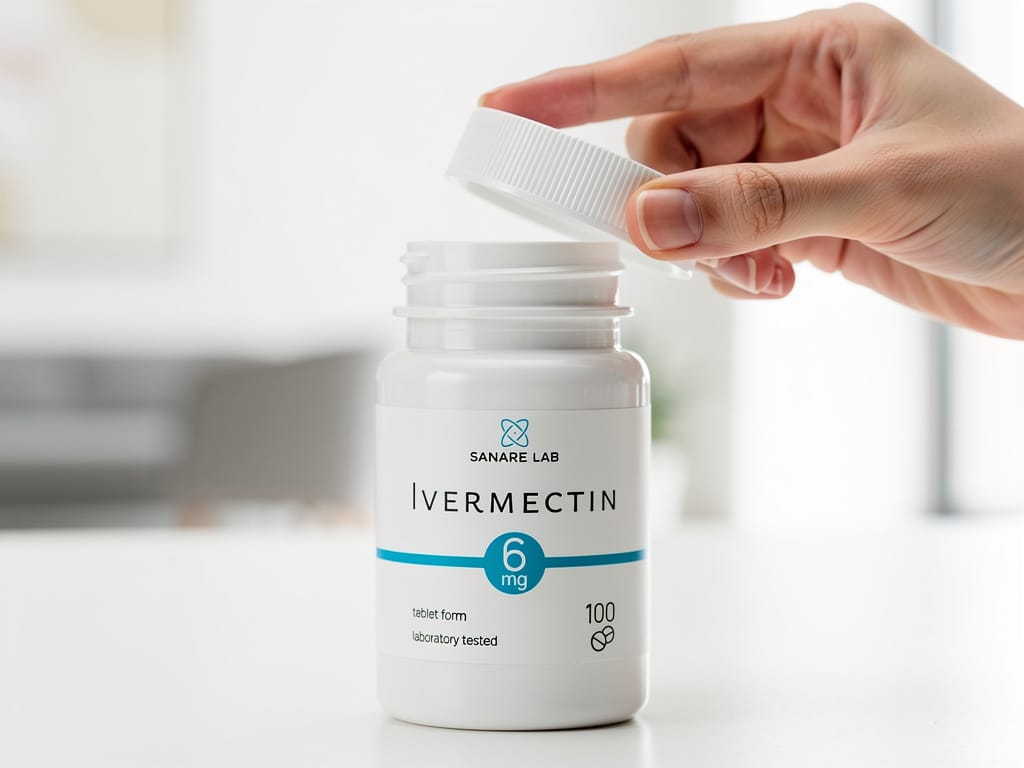
Available from Sanare Lab
The same compound being studied in trial NCT05318469 — pharmaceutical-grade, lab-tested.
6 / 12 / 18 mg — 100 tablets
Disclaimer: For convenience only. Consult a licensed professional.
What This Trial Can and Cannot Prove
What it CAN tell us:
- Whether the combination of ivermectin + checkpoint inhibitor is safe and tolerable in humans
- What dose-limiting toxicities appear, and at what doses
- Early signals of tumor response (objective response rate, disease control rate)
- Pharmacokinetic interactions between ivermectin and the immunotherapy agents
What it CANNOT prove at this stage:
- That ivermectin definitively treats or cures TNBC
- That this combination is superior to existing standard-of-care therapies
- Long-term survival benefits across large, diverse patient populations
Why This Trial Matters Beyond TNBC
Drug repurposing — using approved, well-characterized drugs in new indications — is an increasingly important strategy in oncology. Ivermectin has decades of safety data in humans at approved antiparasitic doses. If NCT05318469 produces positive early signals, it could open the door to larger Phase III trials not just in TNBC, but potentially in other solid tumors where checkpoint inhibitors are used. The broader implications are explored in our overview on ivermectin and cancer immunotherapy research.
Key Takeaways
- NCT05318469 is a Phase I/II trial testing ivermectin + balstilimab or pembrolizumab in metastatic TNBC at Cedars-Sinai
- The scientific rationale is based on ivermectin's preclinical immune-modulatory and anti-tumor properties
- Treatment follows 21-day cycles with pulsed oral ivermectin and IV checkpoint inhibitor on Day 1
- As a Phase I/II study, it is primarily evaluating safety and early efficacy signals — not proving definitive benefit
- Ivermectin remains an investigational agent in oncology — it is not an approved cancer treatment
Scientific References
- ClinicalTrials.gov — NCT05318469 (Official Trial Listing)
- Pharmacological Research 2020 — Ivermectin's anti-tumor mechanisms (PMC7505114)
- eClinicalMedicine 2021 — Ivermectin and cancer outcomes (PMC8248985)
- Cancers 2021 — Ivermectin as immunotherapy adjunct: preclinical evidence (PMC8439580)
Disclaimer: This article is for educational and informational purposes only and does not constitute medical advice. Clinical trials have specific eligibility requirements and risks. Do not self-prescribe any medication. Always consult a qualified oncologist or healthcare provider before making treatment decisions.
Protocol Stack (Quick Links)
Below are commonly referenced items mentioned in this article. Links are provided for convenience — always review the label and consult a professional before use.
6 / 12 / 18 mg — 100 tablets
Disclaimer: Links are informational and for convenience. This site does not provide medical advice and does not endorse any specific vendor. Always verify product quality, labeling, and consult a licensed professional for health decisions.