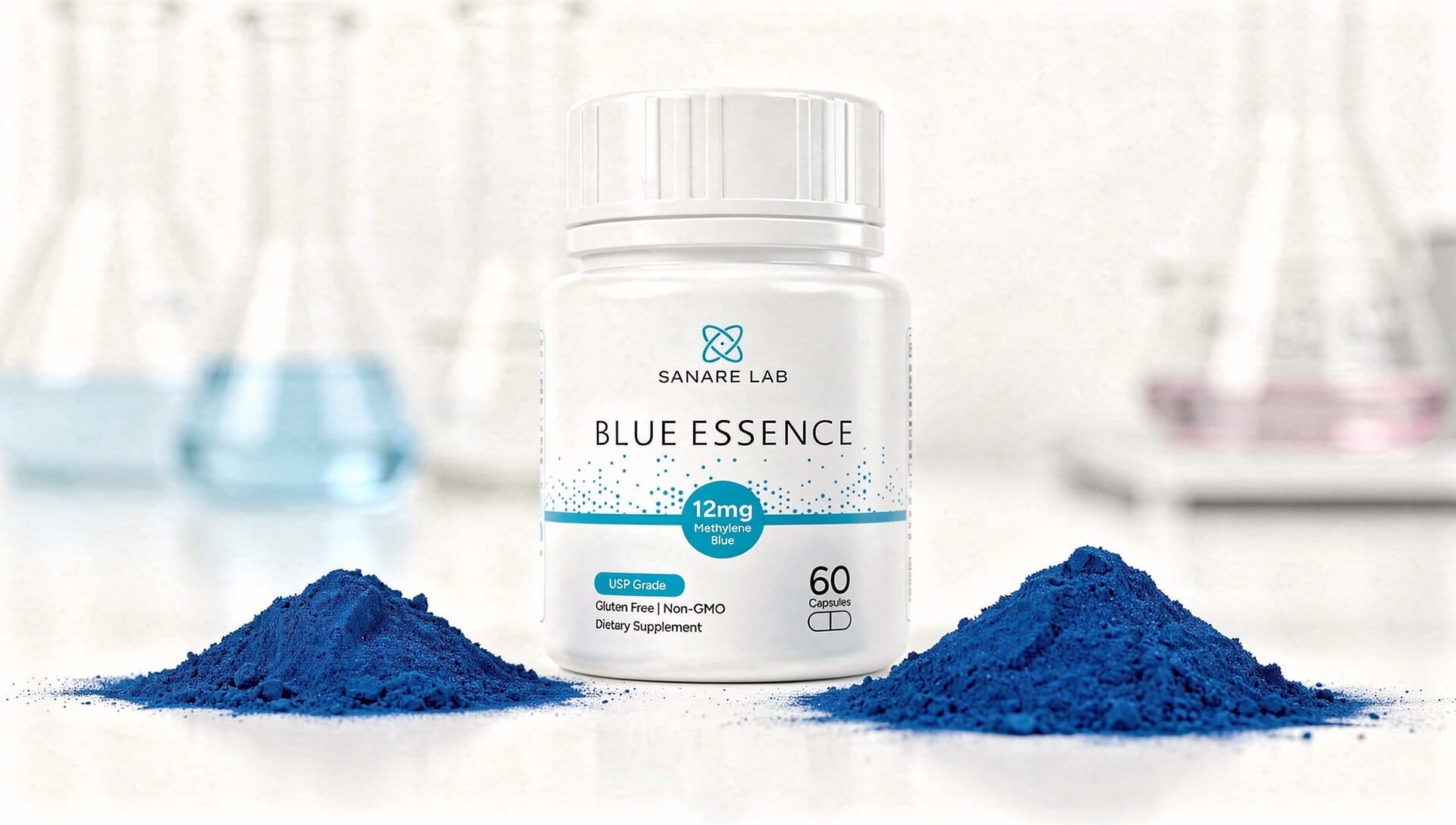

Methylene Blue in Oncology Research: From 19th-Century Dye to Experimental Photodynamic Strategy
Methylene blue is one of the oldest synthetic compounds still used in modern medicine. Originally developed in the 19th century as a textile dye, it later became an established medical treatment for conditions such as methemoglobinemia and has been widely used in diagnostics and surgery. Today, researchers are exploring a new frontier: its potential role in cancer research, particularly in the context of photodynamic therapy (PDT).
What Recent Research Says
Two recent scientific publications help clarify where methylene blue stands in oncology research. A 2023 systematic review published in Pharmaceuticals (available via PubMed Central, PMC10568458) analyzed preclinical studies evaluating methylene blue–mediated photodynamic therapy in different tumor models. In parallel, a 2024 review published in Current Medicinal Chemistry (ScienceDirect, S1572100024000863) discussed methylene blue’s biochemical properties, including its redox activity and potential relevance in cancer metabolism.
Together, these studies do not position methylene blue as an approved cancer treatment. Rather, they explore its biological activity, mechanisms of action, and experimental applications in laboratory and animal models.
How Methylene Blue Works at the Cellular Level
Methylene blue is a redox-active molecule. This means it can switch between oxidized and reduced forms, interacting with cellular components such as NADH and elements of the mitochondrial electron transport chain. According to the 2024 review, this redox cycling allows methylene blue to influence mitochondrial respiration and cellular energy dynamics.
Cancer cells often display altered metabolism — commonly referred to as the Warburg effect — where energy production relies more heavily on glycolysis even in the presence of oxygen. Because methylene blue interacts with mitochondrial pathways, researchers are investigating whether it may influence tumor cell metabolism under certain experimental conditions.
Photodynamic Therapy: The Most Studied Application
The strongest body of oncology-related research involving methylene blue focuses on photodynamic therapy (PDT). In this approach:
- Methylene blue is delivered to tumor tissue.
- The area is exposed to light of a specific wavelength (typically red light).
- Light activation triggers the production of reactive oxygen species (ROS).
These reactive oxygen species can damage cellular structures, including membranes and DNA, potentially reducing tumor cell viability. Importantly, this effect depends on light activation. Methylene blue alone, without light, does not function as a conventional chemotherapy agent.
The 2023 systematic review (PMC10568458) evaluated ten preclinical animal studies. In seven of them, methylene blue–mediated photodynamic therapy was associated with reduced tumor size or slower tumor growth compared with controls. However, outcomes varied depending on tumor type, dosing strategy, and delivery method.
Why Researchers Are Interested in Repurposing It
Drug repurposing is an increasingly important strategy in oncology research. Compounds with known safety profiles can sometimes move into clinical investigation more efficiently than entirely new chemical entities. Methylene blue has over a century of documented medical use, which makes its pharmacology and toxicity profile relatively well understood compared to novel experimental agents.
The ScienceDirect review highlights that methylene blue’s predictable redox behavior, mitochondrial interactions, and light-activated properties make it a unique candidate for further exploration — particularly in combination approaches such as PDT or nanocarrier delivery systems.
Safety and Toxicity Considerations
Methylene blue has been used safely for decades at clinically established doses for approved indications. However, toxicity is dose-dependent. High concentrations may cause adverse effects such as serotonin toxicity (particularly in combination with SSRIs or MAOIs), hemolysis in susceptible individuals, or other systemic reactions.
In photodynamic applications, additional considerations include light exposure control and localized oxidative stress. While preclinical studies generally report manageable safety profiles under experimental conditions, careful dosing and clinical validation remain essential before broader application.
What This Means for Patients and Researchers
The two recent reviews illustrate a broader trend in oncology: revisiting established molecules to explore new mechanisms and applications. Methylene blue’s influence on tumor models appears to be linked primarily to its role in photodynamic therapy and its interaction with cellular redox systems.
While promising at a mechanistic level, the transition from laboratory findings to clinical oncology requires carefully designed human trials. Until such data are available, methylene blue’s role in cancer treatment remains a subject of scientific investigation rather than clinical practice.
Key Takeaways
- Methylene blue is a redox-active compound with a long history of medical use.
- Recent reviews (PMC10568458; S1572100024000863) analyze its experimental role in cancer research.
- Most oncology data involve photodynamic therapy in preclinical models.
- Results show tumor reduction in several animal studies, but findings are not yet clinical evidence.
- Methylene blue is not an FDA-approved cancer treatment and remains investigational in oncology.
Official Source
The official listing is the best place to track updates, recruitment status, and protocol changes:
PubMed Central — PMC10568458 View the official trial listing → ScienceDirect, S1572100024000863 View the official trial listing →Protocol Stack (Quick Links)
Below are commonly referenced items mentioned in this article. Links are provided for convenience — always review the label and consult a professional before use.
60 capsules
60 mL (2 fl oz)